Showing posts sorted by relevance for query Halloween. Sort by date Show all posts

Wednesday, October 24, 2018

Summer’s End

We’re fast approaching the end of the Celtic year, Samhain, or Summer’s End, which marks the half way mark, or cross-quarter day between the equinox and the solstice. The night when the boundary between this world and the otherworld are thinnest. The night of the great bonfires, where my great-grandfather ran his cattle between two fires to purify them (the other cross quarter day was Beltane)—the smoke was probably also a great pest deterrent. To be fair, the celebration of the cross-quarter days predates the arrival of the Celts, but they took to the custom like ducks to water, or sparks to flame.

In 609AD, Pope Boniface IV decreed November 1 as All Saints Day, or Allhallowmesse, thus placing a Christian spin on the Celtic celebration of Samhain. And since the festival lasted several days, we have Halloween, or All Hallows’ Eve, All Saints Day, and All Souls Day as well.

The Irish brought the vestiges of Samhain, rechristened Halloween by the church, to America, and to Scotland. In America, Halloween took off and became the secular extravaganza it is today, thanks to the candy industry, who saw a profit was to be made. During WWII, American GIs stationed in Germany, put on a Halloween festival in a castle, thus reintroducing elements of Samhain to its original Celtic homeland, and also back to Ireland as well.

We associate Halloween with zombies and characters like Frankenstein, but that story was penned during one dreary dreecht summer in Geneva by Irish lass, Mary Shelley, on a bet to produce a ghost story. Galvanizing the dead fits right into the premise of Samhain, or Halloween when the gates to the otherworld are open, the cauldron of plenty could raise the dead, and anything was possible.

Wednesday, October 31, 2012

Hallowe'en agus Samhain


                                                                                    Newgrange, 1905 —Wiki


For the fairy mounds of Erinn are always opened about Hallowe'en. —Expedition of Nera. (Meyer trans.)
Oíche Shamhna! Hallowe'en, aka All Hallows Eve(n), has its roots in an Irish Catholic tradition that supplanted ancient pagan Celtic Samhain traditions, and was introduced to Scotland ca. the 16th century, and to America in the 19th century.

Someone had posted a thread on Facebook that Hallowe'en (or Samhain) was a Scottish tradition (versus Irish—or even a shared Celtic tradition) that got me all in a lather. 
He wrote: "a small fact that halloween started in scotland in 16th century and this was a A modern jack-o'-lantern is typically a carved pumpkin, although originally typically large turnips. It is associated chiefly with the holiday of Samhain and Halloween and was named after the phenomenon of strange light flickering over peat bogs, called ignis fatuus or jack-o'-lantern.lol") 
Note that I left the fellow's punctuation & spelling intact—stet. LOL, indeed.

Samhain/ Hallowe'en customs may have traveled to Scotland, but, for the record, the Scots didn't invent it. Not sure where that misconception arose. Maybe it's the word Hallowe'en itself, allegedly a Scots phrase, that leads to this red herring.

This is not to say that Hallowe'en/Samhain isn't celebrated in Scotland. As to a Scottish-Irish connection: it occurred to me (as I was gnashing my teeth) that during recent times, much of the east end of Glasgow was heavily settled by Irish immigrants (as well as the Barrowland), and along the River Clyde wherever there were shipyards. 


One could also include most of Renfrewshire in that Irish matrix—especially Johnstone, one epicenter of the Industrial Revolution: paper, flax, cotton mills, lathes—has distinct boundaries between the Protestant and Irish Catholic parts of town.

Glasgow slums were heavily settled by, and continuously resettled by waves of itinerant Irish Catholic workers—especially after the Irish Famine. Harvest/Fall traditions carried to Scotland from Ireland took root. 


If one goes back far enough, much of Scotland—especially the Highlands, was settled by the Dalriadan Irish—who spoke Gaelic, and brought their customs with them. 

October 31 has been a big mojo date in the Celtic Irish world for at least 2000 years—with and without church sanction. All ancient Irish epic tales (dating back 2000 years, but recorded in the 6-10th centuries) include many traditions we now associate with Hallowe'en—and most tales begin on the last day of the old harvest year, Samhain, when the gates to the Otherworld open. 

But Hallowe'en customs in Scotland seem to arise a bit later on the event horizon. Curious to know as to when they arise in Isle of Man? There seems to be a strong link in the Goidelic-speaking regions (vs. Brythonic).

Hallowe'en arose because the older Celtic pagan traditions worshipping ancestors and mythological deities needed to be Catholicised and brought into the churchfold: hence we have All Hallows Eve(n), All Saints Day and All Souls Day


Think of the feast days as a hierarchical list of who got to heaven, or not—and it gave the living souls a chance to boost the fannies of the tarnished souls of their ancestors and dearly departed ones a notch up the corporate ladder of purgatory. And so Hallowe'en was church sanctioned, as it were—just like México's El Día de los Muertos (originally celebrated in August.)
From Wiki: Scholars trace the origins of the modern Mexican holiday to indigenous observances dating back hundreds of years and to an Aztec festival dedicated to the goddess Mictecacihuatl
If you can pronounce the name of the Aztec queen of the underworld, that flaca star-swallower, Mictecacihuatl, then you get ten purgatorial points. 

BTW—there's a reason why there are shared customs in both the Old, and New World. In the 9th c., Pope Boniface IV decided to show those heathens a thing or two and Christinised the holidays (holy days). Not really, it was more complicated than that. Besides, the New World hadn't been "discovered" yet. Detail.

According to Halloween Facts and Misinformation: "Pope Boniface IV dedicated the Pantheon in Rome to the Virgin Mary. The date was later changed to Nov 1 by Pope Gregory III who dedicated a chapel in honor of all saints in the Vatican Basilica."

Well, that certainly explains a lot. Like someone giving directions to their home and becoming increasingly incoherent as they get closer to home and you drive around the block trying to find home.
Wiki Answers posted: "Boniface IV introduced All Saints Day to replace the pagan feast of Lemures - in which malevolent and restless spirits of the dead were propitiated. It took place on/about the 13th of May and All Saints replaced it. All Saints Day was moved to November 1 by Pope Gregory III (731-741) and the previous May 13th day was then discontinued." 
I'm sorry, the festival you are seeking is no longer in service. Please check your calends and try again.

Take three:
All Saints Day on Nov. 1 in England, and such a celebration also existed in Salzburg, Austria. Ado of Vienne (d. 875) recounted how Pope Gregory IV asked King Louis the Pious (778-840) to proclaim Nov. 1 as All Saints Day throughout the Holy Roman Empire.
It took another hundred years for the entire Catholic Church to celebrate the saints on one single day. Pope Gregory IV (827-834) declared November 1 as the new date to celebrate the Feast of the Holy Martyrs and expanded it to include all saints, not just those who died for their faith. All Hallow's Eve, the vigil, was celebrated on October 31.
So, who dunnit? Bonyface or Gregory? I found this on a rather rabid Christian site. (I feel the need to post it in 6-point type and eliminate all adjectives, and past perfect tense references so I shortened it a bit. —Maureen : 1)
By the first century A.D., the Romans conquered Celtic territory and adopted (some) traditions as their own. Since the Catholic church... became the official religion of the Roman Empire, pagan rituals were incorporated by the church (to make) Catholicism more appealing to the heathen(s).
In the 6th century, "Gregory the Great (A.D. 540-604) advised the Archbishop of Canterbury to retain Druid sacrifices (REALLY???)and celebrate them in honor of the Christian saints" (Occult ABC, Kurt Koch, p. 87).
During the 7th century, in an attempt to replace the Celtic festival with a similiar, but "holier" holiday, Pope Boniface IV designated November 1 as a time to honor "saints and martyrs" and called it "All Saints' Day". This celebration was also known as All-hallows or All-hallowmas (from the Middle English word "Alholowmesse", (or) All Saints' Day) and the night before, Samhain, (was) called All-hallows Eve and, eventually, Halloween.
Then in the year 1000, the Catholic church set up November 2 to be All Souls' Day, a day to honor the dead. It was celebrated much like Samhain, with bonfires, parades, while the people dressed as saints, angels, and devils. 
However it all went down, the secular aspect of Hallowe'en certainly caught fire in America a few centuries later.

The first historical reference of Hallowe'en in America dates back to 1919, The Book of Hallowe'en—written by a Massachusetts librarian, Ruth Edna Kelley. She credited the Famine Irish with bringing to the new world, Hallowe'en customs. 

The place of the old lord of the dead, the Tuatha god Saman, to whom vigil was kept and prayers said on November Eve for the good of departed souls, was taken in Christian times by St. Colomba or Columb Kill, the founder of a monastery in Iona in the fifth century. In the seventeenth century the Irish peasants went about begging money and goodies for a feast, and demanding in the name of Columb Kill that fatted calved and black sheep be prepared. In place of the Druid fires, candles were collected and lighted on Hallowe'en, and prayers for the souls of the givers said before them. The name of Saman is kept in the title "Oidhche Shamhna," "vigil of Saman," by which the night of October 31st was until recently called in Ireland. The Book of Hallowe'en
AS in Ireland the Scotch Baal festival of November was called Samhain. Western Scotland, lying nearest Tara, center alike of pagan and Christian religion in Ireland, was colonized by both the people and the customs of eastern Ireland.The November Eve fires which in Ireland were replaced by candles and were continued in Scotland. In Buchan, where was the altar-source of the Samhain fire, bonfires were lighted on hilltops in the eighteenth century; and in Moray the idea of fires of thanksgiving for harvest was kept to as late as 1866. The Book of Hallowe'en 
Speaking of fire, of course, there were no flashlights (or torches) and glass chimneys were not always an option, way back when, so carving a turnip root lantern makes sense if one wanted any form of light at night whether in Scotland or Ireland. Just try using a naked candle outside at night—even if there's no wind (or rain) you're blindsided by it. Turnip lanterns were a brilliant, if practical rural invention—like organic alabaster lamps.

As a child, my grandmother carved turnips (or swedes, or even mangles—any big pithy round roots used for cow fodder) in Bantry during the 1890s. Turnips were used as lanterns, candles were placed in the window. 

This is what I turniped on the Irish ancestors of Jack O'lanterns:
"The turnip or white turnip (Brassica rapa, subsp. rapa) is a root vegetable grown in temperate climates for its white, bulbous taproot. Small, tender varieties are grown for human consumption, larger varieties as feed for livestock. In northern England and Scotland, the turnip is called neep; the word turnip is an old compound of neep. Neep also refers to the larger, yellow rutabaga AKA the "swede" (from "Swedish turnip")." —Wiki
In Scots, it is known as "turnip," "tumshie" or "neep" (from Old English næp, Latin napus). In North-East England, turnips and swedes are colloquially called "snadgers" or "snaggers" (archaic). Wiki
Apparently a rutabaga (Brassica napus, subsp. rapifera), or yellow turnip, is a (natural?) cross between a cabbage and a turnip. First noted in 1620 by a Swiss biologist. this sordid little love affair was also noted by Carl Linnaeus in 1753 because the resulting crossbreeding doubled its chromosomes. This relationship is aka the Triangle of U. 
Rutabagas were carved out and used as candle lanterns in Halloween celebrations in Scotland and Ireland. —Wiki
Whether kålrot, or steckrübe, or or rotabagge—the old Swedish word rotabagge, meant "root ram"; or turnips were used as root lanterns, the root vegetables were considered famine foods, fit only for livestock. So the origin of Jack O'lanterns was really a poor man's torch. Somehow our family survived the Great Potato Faminean Gorta Mór (1845-52), in the hills of Coomanore, and I suspect it was because they ate lots of turnips.

It was also an Irish tradition to let the hearth fire die, clean the hearth, and then the sacred tradition of relighting it—from the flame of those traveling turnips. Out with the old, in with the new. It was New Year's Eve, after all! 

My great-grandfather also used to run his cattle between two bonfires, on his farm in the hills of Coomanore. My grandmother told me he also filled an oak (whiskey?) barrel with tar, set it alight and rolled it down the hill. An Irish Catherine wheel of sorts. (The Walsh farm, Coomanore.) 

Wearing masks (as a disguise) and using bull roarers to scare off spirits—were all part and parcel of a long ongoing tradition of Hallowe'en. There was a plenitude of food for the dead—soul cakes, and apples and nuts. In my grandmother's time, prized Valencia oranges—a luxury item wrapped in foil—was also given as gifts. There was scrying in water or mirrors—if you owned one. Then there was the barmbrack cake with its symbolic thimble, ring and penny baked inside. (See James Joyce's The Dead.)

My grannie was thoroughly disgusted by the American tradition of Trick or Treat. She said, in Ireland, one had to dance and sing, or recite a poem or story, and then, if one was good, they might be given a treat, or an orange or a ha-penny if they were very, very good. One was expected to trot out one's best pony show. Move over, Simon Cowell.


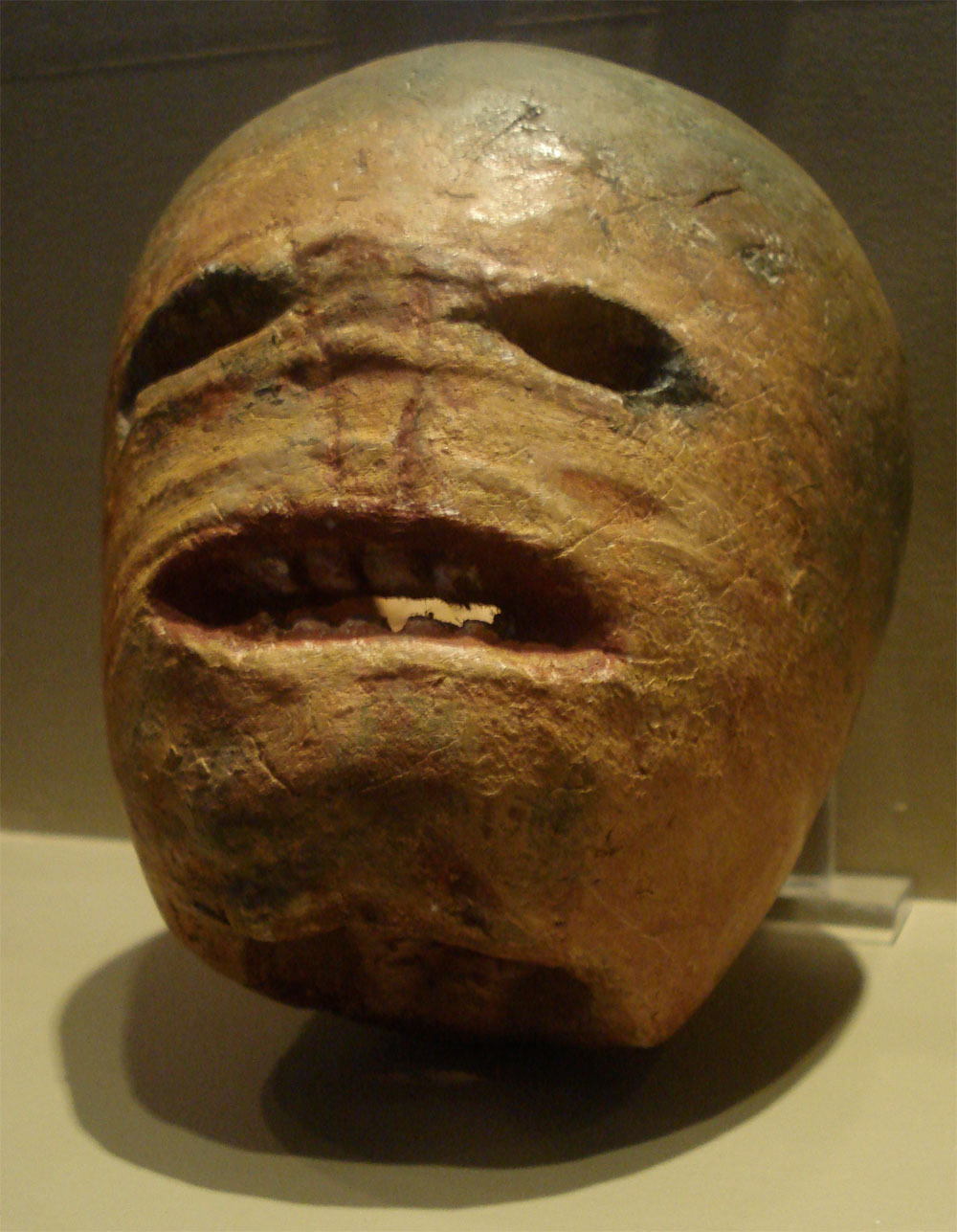
An Irish turnip lantern from the early 20th century at the Museum of Country Life


Monday, October 31, 2005

HALLOWEEN, BANTRY BAY STYLE, ca. the 1890s


While writing a note to a friend, trying to explain the origins of Halloween, I decided to collecting dust off my dribs and drabs that I’ve collected over the years, and send them out as a Halloween blog. As many of you know, I grew up with a foot in three world: America, Ireland, and a somewhat Victorian version of the Otherworld. Hopefully you will enjoy this melange of stories. Actually, dressing up and using the phrase, "trick or treat" (also "trick and treat") was commonly used in southern Ireland in the 1890s... Contratry to popular belief, it was not a backwards traveling idea that came from the Americas as there was very little by way of American customs returning to Ireland until very, very recently (St. Patrick's Day celebration is an example). 

My grandmother, Jennie Walsh Reilly, who grew up in Bantry Bay, used to tell me of the trick or treating customs she celebrated as a girl. They dressed up in rags, they made and wore masks to disguise themselves so the uneasy returning dead let loose from the side (or barrows) to wander the earth for one night, wouldn't recognize or take them, and boys made bull roarers from pig bladders to scare the malicious ones away. They trick or treated. They had to either sing, dance, recite a poem (perform) and only then were they were given a treat...sometimes even a shiny copper half-penny.

She was quite irritated by the American custom of kids demanding candy without first performing. Id bring home from school the American traditions and she would "correct me, show me how it was supposed to be done. I do remember her giving us walnuts, oranges and apples. We played games: bobbed for apples, chased apples on a string with our teeth, peeled apples in one long core and let it fall to the foor to see what letter it would take (who we would marry), etc. I remember she lit a candle and I used to jump over it a la Jack be nimble /Jack be quick/ candlestick. She told me of hollowing out turnips to protect the wondows and offer a light for the souls returning home. Pumpkins are a new world food that replaced the big turnips of Ireland.

She also burned rosemary and sage from the garden in the newly lain fire: smudging the house to cleanse the air/banish the spirits on Nov. 1, and of course, we went to mass to pray for the dead. I remember all this so vividly because I used to help her with these tasks (which I thought odd), I was 5-10 years old, during the 1950s. We lived out in the wilds of N. California, where she singlehandedly raised my brother and I.

Soda bread and tea were made. She'd cut a deep cross on the top of the round loaf baked in a cast iron pan(other times of the year it was merely made in rectangular loaf pans). She told us of the special barmbrack bread but she rarely made it as she couldn't be bothered with making yeasted breads. But we knew the significance about receiving the ring, the coin or the rag.

She said, that in Ireland, they cleaned the house before Halloween, threw out any standing water, decorated /framed the windows with ivy, mistletoe and evergreens, placed hollowed turnips in the windows to light the way for the dead. They put out the fire, cleaned the hearth (once she used a plastic bucked, and it promptly melted when she put the hot ashes in), relit it from the bonfire on the hill at the farm (she used the pilot light on the stove).

At our farm, Coom an Or, my great-great grandfather drove his cattle between two bonfires, and he also made Catherine wheels out of wagon wheels covered in tar and rolled them down the hill... this custom was also done at Beltaine. Not all the All Hallows events practiced were solely for the Celtic New Year.

Some customs were used on St Stephen's Day (the wren on a stick), and Dec 31, and May 1.) Interestingly enough, she did pronounce the "m" in Samhain (it was sort of an m/v), she did learn school (Gaelic League days), she said it was not aspirated (the term they used for changing the s of certain letters. I know that because the typography of the day did not allow for making the dot o aspirated letter, that h's were introduced (thus creating a lexicographical nightmare)...

I found out later, when I attended UC Berkeley's rather rigorous Celtic Studies program (1999-2000) that sometimes that "h" was used in the medieval MSS as an aspiration, but dots were also more commonly used... We translated the Tain(s) Bo Cuailnge, & Fraoch, as well as other stories. I alsc studied with the late Provessor Alan Dudes, and collected much of my family's folklore for the foll archives. Anyway, my grannie argued that the sowen pronunciation was a post 1900 change, and, therefore, wrong. It may have been a Cork dialect or custom/or even just learned wrong... But she always fiercely tracking words in her Irish font dictionary dating from the 1880 or 1890s...Dineen’s think. but the cover was burned off in a kitchen fire.

Wednesday, October 31, 2012

Halloween Traditions in Bantry


This is the original published sort version of Halloween agus Samhian


This post on our timeline by Maureen Hurley is so good we decided to share it with you all. Thanks Maureen.

Hallowe'en (aka All Hallows Eve—an Irish Catholic tradition supplanted older pagan Samhain traditions) was introduced to Scotland. And then it was introduced to America by the Irish, not the Scots.

As a child, my grandmother carved turnips (or swedes, or mangles—any big pithy round roots used for cow fodder) in Bantry during the 1890s. Turnips were used as lanterns, candles were placed in the window. It was also a tradition to let the hearth fire die, clean the hearth, and then the sacred tradition of relighting it—from the flame of those travelling turnips. Out with the old, in with the new. It was New Year's Eve, after all!

Wearing masks (as a disguise) and using bull roarers to scare off spirits—were all part and parcel of a long ongoing tradition of Hallowe'en. My grannie was thoroughly disgusted by the American tradition of Trick or Treat. She said in Ireland, one had to dance and sing, or recite a poem or story, and then, if one was good, they might be given a treat, or a ha-penny if they were very, very good. One was expected to trot out one's best pony show. Move over, Simon Cowell.

As to the Scottish Hallowe'en connection: much of Glasgow (and River Clyde) environs—especially the slums—was heavily settled and continuously resettled by waves of itinerant Catholic Irish workers—through the industrial revolution.


Saturday, October 29, 2016

Halloween Traditions (notes for the UICC Samhain series)

Oíche Shamhna! Happy Samhain. Hallowe'en, aka All Hallows Evening, has its roots in an Irish Catholic tradition that supplanted ancient pagan Celtic Samhain customs. It was introduced to Scotland ca. the 16th century, and came to America in the 19th century via the Irish refugees.

Oíche Shamhna ( night of Samhain) Hallowe’en is the evening before the Feast of All Saints (The Hallowed Ones). But it wasn't always so. In 608 AD, Pope Boniface IV decided to commemorate all the martyrs, so the 13th of May was
designated as the Feast of All Holy Martyrs. In 837 Pope Gregory IV extended the festival to remember all the known and unknown saints. The festival was renamed the Feast of All Saints and the 1st of November was chosen for the festival. The Martyrology of Oengus written circa 800 records the Irish keeping All Saints on the 1st of November but additional feasts of All Saints of Europe on the 20th of April and All Saints of Africa on the 20th of December. Later the 1st of November became the sole commemoration date for All Saints in Ireland. The 2nd of November is the feast of All Souls a day which commemorates the faithful departed. The feast began in the 11th century and was connected with Christian concerns with death and purgatory. Later a popular belief developed that the souls in purgatory could on this day appear back on earth to haunt those who had wronged them. The souls would take the form of ghost, witches or toads. (Farmer 2011, 14). It was also believed one could help the dead on this day by giving alms in the form of coins or food (ibid). In Britain a small round cake called soul cake was made and the cakes were given out to soulers (mainly consisting of children and the poor) who would go from door to door on Halloween, singing and saying prayers for the dead. (BBC)

All-hallows or All-hallowmas (Middle English Alholowmesse: All Saints' Day) the night before was called All-hallows Eve, shortened to Halloween. Pope Gregory IV in 83 AD, moved All Hallowmas to November first. Another harvest holiday was co-opted, one celebrating a Roman Harvest Goddess (of apples) Pomona. Later, the New World Aztec holiday, which shares a remarkable amount of customs with Samhain, El Dia de los Muertos, was moved from August, and added to the melange.

The first historical reference of Hallowe'en in America dates back to 1919, The Book of Hallowe'en. A Massachusetts librarian, Ruth Edna Kelley, credited the Famine Irish with bringing Hallowe'en customs to the new world.

Wednesday, October 22, 2003

Stage notes for LA LLORONA, a performance I did for Oakland Readers Family Night

LA LLORONA                                                                                   

Welcome/bienvenudos. Me llamo Maureen, o Marina o Maria pequeña.  

BEGIN with HOOK: This is a tale, a very old tale...about a girl, a beautiful girl, who...

Sientate mis hijos. Come closer. Donde esta mis hijos? Closer so that I may see you. Venga aca! Sientate.

This evening we are going to visit Mictlan/ the Otherworld para Todos Santos. Cuantos personas comprenden Engleis? How many people understand Spanish? Bilingual? 

Bueno, yo hablo solemente en Russo. (To make them laugh).

I’m going to tell you a real Californio ghost story. 

This evening we are going to invoke el duende/the goblin wind with a story that’s at least 500 years old. Cantadora, cuentista, curandera, seanachie...huehuetatlolli (words of the elders), tlapuetzali (story) historia para todos santos. a real temblón, a shiver story.

Listen well to all the parts because after, we’re going to act out the play for the audience. Insert historical info about halloween/Aztecs /oral tradition whenever possible.

Thursday, November 1, 2018

Samhain, a cross-quarter festival

Oíche Shamhna Shona Daoibh! Happy New Year. May the Gates of the Otherworld stay open long enough for you to escape the coming darkness. And mind the Galoshins!

Astronomically speaking, Samhain should be celebrated November 11, which means that gates of the otherworld are open until November 16. Beware!

Modern calend dates are somewhat meaningless as the Julian calendar was off by ten days when the Gregorian calendar was introduced.

In the 8th c., Samhain was shoehorned into the Christian festival calendar of saints, and the original Roman festival of the dead that was celebrated in in May, and later, the Mexican El Día de los Muertos (originally celebrated in summer) was added to the mix. (See my rant, El Dia de los Muertos was moved atop our Day of the Dead/New Year.

Blame Pope Boniface IV for that mass conflagration of holidays to the dead now celebrated on Nov. 1 & 2.

The Celtic fire festivals are held on the cross-quarter days, midway point between the solstices and equinoxes. Samhain means summer’s end. It is part of a harvest-pastoral, or hunter’s festival calendar. Imbolc is the beginning of spring (first milk) and Beltane is the beginning of summer, followed by the games gathering festival of Lugnasa. And the church tacked on a whole slew of saints to each of these festivals in an attempt to desecularize them. Didn’t exactly work.

There is some thought that the festivals predate the coming of the Celts, which is plausible, as the Bell Beaker folk were sometimes called proto-Celts—at least by my anthropology professor. However, the megalithic standing stone monuments wouldn’t record any astronomical alignment to denote the timing of these fire festivals as they’re aligned to the solstices and equinoxes, not the cross-quarter days.

According to the early medieval Irish epics, that reflect an earlier oral tradition, Samhain was equally celebrated in Ireland, and much of the modern Halloween tradition was introduced to Scotland from Ireland.

Whose? I did a Google image search via Sean Folsom, no luck.

The Celtic wheel of the year with the cross-quarter days, nestled between the solstices and equinoxes. Samhain, the end of summer and the beginning of winter, is a harvest festival, (Halloween), followed by Imbolc, or spring (first milk), and Beltane, (May Day) or the beginning of summer, and Lugnasadh, the time for the great games and clan gathering—which lives on today as the Highland Games. Lughnassad (no double s, btw—) or Lunasa, is the festival of Lugh, is the beginning of August. It lives on in Ireland as the Puck Fair. Someone’s thrown in some other festivals. Oestara was not a Celtic festival, nor was Litha, or Yule, but Mabon was celebrated on the continent. It’s a bit of a mishmash, as someone was trying to shoehorn Roman, Germanic, and astrological signs into one thing. It doesn’t work like that. It’s not an antikythera...you can’t mix apples and oranges and a box of thumbtacks and expect it to make a fruit salad


Friday, November 4, 1988

Journal entry, John Oliver Simon, poem in the mail

 I received a letter and a poem from John yesterday, so upon Elizabeth’s advice, I called him. He made first contact. I called because I was concerned about his accident and possible whiplash. He said it was karmic revenge. It happened on Monday, Halloween. He said, all the times I’ve wanted to call you on the phone but I couldn’t talk to you, not after sending you that dear John letter. He wants to move me into the rank and file of ex-wife like Jan and Alta. 


He said he truly wants to work on his ambivalence, and he wants to do it alone precisely because he is so clingy. He hates feeling dependent upon another, He feels he’s done the heavy work of breaking up, and doesn’t want to re-open those doors. As if it were a hurdle to jump through. Says when it’s over for him sexually, he never goes back. I get that but I also find that hard to believe because nothing is black-and-white. The history of the universe however, is compartmentalized. 

He says he’s sorry for me getting caught up in his crossfire, what he calls his sea cucumber vomit stage (acting out) and he's pretty sad. At least I made a firm stand and acted upon it. It’s true I’m not sure how wise it was though. 

Mexico he said he’s going, and he didn’t cancel my ticket. He isn’t inviting me either, but he isn’t not inviting me. Do we go and travel separately? Share hotels travel arrangements? Part of me wants to go, it might be absolutely hideous. It might be a good time to process information to work through things it might be too soon, and all wrong. We’ve decided upon nothing—other than we’ve broken up. He seems to think I’ll be throwing myself on him. And I said, that option doesn’t exist anymore. I won’t become lovers with you again, not after this. I am game shy. Not my style. I can tell he is offended. Ego. 

We talked about how after our fights, I was so unbending, and how I couldn’t come to him and how I always made him come to me. And yet with this call, I was making an effort to reach out to him. That last fight in Cusco, when he came to me, and I couldn’t even turn over and forgive him, let alone, let him in. That was wrong, I knew it, but with the fighting, my pride was rigid, and I felt he stripped away my secrets and lead me there, exposed my own inner workings, and I did not like it. 

Yes, because he made the first overtures, I could climb off my pride, and we could forgive each other? Yeah. No. But when he used my own self defense weapons against me, I felt betrayed I couldn’t even use my own painful defense system. I was really cut off from reaching out. The ground cut out from under me. 

Yes, I should have reached out, but I didn’t. So this time now, after it’s far too late, I reached out to him and reestablished a link—a shaky line of communication. He acknowledged it as he knew how far I had come to cross that divide. I knew this progress was new to me and we both knew how I either shut people out completely, dismissed them forever, or barely let them in again, however cautiously, slowly. He said it’s like family, they do things to you would never forgive with anyone else. But you continue to relate to them because they are family and you have to relate to them. He said, I am family but I am in the aunt Jane category right now. I am tired of all this processing. Too draining.

And then my mind wanders over to Joel Bennett across the way. I’d like a man who can take care of himself. Marsha reminded me that I once had a crush on Joel a while back. I had totally forgotten about that. My neighbor Lynn Watson had taken that dream from me. Moved in on him like a shark while I hung back, too shy. And now I feel nothing. Wondering how he too is flawed. We all are. I’m also looking at everyone negatively as static and not changing. 

I will miss John‘s nurturing qualities. I miss his bread baking, but not his bed breaking. Spoonerisms, a lack of daily sex equals dyslexia. In this case it was certainly true. My friends have been so good to me. This all makes me want to cry. It is so hard for me to cry, to open up. If I don’t love him, why does it hurt so much? Or, if I do love him in spite of it all, then what? How does one dissolve three years of relationship? No matter how rocky it was, and how we talked about breaking up—but it was always just talk. And this is reality. 

This is real, and it hurts, like with my grandmother. All the preparation in the world doesn’t lessen the blow. Lesson the blow? A lesson is a blow. The blow a lesson. It comes as a blow, severing you from the known world. What seems constant, but that to you is an allusion. At times I feel strangely confident and capable, free, and other times I feel my entire world has collapsed. There is always hope. And defeat. I need to keep talking to him and he needs to keep saying it’s over, so it will become real, like my grandmother. 

All the dreams where she insisted that she was alive saying it’s all been a mistake, I’m alive. And then I have to tell her, no, Grandma you're dead, it’s finished. I’m crying as much for the loss of her as I am for the loss of John. Grieving little pockets. She died before Halloween, so many deaths. John’s break-up took precedence over the anniversary of her death. Was it October 27? Was it an accident that he broke up with me one year from the day of her death, or that he asked me to marry him nine months from the abortion? Internal clocks ticking. 

He sent me a poem about setting the clock back, but not time itself. No retrieving the lost hours. What might have been. We’ve been to the ends of the earth together. It must amount to something. I want to go back to that innocence, and wind the clock back up again like a videotape and try a new road, a new path not taken. 

But here I sit in the garden drying my tears while the annual plants adjust their seasonal clocks accordingly and begin the process of dying. I plant winter vegetables that will attempt to bloom in spring if we make it that far. And they will die before summer is nigh. Readjusted clocks? Wrong seasonal change. Am I in season, or am I fair game to be brought down by the hunter's arrow in late fall, deep in the forest? Cupid's arrow, cannibal darkness. Caliban hiding in that elegant darkness of the cave. In dim light, red, the color of passion of life is black the color of death. Chinese corpses wear white, in American brides wear white. Resurrection and change of status. Beginnings and endings.

I wish I had said yes, just once. My pride, not allowing me to do so, and so many unresolved conflicts, even if we didn’t go through with it. I know rationally I could not say yes, but it would’ve done me and us good, an attempt to commit to each other 100% just once to see if we could resolve our differences. What might have been, probably with the same result in the end, but just a few years further down the road. Did we really give it our best shot? All that we were capable of giving? John says he didn’t, he couldn’t, and now he wants to do something about it, within himself, without me.

Joel's stereo blares muddles piano music and I am swept away by the crescendo of cords until the respiratory vacuum sucks the sound away, it’s not quite white noise and the passing cars on Mirabel Road are a background noise we look no longer hear. It orchestrates the breeze like an ocean, like jazz fission. 

Bumper sticker: fusion not fission. The bomb dropped and my heart is weary. I don’t want to go hunting. I have trouble getting excited about Geoff, that was a proposition, such as it was, didn’t do me any good. Going back to old lovers is not an option.

Time to stop all this indulgence, to cross the street and to check the mailbox to see what news carries in today. Men use letters to say what they cannot say over the phone or in person. Dutifully like the stamp that will deliver a blow at the other end. John, in a confessional mode, said, two years ago April, I wrote you a dear John letter. I even put a stamp on it but I never mailed it. I’m not sorry for it. That information hurts anew. A confession I could've done without. I think of Guatemala, Perú what all we shared. Did he say: I’m not sorry this time for sending it but I’m sorry for the pain it caused in the breaking up? No. The message I received, the words were not sad. 

He says the cat is mad at him for sending me away. I am at least as important as tunafish is to Rainycat, he says. I say you’re imposing your feelings upon the cat. He says, I should know what my cat is thinking about right now. She misses you. She asks for you, the petter. I said the cat isn’t exactly like a child keeping you and Jan together. He said, you're still family. If you hadn’t taken that mutagen we would be sharing a child. He said when he told Kia we were breaking up, she said, I never liked Maureen, but don’t you think we should stick it out? You’ve been with her for three years now. John said he was surprised by her response. And I assume he had no reply to give her.

It’s Friday morning, brightly sky of tall and yellow walnut leaves in the wind. Sun warming me. Mad flutter of blueays in the oak gathering in the harvest. I should be glad to be alive on a day such as this. Even if I cannot write about my dreams. Even if they too have abandoned me.

Wednesday, October 23, 2013

With Pointy Shoes & Bells on

                                      —For Adair Lara

Writer Adair Lara asked on Facebook: "How come people declare they will be coming to a party "with bells on"? Derivation?"

Someone lifted an old Yahoo Answers post to answer the origin of "with bells on" was when peddlers roamed the Appalachians selling wares, they traveled silently to avoid Indians, until they reached a settled area. Then they unmuffled the bells around their horses' necks to announce their arrival "with bells on."

And why were the horses wearing bells around their necks?

Well, I just couldn't pass that one up as it was wrong on so many levels. I'd just finished reading a paper on medieval shoes posted by Medievalist.net, so I was all fired up with useless pointy medieval shoe trivia, and nowhere to go dance it off.

The saying that Adair was referring to: "With rings on her fingers and bells on her toes" is from a 1700s nursery rhyme, Ride a Cock Horse to Banbury Cross. How much older the rhyme is, we don't know but nursery rhymes were passed on orally. I discovered that there are several motifs to follow: the role of hobbyhorse, white horse, rings and bells, and music (wherever the rider goes). 

William Wallace Denslow's illustration from1901—Wiki

The 1901 variant is based on this much older version:
Ride a cock horse to Banbury Cross, 
To see an old woman get up on her horse,
Rings on her fingers, and bells at her toes,
And so she makes music wherever she goes."
           —Warwickshire variant, from Gammer Gurtotis Garland (1783)
 Here's another variant (no date, sorry):
Ride a cock-horse to Banbury Cross,
To see a fine lady upon a white horse;
With rings on her fingers and bells on her toes,
She shall have music wherever she goes. 
It's a safe bet to assume the ditty predates the nursery rhyme published in 1744-84. But how far back it goes, nobody knows. (See Roud Folk Song Index # 21143). Some scholars think the words are associated with 11th c. noblewoman Lady Godiva (the horse tax-relief story appears two centuries after her death), or with Queen Elizabeth I, but it could be much older (or not). 

BTW, I know what you're thinking, a cock-horse is a hobbyhorse, a rocking horse, or a dandle horse. (It also could refer to helper horses who pulled  carriages up steep hills. First use, ca. 1541.)

I found this on Yahoo (it sounds spurious):
Queen Elizabeth I of England travelled to Banbury to see the new stone cross. 'With rings on her fingers' relates to the jewellery which would adorn a Queen. 'And bells on her toes' refers to the fashion of attaching bells to the end of the pointed toes of each shoe! Banbury was at the top of a steep hill and a white cock horse (a large stallion) was made available to help pull the carriages up the incline. When the Queen's carriage wheel broke, the Queen mounted a cockhorse to reach the Banbury cross. Her visit was so important that the people decorated the cockhorse with ribbons and bells and provided minstrels to accompany her "she shall have music wherever she goes". The big cross at Banbury was later destroyed by anti-Catholics. (NB: I shortened this piece, so it's not quite a quote).
Another train of thought is that it's an Anglo-Celtic nursery rhyme, merging Anglo-Saxon noblewoman Lady Godiva (gift of God), and Welsh goddess of the crossroads, Rhiannon (divine/great queen). A white horse, white mare, or a milk white steed is also a reference to the Celtic Otherworld (Open House is Oct 31, May 1), as is the symbol of Rhiannon who rode a white mare. A Gaulish Epona (Irish cognate: Macha) reference is embedded. 

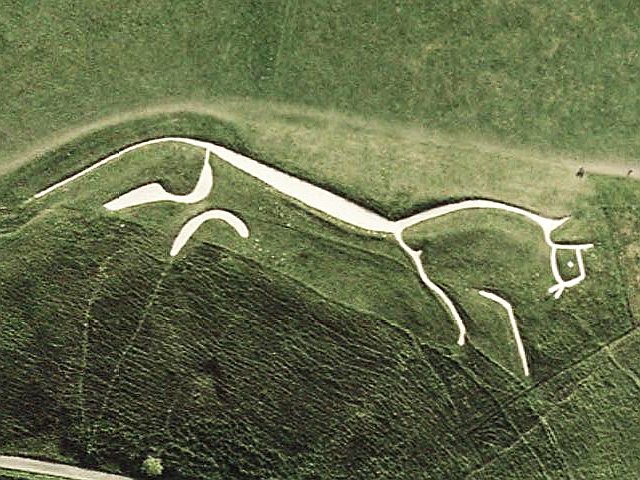
A white mare, a symbol of sovereignty, is a kingmaker because through her, the sacral king marries the sovereignty goddess, or the land itself. Giraldus Cambrensis described a "Celtic ritual, the king mates with a white mare thought to embody the goddess of sovereignty."—Wiki The millennia older Bronze Age white chalk horse of Uffington was also embedded in the folk memory of southern England.

The Bronze Age white horse of Uffington, on the Berkshire Downs in southern England, ca. 1400 BC.

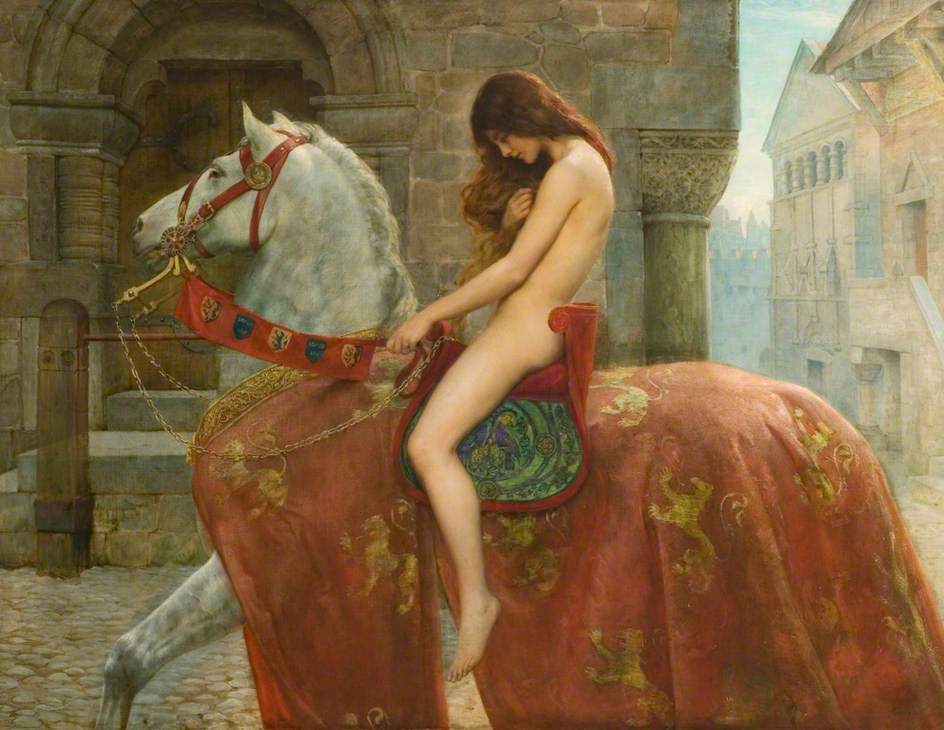
It's been suggested that Rhiannon is the archetype for Lady Godiva, and the nursery rhyme is about Lady Godiva. If Lady Godiva rode through Coventry town on a cock-horse buck-ass naked, where would she have hung her bells? Detail. Not buying it.

Lady Godiva by John Collierc.1897, note the white horse.—Wiki

To finish Rhiannon's story, though betrothed to Gwawl of Annwyn, Rhiannon married Pwyll, Lord of Dyved; at their wedding feast, she turned the jilted conniving Gwawl into a badger, and Pwyll bagged it—and thus, badger in the bag was born. There will be blood! Rhiannon was framed for her babe's murder, and forced to stand at the city gates wearing an asses' collar, proclaim to all that she killed her son, and carry visitors on her back like a horse into the keep. Throughout all the Welsh tales halo of birds is Rhiannin's enduring motif.
Ride a cock horse to Banbury Cross (or Coventry)
To see a fine Lady ride on a white horse
With birds as her halo and bells on her toes,
She will/shall have music wherever she goes.  
Note a distinction is made between She shall, or will have music versus She shall make music. Sorry, no date on this one either.

Banbury, Banna's 5th c. Saxon stockade in Oxfordshire, was built atop a 200 BC Iron Age fort at an ancient crossroads; it was the site of a battlefield between Anglo-Saxons and Britons in 556 AD.
The name Banbury derives from "Banna", a Saxon chieftain built a stockade in the 6th century (or Ban(n)a possibly a byname meaning ‘felon’, ‘murderer’, and "burgh" or settlement. The Saxon spelling was Banesbyrig. The name appears as "Banesberie" in Domesday Book. Another known spelling was 'Banesebury' in Medieval times.
Fittingly, Banbury has a Hobby Horse Festival. Hobby horses have a deep Epona connection, and in Wales, Cornwall and Somerset, they are associated with May Day, and Bealtaine celebrations (later moved to Christmas / New Year); Mummers PlaysMari Lwyd, and the Morris dance. Aka morisk, moreys, morisse daunce, it may mean a Moorish dance. But that may be a convenient assumption. First documentation in 1448 was a bill for seven schillings. There were definitely lots of bells on the Morris dancers' shanks' mares (shins). )

Welsh Mari Lwyd with Christmas ornaments for eyes.

Maybe the origin of the phrase With birds as her halo came from the Mabinogion recorded in the White Book of Rhydderch (scribed ca.1350, but from the 11th century), but I cannot find a reference to rings on her fingers, and bells on her toes in English translations. I did find this lovely line: "The birds of Rhiannon, they that wake the dead, and lull the living to sleep…"

Did the idea cross the Welsh border and enter into English? Lady Charlotte Guest's translation of the Mabinogion was published in 1877. Or is the line solely an English provenance? The English phrase is attested in English in 1745. Rhiannon's halo of magical birds of music didn't make an appearance in that edition, but the line with rings on her fingers and bells on her toes has managed to remain intact in English for at least 275 years. Maybe longer—though the wording is modern. It may be two different traditions merging.

How would an Elizabethan have said the phrase, or someone from the Middle Ages? (Surely they wouldn't refer to Elizabeth I, or Lady Godiva as old ladies!)  When does the phrase With rings on her fingers and bells on her toes enter into our language banks? The terminus ante quem question still begs and I'm far too lazy to drag my old bones to the musty basement of UC Berkeley's Doe Library, or Kroeber Folklore archives, to look up the rhyme like my folklore professor, Alan Dundes would expect of me. Maybe someday.

     *     *     *

Sunday, May 1, 2011

Mayday traditions at Lagunitas School


When I was young, we used to celebrate May Day at Lagunitas School, giving each other little construction paper woven May baskets filled with posies, and we had a Maday parade to the Maypole, weaving streamers around the volleyball poles. It was great fun. Sort of like a double Easter parade. Then it stopped—with no explanation—sadly, someone must've complained to the school board. I remember asking why we didn't celebrate anymore and was told to never mind. It was as if I imagined it.

The Maypole ribbon dance filled me with absolute wonder—even if it was crepe paper streamers—I got to go a couple of weaves—and soon the braided pole was a hopelessly tangled mess. Bit it was pure magic.

I think we had real satin ribbons one year. In second grade, I thought school was grand with Halloween, Thanksgiving, Christmas, Valentine's, St. Patrick's, Easter, and May Day celebrations. I liked school. Then we went secular. School became tediously long and dull—thanks to some knee-jerk Christians.

Sunday, November 14, 2010

WHY DID THE TOURIST CROSS THE ROAD?


Yearning for another time
we strutted along Petaluma Boulevard,
once the chicken capitol of the world,
and clucked fuck-fuck-fuck-AFF
to a startled gaggle of tourists
aimlessly clogging the sidewalk.
We arm-wrestled them down
to the ground with our eyes.
Reclaimed our turf, and moved on.

Halloween 2010, Petaluma

11/14/2010

Tuesday, December 11, 1979

Sonoma County Poetry Readings I produced in December, journal

Dec. 4, We produced a big reading at the Cotati Cabaret with Joanne Kyger, David Bromige, Jonathan London, Rob Sharpe, Michelle Rae, and myself, Maureen Hurley. The objective of the reading was to include Sonoma State student poets along with recognized poets. 

Dec 5, We had an Expressive Arts final event and show at Sonoma State with Jack Crimmins, as Coyote, myself, Greg Loew, Andrea Granahan, Rocco Tripodi and others. A poetry bounce.

Then, on Dec. 10, for our grand finale, we all met up at Garbo’s in Greenwood Park for a Public Poetry Center reading event with fellow Expressive Arts students Gregg Loew, Chaz Abate, Lana Costantini, and myself. We were bringing Sonoma State student poets to the Russian River Writers’ Guild. The reading went really well. Gregg and I had read together on Halloween for the Expressive Arts assembly, another solid reading.

I wanted to read on much longer than I had time for. So I read some new material, but I was conscious of Lee standing in the background and I was afraid I might reveal too much, or not enough. I dedicated my latest poem, The Sighs of Women to him as a birthday gift as it was his birthday the next day. We are beginning to move towards each other once again. The initial communication is clearer than his logical assumptions. I snuck into his bed at midnight and was given a warm welcome.

Other readings I attended, and read at Open mike. Dec 22 Grand Piano benefit reading for the Haight Asbury Literary Quarterly, and another HALQ reading on Dec. 28. Where? Joanne Hottchkiss

Friday, October 31, 1986

2 in class freewrites

I am the star of the sea
Among the waves of the ocean,
longest night,
more than the day,
only sorrow parts the waves.
I am never alone.
Who but I walks the planets.


Son which burns the fire.
Among the stars of the night,
lost in the battle of planets,
more than the breeze
which parts the fire.


In class freewrites found in a teaching folder, no idea as to when—ca. 1986-87. Probably from my CAC grant at Mark West School as that's when I developed the lesson. Around Halloween, as it was in the Song of Amergin folder. Or it could've been around St. Patrick's Day.

Since I'm short of work from 1986, I'll file it there.
added 10/16

Sunday, August 2, 2020

Covid journal, freeway wreck


I’m stuck in a rare traffic jam on 101 outside of Santa Rosa, so I contemplate the mundane roadside attractions, debris, new homesteads in the bushes, in the no-man’s-land between freeway and fence. The traffic jam eventually unveils its ugly secret. A big truck hauling a trailer, someone else’s home, did a 180° turn right off the freeway—facing back the way he came. The trailer crumpled like tinfoil, or a Coke can. The truck, still upright, with a starburst pattern in the windshield from someone’s head. 

Myriad cops circle the scene. I wonder if the couple survived. And I realize that though the driver did 180° turn going back from where he came, he can never go back there again. Was he yet another victim of COVID homelessness? As this pandemic continues on its inexorable path, more and more people are becoming homeless. It too is a pandemic. Seeking shelter wherever they can. During these dark days of summer, it’s not so much of a problem. Pitch a tent, or pitch a tarp. But come winter, then what?

And a jerk in the SUV, seeing a long line of cars, tries to pass me on the freeway shoulder, right in front of the wreck. He is part of the problem. Let’s just say hand gestures were involved all round. 

Some Sunday morning. Our new normal horizon keeps shifting its parameters. What was unthinkable a year ago is now the new normal. But hope is ever present, the Halloween maze corn is growing in the Petaluma field. Waiting for the maze to grow. A bleacher overlooks the green sea of corn. Come October, The Day of the Dead. How many, countless deaths by then?

Indeed, the gates of the Otherworld are open wide, waiting to receive us all.

Tuesday, November 1, 2016

Last sunset of the year (photo)


 Last sunset of the year,2015,  the Farallones from Point Reyes


A macaw-colored sky. Last sunset of the year, 2015, floating islands of the Farallones from the tip of Point Reyes, The air was so clear, it looked like you could touch them. They're part of Point Reyes' lost siblings. Soon the Point will become an island too. Island moving north.

It was the day I killed my camera, all the photos I took on Dec. 31, 2015, came out too dark, and were loaded with sunspots. but this one, with a lot of doctoring, gaudy as it is, worked. It breaks the rules. Never divide a photo directly in half, it's too static (unless it's the Farallones). Don't shoot clichés like sunsets and islands (unless it's the Farallones). 

Don't shoot in low light sans tripod, avoid pixellation and noise. Image was loaded with burned sunspots from pointing it at the sun, burning the processor. I don't think it'll recover. I was able to clone the sunspots out of the sky. But not the pixellation. Spots before my eyes in more ways than one.

I left one sunspot in the lower left corner as a reminder. The upper left corner of the photo looked like a pong table gone mad. Who knew that reflected water off Schooner Creek after 4 PM on one of the shortest afternoon of the year, would completely fry my camera in multiple corners? 

Nothing to be done about the whacked light meter, though. Fritz is its middle name. So even if I can save some of the photos, the digital noise renders them useless. Luckily with this photo, it doesn't matter. But just look at that water. Lovely pixellation. Which made it even harder to clone the sunspots out of it. You can see several patch jobs.

I've fried other cameras before, and undoubtably will fry more cameras in the future, and since the sunspots are usually in the upper corners of the sky, I took to shooting pohotos upside down(the camera, not me) to avoid the sunspots. 

Damage control was not possible this time. I was so distressed I didn't even look at the photos until six months later—hence the late posting. Editing was a nightmare. So this is a salvage job, at best.

from a Facebook post
February 4, 2016


Johnson's Oyster Farm—aka—Drake's Bay Oyster Farm requiem


This was the place where I thoroughly fried my camera shooting a low winter sun over Schooner Creek (it was a Johnson's Oyster Farm—aka—Drake's Bay Oyster Farm homage and requiem). 

My camera lost its mind. You can see a few sunspots in this photo. But it was so outrageous, I shot several photos, each image added to the overall sunspottiness. Not only that, after these shots, the light meter also went south. Or maybe it was north. Everything was underexposed. Nearly black images. Hundreds of them. Not much to be done about it. Except cry.

It was a suck it up Buttercup kind of moment. I used to cry whenever my cameras died...Quivery-lipped, I buried the images in deep dark folders. I still haven't edited this batch...

The Farallones photo and comment were from an old Facebook post, that I rediscovered and revised. Hence the odd posting date.

Day of the Dead, All Soul's Day, The beginning and the end of the Celtic year. Halloween is always hard, my grandmother, brother and mother all died right before Samhain. So, Samhain, All Souls' Day, and El Dia de los Muertos is a three-fold sorrow.

Thinking of my mother who wanted me to scatter her ashes off the Golden Gate, to drift to the Farallones. Maybe I should get someone to sail me out there, and be done with it, give her back to the sea. Who has a boat?

See also
Tomales Bay Photo I managed to save a few photos from hundreds.

Wednesday, October 20, 2021

Pre travel blues and reds


Well, I sort of dyed my hair red, as if in anticipation of of a redheaded friend’s floozy night out. Or Halloween. It began innocently enough, I got this non-soap shampoo called Cleanditioner, with temporary subtle red coloring that theoretically washes out—but, what I didn’t realize was that the tank was nearly out of water. And there I was trying to get it out of my hair. No water. Temporary, myazz. What a long strange day it has been. I will spare you the details of discovering how I found out we were out of water while I was trying to shower and to wash my clothes—I thought the washing machine broke. So I kept rerunning the load which came out dry every time. So now I have soapy dirty clothes, and I need them for my upcoming trip. I am also now a blazing carrot top. I look like Bozo the Clown. And to add insult to injury, we are finally getting our first real rain after many months of serious drought. Had I known the weather forecast, I would’ve just run out in the rain buckass nekkid like Boudicca, just to rinse my hair, while waving my grubby clothes at the moon. Hoping for a reprieve. Meanwhile my best travel jeans look like they scored a one-way ticket to Tijuana. Too bad I gave away my cowboy boots, is all I can say.

Saturday, November 21, 2020

A note on fire and the hair trigger of memory


Sunset, during the August Fire Complex was otherworldly 9/28/20

A friend posted a photo of her sanctuary, a couthy glowing fire pit, and I found myself overreacting to the image of fire. I seem have developed an adverse knee-jerk reaction not only to the odor of burning wood, but also to photos of fire. A knot of fear that begins in the gut, then it encircles the heart, begins to squeeze its fist.

I grew up with wood heating, we had no other source of heat. It was my job to stack the wood for the coming winter. There was a satisfying rhythm to that work. The tump and twist of wood into a puzzle measured by the cord—4 x 4 x 8’ or so. As we laid in the wood, we’d venture to guess if it would be a two, or a three-cord winter. The wood stacking ritual marked the closure of one season, and the entrance to another—and to my birthday. 

I am no stranger to fire, I live in a house with woodstoves, you’d think I wouldn’t react to fire, or to woodsmoke. But I do. I used to love sitting close to the fire on cold winter days, the fire warming my face until my cheeks pulsed and throbbed. I was mesmerized by the strange hypnotic choreography of dancing flames. And seeing the heartwood, the distinct tree rings, their age cut short,  illuminated in the embers. Each tree ring, a birthday in the long count of time.

Yesterday I found a long-forgotten low fired pinch-pot I had fired in our fireplace long ago, it triggered memories of gathering and refining the clay, wedging a mixture of blue and iron rich clay into patterns, pinching it between thumb and finger, then firing it, lifting it from the ash, smothering it in husk and straw to cool slowly so it wouldn’t crack, silica annealed into the hardness stone.

This is the first year that the odor of smoke has affected me. Not the Tubbs Fire, the Paradise Fire, nor the Kincade Fire, but this fire season, beginning with the Walbridge Fire, and ending with the August Complex fires. It’s almost like having my own personal PTSD switch. A hardwired fight/flight syndrome kicks in. 

I first noticed it acutely around Halloween. Those pumpkins. Candle smoke, paraffin, a petroleum byproduct, diesel tinged with the odor of baking pumpkin pie. The mouthwatering thought of Thanksgiving, and things benign. Then begins the mental hell, checklist for evacuation. What to save? I have barely unpacked since my last evacuation. These are my sins. Always at the ready. Samhain, the gate to the Otherworld, open, always by fire.

Ever since the wildfires, I have been scanning and digitizing decades-worth of prints and negatives. Most of my writing and art is already scanned—except for my travel journals on the back burner. Soon. Sometimes I dream I am evacuating again. I sleep with my wallet, MacBook and hard drive within arm’s reach, my keys are already in the car, which doubles as a large go-bag. 

I have to talk myself out of my own tree when the terror begins. I run off a quick mental checklist to convince myself it’s merely woodsmoke from a fireplace. I remind myself it’s a benign, warm, cozy odor. I find that identifying the type of wood helps. Oh, that’s hardwood, that’s crisp black oak, pungent sizzling bay, or fruitwood. Apple or cherry? 

Mmm, applewood fire, the most pungent, the most extraordinary of odors. The secret heart, the perfume of a thousand apples released all at once like flocks of wild birds. The overwhelming odor of orchards in late summer. Mesquite barbecue. Bacon. Clean, pungent, mouthwatering gracenote. 

Someone in the neighborhood burning coal? Sniff sniff. I have the nose of a bloodhound. No, just the rotten bouquet of woodsmoke when the fire dies out. Someone needs to clean their chimney. Wildfire smoke is more complex, nuanced. More creosote laden. Greasy, acrid, but more electrical, with a slight overtone of burning brakes. Like the ember fall and the acrid ash blizzard that descended from the Glass Fire, covering the foliage with a strange blanket of snow.  

My relationship to fire has changed utterly. This year, our extraordinary sunsets came at such a cost. Fire is its own entity, far beyond our feeble attempts to comprehend it, and certainly far beyond our scope to tame it. As a child I was utterly in love with volcanoes, the secret heart of fire within the earth. Later, I watched molten rock plunge into the sea. Sublime beauty, and corrosive air, acrid rain. A terrible beauty.

These days, I see myself as if from the outside looking in. Bearing witness. The fire within burning bright. All I know is that there will be a prime factorization of proverbial candles on my birthday cake this year. I am mesmerized like a moth to flame. Fire-sign to the very end.

CZU Complex fire, Big Basin burning


Sunday, September 1, 2002

Labor Day Monologue

Did you see that? I can’t believe they lost the damned flag. It says right here they lost the flag from Ground Zero. What they gonna do for a flag? They gotta have a flag for the ceremony. It’s nearly upon us, the anniversary. I bet someone took it as a souvenir or something. How they gonna commemorate it?

Seems like we got two Memorial Day weekends now. One in May and another one in September. Some people still got their flags up from last year. Like ragged birds. Well, Labor Day’s pretty much lost itself in the hubbub of time anyways. I mean, now, everybody goes back to school BEFORE Labor Day Weekend. Used to be the end of summer. Labor Day. Last fling of summer. Last chance at a holiday before the old salt grind begins again.

Labor Day belongs to the past. Back then when things had proper beginnings middles and ends. Not like today where everything slides into each other so fast you don’t hardly know where you stand. Now folks are putting Christmas ornaments up right after Halloween. In my day at least they used to wait till after Thanksgiving.

Most folks are too busy shopping to notice how they’ve already forgotten what Labor Day stands for anyway—other than a big sales weekend. Like Memorial Day. I hear it’s gonna be made into a flag holiday, You know, the clerk at the mall said things were pretty slow on account of 9-11, but just you wait, soon it will be a shopping holiday like all the rest. The malls will be packed. They oughta just call them mallidays. Tht’s what it’s about. Buy, buy buy. They say that was what was buggin’ the Muslims. All that buying. I think they’re just jealous.

What’s the point of still having Labor Day Weekend? They oughta just knock it right off the calendar. It’s just cluttering up another one of those little squares and we need to make more room on it. Besides, at the schools, the teachers don’t even come back from their holidays early but they send some poor lackey in to hold court. No matter that the students had to cut short their holidays in order to get to first day of class or lose their places. Some jackassin the University miscounted and we got 2000 extra students with no place to go. No room at the inn. All fighting for classes. Talk about labor!

No, Labor Day will slide right into 9-11 and soon we’ll forget it ever existed. We already lost May Day. Who knows what IWW stands for anymore? Buncha Commies and Wobblies. And the real May Day with its Maypole and May baskets was a rival of my affections for Easter. But the Christians got upset over that. Said it was Pagan. What was so pagan about bringing your teacher a basket of flowers?

Me, I never been to New York. But I think Labor Day is quintessentially New York. Don’t ask why. It’s just a feeling I get inside. Labor Day always makes me think of the East Coast. Long Island. Places like that. Back when people had summer houses and got away from the city. Guess that always meant New York. Seems like everybody who could, got outa New York in summer. Too hot in the kitchen.

Yeah, it makes me think of the days when people had a proper sense of time. Respect for things. Like sitting down to Sunday dinner. Chicken every Sunday was something to look forward to. It meant something. Now everybody eats on their own schedule. Out of boxes you zap in the microwave. NO more home-cooked meals. No sir. That’s a thing of the past. An artifact I say.

Did you know the Smithsonian is having an exhibit on stuff saved from the Towers? They got a whole fire engine door from Brooklyn. All red, white and blue like the flag. Only it’s got a yellow stripe in it too. But those firemen weren’t yellow, no sir!. They was brave. Real heroes. I always wave to firemen now ‘cause I get all choked up and teary-eyed inside. Never forget. That’s what my Irish granny always said about the English, you know. Never forget. Or history repeats itself.

They found some guy’s camera all melted in the rubble. The guy had no more need of his cameras. But what was weird was that the camera was OK. I saw a picture he took before the North Tower collapsed on him. I swear there were ghost shadows rising up from the towers. Like those pictures of Dresden after the bombing. And I thought of all those ghosts having to learn how to fly. It was plumes of smoke and dust from the towers. I remember seeing a picture where people’s shadows were burned into walls at Nagasaki like indelible angels.

And now everybody is asking each other: How did you witness 9-11. It’s like the day Kennedy was shot. An event for the next generation to pinpoint in time. Some things are indelibly burned into the retina like film in a camera.

They have this section of a steel girder in the exhibit that’s twisted like a negative image of Brancusi’s sculpture of birds. You know that one you always see in all the art history books? It always caught my eye. At first I didn’t get it, a column of steel rising up—how could it be birds? But then something happened, one day I didn’t look at it head-on, but from the side, and I swear I saw the steel was like a mass of birds rising up to the sky like a plume of smoke. Like angels bearing flags.

©2002 Maureen Hurley