Showing posts with label Celts. Show all posts

Monday, January 29, 2024

About those wild mustards

With thanks to Ellin Barret who first piqued my curiosity for this post.

Because a friend posted this meme, I was off and running. So I decided to let my fingers do the walking through Wikipedia to resolve for once, and for all, the differences between the escaped feral “wild” mustards that ravage the California landscape in spring. And yes, we do have several rather diminutive native mustard species.

What I discovered is that there was not one species, but over 30 separate species of “wild” mustard plants or brassica. And very few “wild”mustards are actually wild, they are almost all feral. Our most favored mustard species, Eurasian Brassica oleracea, that the ancient Celts and Romans were so fond of, gives us those yummy cultivars (all from the same species, like a breed), including kale, cabbage, collard greens, broccoli, cauliflower, Brussels sprouts, kohlrabi, etc.

Although some species of mustard plants were established crops in Hellenistic and Roman times, there are few archeological records. Wild forms of mustard and its relatives, the radish and turnip, found over Eurasia, suggests domestication took place in that region. However, Zohary and Hopf conclude: "Suggestions as to the origins of these plants are necessarily based on linguistic considerations." The Encyclopædia Britannica states that mustard was grown by the Indus Civilization of 2500–1700 BC. —Wiki

An Asian mustard species from the Hindu Kush, Brassica rapa, one of the first invasive field mustards to bloom in California, gives us bok choy, Napa cabbage (really Beijing cabbage!), rapini, turnips, canola oil, etc. More on native and invasive mustards here.

Highly invasive black mustard or Brassica nigra is the most common species found in California. The seeds were theoretically brought here by the Franciscan friars scattering mustard seeds as they walked from mission to mission—bits and seeds of B. nigra were found in adobe brick made in the 1700s. 

Also, according to the scriptures, tiny mustard seeds were held in high regard because though the seeds may be small, their potential for growth is enormous; to enter the kingdom of heaven begins with faith. Jesus was reputed to have said:

"For truly I tell you, if you have faith the size of a mustard seed, you will say to this mountain, 'Move from here to there,' and it will move; and nothing will be impossible for you." (Matthew 17:20-21)
Nearly all Brassica seem to have one thing in common, a four-petaled flower shaped like a cross, hence the name cruciferous vegetables. Even the diminutive jewelflower species of California, Nevada and the Southwest have four petals, but they are so tiny, they are nearly invisible. 

No matter how you feel about invasive species, I must admit that it is pretty stunning when entire hillsides are solid yellow with mustard in spring. It’s a great cover crop, conditions the soil (and kills pests.) But it is so invasive that it also smothers all native species—including our diminutive milk maids, and vigorous California poppies.

And yes, we do have many diminutive native California brassica species according to iNaturalist. My personal favorites are a magenta wallflower, or rockcress, milk maids, desert candles, and the crazy stripped-down endemic jewelflowers—some species so rarified they only grow in one small patch in the world. It seems that each mountain range has its own species of jeweleeed—and most are endangered species.

And closely related to black mustard, and B. rapa, the Brassica napus or brown mustard species, aka rapeseed, also gives us canola oil, Siberian kale, and rutabagas. Originally from India, it spread to Asia and farmers diversified it by developing cultivars. It's a really popular cover crop in Ukraine along with those heliotropic North American sunflowers. 

Yes, North American: Helianthus annuus—though they were first domesticated and cultivated by Native Americans 4500 years ago, they were commercialized in Russia and Ukraine. Sunflowers and mustard are important sources of vegetable oil. All that oil to fuel the world. We won’t discuss the atrocities suffered by mustard gas unleashed by the Germans at Ypres during World War I.

The ancient Romans not only invented fish sauce (of the Worcestershire persuasion), they also might have invented mustard as a condiment (the Egyptians also used mustard) by mixing ground mustard seeds with grape juice (called “must"), thus giving us the word mustard!

The word "rape" came from Latin for turnip, rāpa or rāpum, Greek word ῥάφη, rhaphe. The Romans were quite crazy for their cabbages. 

Radish means root in Latin. Apparently Egyptians were noshing on radishes before the Pyramids were built. Perhaps the workers were fueled on by radishes and salt. After all, the Romans paid their workers with salt, which means salted cruciferous greens, hence the word salary.

Meanwhile, the French are still buttering and salting their radishes. Forget about that sinus cleaner, Japanese wasabi. Medieval Germans were so crazy for radishes that they grew them bigger and better. Imagine massive 100-pound radishes ravishing the countryside. Radishes, not mustard, were the first cruciferous crops introduced to the Caribbean in the 1500s.

Brassica oleracea probably came from Crete. Or it was a stowaway on Jason’s Golden Fleece. The Greeks too were so mad for radishes (which probably came from China by way of Egypt), that they made little gold radish talismans to offer up to Apollo. Why the sun god needed radishes is anyone’s guess. You’d think horses or chariots or wine would’ve been a more practical gift. Ok, I’ll stop rooting around now on Wiki.

Note bene: I never know where writing ideas will come from. It always catches me by surprise! When I was a child, I was always making equivalencies, that is relationships between things—especially plants and animals. I guess some things never change. When I finally adulted (some could clain that I am still attempting to achieve adulthood), I discovered most of my correlations were spot on. 

At one point, I thought all that wild mustard was native, and it was only one species. When I joined a California naturalist group, I learned that there were more than one invasive mustard species, and that’s probably the thing that spurred me on because I cannot tell the difference between field mustard and black mustard, it’s all mustard to me.

Monday, September 9, 2019

Kiger mustangs carry rare Iberian Sorraia mtDNA


A chalk drawing on a broken school desk I made for an art show.

Someone posted on Facebook a photo of dun-colored Kiger mustangs, a horse that carries a rare mtDNA recessive dun-color gene from Iberia, and I fell down the Google rabbithole. I noted the phenotype was similar to the endangered Iberian horses related to the Gallego, and Sorraia breeds. The Southeastern Oregon Kiger mustangs were originally flagged as being unusual because of their dun coloring. Instead of shooting the mustangs for dogfood, someone thought to sequence their mDNA. So, being a horse of a different color literally saved a rare genetic pool from extinction.

BLM photo of dun Kiger mustangs in southeastern Oregon

The BLM photos of the Kiger mustangs made me think of the autochthonous, or Neolithic CeltIberian Sorraia (closely related to the Marismeño) horse, also with rare mtDNA markers. Coat coloration was the clue. Horses that are dun colored (a bay, or chestnut dilution gene), or grey-dun grullo (an even rarer black dilution gene—neither roan, nor grey) not only carry a primitive recessive coloration gene, they often have dark faces and points with pangaré markings, body mottling, zebra-striped legs, and dorsal stripes—a primitive dun horse trait similar to those tarpan-like horses represented in paleolithic cave paintings. Their manes and tails are often bi-colored with white guard hairs and black upright manes like that of the feral Polish Konik horse, and the Heck. The wild Przewalski's horse has a solid black upright mane and tail.
Many equines appearing in prehistoric cave paintings such as in Chauvet cave are dun, and several closely related species in the genus Equus show dun characteristics. These include the Przewalski's horse...and an extinct subspecies of horse, the tarpan. —Wiki

Chauvet, Ardèche, France, 31 000 BP —Wiki

Contrary to popular belief, Spanish and Portuguese explorers didn't ship their prized Baroque Andalusian horses to the New World. Instead, they sent primitive native horses on long ocean voyages that lasted two months or more. Hardy and resistant, unlike the valuable blooded horses preferred by the nobility, those diminutive horses captured from the fens and marshes of Portugal, were practically breathatarians, and  could survive the harshest of conditions, and subsist on little food or water.

Paleolithic artwork in Lascaux II, note the horse is pacing, not trotting—Wiki
Because the native ponies weren't valued as blood animals, they also nearly became extinct in both the New and Old Worlds via neglect and distain. The Sorraia was once hunted for food, and the Exmoor ponies of Britain was used for target practice during WWII, they were a source of illegal meat in the cities. During the 1970s, the BLM was infamous for slaughtering entire herds of mustangs for dogfood. And their nearest ancestor, the native American wild horse was probably also hunted to extinction during the Ice Age.

Saturday, November 17, 2018

A note on Medieval spices

The early Medieval era, when the Irish epics were first recorded, wasn’t quite the gastronomic desert we imagine it today. Sorrel sauce, and sour verjuice was used to flavor meats, as were rose hips, sloe plums, bitter cherries, crabapples, pears, huckleberries, bilberries, bog berries (a type of cranberry), and juniper berries; coriander seeds were used, as well as caraway, fennel, and mustard seeds; lots of pot herbs were used, such as young tart pine needles, heather, woodruff, and many types of mint—also mushrooms, garlic and onions. Rose petals were a popular dessert flavoring too.

Caraway seeds and greens were used, both as a spice and a pot herb. Any Roman potherb or spice that was introduced and easily grown in Britain would also have been readily available. Main spices used during the British Middle Ages were introduced during the Crusades, but some were introduced to Britain by the Romans. Roman cooks traditionally used aromatic herbs (dill, coriander, cumin, chervil, laurel, carrot, parsnip, lovage, rue, anise, mint, mustard, oregano, savory, myrtle...). I would imagine rosemary was also used as well as geranium and carnation, or pinks. Spices included pepper, silphium or laser, saffron, turmeric, cardamom, ginger and nard. Cinnamon was considered a medicine. I imagine clove was also a medicine, as was sugar!

I once hosted a medieval Celtic feast for my final project at UC Berkeley, using traditional ingredients. Toasting the oats for shortbread produced a strong vanillan flavor, as would using fresh pine needles, etc. We discovered that leached ashes were also used as leavening agent, when eggs weren’t available. Kind of a primitive baking soda, or powder. (See pearl ash, or potash—there's a reason why it's called potash!)

The medieval Irish roasted their oatmeal, and then flattened the hard grains in a saddle quern (think rolled oats) before making their famous griddle cakes. Roasting the oatmeal imparted a strong vanillan flavor. Just because we think of vanilla as a modern flavor, it doesn’t mean the compound itself didn’t exist in other foodstuffs. Epic hero Cú Chullain roasted his oatmeal on an iron griddle for his oatcakes before going into battle. Medieval Britons primarily used rose water, etc., and later saffron, as a custard flavoring.

In Germany and Scandinavia, during the end of the Middle Ages, powdered deer antler was also used as a leavening agent (ammonium carbonate) for hard cookies such as Springerle, Liebkuchen, and Hartshorn. (Leavening could also be made by distilling hair or decomposed urine.) Apparently the ammonia odor as they were cooking was memorable. Cookies as strong medicine....

Contrary to popular belief, Essex was not the original place where saffron was cultivated. Greece, maybe. It comes from the Middle East, especially Iran. Saffron is a Persian word. Saffron was the costliest of all medieval spices, more costly than sugar. The English word "saffron" probably stems from the 12th-century Old French term safran, from the Latin—safranum, from the Arabic za'farān, from the Persian word zarparan meaning "flower with golden petals".

Saffron as a color is also mentioned in medieval Ireland as a dyestuff, but other plants were also used to achieve that color dye, including gorse and brassica. The color itself, regardless of its plant origin, was called saffron, which is a well-attested classical reference. It doesn’t refer to the edible crocus sativus, as the edible crocus is not native to Britain. And it sounds like crocus wasn’t introduced until ca. 1560, when the bulb first appeared in the Netherlands. It didn’t become a common garden plant in Northern Europe until ca. the 1620s.

Speaking of medicine, you can get a fair indication of spices used during the Middle Ages by looking at the medicinal cures from the Middle Ages...Rosa Goidelica. (now I can't find a reference to it....I know it exists as I once spent an afternoon reading it in the Rare Books basement of the Doe Library at UC Berkeley). One of my favorite recipes for a toothache, eat a cinnamon-infused chicken—but it must also be eaten at the crossroads. Apparently saffron rice was another medicinal favorite. Wherever  did they get the rice from? That sort of dates it, timewise, along with noodles—to the age of Marco Polo.

Any spice popular in Rome would’ve made its way into the cooking pots of Britain. The Greeks and Romans were aware of cardamon (a member of the ginger family) and used it as a perfume, and it was well known in Egypt and the Middle East. The Indian spice could’ve been reintroduced by way of the Vikings several centuries after the Romans pulled out of Britain.

Thursday, July 28, 2016

Those Irish-Iberian Connections


There's an article on a webpage, Signs of the Times (Sott.net—The world for people who think) from 2013 that gets trotted out regularly on Facebook,  DNA shows Irish people have more complex origins than previously thought, that, for some reason, pushes my buttons. I suspect that it's the way it's written that froths my dander, more than anything else.

This is my off the cuff response to the article: I need to go back and synthesize it, until I find my way with it. Now I don't have a through line. Working on it.

I wrote: This article/writer needs to be taken with a grain of salt (or read carefully) in that what it's trying to point out, and what it actually does point out, seem to be two different agendas. It's a bit of a rehash. Or maybe a mishmash.

RE: the statement that "The blood in Irish veins is Celtic, right? Well, not exactly.... the Irish are close genetic relatives of the people of northern Spain." OK, here's the argument she's making. Thesis statement, if you will.
 

However, there needs to be a qualifier: yes, there's a link with Galicia, a known Celtic country, not with Spain, nor Basquelands, either. Bronze Age Iberia was mostly settled by Celts who spoke Gaulish, fergawdsakes, of course there would be genetic links. Ditto that with Northern Portugal too.

The Irish are not related to the Spanish (or Portuguese), they're related to an ancient group of Celtic  peoples (pre-Spanish), some of whom who still inhabit the northern parts of the Iberian Peninsula. 


The minute you mention Spain, everybody immediately jumps to Basque links—no, they're not related, and certainly not linguistically related. Then they jump to Black Irish, and ridiculous Spanish Armada links. The persistence of myth is hard to eradicate.

The author goes on to say: "the latest research into both British and Irish DNA suggests that people on the two islands have much genetically in common."

Yes. We're still talking about Haplogroup 1 (or Rb1—related to the redhead gene) here. Same as the Keltoi of Central Europe. Didn't she just claim the opposite?

My main gripe: there has never been a conclusive genome map done of the entire British Isles by one scientific group. Not like what was done in Iceland. That needs to be done first, before sweeping conclusions can be made. Not isolate genome bits here and there, with piecemeal theories pastiched together.

"Many people still refer to Irish, Scottish and Welsh as Celtic culture." (This is what I think she's trying to refute via ethnicity).

They still are culturally related, this article proves nothing. Culture is defined by many signatures, and not all need to be present at once: language, ritual/religion, DNA, etc.

Let's look at the larger use of rhetoric. The scope of the article. Her stance: Irish are not the same as British. Therefore they're not directly descended from the Keltoi of central Europe. Ergo, also not related to the British. This article was written in 2013, by someone in Northern Ireland. So what is her point? The case she's making? Otherness? Why? What purpose?

FWIW, I have books on the history of the Celts dating back to the 1990s and earlier that acknowledge that there's an Iberian (not Spanish) connection with Ireland. But it's not the only Celtic connection. I don't think the Central European Keltoi La Tene artistic links came from Iberia. Just sayin'.

Also, there's linguistic evidence in Ireland of both P-Celtic and Q-Celtic languages, via tribal and placenames, which suggests a much more complex picture of Celtic migrations than what's painted here. But it's a start.

Monday, June 13, 2016

On Finns and Celts


A comment from my Viking-Irish Redhead Gene Myth post turned into a long blog post of its own. So I decided to repost it here. I may or may not get around to fashioning it into a story so these are notes.
Arhi Kuittinen Finnsanity said...
Mother of European culture is Finnic culture.
Blue eyed, blonde and red haired ur-culture. Finnish language is the oldest language in Europe.
"Vikings" were originally Kvens, Kveenit, the biggest Finnish Tribe years 400-1100. Popes robber barons made unholy big crusade to the Finland 1100 and ended the oldest culture in Europe which was called by Greeks Hyberborea. Finland was the last who standed against pope and Vatican.
King word is from Finnish word Kuningas.
Queen is from Kven word, "She is Kven".
Apollo cult hwrote about nordic Hyperborea the home of Greek knowledge and religion.
20 the most old written history text about Europe speaks about Hyperborea.
Blue eyed sea people destroyed Egyptian culture in Ramses III times - Ramsesses and Seth I were red haired Finnic Pharaos.
In China oldest mummies are red haired Finnic - N1C1 genetic line.
Silk road was Finnic project by these white skinned Finnic mummies.
Moscow and every big European city were originally Finnic town and commercial place.
In England there was Finnish names and Towns like Caleva.
Druids were continuing and developing original Finnic rituals but the language changed during 10000 years.
In Stone Henge there is both Moon and Sun ritually respected - that is Finnic cult, holistic feminine cult. "Hengettäret".
In Finland you can found 35 OLDER stone henges' ruins, Jätinkirkko, 5500 years old astronomical temples.
Lord Of The Rings -book is based on Finnic tales "Kalevala", Battle of the warlocks, etc.
Now you know something about the root of the European culture.


Maureen Hurley said...

LOL, Arhi Kuittinen Finnsanity, you've certainly conflated many, many cultures—not to mention time-zones, and millennia (Neolithic Stonehenge to Medieval Vikings), to support your theory, with no sustaining facts whatsoever. But thank you for your close reading, and comments.

For what it's worth, Stonehenge predates both the Finns and Celts. It was not built by the Finns (or the Druids, for that matter). Every culture on earth worships, or has worshiped the sun and the moon. And most cultures have created celestial, or astronomical temple calendars. The Finns didn't invent the idea. Whether Stonehenge was built by blue-eyed blonds, is moot.

Lithuanian-American archaeologist, Marija Gimbutas said the pre-Indo-European Neolithic and Bronze Age cultures of "Old Europe" were the builders of Stonehenge, etc.

The Greeks were not referring to the Finns when they wrote of Hyberborea. The Hyperboreans were a mythical idyllic people who lived forever, "beyond the North Wind," in a land of eternal spring, where there was no war, or strife. That definition says more about the Greek state of affairs, than it did about Finnic culture.

Whether you read the works of Homer, Pindar, or Herodotus, the Greeks were referring to Hyberborea ,a land north of Thrace, BTW. Roman historian Plutarch connected the Hyperboreans with the Gauls. Hecataeus of Abdera further claimed that Hyperborea was Britain.

Pseudo-Scymnus wrote that the hero Boreas, for whom Hyberborea was named, dwelled at the extremity of Gaulish territory (Britain). Hyperborea was one of several terrae incognito. One of the unknown, unmapped realms.

BTW, during this timeframe there was no such thing as Finland. From the 12th c., onward, Finland was part of Sweden. When Adolf Ivar Arwidsson (1791–1858), proclaimed, "we are no-longer Swedes, we do not want to become Russians, let us therefore be Finns," the idea of Finland was born.

The term "Nordic" does not refer to Finns. As you said, Finns are another culture. Nordic means Norse. As in Norseman. It can refer to five separate countries, from Greenland to Denmark. The word Viking can mean raider or pirate, and it's not a Finnish word. There were viking raiders of many cultures, including the Irish, though the Roman term was Scotii.

The relationship between Finnish and the Indo-European Scandanavian or Celtic languages is scant, as Balto-Finnic is a completely unrelated branch of the Uralic language family. Kuningas is from Proto-Finnic *kuningas, which was borrowed from Proto-Germanic *kuningaz. Finnic, a conservative language, even preserved the Germanic normative singular case.

As to Egypt, there were Celtic mercenaries during the reign of the Ptolemys, who were Greek, not Finnic.

Nor were the Tocharians of the Taklimakan Desert Finnic. Their language, Tocharian A, was Indo-European, not Finnic, it shared many linguistic similarities with Irish, both highly inflected archaic languages.

The specific sheep wool found and the style of plaid twill weaving reflects that of N. Europe, what is now Germany, then a Celtic, or Celto-Germanic region. (We know of this because of placenames, and personal names, as recorded by Tacitus, and others.)

Since you mentioned genetics earlier, by blood, the genetic bond between Finns and Swedes is closer than, say, the Finns and Irish. Haplogroup N1c is found in northeastern Europe, Siberia, and the Far East. It's a descendant of an East Asian macro-haplogroup. Uralic N1c1 is found in Samoyedic (Nganasans, Enets, Nenets and Selkups); and Finno-Ugric (Finno-Permic: Baltic Finnic (Finnish, Karelian, Estonia, etc.); and Permic: (Komi, Udmurt). Saamic (Saami), Volgaic (Mari, Mordvin), Ugric, Hungarian, and Ob-Ugric (Khanty, Masi). The Baltic Finnic branch is related to the migration of the N1c1a1a1 (VL29) group.

As to the Tarim Basin mummies, I don't know where you got your information from. Please cite your sources. The paternal lines of male remains belongs to Y-DNA haplogroup R1a1, and a later Tocharian haplogroup genetic signature is R1b-M343.

You're right that Tolkien used Finnic sources. The Silmarillion is partially based on Finnic tales recorded in the "Kalevala" (which is a 19th c. construct from folkloric fragments from Karelian, Estonian, (Baltic), and Finnish oral folklore and mythology. But it was compiled into epic verse by Elias Lönnrot, who also coined the name, "Kalevala."

Like Scottish poet James Macpherson's Ossian Cycle, so influential in the development of the Romantic movement, the Kalevala is not an authentic, replete tale unto itself. It is a quilt, a pastiche. LOTR was also heavily based on Welsh and other cultural (read Celtic, and Anglo-Saxon) mythologies as well.

The Romantic movement emphasized emotion as an authentic source of aesthetic experience, vs. rational, or Classicist ideals: not inclusive of history, anthropology, nor archaeology. It was the birth of the ideal of the Noble Savage, and epic folk hero—which ironically, stemmed from the ancient Greek writings. Full circle.


Sunday, December 6, 2015

Walk through the British Museum using Google Street View


When I went to the British Museum more than a half lifetime ago, I got lost in the bowels, somewhere between the Roman coins and the Elgin marbles, and lost all track of time. I had to run through the rest of the museum before it closed. I streaked by Peter Paul Rubens. All those fleshy apparitions.
But now using Google Street View you can  Walk through the British Museum without going to London
I spent hours virtually wandering these halls. Luckily I had the presence of mind to save the URLs. I've made some pitstops below. It's super easy to get lost via Google Street View. 

Ireland & Celtic Europe, where I spent most of my time in the Museum, but it was dark, not like this wonderfulk well-lit display.


Saturday, November 21, 2015

A Response to a FB Post Conflating Vikings with Bronze Age Celts

((Note bene: Because this piece begins in medias res, right in the middle of things, it doesn't have an introductory lead-in paragraph. I didn't know I was going to get so involved in it, or I would've saved the Facebook poster's statement. At one point, in her attempt to equate all things Celtic as Scottish, she conflated Vikings with Bronze Age Celts, by then, I was gnashing my teeth. Hence this bloggy bit. Of course, at this point, I'm writing into the void, as she'll never lay eyes on this post. Hopefully it will entertain you. There are some cool maps at the bottom too. This is how my Irish redheads blog evolved as well. In bits and pieces. Unlike Athena who sprung, full grown from Zeus's forehead, I have to ramble about to get to where I'm going—and I often know not where. And so, here we are, together again.)


Dear Historically-Challenged Reader,

The Vikings were LATE on the Irish cultural event horizon by nearly 2000 years. They had less influence in Ireland than what they were given credit for. Not only that, they were quickly assimilated in Ireland.

That's what happens when you marry Irish women, their children are half Irish, whose sons will who marry more Irish women, so they're now only 1/4 Viking in two generations. You see where that goes—since the Vikings brought few Viking women to Ireland.

And Viking power waned after the Battle of Clontarf in 1014 at the hands of Irish High King, Brian Bóruma mac Cennétig. If the Norsemen hadn't attempted to impose taxes in Munster, then, Irish history might have been different, then Viking influence would have had a profound impact.

Viking heritage in Ireland is but a drop in the bucket of time. Viking settlement and rule lasted roughly 200 years. And of course, those Icelandic Vikings had a lot of Irish ancestry, as the migratory brunt came from the Dublin Norse stronghold. See  the Icelandic Laxdæla saga, and Burnt Njall's saga, etc., rife with Irishmen and Irish women—most favored as slaves and feisty concubines.

Yes, the Vikings did settle permanently in Shetland, but the Celts (and pre-Celts) who lived there before the Vikings arrived, never actually went away. There's the historical misnomer. (Lots of Celtic DNA survives to this day.) Ditto with the Viking settlements in the Hebrides, and the Isle of Man. The Celts, or more technically correct, the Irish Scoti as they were called (which does NOT mean they were Scottish, but Irish), eventually drove the Vikings out. (Battle of Largs.)

Also that marrying/taking the Irish women thang, applies here too. Somerled, Lord of the Isles, was more Irish than Viking by blood (and by allegiance). The Norse-Irish culture was hybrid, not just Viking.

BTW, the word Scotland comes to us via Latin naming by way of Ireland. Scotia Major was Ireland, and because there were so many Irish living in what is now called Scotland, which was known as Scotia Minor until the 11thc. and the term was still used up to the 16th c.).

Isidore of Seville in 580 CE wrote: "Scotia and Hibernia are the same country." Adomnán, St. Columba's 3rd cousin, referred to the Gaels as Scotti.

It wasn't until the 15th c., that Pope Leo X (1475-1521) decreed that Scotland was, well, Scotland, and as such, had exclusive right over the word Scotland, which resulted in a huge landgrab as the English-Scots took over Irish monasteries on the Continent (i.e., Schottenklöster Irish Benedictine monasteries in south Germany taken over by Scots.).
Schottenklöster (meaning "Gaelic monasteries" in German, singular:Schottenkloster) is the name applied to the monastic foundations of Scottish and Irish missionaries in Continental Europe, particularly to the [Irish] Benedictine monasteries in Germany, which in the beginning of the 13th century were combined into one congregation whose abbot-general was the Abbot of the Scots monastery at Regensburg. —Wiki
So there must've been internecine Irish/Scottish/English squabbling over who owned what, and perhaps some genuine confusion, for a pope to adjudicate as to what country owned the placename. The Irish monks got kicked out of their own monasteries; I'm sure there were some seriously irritated Irishmen. I bet full coffers were also at stake.

So, the next time you notice that Lindisfarne is referred to as an Anglo-Saxon monastery, that's propaganda, the polar opposite of historicity, at work. It was an Irish founded Hiberno-Saxon venture. But I digress. (If Blogger had a sidebar, this would be encapsulated, but I don't want to start another post.)

Where was I?

As to your note on the Viking and Irish similarities in artwork, therefore the Vikings must've taught the Irish how to utilize knotwork design, the Irish practically invented it! The La Tène culture, the source behind a lot of Irish art, equally predates the Viking era by 2000 years. A lot of native British Celtic art is erroneously attributed to Anglo-Saxons in Great Britian, who also predate the Vikings. (The Irish and the Britons shared many cultural traits, including artifacts. Then there was the British-Irish_Anglo-Saxon hybrid culture that followed.

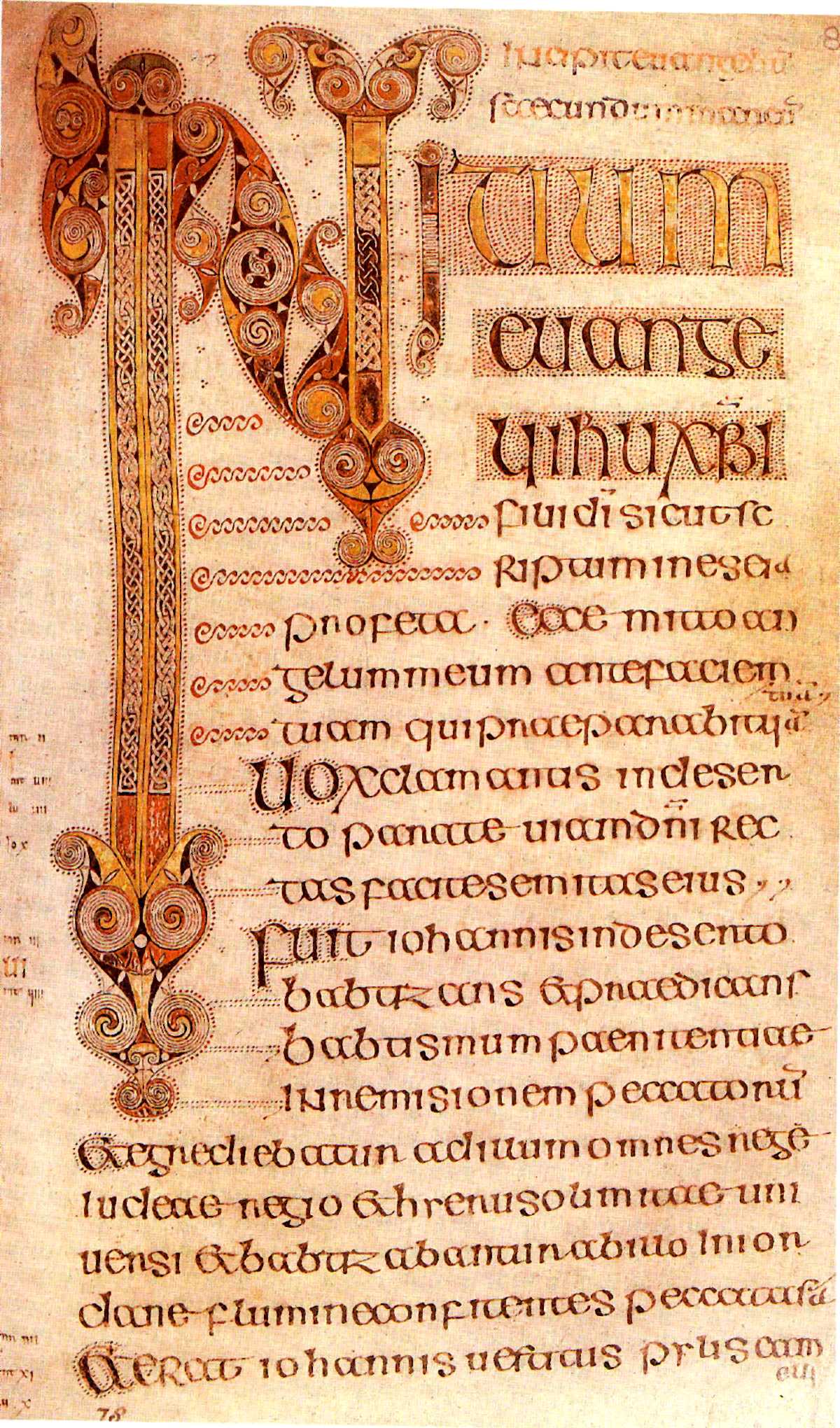
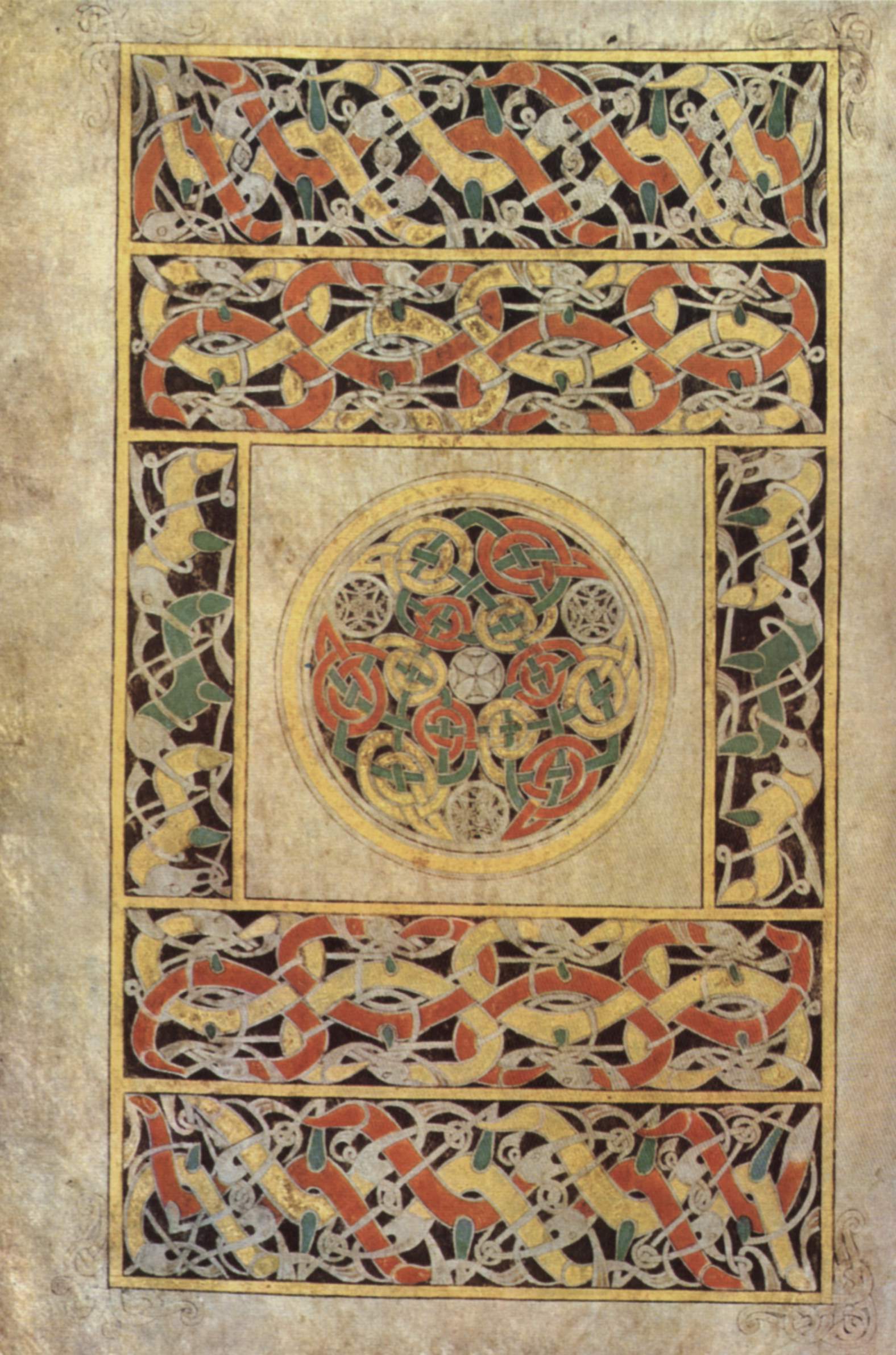
I would venture to say that the Insular art style with Celtic spirals, curvilinear, and geometric shapes employed in the Book of Durrow were not influenced by Norse or Viking raiding artisans. This kind of complex, intricate art did not suddenly spring forth in a brand new art form, the illustrated book arts. Especially when one's homeland was being invaded by Vikings. So what came first? Chicken or egg? (See folios 1v, 85v, 125v at bottom of Wiki page.)

There's more of a correlation with Anglo-Saxon art, and even that was a hybrid art form, later called the Hiberno-Saxon style. I find no Germanic Continental evidence of this Insular art form. What each of these cultures have in common, is exposure to Insular Celts. Early medieval Celtic book treasure bindings were highly coveted by the Vikings. One can only imagine what the lost treasure cover for the Book of Kells looked like.
Various metal fragments of what were probably book-mounts have survived, usually adapted as jewellery by Vikings. —Wiki
(Also, the Bronze Age Celts, and Celtic culture dominated the Continent, so some of their artifacts could have been found by what later become the ancestors of the Vikings.) There was cultural contact. But there's scant evidence that Viking artifacts predate Irish and Celtic art styles. To make an absurd parallel, many little girls the world over love Hello Kitty, that doesn't mean they were all Japanese samurai.


Gospel of Mark, Book of Durrow, 650-700 AD. —Wiki

The Vikings were raiders, they brought back artifacts from other cultures, which in turn, influenced their art. Geometric interlace doesn't appear in Viking culture until after they had contact with Britain and Ireland. They also brought back (Irish) slaves, who were artisans....Again, keep in mind the timeline, and it was a hybrid culture].

(See mid-9th c. Oseberg ship-burial. Artifacts included the Oseberg bucket, with patterned enamel figures similar "to the Gospel books of the Insular art of the British Isles, such as the Book of Durrow, (ca.650 AD)." —Wiki, and Irish Archaeology.

Several Viking ships in Roskilde Fjord, and the Skuldelev ships were made in Ireland. So claiming who did/owned what in the past is never quite as simple as it seems from our perspective. We don't know who carved the ships, and, again, it was a hybrid culture. Also, there was no timber in Iceland, so Icelandic ships too would've been built in Ireland or wood imported to Scandinavia.)

Book of Durrow Carpet page, similar in style to the Oseberg bucket, 650-700 AD. —Wiki
Check out the timeline, The Vikings (780–1100), and this one, but keep in mind that much of what we think of as Viking art was the result of artifacts collected from other cultures during raiding.

If you get a good grasp of the pre-Classical, Classical, and post Classical Celtic cultures, and migrations, then it will all make more sense.

Unfortunately working from a knowledge base that dates to the Plantation of Ulster as a reference point, is politically biased, therefore suspect. History written in the voice of the victor, and all that. Also, the intense hatred the English harbored for the ethnic Irish has also adversely colored "history." So, most Irish connections were extirpated. The OED is a prime example.

In Scotland, a lot of so-called Scots, were actually Irish. The Industrial Revolution, and two famines meant that many Irish immigrated to Scotland—especially The Barrows in Glesga, and along Clydebank (ships).

Yes, the Romans named the Picts, Picti, after a Continental Picti tribe, who were probably from the same Gaulish tribe. Picts were probably P-Celtic vs. Q-Celtic speakers. The Picts were also in N. Ireland, they were called the Cruithne, or Cruithín (they have an asteroid named after them, LOL!) The Cruithne/Criuthín included several tuatha, including the the Dál nAraidi—who settled in Scotland. Qritani/Cruithne comes from the word *pritenī (Pretani). Q-Celtic Irish speakers hated the plosive P sound and swapped it out for a more gutteral cough sound, hard c/q/k C: Cruithne/Pritani. mac/map, etc.

Ireland had many P-Celtic speaking tribes, as well as Q-Celtic speakers (Gaels, Galicia). See Ptolemy's map of Ireland for tribal names: Briganti, Dumnoni, etc. Cruithni and Menapi were probably Gaulish. The Ganganoi were also in N. Wales. In the 5th c AD, Gwynned was an Irish enclave, so there was a lot of back and forth movement.
A rendition of Ptolemy's map (Vlaclav Hollar, ca. 1650s-70s) —Wiki
Julius Caesar, in his Commentarii de Bello Gallico, is the first to call the island Hibernia... —Wiki

Galicians were not Spaniards, but Iberian Celts, one of many CeltIberian tribes. Asturias, Galicia were Celtic kingdoms that managed to survive until the Middle Ages. They probably were the original Hispania immigrants who settled in Ireland, according to the Lebor Gabala Erenn (where the name Scotia is chronicled.)

In the Song of Amergin, the first Gael to settle in Ireland, (Galician) poet-druid Amergin (mac) Mil quells the sea, after the very tall Tuatha Dé Danánn send a big wind spell, proving he was a bigger, badder druid, than they. And to really ridiculously telescope mythological time, they slunk away, shrank, went underground, and became the fairyfolk!

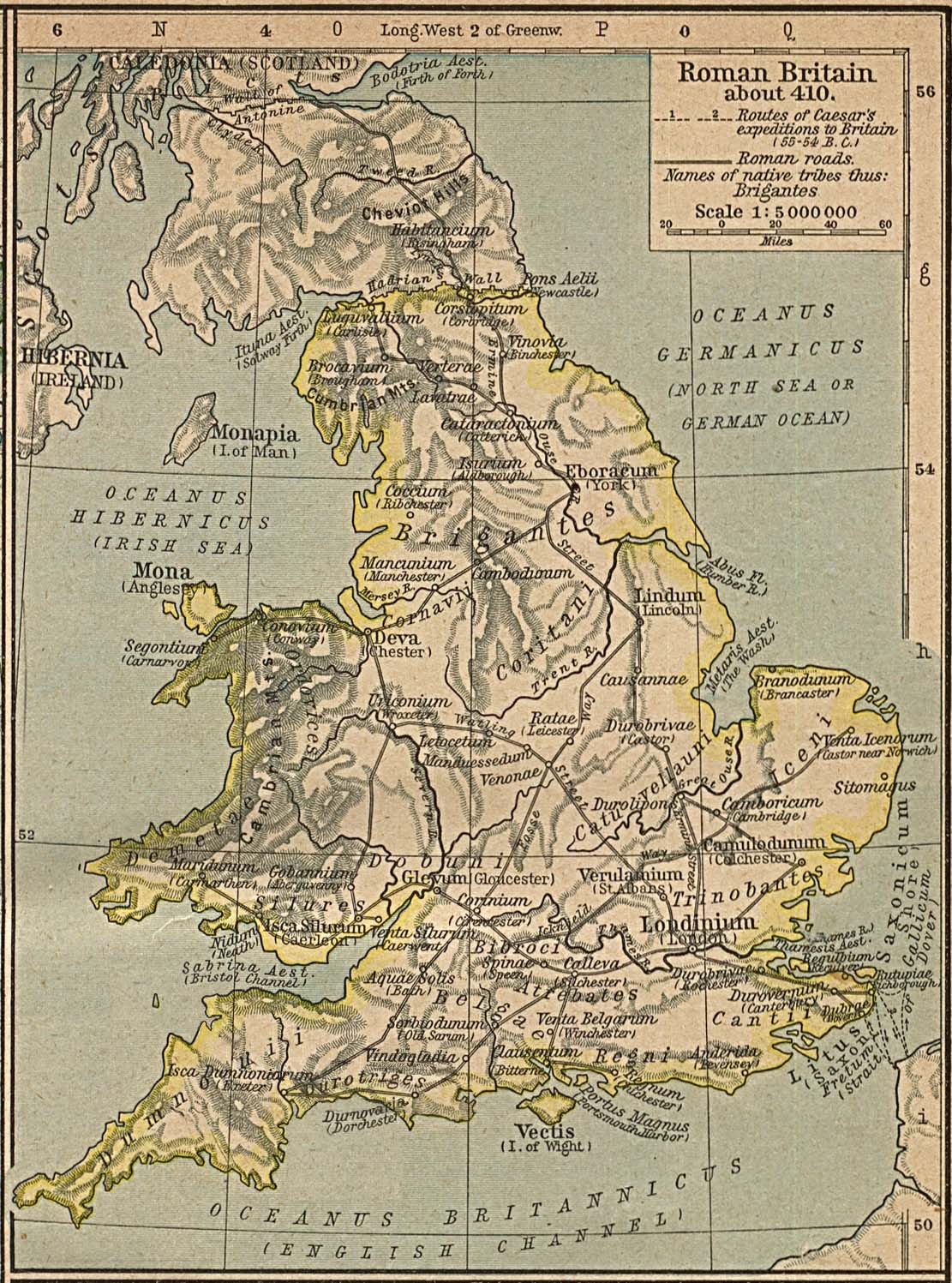
Here's a lovely Roman world view map of Scotland & Eire; note the use of the word Scotti in N. Ireland. Note also that Scotland was not called Scotland, but Valentia, and Caledonia. The Brigantes of Maxima Caesariensis were a buffer between Caesariens (Roman Britain) and what we now refer to as Scotland. Only Southern England, Kent, Cornwall and Devon (Cantii, Damnonii and Belgae tribes) was called Brittania.


Roman Britain —Wiki

Another old map.


Roman Britain in 410 —Wiki

And an updated 1654 map that chronicles Scotland as Scotia and Ireland as Hibernia/Ivverna. Pope Leo X (1475-1521) decreed (when?) that Scotland had exclusive rights to the term Scotland.
In early medieval times Ireland was known not only as Éire but also as Scotia, a name that the Romans used at times to refer to Ireland as well as Scotland. —Wiki

A 1654 map that notes Scotia as Scotland and Hibernia/Ivverna —Wiki

Sunday, November 15, 2015

Red Hair, A German Trait?


This is a comment from my Viking-Irish Redhead Gene Myth blog post turned into a blogeen of its own. I've reposted it here. I wind up doing so much research in order to answer people's comments, it takes me hours to write a rebuttal. Maybe it'll turn into a full post later.
Ross Hunter said...

Red hair is actually a very German trait. I know this not only from my own family history going back several hundred years on my Mom's side of the family, but also from my personal studies on many sources. Even the book "Germania", written around the year 98AD, describes the Germans as having "rutilae comae" which is reddish hair. The Romans who came into contact with the Germans brought that trait into their own society, thus the now large number of red haired Italians. The Germans were described as very warlike in in Germania, and in idle times, they often dreamed of waging their next war. While that may seem to put them in a romantic light, it's actually not that awesome considering their attrition rate. They also were said to have practiced human sacrifice and held a lot of superstitions at the time. They were described as "indians" and wore very little clothing.

I'm actually surprised that people don't associate red hair with Germans more often than they do, it's actually pretty common, even the old bog bodies from Germany have well preserved reddish to golden red hair. Sure, things have changed a lot in the modern days, but there is a lot of historical, concrete evidence to support this. APRIL 27, 2015
Maureen Hurley said...
Dear Ross Hunter,

Sorry I never commented back I must've missed it. A few notes on Germany and redheads. What is now present day Germany now was not Germany then. Much of what is Germany now, was actually Celtic territory, not German. Especially Bavaria, and the area around Cologne.

The bog bodies were found in present day northern Germany, etc., but that doesn't make them German. We tend to use current political boundaries to define ancient peoples, and that is a false syllogism. Ahlintel Man, and others were from Lower Saxony and Schleswig-Holstein, which was part of Jutland, so they could also be Frisian/Danish/Scandinavian/Celtic bog bodies.

However, the Nienburg (and the Jastorf) had material cultural characteristics similar to Celtic cultures.... It should, as the Nienburg culture (grave goods, and weaponry) was the northward thrust of the Hallstatt culture. Some La tene influence as well.

The thing to keep in mind here is that Hallstatt was NOT a Germanic culture. Lower Saxony and Schleswig-Holstein were not settled by the Germans unto the 3-7th c.s AD., considerably later than the bog-folk. At any rate, there is archaeological evidence of isolated Celtic settlements as well in Jutland.

Hair color is impossible to determine on a bog body as bog water, heavy in tannins, both leaches and stains. DNA analysis would have to be done to determine if they were redheads. Blond or grey hair would stain read in bog water, so it's not a reliable indicator.

"There has also been migration from former Celtic areas into Scandinavia .... investigations at Dosenmoor, Schleswig-Holstein, and Svanemose, Jutland, Boreas " —The Germani - Haplogroup I2b1 info

There were Celts also in the Netherlands, and many bog bodies were found near Drenthe.

The Celts lived on both sides of the Rhine. Caesar, when he was thumping the war chest coffers stretched the truth a bit (a lot). Hw said that the Gauls were an awful foe, and that the "Germans" were even worse, so he could get funding. Tacitus stretched the truth even further, both did so, to meet their own political needs—which was to get more money from the senate.

Remember, victory was written in the voice of the winners, who had a political agenda. We need to read those old texts with a grain of salt. Rhetoric.

Part of the confusion lies in the fact that the word Germania is not a German tribe, just like Teutates: both are Celtic words. Germania is actually a Celtic war cry, and Teutates, was a Celtic god.

I have read Tacitus carefully, and many of the names he uses are linguistically Celtic, not Germanic, so methinks he was fabricating just a bit. They also could have been a Celto-Germanic tribe. But culturally and linguistically, many of the peoples that Tacitus described, were Celtic, not Germanic.

As to those red-haired Italians, the north of Italy was settled by the same Celts that settled in Anatolia. Especially around Ravenna, Modena, the Po Valley, and the mountains: it was called Cis-Alpine Gaul. So yes, the red-hair gene would be dominant in the north.

Saturday, January 31, 2015

"Up Helly Aa," reconstructed Fire Festival, or Imbolc in Viking drag?

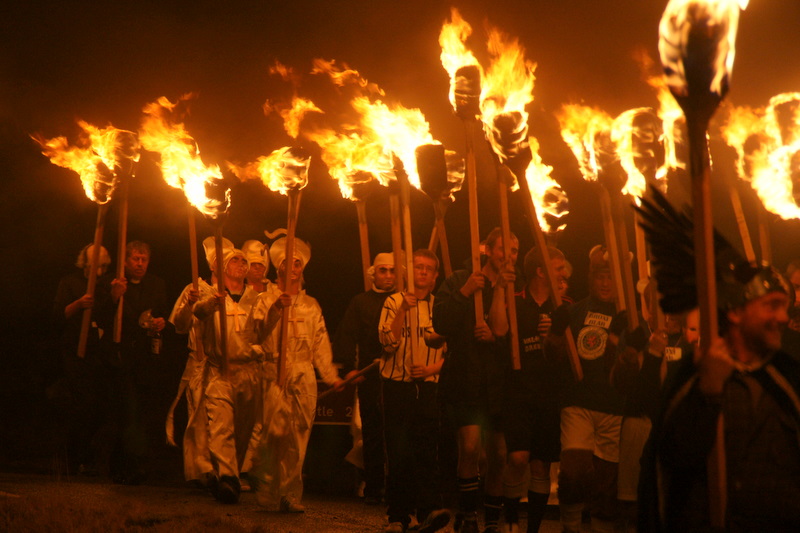
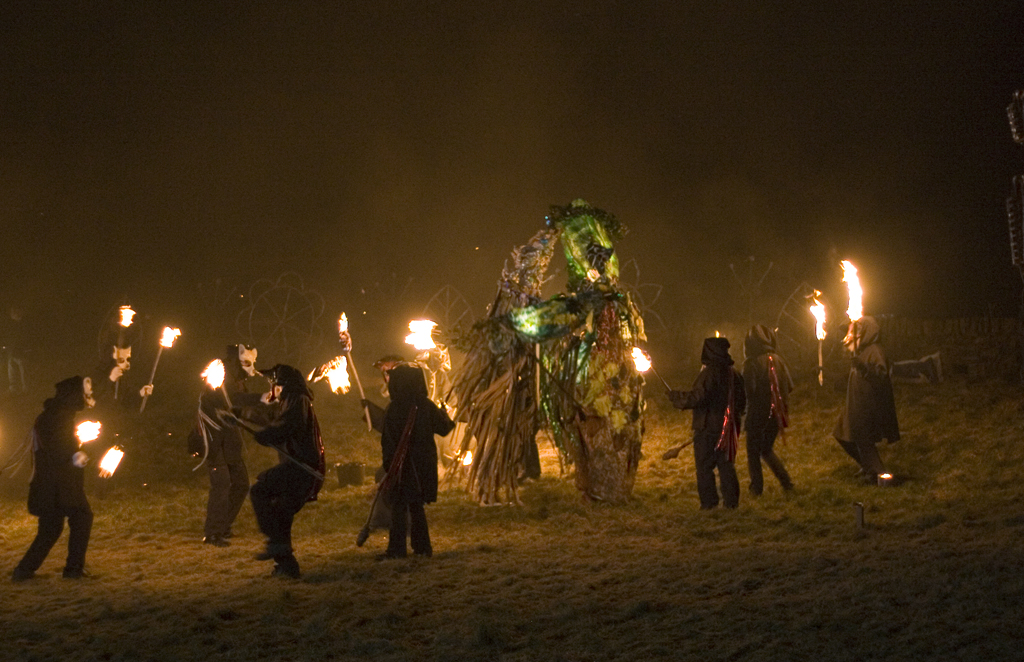
Guizers with torches at Up Helly Aa celebration in Uyeasound,Shetland.  Before the 19th c., tar barrels, not torches, were used. They look a bit KKKish.
The “Viking” Up Helly Aa fire festival celebrated on the last Tuesday of January (originally held on old Christmas Eve) in the Shetland Isles in Northern Scotland, is not a Norse festival, but a "reconstructed" Victorian Solstice fire festival. I'm not convinced the festival has any Viking roots, though modern-day Shetlanders, proud of their Norse heritage, would probably avow it does. 

The setting of the beacons, or the wards along the coasts and the lit tar barrels rolled downhill are well-attested Celtic motifs. The lit barrels, (my great grandfather also lit on Beltaine in Bantry County Cork, Ireland), evolved into setting a fire a long ship. 

The origin is a bit more obscure, as the Vikings invaded the Shetland Islands during the 9th century, and the fire festival was founded in 1880s—1905, more than 500 years after Norse rule was vanquished. Besides, there were other cultures living in the Shetland Isles since the Neolithic era. They didn’t just disappear with the arrival of the Vikings.

The Vikings, as we know, were not big on sharing the wealth, and 19th century Viking scholars were also not keen on sharing either. When something is claimed as being authentically Viking in Celtic lands, there is often a convenient blurring of anthropological lines, with the idea of Vikings still plundering other cultures a millennia after assimilation.

What cultures in situ before the Viking invasion, are often overlooked, because it doesn't fit current romantic thought. So, rather than observing the overlay with a cultural substrate, we often get skewed cultural theories based solely on later invading cultures—especially in Scotland where the Viking love affair is still in full swing some six centuries later. There is only "I" in Viking. Not even poetic license can alter that.

Shetland (sometimes referred to as Thule in Classical tracts), was no terra nullius before the Vikings invaded. The archipelagos of Shetland, the Orkneys and the Hebrides, also were not considered part of Scotland, which did not become a kingdom until the ninth century. The Latin term Scoti/Scotti referred to the Irish Gaels, whether in Ireland (Scotia Major) or Scotland (Scotia Minor). 

Long before the Shetland archipelago (Scots Gaelic: Sealtainn) was under Icelandic-Norse control, it was a Mesolithic, Neolithic, then a Celtic stronghold—for millennia. The Shetland Islands were originally settled by Neolithic Bell-Beaker peoples, then the Celts and the Picts, and the Scotti, or the Irish Celts—who also celebrated a fire festival on this date as well. Thule was supposedly settled by blue painted people (Picts), it could be a corruption of the word for fire, Iceland was also referred to as Innis Tile.

The first written mention of the Shetland Islands, comprised of some 300 islands and skerries, is from the Icelandic 13th c. epic, Njal’s saga. And of course, redheaded Njal with his fierce temper was probably an Irish-Norse Dubliner. At least one Irish Scotti place-name survived the Viking invasions, Dunrossness, and the islands of Papa Stour (Papey Stóra) and Papa Little (P. Litla) refers to Irish Culdee monks. Brother Island may also refer to those Irish monks. Three island place-names may be of Pictish or even pre-Celtic origin: Fetlar, Unst and Yell—once heavily settled by Culdee monks (Pappay/Papil Ness, Loch of Papil and Papil Bay.) St. Ninian’s Isle too was a papar stronghold.

Another Celtic influenced place-name Muckle meaning “big” in 17th c. Scots dialect, and Rua, meaning red (Old Irish ruiadh), a red granite islet, though Muckle Rua is erroneously identified as a Norse place-name, as is Dunrossness. But Dun is fort and ross is a promontory. And ness is a common Scots-Norse accretion also meaning headland in case one didn’t know what a ross was—a clear indication that the promontory was already aptly named before the Vikings arrived. Nothing to do with a noisy tidal race. 

The early medieval Pictish Bressay Stone,  (It’s in the basement of the National Museum in Edinburgh) with Celtic knotwork and beasties, has an Ogam inscription: “The cross of Natdad's daughter, child of Maqqddrroann,” (OId Irish Mac (son of) Droann. More here.) One of five Ogham stones in Shetland, the inscription is an admixture of Old Irish, and Norn, as the word for daughter is in Norse. Certainly, most of the village names would be of Old Norse derivation as the Irish Scotti didn’t go in big for the idea of towns.

Since the Neolithic era, (4000 BC), people have raised cattle and sheep, and farmed the Shetland Isles. What survives are prehistoric field systems, Bronze Age burnt mounds, Iron Age brochs, and Pictish wheelhouses. The oldest archaeological find, ca. 4000 BC, is a midden at West Voe, Sumburgh. Hard to imagine now, but much of the North Sea was once dry land, Shetland was lightly wooded and the climate was warmer. Neolithic burials include stone cists, and heel-chambered cairns on the island of Vementry, Punds Water and Islesburgh. Skara Brae, Maes Howe, and Ring of Brogar, in nearby Orkney, are extraordinary Neolithic monuments.

During the Bronze Age (2000 to 600 BC), the climate deteriorated, peat bogs spread, and sea level rose. Some 300 crescent-shaped burnt mounds (possible hearths) date back to the Bronze Age. "Ireland was the chief center for the manufacture of bronze and Scotland's early settlers were energetic seamen." Even way then there was a lot of travel between the islands. For millennia, there was Irish contact in the Shetlands, whether by trade, or by theft: a bronze-gilt harness mounting was made in Ireland during the 8th or 9th c. AD, was excavated from an archaeological dig.

Possibly due to a population explosion, or increased warfare, the Iron Age in Shetland saw the rise of massive fortifications: double-walled circular towers, and dry stone brochs—sometimes called "Pictish Towers", but their construction predates the Picts. Ancestors of the Picts, maybe.

Of the 120 Iron Age broch sites, Old Scatness, and the Broch of Mousa (ca. 100 BC), are among the finest preserved examples of Iron Age fort towers. In the case of Old Scatness, the Celts, the late Iron Age Picts, then the Vikings each built atop the old fortifications. Excavations at Jarlshof, confirm archaeological evidence in Mainland, Shetland, since the Bronze Age.
By the sixth century AD, Shetland had become integrated into the mainstream of Pictish politics and life. Artefacts such as painted pebbles and carved symbol stones demonstrate a strong Pictish presence in the islands. Good examples include the ogham script of the Lunnasting Stone, and Christian cross-slabs which include fine examples such as the cross slab and the Monk’s Stone, both from Papil.... From the late 8th century, Shetland was subject to the turbulent impact of the expanding Viking world.—Visit Shetland
The Viking invasions began ca. 800 AD. The earliest archaeological evidence of Norse occupation is in the nearby Orkneys (Viking Shetland was administered as part of the Orkneys, and they were both called the Northern Isles). In 800 AD, a Pictish, or Irish Culdee hoard of silver bowls, brooches, torcs, thimbles, chapes, and a porpoise jaw, was found beneath St. Ninian's church floor on Shetland's St. Ninian's Isle. (See St Ninian's Isle Treasure. St. Ninian AKA Apostle to the Southern Picts).
Human settlement of the island dates from circa 3000 BC and there are remains of several Neolithic burial chambers known as 'heel-shaped cairns'. Little is known of the pre-Celtic and Celtic eras, but when the Norse arrived it is likely they found a religious settlement as the name of the island derives from Papey Stóra meaning "Big island of the Papar" (Celtic monks), in distinction to Papa Little. —Wiki  (see Culdees or papar.)
In 1299 AD, the oldest Old Norse manuscript from Shetland (the Norse called it Hjaltland), was over a duel, where the isle of Papa Stour is referenced. Thorvald Thoresson, accused of corruption, was called "dominus de Papay." In early Irish literature, Shetland was referred to as Inse Catt—"the Isles of Cats." And the name Shetland, like Caithiness, may derive from the Pictish name for the cat islands. Ferocious European wildcats were not your modern moggies.

During the outbreak of Celtic Christianity, when "green" martyrs were seeking hermitages to commune with God, the Irish monks settled on most of the Hebrides, Orkneys and the Shetland Isles, as well as the Faroe Islands, and Iceland, the first stepping stone from Shetland to Iceland. Iceland was settled by the Norse, and Celts from the British Isles—including from Hebrides and Shetland.
During the Dark Ages, groups of outlaws and farmers took to the sea from the northernmost reaches of Europe. These seafaring marauders became known as the Vikings. Some of these outcasts among the Vikings were to achieve historical distinction indirectly through dubious means. —from The Struggle against Colonialism and Imperialism in Kalaallit Nunaat
What's interesting about the Up Helly Aa festival is that it completely obliterates any connection with the peoples of the past, other than a nod to 19th century Viking revival nostalgia. It's a wayward case of settler colonialism displacing the preexisting subculture, as a means strengthening an invader's power base to shore up national identity. This was certainly true in Iceland even though Iceland was settled by as many Irish as Vikings. So, what is Up Helly Aa?
According to John Jamieson's Etymological Dictionary of the Scottish Language (1818), up is used in the sense of something being at an end, and derives from the Old Norse word uppi which is still used in Faroese and Icelandic, while helly refers to a holy day or festival. The Scottish National Dictionary defines helly, probably derived from the Old Norse helgr (helgi in the dative and accusative case, meaning a holiday or festival), as "[a] series of festive days, esp. the period in which Christmas festivities are held from 25th Dec. to 5th Jan." while aa may represent a', meaning "all".  —Wiki Up Helly Aa
But the Northern Isles were once described as "Pictish in culture and speech."  Not Viking. Few Irish pr Pictish place-names survive, except for the northern islands Fetlar with its stone Funzie Girt (Finn's Dyke) a Bronze Age Berlin Wall, Unst and Yell, the second largest island, with 12 brochs, and 15 early chapels—a Culdee stronghold, probably not as enticing to the Norse. The dearth of Celtic "place-names suggest that the Picts may have been forced onto poorer land."There is another school of thought that they are pre-Celtic place names.
Despite many archaeological remains, we have only a patchy understanding of those who lived in Shetland before the Viking invasions of around 800 AD. Immediately before the Vikings arrived, though, it’s clear that Shetland – like much of Scotland - was part of the Pictish culture. By the time of the Viking invasion, possibly two or three hundred years earlier, Christianity had reached the islands. —History of Shetland
The "Northern Isles were the first to be conquered by Vikings and the last to be relinquished by the Norwegian crown." The historical record is weak but Woolf (2007) suggests the Icelandic sagas proclaiming dominion over the Shetland Isles are stories concocted "to legitimise Norwegian claims to sovereignty in the region." Perhaps that is also why a Celtic fire festival, possibly Imbolc, underwent a transformation into Up Helly aa.

An interesting aside: according to the Icelandic sagas, Egil's saga, and the Orkneyinga saga, the Broch of Mousa was used as a refuge for runaway lovers.

I suppose if one is inventive enough, the Norse origin of other island place-names could be challenged: Vementry (Old Norse: "Vemunðarey) could also be derived from a form of Finn, as in Finn's beach: as in Ventry, (Irish: Ceann Trá—which means head beach), which is an anglicization of Fionntrá, in Dingle, Co. Kerry. St. Ninian was also known as Fionnian. M, B and F, in the genitive, take on a v sound. But I'm being linguistically silly.

Maybe it would be more fruitful to look at DNA. Shetland's genetic heritage is 60% Norwegian Y-chromosome DNA (R1a Sigurd), and 40% is ancient Briton (Celts) DNA. The most common male Y chromosomes reflect the most recent migration. Apparently the Norse married lots of local women; as Norse (matrilineal) mtDNA was 30%. However:
[in] Orkney and Shetland, Roberts reported (1985, 1990) that both island populations diverged considerably in allele frequencies from neighboring populations. Roberts concluded that the islanders of Orkney and Shetland most likely represented remnants of an aboriginal gene pool that had changed on the British mainland because of later population movements.... Of the Scottish populations, Orkney [not Shetland] evidently has the closest matrilineal links with Scandinavia. The inhabitants of the Scottish islands share two to seven times more of their lineages exclusively with Gaels than they do with Scandinavians.... mtDNA lineages can be used to identify recent migration. Viking men settled and intermarried with existing populations in Shetland... —mtDNA and the Islands of the North Atlantic
So, with all that intact ancient matrilineal Celtic Briton gene pool intact, do you think their fire customs, celebrated since time immemorial, would suddenly be forgotten and just disappear with the occupation of the Vikings—only to return as a new and improved Viking festival? Methinks this particular fire festival smacks of the neo-Romantic Viking revivalist movement: think truncated Wagner as performed by Viking mummers. (Note that Up Helly Aa is not celebrated in Scandinavia.) 

According to the Smithsonian article, "Up Helly Aa was first celebrated in the 1880s. Before then, rowdy residents would take to the streets to mark the end of the Yule season by burning tar barrels." 

Up Helly Aa is a procession of 1000 guizers celebrating their Norse heritage. Guizers (dis-guisers and galoshins) are a long-standing tradition in the Celtic ream; our modern Halloween trick or treaters are guisers. 

The festival is stapled onto the end of Yule season (see: Burning of the clavie), but even using the old calendar, "Old Twelfth" would have fallen on Jan. 17, not the end of January, which would be Imbolc, the Fire Festival of Brigid.

A parallel story of confusion: an Irish Medieval History Facebook post notes that people erroneously assume the pagan Celtic Goddess Brigid, who represented the light half of the year, was transported into Christianity as Saint Brigid. Ancient customs and religious beliefs were not swept away with the arrival of Christianity and traditions associated with St. Brigid’s day are thought to date from the pre-Christian period. Candlemas is the Christian overlay of Imbolc.

So taking that model for cultural continuance, despite new landlords, I suspect this Shetland fire festival is an offshoot of the festival of Imbolc, and of the pan-Celtic Goddess Brigid, which was a time for a massive spring clean-up, burning old possessions and replacing them with new ones. 


Since Neolithic times, cross-quarter days, that midway point between solstice and equinox, were celebrated with fire festivals. Cross-quarter days were marked via astronomical alignments on ancient monuments: Mound of the Hostages: Hill of Tara, Howth, Newgrange, Stonehenge. The four fire festivals, Samhain (the end of the Celtic harvest year), Imbolc, Beltane and Lughnasadh also mark the beginning of each season. Spring was the beginning of the Roman New Year.

Imbolc might derive from Old Irish í mBolc, meaning in the belly (as in pregnant—bolg — Spanish /Galician bolsa means bag); it might mean purification or, First Milk.
...which arises from the word “oimelc/oí melg” used in the 10th century Sanas Cormaic (Cormac’s Glossary) which some people have taken to mean “sheep’s milk”. The word “melg” meaning ‘milk’ comes from the Proto-Indo-European (PIE—the ancestor language of most European languages) word “melg” which means "to wipe, to rub off". Purification/ cleansing was an important aspect of many ancient festivals and “oí melg” is not milking but rubbing, as in the act of cleansing. Further evidence of cleansing comes from the Roman festival of Februalia. The Old Irish word for February is ‘febra’, ‘febrae’ from Latin ‘Februarius’ which in turn comes from ‘februa’ meaning purifications. —Irish Medieval History: February 1st or Imbolc 
Imbolc was the second of the four great fire festivals, with significance placed upon the Light of fire. The Irish word for spring, "errach” thought to be related to the word “airreach” which means hauling and dragging. In Ireland, Imbolc is referred to as the big Spring Clean. "Right up to the twentieth century, on Brigid’s eve, the house was be scrubbed from top to bottom by the women who worked into the night." 

All debris was burned (including floor rushes, beds and bedding). Bonfires galore. Oh, and Brigid is a daughter of the Dagda, and a poet. She is the patron of the hearth, healing, metal smithcraft; and inventor of poetry, keening, and beer making. Ya don't want to piss her off. Burn, baby, burn. Sláinte!
A Bhríd, a Bhríd, thig a sligh as gabh do leabaidh
Bríd Bríd, come in; thy bed is ready
Brede, Brede, come to my house tonight.
Open the door for Brede and let Brede come in.
Imbolc festival in Marsden, Yorkshire. —Wiki

Brigid's the goddess of weather, for an early spring, forget the groundhog, chant this instead:
Thig an nathair as an toll
Là donn Brìde,
Ged robh trì troighean dhen t-sneachd
Air leac an làir.
 
The serpent will come from the hole
On the brown Day of Bríde,
Though there should be three feet of snow
On the flat surface of the ground.
Lá Fhéile Bríde shona dóibh go léir (Happy St. Brigid’s festival day to you all)!

Wednesday, August 20, 2014

Celtic Aedui oppidum (from a Facebook thread)


I usually don't repost Archaeology Magazine articles as they're barely more than teasers with photos, but this oppidum dig was about a Celtic tribe, the Aedui—a tribe that left an impact—as Caesar practiced genocide and scorched earth politics. The Celtic oppidum (hillfort) was founded in the third or second c. BC. The (Burgundian) settlement was abandoned after the Romans defeated a coalition of Celtic tribes including the Aedui and Arverni in 52 BC, at the the Battle of Alesia. The oppidum fell after Gaulish leader, Vercingetorix, who unified the Gallic tribes against the Romans -(no mean feat in, and of itself), was defeated—he was held prisoner for 5 years, then paraded through the streets of Rome and then brutally executed. That was, in effect, the end of Gaulish resistance. They cowped.

And the Vikings stole it from...? They are not "Viking artifacts." Sloppy, misleading writing, An snameled 9th c. silver Celtic cross? Not bloody Viking. Galloway was settled by the Irish 1200 years ago.


Nik Saulter If it helps paint a clearer picture of Viking raiding/travel history, I don't see what your problem is.

Maureen Hurley The problem is that Irish artifacts suddenly become "Viking art" when found in a Viking hoard. Much of what we think of as "Viking" art is not. The Gundestrup Cauldron is a good example. Only recently has that been corrected. Bot there's lots more in Scandinavian museums that is identified as as Viking art—when it really came from Viking raids.

Martin Mcsweeney As someone who was there and witnessed this all being found and excavated I totally agree with your statement, many of the silver items are what we call viking but many items such as this bird, the pot, etc are not in fact of viking origin but booty collected or traded or even passed down along the way so yes this doesn't appear to be viking origin but it was labelled viking due to it being found in a viking hoard, stupid media lol

Maureen Hurley Drives me fecking crazy! So many Irish artifacts were labeled as "Viking" during the Romantic Era—the beginnings of modern archaeology—that it's now impossible to untangle the mess. This merely promulgates it... You'd think the Vikings had invented La Tène art before they even existed! (Thesis-worthy...)

Karalea Hirneisen The vikings did indeed pillage and plunder but they also established vast trade networks that ranged from present day North America North into what is now Russia and East into the Baltic regions and South into the Mediterranean regions. The horde isn't necessarily stolen goods. It could very well be made up of trade goods and or Viking made ornaments. Vikings were a very well traveled people and they saw flora and fauna from many different geographical locations, including flamingos from the Mediterranean area. This is a fact as it has been confirmed. At one time there was even a contingent of Vikings who were employed as the personal bodyguard for a Roman Emperor.

Maureen Hurley Not necessarily, but probably stolen goods during the 9th c. Much of what is labeled as as "Viking art" is actually art styles borrowed from (or executed from) the conquered tribes. In Northern Europe. the Vikings borrowed heavily from the Celts, and probably kept Irish and Pictish artisans as well. Interesting to note that the Irish art style (or so-called Viking art style) did not travel east with the Vikings to the Eurasian Steppe—which leaves the definition of what is "Viking" art suspect. Hmm—only from the British Isles, but not in Russia? If it was Viking art to begin with, you'd see Celtic art turning up in the Ukraine and beyond. But you don't. However, a reverse tide introduced Eurasian art styles to Scandinavian Romanesque art. It would be great to see more comparative analysis in some of these papers—the myopist view is so limited.

Saturday, March 1, 2014

How the Welsh language was really invented

 Dydd Gwyl Dewi Dedwydd—or how the Welsh language was really invented: whiskered kittens on keyboards wearing white woolen mittens.

These are a few of my favorite things. And now I don't feel so bad...but you might if you ever wish someone a Dydd Gwyl Dewi Dedwydd, or visit Wales and have to pronounce some of the downright eyeteeth challenging placenames. Why yes, I have been to Llanfairpwllgwyngyllgogerychwyrndrobwllllantysiliogogogoch, now that you mention it, but why do you ask? 

Llanfair PG for short—is not the byproduct of a cat walking on keyboards, but it is a real village on the isle of Anglesey in Wales. One of the longest place names in the world, it was an 1860s gimmick for the longest railway station name in Britain prize—only no one can pronounce it. The railway sign is so long we could barely fit it all in the photo frame.

Barbarella's secret password is pronounced Llan-vire-pooll-guin-gill-go-ger-u-chwurn-drob-ooll-llantus-ilio-gogo-goch, which means [St.] Mary's Church (Llanfair) [in] the hollow (pwll) of the white hazel (gwyngyll) near (goger) the rapid whirlpool (y chwyrndrobwll) [and] the church of [St.] Tysilio (llantysilio) with a red cave ([a]g ogo goch). Got that? Good.

I double-dare you to Google these phrases I've compiled for your next Welsh lesson: 
Wnewch chi ysgrifennu hynna, os gwelwch yn dda? 
Helpa fi! Helpwch fi! 
Galw'r heddlu! 
Dw i ddim yn deall 
Mae fy hofrenfad yn llawn llyswennod. (Omniglot).

Aside from the pesky eels in the hovercraft (a linguist's inside joke), a friend of mine said Welsh looks like it is suffering from a severe case of irritable vowel syndrome. But it's really just a case of bad orthography. OK, so there are a lot of ds in a row too.

You know that Dydd Gwyl Dewi Dedwydd is a Welsh national holiday, today, right?

Eight of those letter combos (digraphs) are really one-letter sounds written in the English alphabet with two Latin letters: 
ch—èch, dd—èdd, ff—èff, ng— ll—èll, ph—ffi/yff, rh—rhi, th—èth. 
Speaking of those irritable vowels: the usual complement: a, e, i, o, u—but, hold on—w and y are also vowels. 

The Welsh—Cymraeg (aka Cambrian, Cambric, Cymric)—alphabet has 28 letters 
(but no j, k, q, v, x, or z), and it is related to Cornish, Breton(Brezhoneg); Cumbric, and Pictish—are both extinct. Probably because nobody could spell them either.

Welsh is a P-Celtic language. Irish, Scots Gaelic and Manx are Q-Celtic—as were almost all the Atlantic Celtic languages of Iberia—which is different than Gaulish.

TRANSLATE: I live in Wales
Welsh - Dw i'n byw yng Nghymru 
Cornish - Trigys ov yn Kembra 
Breton - E Kembre emaon o chom 
Irish - Tá mé i mo chónaí sa Bhreatain Bheag 
Scottish Gaelic - Tha mi a' fuireach anns a' Chuimrigh 
Manx - Ta mee cummal 'sy Vretyn (Omniglot).

BONUS POINTS—TRANSLATE & MATCH LANGUAGE:
Mae fy hofrenfad yn llawn llyswennod
Leun gant sili eo ma dourruzer
Tá m'árthach foluaineach lán d'eascanna.
Leun a sylli yw ow skath bargesi
Ta my haagh crowal lane dy astan.
Ma hoovercraft's full o eyls
Ma hoovercraft's breemin' ower wi eyls

Welsh emerged from Common Brittonic, or another down in the 'eels Brittonic dialect, ca. 6th c.AD. The Britons were all pushed to the west of what is now England/Scotland, and eventually the Brittonic-speaking west, was divided near modern-day Manchester/Liverpool, and the boundaries of modern Wales were founded.

Before the 6th c., Brittonic kingdoms extended from The River Clyde (Cumbria), to Cornwall & the Isle of Wight.

The earliest Welsh literature dates back to 600 AD. Wales' first Welsh bard was Taliesin of the 'shining/radiant brow' (or Tal-iesin, Taliessin; c. 534 – c. 599). He composed the story of Urien of Rheged, a 6th c. king—in what is now southern Scotland.

Another Welsh bard, was Aneirin, a Cumbric poet from Dumbarton (also modern Scotland), aka the "prince of bards, of flowing verse." Aneirin's epic Y Gododdin, records a pitched battle between the Britons and Angles at the Battle of Catraeth ca, 600 AD, in remembrance of his fallen patrons and lords of Hen Ogledd.

So, I guess we could say that the roots of written Welsh is really Scottish! Of course, there was no Scotland yet. Detail, I know. Also understanding the Brittonic language map during the post Classical era, and the early middle ages gives some linguistic credence to the next Mad March Celtic holiday on deck—that St. Patrick was actually from what is later known as Scotland.

Welsh was much easier to learn than Old Irish (also VSO and sometimes P*, but less tenses to fuss with). However, I was a mental disaster in my Medieval Welsh class at Berkeley—it was also post-9/11. I had the post-acopolytic mind of a squirrel. I did, however, manage to get through the first story of the Mabinogi, and another tale in Medieval Welsh. All I can say is, I'm glad I already knew how the stories were going to end. 


*Verb, Subject, Object, Preposition that conjugates with personal pronoun. 

Dydd Gwyl Dewi hapus
Anyway, all this to say to you: Happy Dewi Sant! Or Dydd Gwyl Dewi hapus! Do you have a bouquet of daffodils in hand, and a lucky leek stuck behind your left ear? Then, let the March madness begin.

White rabbit, rabbit, rabbit.


Note Bene: David, the patron saint of Wales and doves, whose feast/death day is March 1st (ca. 569-601 AD), would've been a contemporary of Taliesin and Aneirin.

During the height of Welsh resistance against the Normans, Saint David was recognized as the national patron saint. On his deathbed Dewi Sant was said to have uttered: "Brothers be ye constant. The yoke which with single mind ye have taken, bear ye to the end; and whatsoever ye have seen with me and heard, keep and fulfil."

An 8th c. poem prophesied that when all might seem lost, the Cymry would unite under the banner of David to defeat the English; "A lluman glân Dewi a ddyrchafant" (And they will raise the pure banner of Dewi)."

Dewi was son of Sandde, the Prince of Powys— the Ceredigion clan, and Non of Menevia. He founded a Celtic monastery at Glyn Rhosin (Vale of Roses) at Sir Benfro. He was buried at St David's Cathedral at Pembrokeshire; his shrine was a pilgrimage hot spot during the Middle Ages. Saint David is also associated with corpse candles, a flame, or blue fireball (bog-fire, will-o-the-wisp, ignis fatuus) that foretold death.

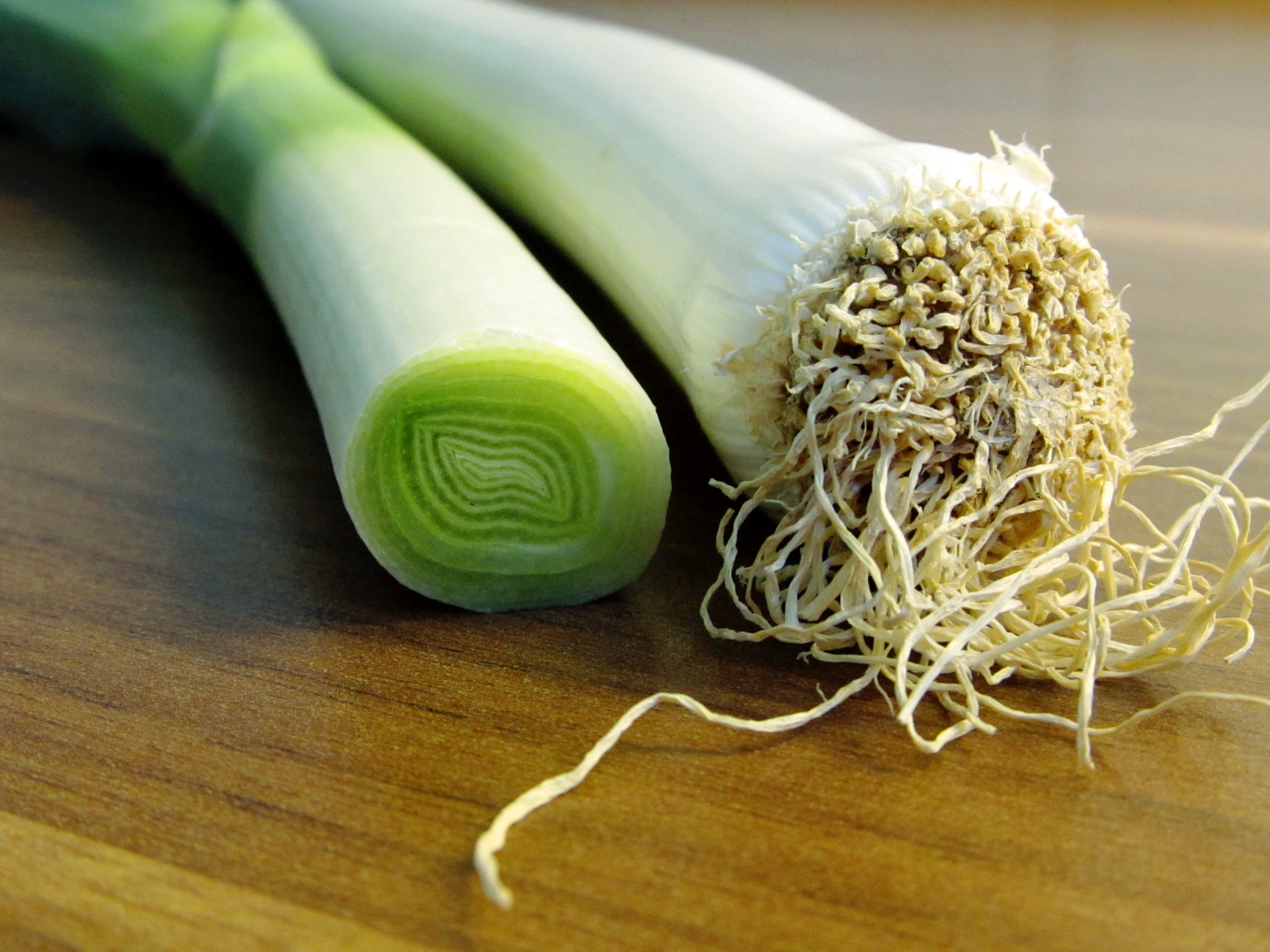
The Welsh wear a daffodil (symbol of spring) or the leek (secret sign) on their lapel to celebrate the feast of St. David. The words are similar in Welsh, Cenhinen (leek) and Cenhinen Pedr (daffodil, "Peter's leek").The leek was used as a symbol to distinguish Welsh troops from the pagan Saxon enemy. Friend or foe.

Cenhinen
The word Cymry dates back to the post-Classical Roman Era, meaning the peoples of "Yr Hen Ogledd", or the Men of the North. In Old Welsh combrog means "compatriot, or Welshman"; from cymryu+ brogi —country, or territory.

The word Wales, or Welsh, is not from within the culture. It's from the Germanic root (Walh, Walha) foreigner, which ironically was derived from the name of a fierce Gaulish tribe, the Volcae Tectosages—who gave Rome some real grief. The Volcae fought alongside Alexander the Great, and feared nothing.  

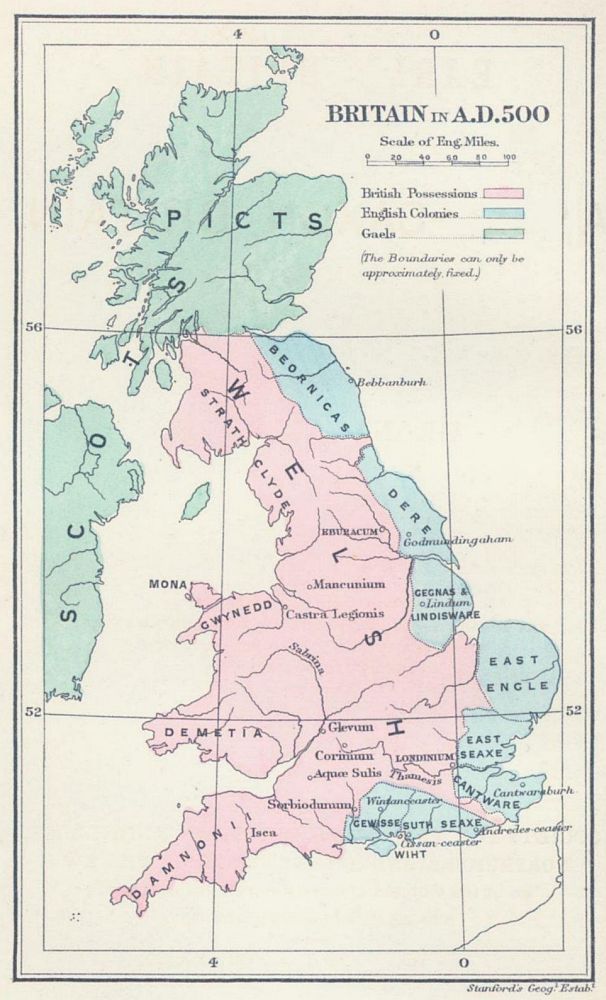
Britain 500 AD: Pink: Celtic Britons, or Welsh. Blue: Germanic tribes Angles, Saxons. Green: Gaels & Picts.

There was a lot of prehistoric travel back and forth from southern Ireland to Wales. During the 5th c., Gwynned was an Irish settlement, as was Anglesey. The word Gwynedd is an early borrowing from the Irish, related to the  Old Irish name Féni. Finn/Gwyn are cognates—fair/white.

My family name, Walsh (the Welshmen), is Breathnach in Irish. This does not mean our family were supplanted Normans, they might have come over to Bantry from Wales with Strongbow, they may have been descendants from the kingdom of Gwynned, or they may simply have been Brittonic-speakers in Ireland. 

My grannie's Irish Grammar book: Sinead Breatnac (Jane Walsh).