Showing posts with label Leningrad Rok Opera. Show all posts

Wednesday, December 29, 2021

LENINGRAD, MID-WINTER

LENINGRAD, MID-WINTER

I remember Leningrad, mid-winter, 
before it became Sanct Peterburg, 
before the fall, where we watched the ice boats 
open and sluice the black arteries of the Neva River, 
how the rostral column of the Viking ships 
with its severed boat prows, bled into the sky, 
held asunder to the pale clouds 
where light reflected off snow 
falling, perhaps somewhere in Finland. 
The ancient windows of the Hermitage Palace 
were warped and buckled with age, slumped glass 
seeking the currents and eddies of the river, 
having survived the siege and revolution. 
I remember how the babushka greeted me 
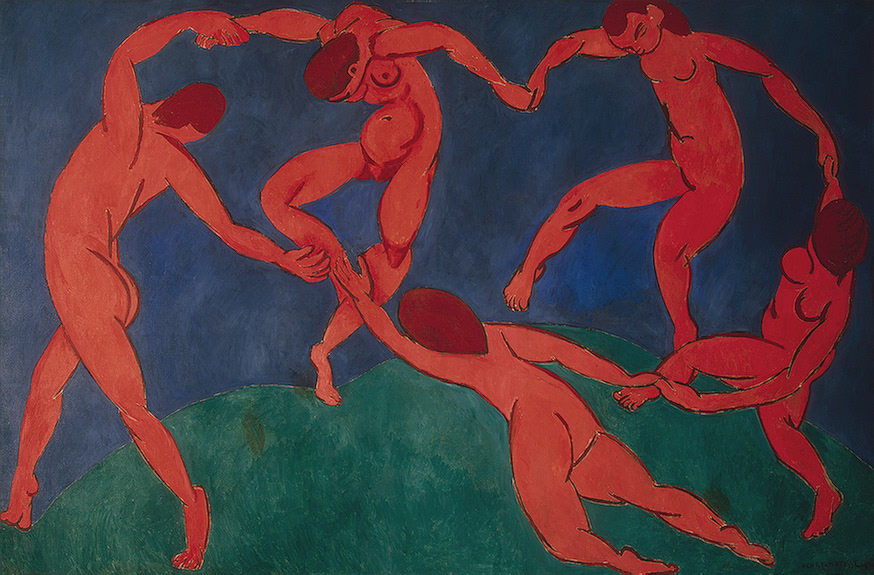
when I entered the room, she said Matisse’s dancers 
righted the world, kept everything in motion. 
They were wrapped in a fulcrum of time. 
I was homesick, stuck in an exotic place like this 
always brought the unbidden ache 
for what was familiar and safe. 
It's almost as if we can never be satisfied 
with where and what we are—perverse memory, 
that thread of loss, like a red fishing lure
tangled in the back reaches of the mind. 
Valera the rock singer, took me out walking afterwards 
onto the vast frozen lakes of Ozirkii. 
We were far from shore, the bleak ice 
moaned and cracked and hissed beneath our feet. 
The distant shouting in a loudspeaker,
the red flag warning as we retreated 
to the marching song of an unseasonable thaw.
The dark eye of the lake opened up 
to the color of death and distant skies. 
Not now, not this time, the lake said.

12/29/21 CPITS Write On! Susie Terence class

Saturday, December 19, 2020

Rappelling in the rotunda, USSR


When I think of all the scrapes I’ve gotten myself into, it flummoxes me. I think that’s why am a writer. Perhaps the weirdest moment was when I was in the Soviet Union, midwinter, visiting a friend who took me to see a muralist who was restoring a cathedral, dubbed the Museum of Atheism and Religion. The muralist asked if I wanted to see the rotunda mural up close. I said yes, not knowing that we had to climb up outside the copper dome along a catwalk where the railing was literally no longer attached, then go in between the outer copper dome, and enter the inner plaster dome, and traverse to an ancient circus trampoline stretched over the opening of the rotunda—we had to let go of our faith and land on the trampoline so that we could be strapped into a harness. Now understand, I have never been rappelling in my life. This was the Soviet Union where everything was either fly by night, or cobbled together. Or both. No such thing as safety nets. Good news I got to work on the mural a bit, scraping off years of smoke with an exacto knife, but then I had to get down from that lofty height. I was suspended 40 feet above the floor, like a spider. So in Russian, mind you, I didn’t speak Russian, they told me how to rappel. I looked down, not knowing my long hair was going to be problem, and let’s just say a huge hunk got ripped out of the top of my head as I descended spider like to the cold stone floor below. Crapping my pants was the least of my worries.

see 

Friday, April 10, 2015

Dark Winter Days at the Hermitage


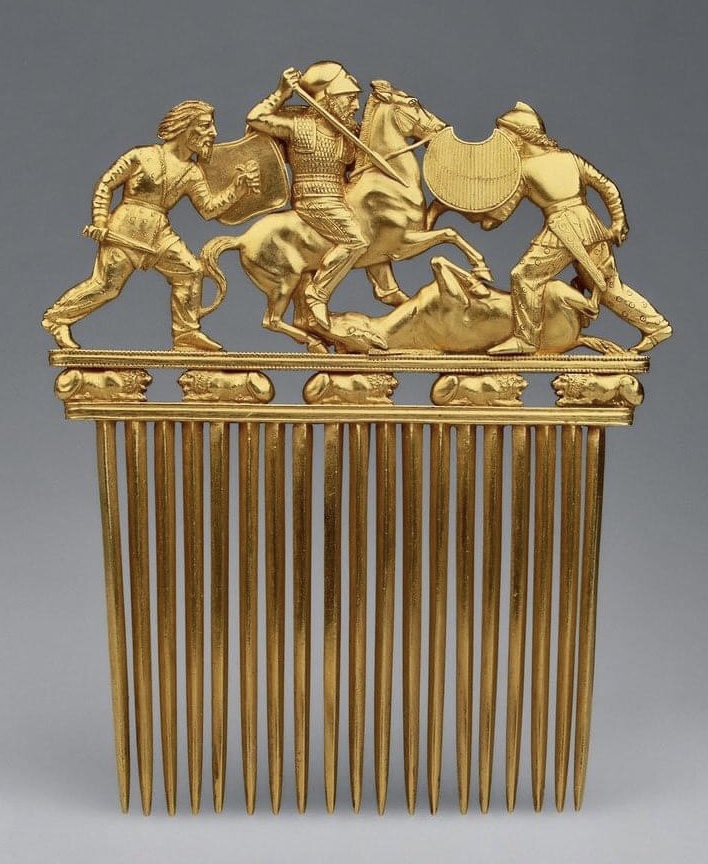
Greek-made Scythian gold comb, Solokha, Ukraine, 4th c. BC, Hermitage —Wiki

During the fall of the former Soviet Union, in the early 1990s, I spent a few seasons living in Leningrad with a noted pop singer. As winter closed in, and light diminished, I became stir-crazy, desperate for outside contact. I was living in isolation with a man from Grozny who spoke no English. But that's fodder for another story. One thing that enabled me to retain my sanity, other, than black market treats, including Earl Grey tea, was art for art's sake. I lived near the largest museum in the world, The Hermitage.

I literally spent my dark winter days in the dreary basement of the Old Hermitage. I discovered that I could waltz in the back door, for free, and avoid the long lines, if I attached myself to a busload of tourists....

Pop singer Valera Stupachenko, my Soviet fiancé, sometimes dropped me off at the museum when he had rehearsals at the Leningrad Rok Opera. I was lonely, isolated by language, or a lack thereof, though I could communicate basic needs in Russian.

I often divided my time between the Scythian, and the Fertile Crescent displays. The winged bull of Nineveh, the bust of the Akkadian king. Mysterious clay seals of Mohenjo-Daru, and cuneiform shards. Thracian gold. 

Of course, everything was explained in Russian, so I had to make do with what I remembered from my distant college art history classes. I painstakingly transcribed the Cyrillic placards into English. The guards did not seem to mind that I spend hours in darkened rooms gazing at these ancient wonders. 

A 2,300 yr-old women's soft red leather boot sewn with pyrite crystals and black beads, found  in an Altai mountain grave, 1948. Hermitage collection.

Having grown up on horseback, I was particularly fascinated by the Scythian horse trappings. Intricately designed saddles, felt applique blankets, bridles, stirrups, bits, and silk rugs—the oldest pile carpets in the world. Soft riding boots with wild roses beaded on the soles. I imagined a woman's feet never touched the earth, except for maybe to sit by the fire pit, dance on a thick carpet at her wedding, or when she was buried.

Oldest pile carpet in the world from an Altai Scythian tomb,.Pazyryk, ca. 4th c. BC. Hermitage

The elaborate gold Scythian pectoral collar made me weep, as did the golden reindeer, with horns so elaborate, they were like shining star-filled trees in a treeless tundra. They were more ancient and mysterious than the elaborate Greco-Scythian synthesized pieces. They were imbued with magic. Nomadic talismans.

Gilded wooden reindeer, Pazyryk, 5th c. BC. Hermitage

Afternoons were best spent in the (Post) Impressionist rooms, often the only direct sunlight I ever saw in winter was in those beautiful rooms with huge warped glass windows so old that I imagined they had somehow survived the Siege of Leningrad. 

Henri Matisse, Dance, 1910, Hermitage (they aren't that red!)

I didn't know those Scythian finds were the foundation pieces for the genesis of the Hermitage. I had unerringly gone to the heart of the matter. During the early 18th c., Russian explorers brought Scythian gold from burial kurgans to Peter the Great. Catherine the Great, a fierce collector of art, and artifacts, was so amazed by Scythian artifacts that she ordered scholars to systematically research them—this was before modern archaeology got its groove on.

Scythian pectoral, Ukraine, 4th c. BC. Horses torn apart by (Greek) griffins. Hermitage —Wiki

A woman ahead of her horse and time, Catherine the Great had the largest collections of paintings in the world (4000), including hundreds of Impressionist paintings. They had to hang somewhere along with all the other art she had collected—some 3 million pieces. One of the oldest (and largest) museums in the world, the Hermitage, a collection of buildings fronting the Nevsky River, was founded in 1764 to house her treasures. (There was Scythian art in Moscow, Kiev and Budapest museums—but nothing matches the Hermitage collection.)

The Giottos, da Vincis and Raphaels were all wonderful, don't get me wrong, but I lived for Impressionism. The impressionist rooms in the southern wing of the Winter Palace were filled with movement. I clattered up three flights of stairs to see Matisse's Nude Dancers, and the old babushka guarding them said she saw them as messengers. It was not just a job to her. She put her hand over her heart. She had to be there every day to keep them dancing. To keep the world dancing. And so she did.

Both the Hermitage, and Moscow's Pushkin Museum had replicas of the world's greatest statuary (for art students). I stood before the Dying Gaul of Pergamon, and marveled over Greco-Thracian artifacts...another abiding interest. The Celts settled among the Thracians. Albania and Bulgaria retain scant traces of lost Balkan Celtic cultures.

The Dying Gaul, Gladiator, or Galatian, a Roman marble copy of a lost bronze Hellenistic statue, 3rd c. BC. Capitoline Museums, Rome. Livy recorded that the Celts of Asia Minor fought naked. There's a modern copy of the Dying Gaul against a Naples yellow wall at the Hermitage (see a copy here—there's no free Wiki image), in St. Petersburg, and another at the Pushkin Museum in Moscow.

And the Scythians of the steppes probably had contact with the Celts (and Tocharians)—especially along the Silk Road, as some artifacts seemed to have a curious cross-influence. Yellow embroidered silk slippers were found in theLate Hallstatt Celtic Lady of Vix's cart burial mound, and site of the world's largest wine krater (500 BC). She must've been thirsty after death.

Early Irish origin myths named Scythia as the Irish homeland and the Scythians as their kin. Perhaps the Irish scribes were miffed, and maybe it's an accretion, because Old Irish wasn't listed in the Tower of Babel, but the Bible included a reference to the Scythians, followed by barbarians. (Colossians 3:11) Better to be Scythian, than barbarian.

Modern archaeology links Scythia with Iranian (not Turkic) cultures, but I'm not entirely convinced. Satem (Avestan, Old Persian; Thracian may have been a transition language) vs. centum (Old Irish, Hittite, Hellenic, Tocharian). Soft vs hard C/K sound. Herodotus recorded that the tattoed Gelonii, were formerly Greeks; they "use a tongue partly Scythian and partly Greek." Sounds like a centum language.  He also placed the Keltoi homeland in the steppes at the source of the Ister/Danube. Like pots, gold doesn't speak much, other than of beauty.

This belt boss seems to have a Celtic echo. Note the wolfhound (lion?) riding the tail of the horse (deer?) has swirls similar to Hallstatt or La Tène art, as does the distinctive shape of the horse's body. No triskles, but plenty of swirls.

Gold Scythian belt boss, Azerbaijan, 7th c. BC. —Wiki

It was easy for me to spot the Classical influences, and/or Greek imports. I have a prodigious memory for art images. The saying goes: beware of Greeks bearing gifts. But these gifts from antiquity were no Trojan Horse filled with the enemy, or shiny objects to steal, or intended to usurp one's culture, they were bridges, or windows into ancient worlds, lost to time and memory. All we have left of so many cultures are shiny artifacts from another time.

Gold plaques: resurrection of a dead hero; Saka culture, 5th c. BC, HermitageWiki

I never married the singer. My heart wasn't in it. I never danced with him, for he loved God more than me, but my days were filled with wonder and beauty in that dank, dusty basement of the Hermitage. I could not resurrect what was never lost. The lower depths of the Hermitage was my only refuge during that last Soviet winter before the Fall.

Monday, January 5, 2015

The Mother House at Dominican


During the summer of 1989 we held our 25th annual California Poets in the Schools conference in the Mother House at the Dominican Convent in San Rafael. It was a a big international event with guest poets from several Writers in the Schools programs, and poets from the USSR and Mexico.

Dominican Convent, San Rafael, California, circa 1908 [postcard‘ Marin County Free Library 
The Convent, dedicated on July 21, 1889 in San Rafael, California, was originally the home for nine Dominican Sisters, four postulants and one novice. The same building housed a girls' school plus high school. The Sisters also taught children at St. Raphael's School at Fifth and A Streets. The college was increased to a four-year institution and the first class of Dominican College graduated in 1922. The elementary school and high school moved to San Domenico in San Anselmo in 1965. In 1971, the College became coed, and in April 2000 Dominican changed its name to Dominican University. The Convent burned in 1990, and the Sisters elected to replace the remains with a new, more modern building. —Marin County Free Library 
The Mother House, designed by San Francisco architect Thomas J. Welsh, was an intricate and ornate four-storey affair, built of solid redwood. A grand Victorian dame replete with cupolas, bell towers and widow walks. There was gorgeous turned woodwork, hidden nooks, lace-curtained vaulted windows and Greco-Roman touches worthy of any fin de siècle grand hotel. Massive grand staircases, fine tongue and groove, intricate tile-work, wall panels of black walnut, oak and rich mahogany patterned veneers.

The Mother House was a living museum. I was attracted to the early California plein-air pastoral paintings worthy of the Hudson Impressionist School, probably hung on the walls when they were still wet. There was a rumor of a Rembrandt. It also contained the usual array of religious iconography, stained glass, and wooden shields, heavy antique claw-footed furniture, and vast carpets of Persian rugs blossoming everywhere.

Tuesday, December 12, 1995

All the Goldeneyed Birds


Yesterday Nathan and I went to see Goldeneye, the latest James Bond movie with Pierce Brosnan. He was certainly handsome, but I didn't laugh as much as I did in the old Sean Connery 007 films. The entendres were well delivered. You could see them coming, the bad girl was thoroughly bad, the Russian focus was fun—especially St. Petersburg, but having lived there, I was distracted by familiar sites, places that I had walked daily. The plaza where the blackbirds, with their golden eyes, trapped suns, strutted and cooed. I had a pang of homesickness when I saw the airport, where Valera had greeted me with carnations. A pang, because I fell out of love with him, and couldn't ever get back to that place within me. And now it seems that Sonny and I are heading towards a truce, but to what end? All the golden-eyed birds in the bottom of a shot-glass.

Tuesday, August 4, 1992

Budapest Nights

Sultry Búdapest nights: as clichéd as it might sound, during the dog days of summer, 1992, I walked along a parapet of the fish market at sunset listening to the distant wild strains of someone playing gypsy violins.

I'd walked several miles from the Pest (Pesht) side of town all the way up to the top of the ancient walled hillfort of old Búda (Obúda). But as perverse luck would have it, my friend, theater critic, Ken Bullock, was with his Hungarian girlfriend on the Pest side of the river leaving me stranded.

It seems we were always on opposite shores of the Danube most of that summer. I wasn't picking up any survival Magyar, my German was non-existent and so I was pretty lonely. Búda and Pest are two separate cities conjoined by modern bridges. But this whole trip was filled with turned tables, burnt bridges, and switched alliances.

During most of August of 1992, I lived across from the Houses of Parliament on the Pest side of the river, while Ken was staying in a pied–à–terre near Boulevard Bartok in Búda proper. I loved looking at the Houses of Parliament, modeled after Westminister. The spires and steeples were constantly changing moods, it was like living within a Turner painting at sunset with the glassy Danube changing its négligé.

Calling Ken's cramped quarters a pied–à–terre was generous, Ken had a closet-sized flat, nothing more than a bookshelf and a murphy bed in a room so small you had to step into the hall just to change your mind. Let alone, your shoes. This was a country still suffering from the throes of communism. No amenities, no phones. And we were both living on frayed shoestring budgets.

My free housing arrangements in Búdapest had fallen through at the last minute and I was afraid of spending too much money before I got to Russia as I was planning on spending six months to a year in Leningrad and dollars were the only stable currency. So what was supposed to be cash for my meager food budget went into renting a dark little hovel of a room on the other side of the river. Walking to Ken's instead of taking the tram meant I had some spare coins for morning caffè latte. My only indulgence.

Búdapest is the city of romance, and I was there all alone, thinking—trying to imagine myself as the wife of a devoutly religious Russian man, living in Russia, leaving my homeland, my family and friends—perhaps forever—and I just couldn't get the pictures and reality to merge.

These were not exactly the thoughts of a woman ready to meet her lover after an absence of seven months. I was in limbo, feeling quite lost. But I'd been in limbo since my former boyfriend John Oliver Simon and I had split up—though the parting distance between us was longer than the length of the relationship.

But my friend Celia Woloch knew of such things because, as she said before I left home, "we are not swans" mating for life—though I swam in the Duna, the Donau, the Danube with the other wild birds.

The afternoons were ours—we often met at Santo's Espresso café on the utca across from my room. Ken is my polar twin; unable to commit to his girlfriend, we endlessly fulminated over the myriad problems between cultures in regards to marriage.

Ken said the idea of Hungary and America merging was not such a stretch of the imagination—his girlfriend spoke English, and is in the same business as Ken (the theater), and she has lived in California. Yet he was extremely cautious.

Obscure guardian angel—Ken said he wanted me to see an Eastern Block country that was full of joy and prosperous—not like the Slavic dolorosa I knew so well. And my folly seemed to be an extreme form of madness under the clarity of these extraordinary Budapest skies.

My plan was to Eurail from Hungary to Helsinki (changing trains in Amsterdam, visit college classmate Vinz van Neerven a week) and then from Helsinki, I would take the St. Petersburg train into Russia, and return to Amsterdam via Moscow to catch my flight home some six months later.

I was really in a quandary over what to do about Valera.

In my suitcases—I had myriad letters and gifts from Russians living in America, I had tele-communications devices and tele-connector wires, Mac programs, even an Apple printer to trade/barter with Valentine Yemelin for an airline ticket for Valera (Valeriy) Stupachenko to come to the States… But he had no desire to live in America. His world was the Leningrad Rok Opera and serving as a deacon in a church.

It all came down to valuta. Valuta. (Hard currency). Because I had so much luggage with me, I mailed three boxes of books and two boxes of luggage and cigarettes to Valera in St. Petersburg from Búdapest. Books, cigarettes and western clothing—especially jeans—were invaluable barter currency in the former USSR. Worth a small fortune. No guarantee it would ever arrive in Russia but I was tired of lugging it around.

Ken had left a day earlier for Vienna to visit another friend, I was learning to navigate quite nicely in Búdapest on my own—even without a language. So I was really on my own to navigate the trials of travel.

Right before the end of my Búdapest stay, I visited László Tabóri and Irén Kiss's home in Búda to co-translate poetry into English for a poetry periodical I edited with Herman Berlandt, Mother Earth News.

After my first visit to the Ukraine in 1989, I came back with so much translated Russian poetry, Herman and I had concocted the idea of doing a contemporary poetry anthology in newspaper format that covered the seven continents. (See Soviet Poetry Since Glasnost.)

László, a poet and playwright and his wife Irén, a poet teaching at the university, agreed to be the Hungarian editors for the Eastern Bloc issue of Mother Earth News.

We discovered that even when English-speaking poets translated poems into English, poems needed a second translation into poetic English. Metaphor doesn't travel well. That's where I came in. I had a real knack for wrestling their broken English into poetry.

Whenever possible, I worked directly with the poets and a translator together as well. So I found myself in otherwise improbable triadic situations all for the sake of poetry. Like at the Széchenyi baths or the Houses of Parliamant.

László and Irén had a big going-away party for me with all the intelligensci and literati of Búdapest in tow. A Rumanian woman playwright was trying to converse with me over a glass of Bull's Blood to no avail. Kiss Anna vagyok. So we slid through what languages we knew and out of the six languages we attempted, we found the only tongue we had in common was—Russian. I found myself apologizing to her in the language of the oppressor!

The famous Hungarian poet Anna Kiss had overheard me speaking in Russian and with that liberation of language, we found ourselves gleefully talking of poetry in halting Russian until we were utterly exhausted by the strain of thinking in languages not our own. Smiles and gestures became our conversation when our brains and tongues grew weary. We raised our glasses high.

I still love the Russians, and the language, and wouldn't trade my experiences in the Soviet Union for anything in the world. I hope my guilt over abandoning Valera Stupachenko won't cut me off from that experience. (Am I burning my bridges?)

Russia was my attempt to fill a vacuum in my own life— a parallel to what I experienced with John Oliver Simon's Latin American connections. And I gained some invaluable experiences from it—my writing took a giant leap forward. And I did create some excitement in my life, in fact, much, much more than I bargained for.

My college friend Vinz met me in Amsterdam what was to be a short week's stay. He often complained that I was always going to Russia, but I never came to visit him. So this time I was amending that problem. It was so wonderful to be in Amsterdam. I loved it and I could see how Peter the Great, who lived in Amsterdam for a while, was influenced by its architecture. St. Peterbourg (Leningrad) was modeled after Amsterdam.

But as the final day approached where I had to make my train reservation to Helsinki and St. Petersburg, the fears began to return full force; I was absolutely crazed. My friend Vinz was amazed when I announced I wasn't going to Russia as we went up the last escalator to the train station at the eleventh hour. More like 11:59.

I think that snap-decision was like a good game of poker, bluffing yourself (and your opponents) with a weak hand in order to win the jackpot by chance. When caught in a quandry, I often procrastinate to the last possible minute. And I often don't know how I feel or want until after the fact. Going into Russia was like that. But I'm getting ahead of my narrative. And out of sequence. In medias res.

Though I'd mailed several parcels on ahead, I was enroute to Russia with enough luggage to founder and bog a truck in the mud. My printer and laptop each had their own baggage requirements with converters and wallwarts the size and weight of bricks. Then there were my cameras. This was the pre digital camera age. I was NOT traveling light.

A lot of this baggage was my dowry—so to speak. I could sell most of it on the Black Market for ten times what it was worth stateside. I went several hours early to the Búdapest train station to get my Eurail pass stamped to Vienna where Ken was waiting with Claire.

But first, I needed to activate my Eurail Pass. So I got in line three hours early. And stood. And Stood. And Stood. Soviet "efficiency" still very much in operation in this former Eastern Block country; two minutes before my train to Vienna was to leave, I was still 5th in line at the ticket cassa.

Swearing like a sailor, I gave up trying to validate my Eurail ticket (ignoring warnings of severe penalties—your hair will fall out, we'll throw you from the moving train, excommunicate you, take all your money and revoke the ticket—threats didn't deter me). I decided to take my chances with the conductor because my friend Ken was meeting me on this train, not the later one. And we had no way of reaching each other. No phones. No addresses.

I grabbed my two wheelies laden with baggage and raced to the platform: the girl in front of me turned and said to her friend in English, "car 270." Where it was going, I wasn't sure. I didn't even have time to check. The gods must be crazy, I looked at my ticket, the numbers checked, I threw my backpack, my two bags (with computer, cameras and printer) and wheelie luggage rack onto the moving train as it pulled away from the platform.

I made a leap for the caboose, my waterbottle, loosened from my daypack, clunketed onto the spinning tracks, leaving me little time to ponder if I could really fight both gravity and physics at the same time. I was literally teetering on the brink of indecision.

The weight of the daypack on my back was literally pulling me backwards out the door. All those camera lenses. My luggage aboard, my corporal body was fighting both centrifical force and gravity at the same time. I thought, "Uh-oh, I'm not going to make it. I'm going to die horribly beneath a train just like Anna Karenina."

Running alongside the train, the train attendant literally lent me a helping hand, he shoved my protuding ass hard up the stairs and over my luggage, shutting the door behind me.

I lay sprawled in a heap over my luggage, stunned, taking a panicked personal inventory of luggage, passport, tickets, arms and toes.

MEETING SYLVIA TOTA

I stumbled into my train compartment which occupied by a henna-wigged Hungarian woman well on the other side of fifty, replete with false eyelashes and carmine claws. She was dressed like an overstuffed canary silk couch and had enough luggage to go into business retail perched on four of the six seats.

I asked to sit in the only vacant seat. Crabbily, she said in an accent more outrageous than the famous Gabor sisters, "No! Zis ees not smokingk compartment; zat's MY seat! I haf ticket." She waived it menancingly in my face.

But I was in a dangerous mood after having nearly fallen off the train as I boarded it, and with an adrenalin rush, I told her she couldn't have tickets for the whole compartment. She begrudgingly moved one of her Louis Vuitton makeup bags two inches closer to make room for me.

Trying to ameliorate our hostile beginnings, as Vienna was a long train ride away, I made some small talk, and eventually won her over. Unbelievably, we became friends by the time it took her goose liver (a whole, unadorned mountainous pale goose liver the size of Mt. Rushmore) sandwich to thaw; my pocketknife slicing neat pink cutlets from its generous slopes for breakfast.

As we began to unravel the theads that clothed our lives, Sylvia Tota told me that in 1954, when she was 19, she escaped Búdapest with her first husband via the underground railway. She described leaving home in the dead of the night, crawling through a hole under the border fence. Heavy midwinter fog, barbed wire, faces smudged with coal. Her face, too much a Jewish map for her to safely stay behind as the Soviets marched across her homeland.

They were smuggled into Austria, where she lived for a time in a refugee camp until safe passage was made on a ship destined for Canada. There weren't many places for Hungarian refugees to go. Canada was one safe harbour.

In Toronto, Sylvia learned English, she got a job waitressing, life was hard. She eventually divorced her Hungarian husband, leaving him for an Italian immigrant, which is how she wound up in New York, and then later, Miami. Her husband died so she was on her own, a wealthy widow.

Sylvia was a literary agent for the late Fedor Ágnes, a famous Hungarian writer who wrote "Sárga Nárcisz," and "Különös Karnevál," or "Strange Carnival," which she hoped to get printed in Hungarian, a challenge as Jewish Holocaust writing was banned in Hungary for so long.

Jewish Hungarian writers were truly a lost generation, lost to Hungary, lost to Israel, lost to America. She wanted to rekindle the flame, to get the book published in Hungary so that she could entice an American publishing house to print a bilingual edition.

In "Women’s Voices in Hungarian Holocaust Literature," Dr. Katalin Pécsi, Director of Education at the Holocaust Memorial and Documentation Center in Budapest, wrote, "Although quite a few personal memoirs had been published directly after the war, they did not become well known for some reason – so they did not become part of the Jewish canon either." (Alas, I found only this one link.)

Ágnes Fedor’s interview-style novel chronicles the story of her family living in hiding a la Anne Frank. Fedor’s article 'Bevilaqua' from the Esti Hírlap newspaper informs us that “Bela Borsody Bevilaqua was a patron saint of journalists… By chance, I think he saved my life…"
Fedor wrote, "When I interviewed Bevilaqua in 1939 about the origin of Hungarian Jews, whom he considered to be Khazar based on evidence of geographic and family names, he looked at me and asked, ‘Doesn't this anti-Semitic law apply to you as well?’ I nodded. ‘But you’re a typical Khazar!’ he said.
He stared at me drawing an inventory of my features—but he did so with the purpose of saving my life. Then he said, ‘With your features, complexion and bone structure, you could pass as a Slovakian maid servant. It’s only your eyebrows that you have to dye fair!’It was snowing in March 1944, just like today. I dyed my eyebrows fair in the danger of death. And I survived.”
Sylvia and I chitchat about the literary world, contracts, and rights as I was in Hungary to meet poets. I told her about one poet whose poems I'd worked on, polishing them into poetic English for an upcoming Mother Earth issue on Eastern Block poetry after Glasnost. I was to meet Gyula Kodolányi, who was Hungary's Secretary of State. I never did meet with him, except to briefly shake his hand as he descended the steps of the Hungarian House of Parliament, he was a very busy man—though I talked to his wife several times.

Everything moved slowly in Hungary—the manãna complex was alive and well. It took me a week just to get his phone number from Ken's friend, playwright László Tabóri, a former student of Kodolányi's. László's wife, Irén Kiss, also a poet, was a former editor of "The New Hungarian Review," and held Kodolányi's old job at the University. Irén informed me everything is corrupt in Hungary.

She told me Kodolányi married a famous poet's daughter; Gyula Setijis—I'd never heard of him either, but then, I know little about Hungary to begin with. I was armed with a few random poet's names and a lot of faith in optimism and sychronicity.

Irén said she had quit "The New Hungarian Review" because it was a communist party organ; she said they had an editorial parting of the ways. That was a huge blow as I had counted on getting poems from their archives.

Irén studied with Italian poet Edouardo Sanguinetti (whom I later met in Holland at Poetry International); we translated several of her poems done in the Italian style. Like in Russia, everything is 10 to 20 years behind the times. Kodolányi was paradoxically a member of the old guard, and of the new wave at the same time. I wanted to meet poets from the other side but I had trouble finding them.

Sylvia told me, "There's no money in writing. At least not in America". I said, "Tell me something I don't know." I was floored—nay my flabber was ghasted—when she told me a friend of hers was Isaac Bashevis Singer. Sylvia said, that when he received the Nobel prize for literature, she called him up to congratulate him and he despaired, "Here I am, a famous writer, and all I get is rejected manuscripts in the mail. This is no life for a writer." Amen to that.

When the conductor came into our carriage to check our tickets, Sylvia explained the circumstances to him in Magyar. I was relieved to have this unlikely angel come to my rescue.

The conductor gave me a closer look and remembered me. He laughed and said, "Yes, I remember her. I saw her board the train at the last minute with all her baggage. If I validate the ticket on the train there'll be a severe penalty, but she looks like a nice, poor girl. Tell her to take care of it in Vienna." And so I rode to Vienna for free. Since Sylvia was translating this, I had only her word—but I do know they had a good laugh at my expense about my ass literally hanging out of the train.

When I told Sylvia the story of going to Moscow to meet Valera (Valeriy) Stupachenko, the Russian pop singer of the Leningrad Rok Opera, and formerly of Singing Guitars—Payush Guitara, at first she said very yenta-ishly, "Don't marry him if he can't support you and take care of you. Marriage is a business transaction."

When I showed her Valera's picture, she looked at it a long time, perhaps remembering something of her own past. I told her of the unusual circumstances of how we'd met during the August coup/putchst aboard the Soviet research vessel, the Akademik Shirshov, she said, "I see. It's very romantic, just marry him, if you wait, you'll rationalize. Don't let it spoil by waiting."

Valeriy Stupachenko, Akademik Shirshov, SF, CA 1991

Bewildered and bolstered by her advice, I prepared to leave. We kissed three times, she saw me off the train as if I was family. I was remembering other trains, seeing off the Soviet students at Kiev, staying behind with my Ukranian lover Oleg Atbashian. Ken meeting me in both times in Vienna.

I am always grateful by how special it is to be met at the train or plane; like when Ken met me at the airport before my last trip to Russia. These passages, or transitions, travel are often lonely ventures. We never come back to what we were. And we will never pass this way again.

But Peter the Great's beloved city upon which he modeled Peter'burg, Amsterdam, the city of his youth, had other plans for me. My dreams of Russia dissipated into the Baltic mist.

Maureen Hurley, Amsterdam,

Monday, March 9, 1992

Journal entry, 3/6/92, art opening, Women Depicting Women


 3/6/92, I went to my  art opening, Women Depicting Women, at the Tweets gallery, on Mendocino Avenue, in Santa Rosa,  and it was jampacked, I couldn’t move, let alone see any of the work. My Volcano Goddess Erotica: Madame Pele was very visible above another photo. But I was disturbed by all the people. The women’s community really turned out for the event. That’s a euphemism for lesbians who are all checking out all the other women. It’s a pick-up scene. A meat market. I guess I’m disturbed by the deliberate separatism of the sexes, I don’t want to be identified by the women’s community, or the goddess community for that matter.

Anyway, I come home very depressed. I am missing Valera, and I am listening to the Leningrad Rok Opera, Juno and Avos, I’m thinking in Russian and in Spanish, bypassing English completely, wondering what language to think in, mixing them all up.

I rented two movies, Christy Brown’s My Left Foot, and Nicholas and Alexandra. I drink a glass of red wine for my cramps, I’m in the bleeder’s hut. I remember my grandmother telling me about Christy Brown, showing me his paintings all done with his left foot. Irish and Russian. It always comes back to that. Mining the past. Does it really take five Hail Marys to set the souls free? King of the bonfire. Wickerman still burns. Christy’s first word, Mother, and I am crying for I don’t know what. My grandmother had me picking up marbles with my toes to strengthen them, she said. I learned dexterity with my toes drawing, painting, picking up buttons, preparing for the future.

Monday, September 2, 1991

JUNO AND AVOS

JUNO AND AVOS

The labor of love begins in the mind
works its way down into the body—
hollows imperfect architectural notions —
the way a termite hungers for wood.
At Goat Rock, or Slavic Gate,
I turn and speak to my Russian friend
in the few nouns I know.
Called home by the tzar in 1806,
Count Rezanov must have felt this hollowness
as he gazed upon his betrothed,
the Presidio Commander's young daughter,
ConcepcÌon de la Maria — or Conchita, as he called her—
before he set sail on the Juno that summer.
To love was to commit treason against church and state —
But by taking a wife, he could take a country too.
Besides having to woo the Tzar, the Patriarch,
and the Vatican, the King of Spain also had to give consent.
Teaching Conchita her first foreign words,
We must have faith, he said. Mea maxima culpa, she replied.
Did Rezanov and his secret bride pantomime desire
and willingness to wait in their own languages,
each hoping the other would understand?
Adios — go with God, she whispered to the wind.

That same Fort Ross bell still tolls for love:
I am the music of the field, what do you want of me?
Under the Russian-American Company flag,
the Leningrad Rok-Opera renders their love story
into Juno & Avos.                 We celebrate
the end of the August putsch and the 250th anniversary
of the Bering — Chirikov discovery voyage to America
by feasting most sumptuously on salmon, caviar, and borscht.
We raise a bilingual toast to peace, friendship,
and to the offshore flotilla anchored in the bay —
the frigate Pallada harvests only the wind in her sails.
Peter the Great must've dreamed of a moment such as this.
The end of summer, the square-rigger,
To the Pomo, the tall ships were exquisite winged gods
rising from the belly of the sea. Tabula Rasa. New lands.
After 150 years, the otter is making a slow comeback
from the brink of extinction, no more fur-traders left in the new world,
and freedom has resurrected Leningrad
once again into Petrograd. Peter's city.

The Russian singer calls me his Conchita,
naming himself as Rezanov.
The night is empty, cold ikonii.
No one told her Rezanov, weakened by illness,
was killed by a fall from a horse in Siberia,
and she waited 10 years for his return
before defecting to the veils of God —
as California's first nun.
No one can tell me the dark secrets
gnawing at the singer
who falls to his knees, and blesses me
on this feast day of the three Maries —
as if he were an apostle,
and I, a heathen in need of salvation.
He asks: Are we Romeo and Juliet? 
I shake my head: No, wrong metaphor —
Too seasoned a warrior to die for ideal love,
I keep an uneasy truce with religion.
As a child I was a cynic, I deliberately armed myself
by collecting small bright stones of venial sins,
insurance against conscription to Jehova's cloisters.
In as many days as it took to make the world,
he sings arias to me, Ave Maria, wooing me.
A chance meeting: have I fallen in love with the art,
mistaking it for the man?
But maybe there's no other way out,
maybe this is a natural reaction to so many years of denial.
Avos. Perchance by sleeping with the enemy,
we find we are one people after all.
On our final journey back to the ship's berth,
his first sentence in English: Marina, I want…kiss you, 
I nearly drove off the road,
last night's horses dreamed us into being,
having no common tongue.
Pointing at the dictionary, he gestures,
dumb and mute, I nod, yes. I understand.
He shows me the words serious and tenderness,
pointing to his heart.  What do you want?
I confuse the Russian word soul for rain,
and answer, No, the stars are shining.

At a friend's trailer, we sang
until darkness melded us to the redwoods,
Venus burned, we broke apart a sand dollar,
freeing the five small white doves inside.
Rick said: It's a gesture of peace 
to each take a dove upon parting.
Los aves, I say in Spanish. The Cold War is over.
Handing me a half a loaf of Russian bread,
and blowing me kisses, the singer asks
when I'll come to him in Leningrad.
I answer, In the night wind instead of In spring.
Our final kisses through the porthole need no translation
as the Akademik Shirshov shudders away from the dock.
A modern-day Conchita,
I race the ship to the Golden Gate Headlands
and wave my impromptu flag — red pants —
feeling as she must have so many years ago,
with her snowy petiticoats held aloft to the wind.
The vessel returns my salute with two blasts of her horn;
a white ship brilliant as an idea merges with the fog,
returning home to an uncertain future,
towards the westering sun to Vladivostok and Siberia.
Hammer and Sickle. What dawning country awaits?
The paradox of sailing west only to arrive in the east,
thus losing the day already gained,
is no less strange than this love.
I am hollow sacrament,
the chambers of my body,
riddled with light.

Labor Day 1992
Marin Headlands
1993 Maverick