Showing posts with label Peru. Show all posts

Thursday, August 3, 2023

Potayto, potato. How about tomapotatl as pomato is already taken?


Do check out Cultivariable, a great site for everything potato, including buying seeds.

The other day I recalled reading an article in July, 2017 that claimed that potatoes also grew in North America, and I thought what was dubbed the Indian potato was merely a simile, something lost in translation, or a case of mistaken identity. There was almost no follow-up information on it. I chalked it up to a mistranslation. Looks like, but is not equal to….and then Covid came along and I forgot about it. 

Yesterday, on Facebook, Discover Magazine reposted an archived article from 2021 on Solanum jamesii, or the Indian potato, now renamed the Four Corners “potato,” which renewed my interest. But the somewhat updated article compared it to domestic potatoes because it produces tubers. I thought to myself: hundreds of others solanum species have tubers too. 

However, the Four Corners potato, Solanum jamesii, is not what we think of as the ubiquitous potato. It's related to, but not the same as the garden potato, Solanum tuberosum, domesticated in the Andes 8,000 to 10,000 years ago. 

I let my fingers do the Googling, and found that what are called Apache and Navajo potatoes were hybrid varieties of the domestic potato. A dead end. Back in the summer of 2017, potato farmer /poet Art Goodtimes piqued my curiosity about Solanum jamesii which led to a spirited discussion about the origin and nomenclature of potatoes. And researching "Indian potatoes" led me to another order of plant altogether, an aquatic species related to taro root, Sagittaria latifolia, or duck potato. If it walks like a duck... What quackery!

Growing up Irish meant I ate potatoes every night for dinner. When I traveled through the Andes, I ate many varieties of strange potatoes, the most bitter was black, and grew on the island of Amantani in Lake Titicaca. My GI tract never forgave me. Apparently I was supposed to also eat the arcilla de chaco, or clay jacket—which absorbs the bitterness. When it comes to eating wild potatoes, bitter is not good, and sour is even worse. Spit it out, I tell you.

Astonishing diversity of Incan potatoes in CIP International Potato Center's seed bank.

There are something like 53 known species, and 4000 types, or varieties (not sub-species) of domestic potatoes in Peru alone. And even more in Bolivia and Chile—not to mention the Amazon. According to CIP, the International Potato Center, a genetic seed bank located in Lima, Peru, there are 151 to 180 species of wild potatoes, worldwide. The actual count is in dramatic flux as we discover new species, lose others due to climate change, and make advances in DNA sequencing. 

In fact, the entire Solanaceae family is undergoing genetic reconstruction. Solanaceae is a huge family, there are over 3000 to 4000 species worldwide. And solanum includes a whopping 1500 genera: potatoes, tomatoes, peppers, eggplant, tobacco, datura, and petunias, to name a few. They’re all members of the nightshade family.

And like most solanum species, the Four Corners “potato,” Solanum jamesii, prefers to grow in disturbed soil—which suggests to ecologist Bruce Pavlik and his wife, Lisbeth Louderback, who is an archaeology curator at the Natural History Museum of Utah, that this wild potato may have been domesticated as early as 11,000 years ago. I'm not so sure about that. It’s not like hybridizing teosinte.

Escalante Valley was once referred to as Potato Valley. Pavlik and Louderback have been genome sequencing the wild potatoes near the pueblos for signs of domestication—they're looking for a genetic bottleneck. Ok, so I have trouble with their advanced reference date, as it predates Andean domestication, and, besides, it was the end of the Ice Age. Potatoes hate frost. (In the 2017 Salt Lake Tribune article, Louderback, in her doctoral thesis, quoted 10,000 to 11,000 years. See also University of Utah News).

Everything about the Four Corners “potato” is toxic—like many members of the nightshade family—unless you boil or eat the immature tubers with gobs of white clay called gleesh’ (think Kaopectate) to counteract the toxins—so it’s different than the domesticated South American potatoes of Bolivia and Peru. It’s more of a dangerous wild potato cousin with a deadly kick.

It also turns out that the Four Corners “potato” toxins are also different than those found in domestic potatoes. The toxin is the same found in tomatoes. So maybe cavalierly calling it a potato just because it has a tiny tuber the size of a grape, is a bit premature. Maybe call it tomapotatl? 

Oddly enough, Santa Rosa, horticulturalist Luther, Burbank, the man who invented the Burbank, or russet potato, aka the Idaho potato, did developed an edible white potato-tomato berry called a pomato. But, unlike the ill-fated Wonderberry, also a nightshade, which resembled a huckleberry, victim of a smear campaign touting its toxicity, the pomato didn’t breed true, so he gave it up. But in 1934, an Australian successfully bred a pomato. Many flowering ornamental solanum produce tubers too, but noshing on them could be a one-way ticket to paradise—no matter how you roll the old snake-eyes.

I realize that it’s a handy linguistic shortcut to call this wild potato cousin a "potato," because it’s so much easier to say potato family instead of saying the nightshade family. Old habits die hard. And then there’s the toxic baggage attached to the word nightshade. Think Atropa Belladonna and deadly atropine. How about an expansionist mindset, with a new name, instead of a reductionist one handcuffed by the tyranny of simile?  

The Diné word for the potato is Nimási. Maybe we should call the Four Corners “potato” that. But then we’d also have to include the Apache, Hopi, Kawaik, Southern Paiute, Tewa, Zia and Zuni names, etc., not to mention the Ancestral Pueblo (Anasazi) names. So maybe calling it the Four Corners “wild potato” is a far better name. Otherwise we’ll have hordes of eco-nuts going afield to nosh on them thinking they’re benign.

For the record, botanists insist that pretty much all wild potato species are not safe to eat, other than in small amounts, due to their high glycoalkaloid content. Also, Solanum jamesii is not native to California, which means it was introduced from somewhere else. But where?

Wiki spells it out: “Solanum jamesii is a species of nightshade. Its range includes the southern United States. All parts of the plant, and especially the fruit, are toxic, containing solanine when it matures. Immature tuber roots are edible.” But they’re the size of grapes, so how do you know if they’re immature? They tell off-color jokes? 

It turns out that Solanum jamesii is not the only “wild potato” in the old pueblo. One or two other southwest wild potato species, depending upon how you count your potatoes, are Solanum stoloniferum aka Solanum fendleri, or Fendler’s horsenettle—genetically speaking, they are variants of one species, the controversy rages on. Horsenettles are generally not called potatoes, BTW. 

Because of the toxicity, they are often considered famine foods. And people sometimes eat the ripe berries, or ground cherries. And since they vary in toxicity, you never know which ones will be real stinkers I’m not willing to be the guinea pig.

Let’s talk toxicity. “The primary glycoalkaloid in this Solanum jamesii species is tomatine, unlike the domesticated potato, in which the primary glycoalkaloids are solanine and chaconine." And there’s also a smidgeon of the nicotine alkaloid too! Tomatine puts this species firmly in the tomato camp—name your poison. Put that in your pipe and smoke it. 

Wow! Potato blossoms. Cultivariable is a great site for everything potato, and then some.

The question begs, how closely related is the Four Corners “wild potato” to South American potatoes? As James Dinneen in The ancient potato of the future, quipped, DNA-wise, “The Four Corners potato, Solanum jamesii, is related to the common potato in somewhat the same way coyotes are related to dogs.” Both are canines and can interbreed. But the domestic dog is descended from wolves. You’re barking up the wrong tree if you think they're siblings.

Why does any of this matter? Because, Dear One, genetic diversity. Wild species carry a wide range of unusual survival traits. Take the Irish potato famine—had there been a way to introduce more resilient genes into the potato monoculture against the potato blight (Phytophthora infestans), then one million people might not have needlessly died. Or immigrated.

The USDA is interested in the Four Corners potato’s astonishing 8-year shelf life, resistance to disease, and to drought. Climate change is affecting domestic monoculture potatoes, which is the world's third largest important food crop. Potatoes need specific heat requirements and 12-hours of daylight in order to reproduce. Not all nightshades reproduce by seed, some spread via tubers, or reroot via creeping stolons.

I plowed through a lengthy list of solanum section of Petota, and found that Solanum commersonii is resistant to root rot and nematodes. Solanum demissum, Solanum pinnatisectum, and Solanum bulbocastanum, an ornamental nightshade, are resistant to the potato blight, and "has been used to genetically engineer resistance into the cultivated varieties of potatoes around the world." —Wiki 

Genetic traits from tough wild potato species can be hybridized into our domestic potatoes. And before you go off the deep end about genetic modification, every plant we consume has been genetically modified—from aubergine to zucchini. Especially corn and broccoli. Besides, the voodoo magic of crossbreeding solanum species is far better than sticking pins into a potato. 

Where is Mr. Potatohead when you need him?

Wednesday, July 27, 2022

WORD BY WORD

WORD BY WORD
     —For John Oliver Simon

Because I wanted to write about risk, I couldn’t choose. 
Because I had a plethora of memories to choose from, 
I drew a blank, I was a stalled page, a blank screen
where you sit in a small storm, isolated by the elements. 

Sometimes writing is like that, a clean slate 
waiting for you to say something, anything at all. 
But I’m in love with the act of longhand, 
that journey of letters scrying across the sky, 
proclaiming acts of birdsong and mountain passes, 
earned word by word, step by step.

Was it the time I scaled Half Dome, 
and hung my legs over the ledge, 
listened to silly music rise up from the valley floor? 
Or the time we found our own Thank God ledge 
on Mt. Tallac where I hovered like a bird on the brink 
between land and air as he shoved me into the rock face?

In that moment the cliff taught me balance, 
not just a matter of passively occupying space, 
but conforming to it, becoming one with the mountain—
which required an earned respect. And trust in the other.

That time we scaled the rock chimney at Sonora Pass
where we proclaimed eternal love at the summit,
the sky and the clouds as our witness.
But the journey back down the chute was treacherous. 
Portent of things to come. I dislodged a rock 
that clattered deep into the crevasse, where I found 
a small pocket of quartz crystals gleaming like stars.

Or was it the time we tested the tensile faith 
of that rope bridge as we inched across the gorge,
the headwaters of the Urubamba River
rapids assuaging the stark hunger of the rocks 
gnashing their teeth below us?

It seems we are always on the verge of leaving 
each other behind. That is the dance.
When it came to all the men I’ve loved, 
I never learned where the trail ended, how to cleave,
or where the river began, and without wings, 
I leapt blindly, followed the vagaries 
of the heart bursting into thin air,
in search of my sullied craft.

7/27 Write On! Terri Glass

Wednesday, October 3, 2018

Groundcherries by any other name


CNN posted a slouchy article on the process of genetically modifying groundcherries, a species of tomatillo, for commercial harvesting. I think the headline, Groundcherries, the latest modified fruit scientists want you to try, was designed to get a rise out of readers. Anything for a few hits on Facebook. If the header didn't grab your attention, the synopsis was even lamer: They taste like pineapple, but also like vanilla. They're "tropical" but also a bit like a tomato. A bit like a tomato? they're such close cousins, they're practically Irish twins.

I’d chalk the article up to uninformed journalism, replete with bad headlines, or bad tastebuds, or both. Of course, the CNN journalist Arman Azad might not have had anything to do with the epic headline fail. Could be a wonky editor. I can't answer for their tastebuds. Vanilla? Really?

Of course, most Facebook readers lost their collective minds. If the headline hadn’t read “modified” would all the howling Facebook readers have had such an adverse knee-jerk reaction? One could almost hear all those knees smacking their owners in the chin. Don't knock out all your teeth in the process.

Groundcherries (Physalis peruviana) are not some kind of new frankenfruit. Modified does not mean inter-species spliced GMOs, no foreign fish, or alien fungus genes inserted into your tomatoes or groundcherries. People have been domesticating tomatillo species for millennia. If anything, they should be dubbed heirloom plants—even though they're considered to be weeds the world over.

Cape gooseberries, or Inca berries, Physalis peruviana, take some time to ripen.—Wiki

The CNN article nattered on about the significance of scientific development of a more compact groundcherry bush with larger fruit, and more fruit clusters. Talk about burying the lead sentence! If the CNN journalist had merely called the process “domestication” then there probably would have been no flappy Facebook furor. Talk about the five Ws of journalism gone awry. Never bury the lead.

The real problem is developing a commercially viable crop, so that Physalis peruviana can be harvested and shipped. It's just not commercially viable as is—wild grown. Harvesting, shipping, etc., is problematic, as the big rambling bush likes to flop about and lay down on the ground, and randomly drop its fruit—hence the name—groundcherries.

Cape gooseberries, Inca berries Physalis peruviana, yellow ones are the sweetest.

As to gene manipulation, any food you eat has already been modified. Call it domestication, cultivation, or breeding—whether by natural selection, farmers, monks, or scientists... Everything we eat has been modified, unless it's completely wild.

Thursday, July 28, 2016

La Garúa


My friend Nels in Lima commented about the unusually clear weather. Having been on the coastal plateau of the western slope of the Andes in winter, all I can say is, make the most of that sunshine. You may not see it again for six months. Because: La Garúa.

La garúa is a thick sea mist caused by warm tropical winds interacting with the Pacific ocean chilled by the Humboldt current. A thermal inversion. La garúa is a persistent low-level cloud cover, or fog, that blocks out the sun on the western Andes for months on end. Officially, it's winter from May to December. No matter that you're close to the equator. No sun means it's cold and damp and gray.

At sea level, la garúa drizzle evaporates, so there's no rainfall. It's an odd sensation. You can feel some dampness on your face, but if you sit on the ground, it never reaches you. Sort of like San Francisco's June Gloom on steroids. La garúa is bone-chillingly SAD—as in Seasonal Affect Disorder. A soul-smothering purgatorial greyness seemingly without end, without benefit of the delightfully earthy odor of petrichor.

The greater Atacama Desert is the driest place in the world—3 million years' worth of extreme hyperaridity. A rainshadow desert caused by the extreme height of the Andes. There is almost no rainfall along that entire thin strip of coastline that stretches the length of South America from Chile to Perú. It hasn't rained in some places in over 400 years.

The Peruvian Coastal Desert and the Sechura/Nazca Desert are northern extensions of the Atacama—by right it should be called the Sechura-Atacama desert. Bolivia lost its coastline in a Chilean-British conflict over guano during the War of the Pacific, (1879–83). Normal precipitation (in the from of fog) in the Atacama is about 0.07 inches (1.7 mm) a year.


When it does rain in the desert, the ground is so dry and hard as pavement, even an inch of rain can cause colossal flash floods. Like in 2012 and 2015. A freak snowstorm in 2011 dumped 31" of snow. I'll leave you to imagine the catastrophe that caused. (see my post Atacama Floods). Less than an inch of rain in March of 2015 (first rain in 80 years), caused not only mudflows, but an aftermath of colossal bloom of magenta flowers, the WA Post identified as desert mallow (malvia), but I suspect that might be Calandrinia, or Chilean rockrose as well.

Even the driest desert will bloom. The Atacama after a freak rain—a once-in-a-lifetime malvia bloom —Washington Post

But I digress, lost in the dizzying tracts of flowers... on the lower slopes of the western Andes, where the cloud cover kisses the mountains, a heavy fog drizzle also creates some biomes, or lomas —seasonal oases of unusual flora. A desert cloud forest.

La garúa makes Lima a damp place to be in winter. So if you've got sunny skies, pack all that sightseeing in, pronto.

What the travel guidebooks don't tell you is that la garúa makes it difficult to handwash your clothes—unless you have access to a clothes dryer. We never found any laundromats in Lima. Try drying your clothes on the clothesline during la garúa. Not gonna happen for at least six months. I melted a hair dryer trying to dry my clothes. Nae knickers and I was one cross camper.

Most people don't have washing machines, let alone clothes dryers. Some natives wear their clothes until they can stand up on their own, and just buy more when the dirty clothes run off on their own. The region is dry and dusty to boot, and aquifer water is scarce. Everybody else uses the drycleaners.

Going to the drycleaners at rush hour qualifies as a contact sport. My feet never even touched the ground as that seething mass of humanity inexorably pushed us forward to the counter to pick up our clothes. Added a whole 'nother dimension to Take me to the cleaners. I must admit I felt sheepish taking my underwear to the cleaners. But I was a much happier camper with clean knickers.

Tuesday, January 5, 2016

The Last Rope Bridge


We crossed the last remaining Inca rope bridge, across the Apurímac Gorge north of Cuzco. I didn't dare look down. But then, just before I got to the lowest point, I caught my boot in a rope guardrail, I looked down. Watched something fall into the night-dark pool. A pebble? a twig? something from my backpack?

I froze, causing a traffic jam. John yelled: No! Don't Look down. Look to the far pillar. Look at me. He was throwing me a lifeline. The water swirled like a vortex, sucking me down. His eyes were the color of clouded winter skies.

They say the Q'eswachaka rope bridge was the inspiration for Thorton Wilder's novel, "The Bridge of San Luis Rey." I still have an original 1927 copy in my bookshelf, it belonged to my lovely Argentinian Spanish teacher. I feel bad that I never returned it, she's long gone now, having crossed over the bridge decades ago.

Once there were numerous rope bridges in the Andes. It is mid July. Anniversary of the bridge collapse. Am I Doña María or Pepita? Please don't let this one collapse, I prayed to any gods who would listen. If it collapses, it is God's will.

Every June, the rope bridge reinvents itself with renewed braids of ichu feather grass and sedges. Yes, there is also a modern bridge but this is not about convenience, or about the modern world. It is a longstanding cultural tradition dating back 600 years or more, the bridge is a gateway the Inca Trail.

They say this is the last rope bridge of its kind in the Andes. Family clans on both sides of the gorge make bundles of grass-ropes and plait them into long cables, they bind rock pillars on either side of the gorge to honor their ancestors and to honor Pachatata and Pachamama.

On each side of the gorge, the villager twine and plait the ropes carefully, untold lives depend upon their strength and fortitude. Spans that once held the weight of an invading army on horseback. The handrail is the width of a man's waist, the woven floor, punctuated with boards and twigs, grows new grass in the crevices, seed-holds, both its origin and its destruction.

It takes a week to renew the vows of bridge and trail, of sky, water and rock, and it ends with festive rituals honoring the apus, or mountain guardians. They say Apurímac, headwaters of the mighty Amazon, means gods of the laughing river. Or more accurately, divinity oracle.

The oracles in the gurgling river were laughing at us, all right. It seemed like it took a lifetime for me to cross that bridge to get to the other side. There was no thought of turning back. It was also the beginning of the end. We could only go on from there.

Friday, April 3, 2015

Atacama Floods


Dear CBS,

The thunderstorm wasn't the worst storm to hit Chile in seven years, it was the ONLY real rainfall to hit northern Chile in over a hundred year. You do know it's the Atacama Desert, the driest place on earth?

The last recorded rainfall was about 80 years ago. According to the Chilean deputy interior minister, Mahmud Aleuy, it's also “the worst rain disaster to fall on the north in 80 years.”

But any rain in the Atacama region is a disaster waiting to happen. When the rain falls, it has nowhere to go. No vegetation, no soil. Nothing to absorb rain. So, it's all runoff. Rain never ever falls on the Atacama. Not even on the plain.

OK, so there was a freak snowstorm in 2011. Now that was an anomaly. It was meant for the southern Andes but the high pressure marine layer was disrupted. And it snowed and snowed. No flash floods were recorded but no one knew how to drive in snow.

CBS reported that thunderstorms dumped the equivalent of 7 years' worth of rain in 12 hours. That's technically true. But how you presented the facts was a bit skewed. How much rain? Seven years' worth of rain is 24 millimeters which is 0.94488189 inches. OK, so that's almost an inch of rain (divided by seven years), not a lot of rain, but it had nowhere to go, and the desert certainly wasn't going to soak up that weird, alien stuff. Think of thick dust on on pavement. Now add water. what happens next? Flash floods.

Normal precipitation (in the from of fog) in the Atacama is about 0.07 inches (1.7 mm) a year. And the southern region's been experiencing a huge drought. But if normal is 0.07", then I guess it's been about 0.1" moisture a year in the Atacama for quite some while. 

The Atacama Desert, the driest place on Earth, has been deluged by torrential rains and floods have caused at least two deaths, swept away homes and left the region without power or infrastructure. So, yes, horrific flash floods were in order. And sadly lives and homes were lost. Seven rivers, including the Copiapo River all leapt their ancient banks, such as they were. The rivers don't get much of a workout as most of the Andes rain and snowmelt runs east to the Amazon.

What's weird about this weather is that virtually no rain ever falls this time of year. If it ever falls at all. That's the real story. The sudden autumn downpour on the heels of an unusually hot, dry summer in the throes of an eight-year drought, has left parched fields. A disaster waiting to happen.

Northern Chile is normally cloudy (la garúa), but it never rains, as the marine front blocks all showers and thunderstorms. No moisture makes it over the Andes from the east, the mountains are too tall. According to a Chilean expert, Sagliani. "It is estimated that it has not rained in some places in the Atacama Desert in hundreds, even thousands of years." The surface is so like Mars that the Mars expedition test drove its robocars in the Atacama.

I was in Lima one winter, and there was no rain there either, but la garúa, the thick fog cap, blocked the sun for weeks on end. The only precipitation along the entire South American coast from Perú to Chile, is the condensation from la garúa. Not exactly rain falling in a rainshadow.

It's so weird to walk on bone dry dirt, there is no soil. It crunches under your feet like dried clay tailings or saltine crackers. I met people in Nazca who had never seen rain in living memory. But they told stories of deluges in Biblical proportions. And there are numerous ancient flash flood scars on the desert floor to support their stories. 

Sometimes rain happens in the Atacama Desert. It may not be related to global warming.

But the drought in southern Chile is certainly related to global warming. And this storm, destined for the Maipo vineyards of southern Chile, snuck past the desert goal keepers to weep in the driest of deserts and the world's largest open copper pits. Meanwhile, Villarica, a volcano in the south, which erupted on March 3rd, is rumbling again.

Saturday, November 6, 2010

BALANCE

I am without flagrant words
the family transports 6 million pieces
of angst into every room, the hearth
I am not a bittersweet song of iron tracks
the oncoming train, or stunning constellations
a silver center deep in the mines
or a lone candle by the river
I am the forgotten pointallism
the ears of night listening to blue piano notes
I am the river of singing stones
I am the Apúrimac, while the Andes wept
an ancient glacier of rhythms melting
into dry sobs of the coming summer.

11/6/10

Monday, November 2, 2009

Atacama Civilizations


A recent NewScientist article penned by Andy Coghlan on the downfall of ancient Peruvian civilizations is misleading, suggesting that the deforestation of kiawe (g/h/uarango, or thaccu in Quechua) or algarrobo in Spanish, aka carob trees, considered to be a keystone species of the prosopis genus, or mesquite-tree, was the reason for the downfall of ancient Nazsca civilization through the loss of a fragile desert ecosystem and precious water resources.
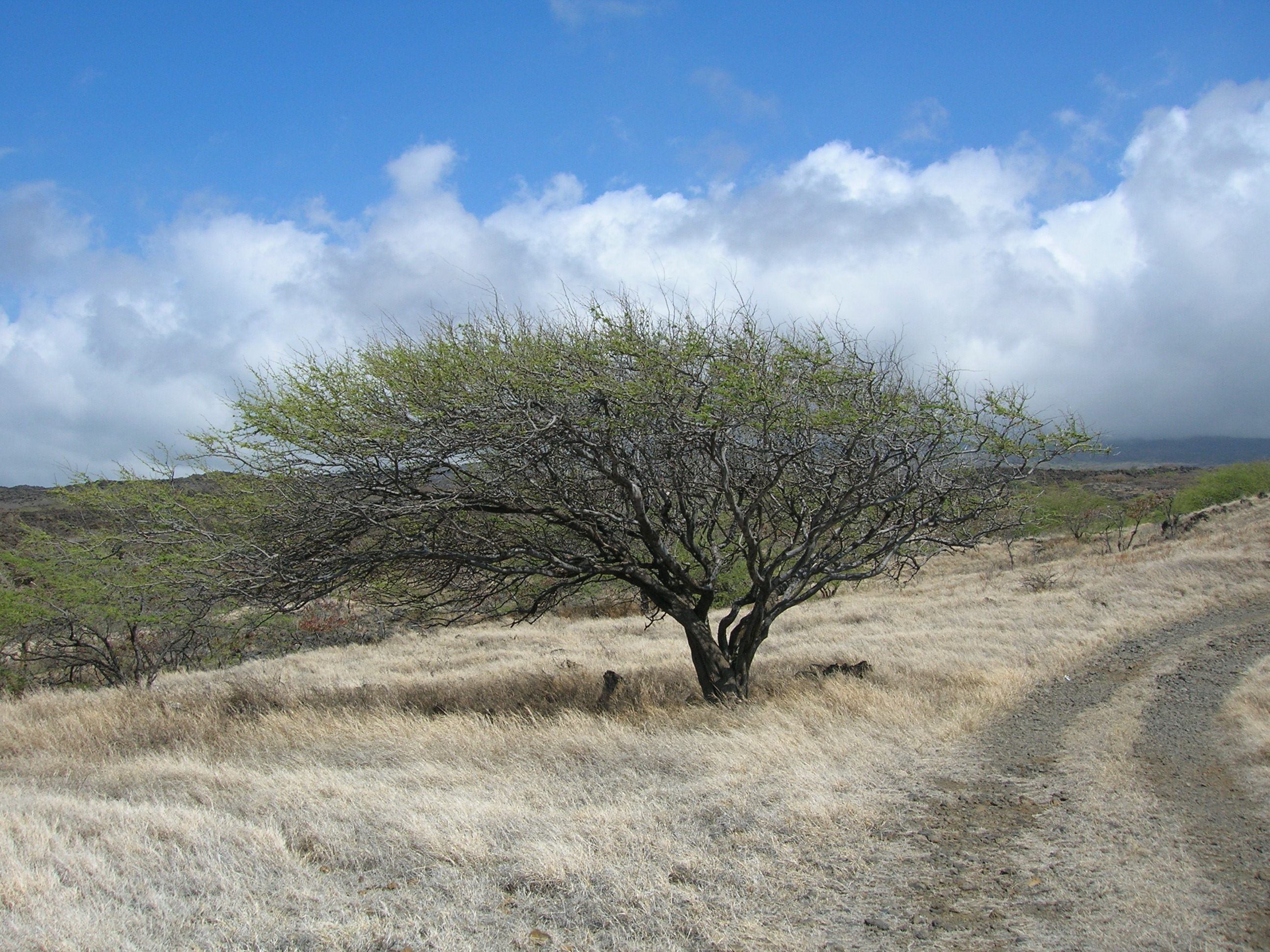
This photo is misleading as there is no grass in the Atacama

First, the Nazca (2nd c. BC - 7th c. AD) and their mysterious Nazca Lines were but one civilization inhabiting the Sechura-Atacama desert regions. Nor was the Nazca culture the only ancient Peruvian culture to create vast geoglyphs and vast irrigations systems.

Ancient civilizations rise and fall, each layer of civilization stacked upon each other like so much firewood. So the length of their stay, and their demise is part of a much larger cycle.

To enlarge the lens, there were many overlapping pre-Incan cultures that preceded, co-existed with, and followed the Nazca during 10,000 years of human settlement, including complex city-state civilizations of the northern Sechura desert region. The Chavín culture (1500 -300 BC; Late Chavin, 100-700 AD) was an Andean foothill culture but its sphere of influence was widespread along the Peruvian seaboard as far south as Nazca.

Then there were the Norte Chico/Caral-Supe cultures (3500-1800 BC), the Chimú-Moche cultures (ca.? BC -500 AD; [Moche ca. 100-800 AD]; and the late Chimú kingdom expansion into the Andean foothills of southern Perú [1370-1470 AD], their empire rivaled that of the Incas).

To the south, in the Atacama region, were the Paracas (750 to 175 BC—the oldest verified human remains date back 10,000 years), the widespread Wari (Huari) culture (500-900 AD) and the Ica-Chincha cultures (1000-1476 AD). (Paracas, in Quechua [para-ako] means raining sand—or sandstorm—the winds blow as high as 65 km/h and they will seriously sandblast you for a whole season at a time.)

The later Andean Incan Empire (1483-1583 AD) with its administratice center in Cusco, was not part of this complex—The Incan empire was the Andean equivalent to Roman empire (spanning from Columbia to Chile). So the Quechua-speaking inti-worshiping Incas are not part of this discussion.

Wikipedia Peruvian timeline:

But people are always attracted to sensationalism. And the Nazca have drawn their fair share of New Age kooks explaining both their existence and demise—from abracadabra to aliens. I fear that, under the guise of popular science, the Beresford-Jones treatise is yet another stringy theory riding the sensationalist's coat-wings.

Problem is, that the article, perhaps in the interest of brevity, does not paint an adequate representation of the larger story of the Atacama region and because of that, New(Age)Scientist readers are jumping on all the wrong bandwagons while shaking proverbial sticks and barking up all the wrong shrubs in the process....

What the NewScientist author fails to take into account of Cambridge archaeologist, Dr. David Beresford-Jones's claim, is that the vast hyper-arid Sechura-Atacama deserts, that runs along the Pacific coast from Peru to Chile, are in the most extreme rain shadow region in the entire world. And humans had absolutely nothing to do with that factor. So, naturally I was immediately questioning all assumptions.

Let me digress:

The massive Andes cordiellera blocks the path of precipitation. Rain-laden weather systems don't arrive from the Pacific, they come from the Atlantic and dump their payload on the OTHER side of the Andes. At 6895 meters (22,590 ft.) the Andes are too tall a barrier for eastern storm clouds to crest.

There are pockets high on the western slopes of the Andean foothills between 4-9,000 feet that do receive marine fog, or garúa drizzle, and sporadic rainfall spillover from the eastern storms, sometimes overflows, and is the headwater source of the few oases-rivers of Western Peru.

But the winter garúa, with its tall cloud ceiling that completely blocks out the sun for six months of the year, significantly does not come in contact with the relatively low-lying coastal region—hence no lowland drizzle is possible—despite high humidity.

Perhaps the NS author citing the fieldwork of Cambridge archaeologist David Beresford-Jones proporting the widespread deforestation theory should have looked a lot farther upstream in the timeline. Massive deforestation in the Andes is a very real problem. Deforestation of the huarango trees on the Ica plain began after Spanish colonization, with widespread massive deforestation at the beginning of the 20th century. (NB: David Beresford-Jones is very thorough in his Ph.D. thesis—it's a good read. See Ch. 8.)

The Sechura-Atacama desert NEVER get any rainfall. Ever. At least not within recorded memory. The official average is 1.5 mm per year. In some places, the average is .3 mm, or, put it this way: it hasn't rained since 1570 AD. In other places, it rains upon average—once every 400 years, the cumulative all-time average is once every century. The only place where there is any plant life at all is confined within the narrow river valley deltas, or on the crests of the isolated coastal foothill ranges of around 4-9000 feet.
The Atacama Desert in Chile (NASA)

The idea of vast tracts of forests growing along these narrow river valleys is a relative term—unless you measure the idea of forest in terms of the width and length of dry riverbeds. There are few riparian valleys—except near Pisco—which is like Needles, CA. Cutting down the huarango trees is not a logical explanation as to why the Nazca civilization suffered a catastrophic collapse around 500 AD.

The most recent major phase of enhanced precipitation in this region was about 15,000 years ago. There seems to be little evidence of massive glaciation in the Andes as well. Though current popular thought wants to mold the Atacama into a vast ancient grassland like the pampas, there's little or no evidence of it. It's been the driest desert region on earth for a lot longer (20 million years) than during the last 5000 years when the region was settled.

In the Supe River Valley, 120 miles north of Lima, the ancient city of Caral was not only the oldest city in the Americas (2600-2000 BC), contemporary with ancient Egyptian and Mesopotamian civilizations, but it also had the earliest extensive crop irrigation system. Caral geoglyphs etched on ancient flash flood plains are similar to that of the plains of Nazca. It too disappeared. As did many ancient pre-Incan Peruvian civilizations. And when it rained, entire civilizations have fallen, their mud-brick pyramid cities washed away. And I haven't even mentioned the massive earthquakes that uplift the region.
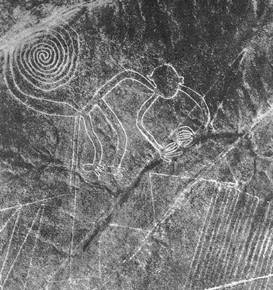
Nazca Lines or geoglyphs—the monkey.

What is the half life of the rise and fall of an ancient civilization faced with centuries of drought, catastrophic earthquakes, combined with rare torrential rains and flash floods—associated with supercharged current reversing barren El Niños—that devastated local fishing industries and rearranged coastal harbors?

The Andes mountain range is continually rising, uplifting the coastal plain—it's one of the most seismically active regions in the world—and its ceaseless uplift has rendered ancient irrigation and catchment systems obsolete in one shudder upon more than one occasion. Most of the region is situated on an alluvial mesa or tableland high above the Pacific. there are few natural harbors. Miles and miles of sheer mud cliffs drop 30 meters to the sea.

The only real form of precipitation in the Sechura-Atacama deserts is the seasonal camacacha or garúa, or thick winter (June-Sept.) marine fog. Certainly tree needles would trap some of the garua, but the fog itself never dampens the earth at lower elevations.

The Pacific Ocean is surprisingly cold, due to the Humboldt current, so the air temperature ranges from -2°C to 30°C. It's also a surprisingly fertile zone compared to the surrounding desert. There are also large colonies of penguins and fur seals thriving in one of the richest marine bio-regions of the world.

Only when there's a strong reverse warm El Niño current, does the icy nutrient-laden Humboldt current get diverted offshore and only then the traditional coastal inversion layer (anticyclone) shifts, allowing for the possibility of torrential rain and flash floods of Biblical proportions. And then there are no fish.

As far as the soil being too salty for agriculture after a flood, due to deforestation—huh? The ocean didn't climb up the enormous cliffs that rim the coast. Even a tsunami would be hard pressed to climb those cliffs. There was never excess runoff water (no rain) in the rivers to over-irrigate causing salt leaching. (Subterranean water, yes.) Dry farming and traditional drip irrigation methods were used (they tapped puquios-pipes into aquafers) to grow maize, squash, sweet potato, manioc and achira; cotton for textiles; coca, and San Pedro cactus—for religious purposes.

In the Nazca region (cradled by the Ica River and the misnamed Río Grande de Nazca), due to the sloping alluvial fan topography there were rare flash floods but no long-standing floods like New Orleans after Hurricane Katrina that took weeks to ebb. We're not talking about rich river delta floodplains here either as a large coastal range separates Nazca from the sea. But there is deep subterranean groundwater.

As for the extremely water soluble nitrate salts, the region has among the largest saltpeter deposits in the world that predate any civilizations by millions of years—suggesting an extremely stable, if, arid climate, for the lower Ica valley. Again, this points to a region of no rain.

True, the leguminous kiawe (huarango) trees desalinate soil as well as fix nitrogen (it's related to mesquite), but they would not be growing on the bone-dry arid plains but in river ravines wherever there's moisture. And they're similar to the water-hungry tamarisk, little water escapes their massive root system. So, no other plants survive in their perimeter.

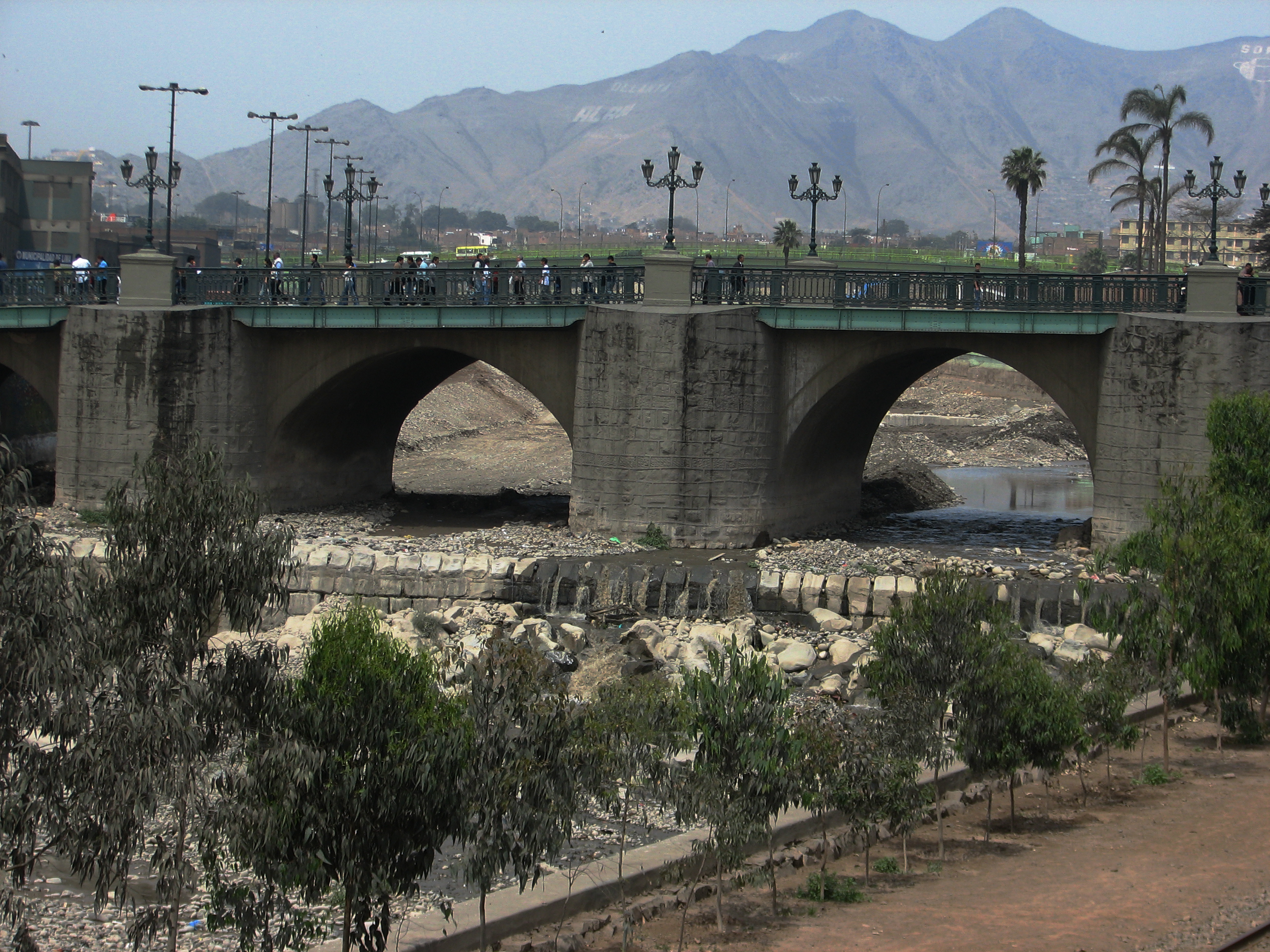
Despite underground aquifers, few western Peruvian rivers actually make it all the way to the ocean. Most run dry long before they reach the Pacific like Lima's glacier-fed Rímac River.

Lima's glacier-fed Rímac River is usually a dry riverbed.


Some Atacama river beds have been dry for over 120,000 years. And though there are plenty of water-rounded boulders strewing the Nazca Plain, they too are so ancient, their top surfaces are coated with a desert varnish that belie an ancient age. Desert varnish is a measurable slow-forming manganese patina, sort of like the verdigris on a copper dome. The darker the patina, the older the stone surface. The age of petroglyphs are measured in terms of desert varnish.

I picked up smooth-bellied river rocks crowned with a deep desert patina on their uppersides which means that they had lain undisturbed on the San José flood plain in that same position (the surrounding ground pebbles were also varnished) for at least 10,000 years.

Some New(Age)Scientist readers' comments also suggest a profound lack of understanding of the region. None, it seems, have ever been to the Atacama—including the author. Comments are just plain silly. There was no profound lack of imagination, no (gay) aliens, no (European) bees and certainly no livestock as we think of it— were involved. (Other than dogs, guinea pigs, alpacas and llamas—all of which were routinely harmed as they ate them.) However, according to NASA, the soil of the region is closest to that of Mars.

Blaming the farming practices of the Atacama civilizations that managed to survive with dry farming techniques for more than 5000 years—is equally silly. The armchair theorist who stated that ancient "man took a viable ecosystem and screwed it up for short term gain" is oh-so-geologically-wrong.

The idea of forest is a relative term here. One would be hard pressed to consider the mesquite that grows in Death Valley to be a forest by any stretch of the imagination—and the Mojave/Death Valley is lush (some 50 times wetter) by comparison to the Atacama.

And the Nazca civilization had plenty of faith—perhaps too much of it as they believed too heartily in their own Hereafter—judging by their practice of human sacrifice. It's a miracle they survived at all in such an extreme region.

There is, however, ample archaeological evidence that head-hunting became a major preoccupation during the middle and late Nazca culture. Maybe they just ran out of heads to trepan or they were victims of too much intense cranial manipulation—sort of like this article.

Maybe Beresford-Jones is right that the destruction of the huarango forest contributed to the downfall of the Nazca civilization, maybe my argument is slant-rhyme, maybe I'm too old school to accept these currently popular theories. Or I'm just cranky. But to my way of thinking, 4700 to 1500 years for any ancient civilization to survive under such harsh conditions seems to be a pretty good track record.


Note Bene: (In this case, it's a post mortem): A little internet sleuthing uncovered Beresford-Jones' 2004 PhD thesis on the same subject matter. So, was he out to prove his thesis correct? I haven't read it all yet, but Beresford-Jones compares the Nazca of the Samaca basin to the Sonoran culture as a model. OK, right there, that gets my goat.

The Sonoran desert is considered the lushest and wettest of the world's deserts, more rain (10-12 inches) falls in the Sonoran desert than any other desert. Though many of the same plants grow in both regions, the extra moisture of the Sonoran desert needs to be taken into consideration as well.

A closer comparison might have been the Mojave desert which receives less than 10 inches of rain (250 mm) per year, or better yet, Death Valley. The the annual rainfall average of Death Valley, the hottest, driest place in North America, is 1.5-1.9 inches (38-49 mm), comparable to the wetter regions of the Atacama.

Point being that these desert regions receive at least 50 times the amount of moisture as the Atacama (1.5 mm per year), so I remain skeptical.

The indigenous Sonoran cultures are varied: Pima-O'odham, Gila River, Papago, Pascua Yaqui (Yoeme), Seri, Tohono, Guarijio, Cavapizca, Tuguarda, and the Cocopah, to name a few.

I noted that Beresford-Jones also seems to refer to the Nazca culture as a unique singularity but all the Sechura-Atacama region civilizations practiced some form of massive geoglyphics—as well as constructing complex irrigation systems—not to mention temples and pyramid complexes.

Then there's the danger of making a hypothesis (say, a Ph.D. thesis) and then going out to find supporting evidence it because you're looking for material to that will fit your theory.

Me, I'll take the Schrodinger's cat approach. Is you in or is you out?

THESIS: OK, in the introduction, Beresford-Jones refers to the possibility of massive ancient deforestation. Right there, my dander's up—I think he's wrong. No indication of massive anything in Nazca, except mud and geoglyphs. Hundreds of mesquite tree trunks does not a forest make. Deforestation is a very real new-colonial manifestation beginning in the 16th c., and escalating during the Industrial Revolution.

However, Beresford-Jones' thesis does thoroughly assuage my concerns about the weather in more technical terms than I have access to. Too bad that information was omitted from the NewScientist article…it would have gone far to put my 'yeah-buts" at ease. It's a LOOOONG Ph.D. I may not get through it all…I'm up to Chapter 9.

Here's a thought: how does one critically read a piece? The wired story obviously got my dander up, due to obvious holes in the weather theory, but the Ph.D. thesis, less so—however I'm barely into it so I don't have the actual data in hand, er in my brain. Question is, do I really want to invest this kind of time to prove/disprove someone's theory? Other than the fact that I've been there, or that I harbor some opinions, what's in it for me?

Though I have an abiding interest in archaeology, I am not an archaeologist. That critical reading thing: I emotionally responded to the so-called facts presented, because my gut said they were wrong. I began to write this in order to see what I needed to know/relearn. So for me it's a teaching tool—a reason to learn.

However, when I began to research this piece, I found plenty of evidence to prove my climatic theory right—but the premise that the tree pollen count dropped (indicating the fall of the Nazca empire) requires further investigation. Sleuth on.

Disclamer: most links are from Wikipedia, there to expand the knowledge base but I read all Wiki articles with a grain of salt as they are not scholarly articles. That said, the links I've included seem accurate enough to shed light.


Friday, April 24, 2009

AFTER THE SOLSTICE, MACHU PICCHU


© Maureen Hurley 1984 All rights reserved.
On the northern slopes of the Andes, 
the packhorse veered sharply from the trail
that led to the fabled lost city of the gods,
makeshift hacamore biting into his eyes
he was running blind, but his hooves knew
the paths, both sacred and profane.

I pulled the runaway's head into in my lap,

I gasped as the thin air whipped my face
thigh muscles burning to maintain balance,
but his eye was a lake of fear rimmed by a pale shore
as I hammered on his hollow forehead with my fist.
Perhaps he was remembering his Andalusian blood,
his tail was a prayer flag raised high to the wind.

The grey gelding raced up the slope to a chicha bar.
Unaccustomed to the live weight upon his back,
his hooves tattooed a drumroll of panic on hard clay.
At the last second, I hoisted a leg over his neck,
as he slammed sideways into the adobe wall,
the wooden pack frame splintered into kindling
and the hut resounded like a wooden drum.

The startled Indios abandoned their beer gourds
and scattered to the four directions like crickets
away from the flash and churn of hooves and teeth,
and a crazy gringa astride a wild packhorse, sidesaddle,
without a bridle, only a stiff lariat across his nose.


* * *

Like Frost's pony, the dappled packhorse
was used to stopping there. No frozen woods
or downy lake, this was an alien land. He stood shaken,
with heaving flanks, head hung low, nostrils flaring red,
as the Indios gathered around a crazy Epona in their midst.

The Poet rode up to translate us out of that mess.
The Gates of the Sun and Moon to the Lost City
of the Incas opened wide to let us in.
We made peace offerings on the intihuacana.
We made poetry, equating it to eternal love,
we played a benediction of mathematical equations
with the piercing stars of the Southern Cross,
compared it to the emptiness of the sky to the south,
and descended into the inferno, as a forest fire
raged on like a ruby-throated monster gone mad
on the terraced slopes of Machu Picchu.


But when we returned home from the Cordilleras,
the Poet went south, without so much as a tu
or an
entonces or even a pues, he translated
the burden of a mid-life crisis, into the classic
binary subdivision with a blonde student—
younger than his daughter. Of course. She was
a descendant of the ill-fated Donner Party,
she was born into a cannibal hunger for men,
and a survivor's lust for horseflesh and melodrama,
he blamed her strange appetites on the vagaries
of weather and stars but in the end, 

she left him for another woman.

Poetic justice.
4/24/2009  
24 Write a travel-related poem


Thursday, April 3, 2003

SACRED VALLEY 2003 (GARBLED TEXT)


In Ollantetambo,
the sun reveals its secrets at dawn.
Winter solstice.
Delicate breasts on the rocks.
We crossed ancient bridges
that have stood testament for 600 years.
Pizarro was routed here. Say the names
Ollantetambo, Huaynapicchu, satellite cities
marking the 12 routes to the sacred city.
Temple terraces face due north
towards the temple of the sun.
At the temple of water
science and religion and power
are one thing and speak in rills.
At Ollantetambo there are
water mirrors everywhere
to remind the Southern Cross,
the Chakana, stairway to the threefold world,
to bring back the season.
The four directions were invoked 
at the pachamanca, the earth oven.
At Saxayhuaman, the ballcourt of the panther,
that mirrors the darkness of the Milky Way,
there are potato ovens everywhere.
At the altar of the intihuacana,
potatoes are the center of the world
the inti rey invoked the days
and the seasons to return
to the navel of the world.


2003 April 3

Tuesday, July 16, 2002

Intangible Take 2

I never wanted the plane to land, but the Andes rose like a white dream puncturing the sky. All the blue leaked into the eyes of mestizos. Time flowed backward, lined up like basureños in shacks along the Apurimac. Lined up like the locked eyes of death on several continents. The snake dancer from the selva cursed me. I was banished from the garden. The bridge at San Luis Rey failed me. The six-legged nightmare rode on the smoke. Ask me what this means, I can’t read your history written in the smoke of the victor. The garua fog hid our feet. A gorge divides water from water, brings it together again. Except the L.A. river. What leads us on? A child’s face buried in the moon’s path.

She stored apples under her bed. She said she was afraid of time. The teeth of graveyards. Riderless horses. Fear of Eden. Fear of the scent of money, fear of poverty. Fear of the telephone in the dead of night. I said I stayed in my dreams. Memorized floor patterns, but specific moments never came. The desire to return was embedded in the fear of fear. But I said there are many fears to choose from. Fear of not growing up. Fear of control. Of growing up and not being in control. Or of growing up and being in control. What if I ran away and no one stopped me? That moment of star-crossed thresholds. Not saying, Now I lay me down to sleep. Saying, I see my future as nothing, becoming nothing. The thrones of angels. Fish with the hearts of men. Each belabored breath blinded by the light, I opened my eyes. Looking forward, looking back. My dreams littered with scorpions. Descend with eyes open wide, like Beatrice.

Do you remember when we danced face-to-face? Your mouth opened into my darkness. We swam to the ceiling. You flew into the light, grew fins. We needed to rearrange definitions of speech, of the forgotten rain. Kiss me while the bones of humanity learn to sleep in doorways, and eyes learn not to see. They bathe in the streets where privacy is closest held, yet farthest away. To suckle memory. Whose tongue in my mouth? Por el loro, he said. Van Gogh’s sunflowers weren’t gold enough in the city of bankers. Raucous words flock to the trees like wild parrots. The computer is the 13th muse.

Fear of your thoughts. A code trickling down my thigh. What I ought to have said. Or, if I said too much. Fear of my thoughts. The audience dreaming of an audience dreaming. On bulkheads facing the sea, and in stairwells facing dark alleys, fear the semen trapped or not trapped in translucent orbs, a tangible sign on all the continents. The bridge becomes a flamenco skirt for the moon. Who wears the moon’s mask? The lover’s hand under the dress. No mermaid’s tail. When I said love, I got religious. Learned to walk, then crawl. Post-modern love deconstructing beneath city clocks without hands. Orgasm is closest to art. I didn’t mention syringes or T-cells.

What are we willing to accept? Kennedy shot again and again. And now this. Everything post-catastrophe. The TV channel-surfing in an empty room. Think of random blue noise as a way of life. Intangible instructions. When will blood learn to become stone? Was it better than anything, walking on the moon? Were we ever in the garden? One thing is certain: Night is neither noble nor sacred; her indifferent legs are open wide.

See also

© 2002 Maureen Hurley

Monday, January 22, 1996

Machu Picchu: sweat of the sun


At Machu Picchu, gold was the sweat of the sun. Hiram Bingham only spent a few hours in the city, never realizing what he had discovered. At the temple of the sun, massive peaks rose to the sky, it was an empire of the sun.

Bingham was searching for the fabled Valley of Vilcabamba, the last Incan capital, and retreat, the Espiritu papmas, the plains of ghosts. He came looking for gold, and mummies. The jungles hid hundreds of buildings he never saw. 

Bingham's exploration was eclipsed by Admussen's discovery of the South Pole. The Golden Age of Discovery was declared over. He returned in 1912 looking in vain for the gold, and the mummies, but the Incan cloaks were made of bat-skins and twilight. 

The last Sapa Inca, Pachacuti Inca Yupanqui, emperor of the Incas, built the city 500 years ago as a summer palace, during a time when these mountains were gods, the thunder was their voice and the Incans were their children.

The conquest of 1532 never touched the fabled city of Machu Picchu. Why did the Incas abandon their city in the clouds? She still sleeps in the clouds, and weeps the sweat of the sun, dreaming of her children.

1/22/96

Sunday, December 3, 1995

Paracas, II, first draft

Paracas, II

I have stood in the deserts where it has never rained in living memory, where the ancients brought water from miles away in canals. Snowmelt from the Andes made this desert bloom a thousand years ago, but the Cordilleras grew up to the sky, taking the fertile plains with them, until the water flowed backwards. 

I have climbed the skeletons of ancient cities, on man-made mountains, where strange crows flew to the center of the labyrinth. I have hiked into the heart of the Inca Empire. 

I have been to Sacsayhuaman, the panther of the Milky Way slept there. The red ocher on the walls. I have stood on the Masada at Cerro Baul, where there was a siege of 50 days. No water forced a surrender. 

Why was Chan Chan deserted like all the other citadels along this coast? When the Spanish came? All the deserted terraces lying fallow for 500 years, the desert endures the confession of stone. 

I have carried the red rocks back from Nazca where they have lain undisturbed for centuries, staring up into that forever sky for millennia on end, while the constellations orbited into the Aquarian age. Who knows how long the erosion chewed on their rock faces, the undersides, smooth from river polishing? This place that hasn't seen a river flow in the millennia. 

Skulls and bones have lain here undisturbed for a thousand years. Llama bones and scraps of burial shrouds. The ceremonial death ritual to ensure life. 

Climbing the metal water tower on the Pan-American Highway, we view the necropolis. Chen Chen was already in decline when the Incas invaded Chimo the remains of hundreds of young women in the burial bed of the king. God Kings of Chan Chan. 

Coastal desert reed boats on the Pacific. Where do you find water in the desert where it never rains? Green jewels on cliff edges In the Moche Valley.

I stood at the top of this ancient pyramid at Huaca del Sol, abandoned canals 2500 years old. The the inter valley canal, once fed by a river 60 miles, away was built in 1100 A.D. There are hundreds of canals and river valleys here, they used the water to measure the degree of slope. I've walked down those dry canal beds, with their sophisticated hydraulics on par with the Great Wall of China and the Egyptian pyramids, as a great ancient engineering feat.

Meanwhile the land rose like a budding tooth. 

El Niño in 1983, flooded this region; 50 feet above the valley floor there is a flood line with freshly eroded bricks above it. The taxi driver tells us of the flooding of El Niño, he said that the Pan-American Highway was underwater. 

I'm reminded of the pink flamingos at Titicaca, on the altiplano, the giant Andean coots and grebes, the shell middens like giant chess figures dotted the landscape on this rapidly receding coastline where one coastal uplift of 60 feet at a time, combined with a deluge of rain, forever altered the landscape. 

The orange and red Peruvian buses with their white stripes like a reflecting mirror shining on the desert into these opposite shores. 

I've stood in dry riverbeds, and I have been the raw scarred banks, decades after the deluge. All those skulls staring out to sea, refusing to stay buried, as if the sea held all the answers.

Only now, after seven years, every cell in my body having replaced itself, but what about my hair? Surely my hair hasn't replace itself, for it is longer than seven years growth. 

On the temple of the moon above Machu Picchu I wanted to leave something of myself behind for my dead grandmother and so I cut off a chunk of my hair and left a quartz rock from home at the top of the moongate. 

December 3, 1995 (from my journal)

See Letter to Luis Kong, from the Necropolis, Paracas 1988


Friday, October 14, 1994

HEALING WAYS freewrite


For those who will follow.
        —for Al Hunter

I wanted the edge of the equator
where the scent of eucalyptus
tangles the continents
I fell hard against the sun
on the streets of Quito
on the street of the upright coffins
I wanted to find a dancing partner
I wanted to find life
edged in the purple satin of the dead

I could see their faces smiling at me
following me into my dreams
When I saw the eyes of the unborn
I was separated from myself
though the rainbows chased us to Otovalo.

My grandmother follows me even in sleep
in the underbelly of this continent
She refuses to speak but asks for
the camera lens of my eye
to record the tarnished silver of the heart
my beating heart with clipped wings
in the cage I was born into.
I dream of lizards in the woodpile
against the coming of winter
the circular haunting of life.

I cannot write of my father
whose solitary confinement
followed him even in death
raising his jar of whiskey against the darkness.
I gestate my terms of mourning
give birth to lizards and geckos
who died the day after his birth
I walk the streets of the Mission
like a bloodhound in search of unnamed quarry
of my absent father, hungry for memory
anyone’s memory
a mirror against my own emptiness
that I couldn’t foresee
the circle of the cup eternally chasing
its own beginning, its own end.

I stack wood in order to find order
flanges of wood, splinters in my blood
ordinary things speaking in tongues
In dreams I ask for explanations
He hands me a book
says, Pretty good story, huh?
This, my gift for healing

I wanted to find the edges of the cup
I wanted to slide down the white belly
for those who will follow
not of my own lineage
for I have taken back life too many times
to live a charmed life
The decisions, hard as silica pierced my heart
opened it to the vulturing wind
and genetic code fluxing the lake of memory
ancestral chain of mountains  scouring the sky.

I give you the heart of these mountains for safekeeping
they require the singing of your feet at sky level
and they will give you fragments of me
buried in the crystalline structure of quartz and fossilized bone
I have found fragments of ancient trees wishing to speak
locked in the eternity of stone

I wanted the edge of the earth to find me for once
I believed in falling off it
I was given no object to hold
nothing to pass on except the work of my life
and the ability to find the hidden lineage in everything
the circle of the cup following me white in sleep
offering me coffee to keep awake.

I want to tell you to live is to be fully wakened
to the song of the sky
against the edges of the mountains
the gift my grandmother gave me
there are no edges, no endings
the round eye of the cup
singing patterns of the equator
of our lives
in these mountains of our past
the Styrofoam cup is a poor reminder
of this final century of the millennium
its progeny on all the sacred trails
of poetry without borders.

10/14/94
Fort Mason
Al Hunter's poetry workshop, 
CPITS International Conference

Wednesday, July 6, 1994

IN THE CLOUD FOREST


IN THE CLOUD FOREST
                           —for JOS
A través de la noche de piedra, déjame hundir la mano
y deja que en mí palpite, como un ave a mil años prisionera,
el viejo corazón del olvidado!
     —Pablo Neruda, IX, Alturas de Macchu Picchu

On the trail to Machu Picchu,
fire opened the door to memory.
Our eyes mirrored the struggle
of the selva’s final story in the cordilleras.

Smoke peddled light across the sky.
Speculatively met us at the pass
of the abandoned fortress, Huaylabamba,
with tarnished masks and season tickets.

Gave us ringside seats—our eyes fondled
the cleavage of the Andean night chained
in firecrested ruby and golden necklaces—
the angry mantle of a campesino’s escaped milpa fire.

Cut off from the wounded hems of snowfields,
and chained to the heights, we dreamed of baptism by fire,
meteors trapped within the smoking mirror of the sun,
and of honor among thieves in this crucible of silence.

We climbed the long ladder of the earth to balconies of the sky,
to draw cool air through Neruda’s wet shrouds,
to firewalk on the coinage of coals and seasoned stars,
and to navigate the adamantine flame of the Urubamba river.

We kissed the secret eyries of crowned solitudes,
we gathered orchids, we entered the shining path to the heart
of the city of stepped stone, we burned poems written in blood
on the intihuacana. We emerged unscathed only to lose faith,

we scattered our ashes to the wind for seven years.
Waited for something—anything—to happen;
perhaps an irrefutable sign from the gods.


7/6/94