Showing posts with label St. Patrick. Show all posts

Thursday, March 15, 2012

It's PADDY not Patty


For PaddySnakes! Why is it that as we approach St. Patrick's Day, the Irish-American (and wannabe Irish-American plastic Paddy) illiteratii, perhaps with a sullied and powerful thirst upon themselves—therefore, being thoroughly deficient in any reasoning skills, or little gray cells, crawl out of the woodwork, and insist on calling their international drinking day St. Patty's Day?  PATTY? Tut-tut. Are you kidding me?

Bah! What's with all these amateurish alcoholics who don't even know how to spell their patron saint's professional binge-drinking day nameslake?

It really gets my goat. My initial response (aside from my knee jerking so hard so as to render myself unconscious from a self-inflicted blow to the chin), is who's she? She? Baaaaa?

Did St. Patrick undergo a sex change? A sea change? Was he Swedish? A cloned sheep? No, that was Dolly. We do know that Patrick had a thing for pigs, not sheep. At 15, when most kids were fooling around in the bushes, he was captured by Irish pirates, and became a slave. 

An Antrim chieftain named Miliucc (his name sounds suspiciously similar to the Irish word for pig—muc, as in mucky. Anyway, Miliucc called Patrick "Succat." (That's Irish for sucker—not.) Probably because that was his real name: Maewyn Succat. It means warlike in proto-Welsh. He'd have to be, considering besotted Americans would be calling him Patty some 1500 years hence.

Maewyn Succat (he wasn't yet baptized Patricius) was a swineherd for seven years in the mountains of mourn—er, Antrim, with nobody to talk to except them little piggsies. Maewyn-Patrick-Succat was off gamboling with the jamóns for seven long years? Helloooo Dolly! Can you say rashers of bacon?

The Irish word for pig muc, comes from the Old Irish word for pig, which is socc (soch/suck). Sounds suspiciously like Succat, doesn't it. Being called a pig or boar in Irish or Welsh (trwch) wasn't a bad thing in the pre-medieval ages. The pig, or boar, was considered a sacred animal. You're on the pig's back now means you're on a roll. Of course, nobody could say trwch in Welsh without sneezing or sounding like a pig. Better than being called sucker! 

How the little piggsies (that's banw in Welsh) ever taught Maewyn-Patrick to speak Irish, remains a mystery. They must've been very talented swine. Perhaps they were bilingual? You may well ask: seven years? So, what's time to a pig? Maewyn-Patrick was 21, far from home, and he readily admitted to hearing voices on or in the hillside. Holy Leaping Schizophrenics, Gilligan! No wonder he drove all the snakes from Ireland. They didn't speak Oirish like the pigs. Or they weren't speaking to the pigs at all, so they got eaten.


I know St. Patrick had a cross to bear trying to convert the so-called heathen Irish to Christianity—but, ferfeckakes, not TWO of them. (No matter that Palladius was already busy converting the Irish when Patrick was still wet behind the ears.) I digress. Not PaTTy (see the two crosses?), but PaDDy. As in a DruiD. Was it some loose canon (stet) of a TT stutttttttering off somebody's keyboard to blame, or what?

How did this glaring "T" typo snake its way to these clemented shores of Amerikay? Maybe it's derived from the baby hand-jive, patticake. Or maybe it's from slinging hamburger. Gimme a patty. Raw. Hold the curly shamrocks, Babycakes!

it's PaDDy—not Patty—ever! Patty is a girl's nickname. Got it?  St. Patrick was not one billion McDonald's burgers served either—which is probably the natal spawning ground of this blaring typo. Blame it on those preliterate generations raised on Big Macs. Paddy is not necessarily a derogatory term. It's a man's (diminutive) nickname, or pet name.

St Patrick
Ok, so my great-great uncle was called Paddy Walsh, and his son was really called Patsy to distinguish him from his father. Really. No one would dare call Paddy diminutive, or Patty, for that matter, and live to tell the tale. 

But there were too many Patricks and Patricias in the family. Patsy's cousin was a Patsy too. Their sons were Paddys. Paddies and Patsies. Yup. We tend to flip the dimunitives every other generation. Works like a charm until they begin to overlap. Then we're right fecked.

Our family is rather name-challenged—we keep recycling the same handful of names over and over. Even the girls are called Patsy. (Not Patty!) Causes massive confusion in the family tree. We just know we're all related. But not exactly how. Sort of like a Kentucky Family Tree—you know, straight up, only ours is horizontal. Or maybe it's drowning itself neat in affrontal lobotomy of uisce beatha. But that's fodder for an-udder blogger.

Imagine being a cowboy called Patsy in the wild, wild and wooly west of Nevada. Yep. That was my rellie. I suspect some serious bar room brawls were in order. It's sort of like a Boy Named Sue. Paddy was also called The Boss. But trust me, no one called any of my relatives—male or female, Patty! Ever. So we tend to take umbrage rather easily.

Call it Saint Patrick's Day? Grand. It's all right and proper. (You may also genuflect here—a full knee drop, if you please, at the bar of your choosing—not some pannywaist half-knee crick or, gawdforbid, a curtsy—though royalty is invoked.)

Call it Paddy's Day? It'll do; but don't forget the St. part. As in saint, not street. Or Paddywagon. Get it?

St. Pat's? Och aye, if ye must. 

St. Patty? NO feckin' way, ye illiterate goats! Bahhh! Maaaa? 

It's enough to make and Irish(wo)man to take up flinging pigshit or cow paddies or worse, become bullish and see red—er, make that green. No wait, that's a river in Chicago. (No, not in back alleys. The real river. They dye it green.) Enough to get your knickers in a twist.

Beides, have you ever heard of a police prisoner transport vehicle referred to as a Patty wagon? I think not. Black Maria, maybe.

As my Irish teacher, Joe Nugent from Mullingar would say: We'll have one o' that fookin' shamrockery here!

Wednesday, March 18, 2009

St. Patrick Portrayed as a Druid


A reader asked: "Where did you find the information about Patrick's intolerance toward non-converts and his running down his own sister?"

It was probably from The Life and Writings of St. Patrick, John Healy, 1905. 

"'Driver the chariot over her,' says Patrick; and the chariot went over her three times for each time she would come and place herself in front of it."  St. Patrick’s Labors in Armagh, P 502.

Dr. Healy (1841–1918) was Archbishop of Tuam from 1903 to 1918. "The Life and Writings of St. Patrick" is considered to be one of the fullest accounts of St. Patrick's mission in Ireland.

"Dr. Healy has collected the popular traditions; has identified, wherever possible, the sites of the old Patrician churches, and to our mind has given the most accurate, the most complete, and the most interesting account of what may be called the topography of St. Patrick’s life." —The Irish Ecclesiastical Record

I guess the larger question is: what were Healy's sources? I have read this account in more than one book. I think the original source comes from The Tripartite Life of St. Patrick. You can download and read it here at Project Gutenberg: Most Ancient Lives of Saint Patrick

Of course, that three times thing is a charm—signifying a druidic event. (Drumroll.) Of what, I'm not sure. However, what's even more curious is that that Patrick's sister placed herself in FRONT of the chariot three times. Maybe it's more about the chariot itself, than putting one's self in harm's way.
When Saint Patrick was trying to convert King Lóegaire to Christianity, the ghost of Cú Chulainn appeared in his chariot, warning him of the torments of hell.  —Cú Chulainn (Wiki)
St Patrick was reputed to have driven three times over the prostrate body of his coarb, or disciple, Sechnaill, or Secundinus, (who was not only Patrick's nephew—his sister's son—but also one of the first bishops of Armagh).  
And thrice, like some great warrior of the bards,
Your conquering wheels above me you have driven. —From The Legends of Saint Patrick, by Aubrey De Vere, 1872, P. 247.
What is it exactly with this "meek and mild" Patrick fellah doing running over all his relations with chariots? A case of being a really bad driver, perhaps it was a faith-based DUI? But we know that Patrick had his own personal chariot driver, Odhrán. Later ninth and tenth c. interpolations of the Patrick stories seem to have distorted the meaning of the original roughshod tradition. Whatever that was.

To drive over someone, is probably a metaphor, as in overthrow. As in driving out snakes. So, I hope it's a trope of sorts—perhaps once understood in Irish, but clearly something got lost in translation.

"St. Patrick's Breastplate," a journey poem composed in the style of a druidic incantation or "Lorica," on the theme of Patrick's this victory over paganism. (It was written in 8th c. Old Irish and is sometimes attributed to Sechnaill. You can see the original here—but there's no chariot line.)     
Christ with me, Christ before me,
Christ behind me, Christ within me,
Christ beneath me, Christ above me,
Christ at my right, Christ at my left,
Christ in the fort,
Christ in the chariot seat…
My reader also commented upon the  "multitude of "historical documents" and that most them contradict one another." Well, I think the above paragraphs prove this theory out nicely.

I try and read the oldest known documents from manuscripts (prima materia), and then fill in my knowledge base from there as I juggle and weigh the varied accounts. 

In this case, I studied with UC Berkeley Celtic Studies Chair, and Rhetoric Chair, professor, Dr. Dan Melia. We read several medieval hagiographies including  Adamnán's "Life of St. Columba," which also gave me glimpses into that realm—at least from ca. 650 AD.

And we read the "Confessio of Saint Patrick & Letter to Coroticus" (probably written by himself) which is as close as one can get to the source material. Adamnán's "biography" gives us a glimpse of  how Irish saints were viewed—using the druidic model. (You can read a translation online here:)

I found I had to hold more than one world view: 20th c. synopses were not useful, many 19th c. treatises were loony, but the Medieval view—what was known, what was expected, was most enlightening, provided that you were able to put on a Medieval mindset. No 21st. c. anachronisms or historicity through a modern lens need apply.

Tuesday, March 17, 2009

St Patrick was a Strathclyde Briton

NB: This post was in response to a rock-stubborn Scottish American lassie (not terribly clear on history) who slavishly flamed our Irish in CA group. I've removed most of the personal references. It's challenging to turn an email letter into a blog. I feel like St. Patrick writing a shame Letter to the Soldiers of Coroticus. When I get time, I will revise this. Add links. Or not. This is not a blog on St. Patrick, per se. I'm assuming the reader already knows the basic story.


St Patrick was a probably a Strathclyde Briton. Meaning he didn't speak Irish. Or Scots-Irish. Or English. He probably spoke something similar to Welsh or Cumbrian.
I am Patrick, a sinner, most unlearned, the least of all the faithful, and utterly despised by many. My father was Calpornius, a deacon, son of Potitus, a priest, of the village Bannavem Taburniae he had a country seat nearby, and there I was taken captive.  —The "Confessio" of Saint Patrick (http://www.robotwisdom.com/jaj/patrick.html seems to be a dead link)


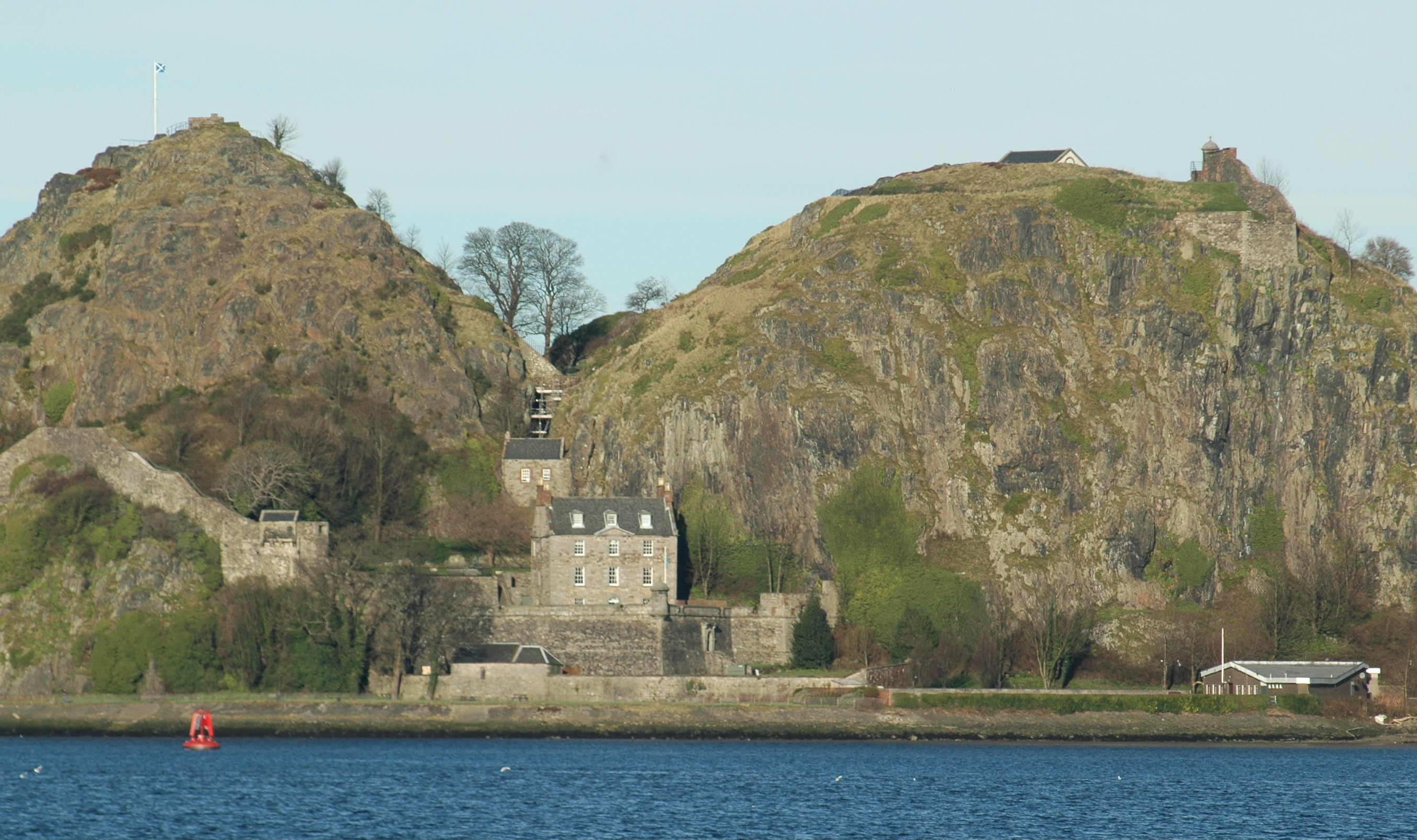
No one knows where the village of Bannavem Taburniae was. But Cumbria, or southern Scotland may have been Patrick's homeland. There's some conjecture that it was near Dumbarton (Dùn Breatainn, or Alt Clut—Clyde Rock) on the River Clyde, translates as Fort of the Britons. 

The Dumbarton settlement was first recorded in the famous letter Saint Patrick wrote to Ceretic (aka Coroticus of Letter fame) King of Alt Clut in the late 5th century. Merlin was rumored to have slept at Alt Clut too. Sir Thomas Grey of Heaton, in his medieval tale, Scalacronica, recorded that "Arthur left Hoël of Little Britain his nephew sick at Alcluit in Scotland."

Some historical "truth" is in order. The term "Briton" in the 5th c. does not refer to a slur, as in "Brit," or the Irish slur, "West Briton," a wannabe Englishman. The correct term in this case, is a Briton, not a Scot. It is not intended as a racial slur but an anthropological/ cultural/ linguistic time/ place indicator.

King Arthur is referred to as a Briton... A Briton was a P-Celtic-speaking native living on an island (Pretannia) that was later referred to as England. There were dozens of Celtic tribes, the Icenii, Caledonii, (or) The Pictii, etc, who spoke Brythonic Celtic, or P-Celtic. (Pictish seems to have elements of both P- and Q-Celtic. It may be an older archaic language, related to Gaulish, as the Romans do identify the Pictii as being in Gaul as well.)

In the 5th C. the term "Scott" would have referred to an Irishman, or an Irish speaker, not a Scotsman. 

At one point, "Scotii" referred to the Q-Celtic-speaking Irish, not the modern day Scots, as Ireland was referred to as Scotia Major, and because of all the Irish settlements in what is now referred to as Scotland, that region of Scotland (Dal Riada) was called Scotia Minor.

The Roman term "Scottii "has been variously translated as "raider" and "pirate." The term may have evolved to distinguish Q-Celtic speaking regions from P-Celtic regions.

Curiously, Scoti is not a Roman or Latin ethnonym. (The Romans used Hibernii, based on Ptolemy's Greek, Iérnē). Nor is it Goidelic, but there is a reference to Scoti in the Middle Irish MS, Lebor Gabála ÉrennScota, daughter of a Pharaoh of Egypt. (Scota was probably Milesian, or Iberian vs. Egyptian—tho the Ptolemys did hire some 40,000 Celtic mercenaries), and Scota was the eponymous leader of the Gaels, who created the Irish language.

The word "Briton" comes from Pretanii. P/B sounds were indistinguishable in insular P-Celtic, the language spoken in most of Great Britain—including the Pretenic of the Picts (but they had elements of both P- & Q-Celtic embedded in their language.)

There was also Q-Celtic, the languages spoken in CeltIberia; (Goidelic), Ireland, parts of Scotland (there were numerous waves Irish settlers in Strathclyde and Renfrewshire), The Hebrides, and the Isle of Man.

Yes, Q-Celtic was also spoken in the Isle of Man. Manx is a dialect of Irish with a different orthography (spelling). In other words, I can grasp Manx if I say it out loud. (Viking veneer aside), there is also linguistic evidence that the Celtic inhabitants of the Orkneys and Hebrides spoke Q-Celtic. There was no difference between Scots Gaelic, Manx, or Irish during the 17th & 18th centuries. It was one language, one dialect.

Irish Q-Celtic place names in Strathclyde region are still in evidence. There is record of Q-Celtic spoken in the West of Britain: there is an ogham stone in Irish. Many waves of Irish speaking settlers in the Lake District, etc.

Scotland and Wales don't emerge as national and separate nations/ identities until centuries after the Anglo-Saxon invasions severed the West Coast Britons into two groups. The language spoken at the time on the West Coast of Great Britain was the same. Eventually the P-Celtic evolved into two dialects (ancestor of Welsh and Cumbrian).

We know very little about St. Patrick—other than he DIDN'T speak Q-Celtic. He had to learn Irish. We also don't know if he spoke P-Celtic. We do know he spoke and wrote in Latin and that his family were Roman citizens. Patricius is Latin. This does not mean he was Roman (or Italian), but we do know he was a Romanized Celt, as was the Cis-Alpine Gaulish writer, Vergil, and probably Catullus, Trajan, and many other so-called Roman authors.

Sunday, March 15, 2009

from Annals of the 4 Masters—St Patrick Timeline

Notes from the ANNALS OF THE 4 MASTERS
AKA The Annals of Donegal comprised of the:
Annals of Tigernach,
Annals of Clonmacnaoise,
Annals of Inisfallen,
Annals of  Ulster,
and the Book of Conquests; and the books of O'Maol Conereys, Kilronan, Leacan, Isles of the Saints, MacMangus, etc. (Michael O'Clery, et al, compilers 1332-1608).

(Note Bene: Most  of this is more or less from the Univ. of Cork electronic texts and Annals, v.2, Owen Connellan, tr., Dublin, 1845. I've long since lost the original links. So sorry. I compiled this timeline at the end of last century (by hand)—at a time when I had limited internet access—and there was no such thing as broadband so I've included a Wikipedia link above. Hope that helps. There is so much more available on the web these days than when I began studying the Irish texts.


I spent a lot of time searching UC Berkeley Library microfiche databases. I also spent a lot of time in the dusty library basement with turn of the (19th) century facsimiles of Irish Annals. This was all long before I started blogging—as blogging hadn't yet been invented. I never expected my notes to live on in this form. But someone asked me for a timeline. And so here it is. 


This timeline is also augmented from miscellaneous timelines I was reading [they are marked in various ((inventive)) parentheses]. I used several timelines in order to be able to read Patrick's Confessios and Adámnan's Life of Columba in some sort of  quasi-historical context. 


So this is really my personal cribnotes for a class I took at UC Berkley on Medieval Irish texts with Professor Dan Melia. I found it helpful to have both the subject's and the author's timeline at hand—especially since the Viking invasions both promulgated and destroyed much of Ireland's literary history and oral tradition. 


I found that I had to read the texts with two minds, maybe three minds—from the medieval mindset—and from the modern mindset—simultaneously. What was commonplace knowledge during medieval times was often omitted from the texts. (So you have to fill in the missing blanks with your modern mindset). Current medieval notions and schools of thought also have to be kept in mind. What was accepted knowledge, what was the new thinking of the time, etc. And keep in mind what was considered to be old-fashioned thinking way back then.


You have to bring a lot to the table to read ancient texts. You cannot read the texts with 20th or 21st century eyes—then judge them with with modern morals and value systems. That will interfere with your understanding of the medieval world. Sorry this is so clumsily said—I'm sure someone has said this more succinctly. Just my observations. 


I loved Dan Melia's advice on reading the texts: you need to build separate rooms in your mind to house the texts. Mansions of the mind! I needed a freakin' master floor plan to find my way out of the labrynth. The timelines were my only hope. There are also some lovely quatrains buried in the Annals. Tidbits to keep you going.  —MH)

((From the Annales Cambriae; ‡ = different MS)) and is marked as such. Often, there was a conflict of dates—I noted them whenever possible. My comments are marked with [these.]


(429) 430. The second year of Laeghaire. In this year Pope Celestinus the First sent Palladius to Ireland, to propagate the faith among the Irish, and he landed in the country of Leinster with a company of twelve men. Nathi, son of Garchu, refused to admit him; but, however, he baptized a few persons in Ireland, and three wooden churches were erected by him, namely, Cell Fhine, Teach Na Romhan, and Domhnach Arta.

At Cell Fhine he left his books, and a shrine with the relics of Paul and Peter, and many martyrs besides. He left these four in these churches: Augustinus, Benedictus, Silvester, and Solinus. Palladius, on his returning back to Rome (as he did not receive respect in Ireland), contracted a disease in the country of the Cruithnigh, and died thereof.

431. Saint Patrick was ordained bishop by the holy Pope, Celestine the First, who ordered him to go to Ireland, to preach and teach faith and piety to the Gaeidhil, and also to baptize them.

432. Patrick came to Ireland this year, and proceeded to baptize and bless the Irish, men, women, sons, and daughters, except a few who did not consent to receive faith or baptism from him, as his Life relates.

[There were more than a few that resisted—but Patrick was not above smiting the non-believers.. Interesting, he was given the tropes and powers of the druids. Monks hedging their bets?]

Ath Truim was founded by Patrick, it having been granted by Fedhlim, son of Laeghaire, son of Niall, to God and to him, Loman, and Fortchern. Flann Mainistrech cecinit:

Patrick, Abbot of all Ireland,
son of Calphrann, son of Fotaide,
Son of Deisse,—not fit to be dispraised,
son of Cormac Mor, son of Lebriuth,
Son of Ota, son of Orric the Good,
son of Moric, son of Leo of full success,
Son of Maximus, 'tis not unfit to name him,
son of Encretti, the tall and comely,
Son of Philisti, the best of men,
son of Fereni without a tempest,
1Son of Britan, otter of the sea,
1from whom the vigorous Britons came;
Cochnias was his modest mother;
1Nemthor his native town;
1Of Munster not small his share,
which Patrick redeemed from sorrow.

437. Finnbharr Mac Ua Bairdene, died.

438. The Seanchus and Feinechus of Ireland were purified and written, the writings and old books of Ireland having been collected and brought to one place, at the request of Saint Patrick. These were the nine supporting props by whom this was done:

Laeghaire, i.e. King of Ireland,
Corc, and Daire, the three kings;
Patrick, Benen, and Cairneach, the three saints;
Ross, Dubhthach, and Fearghus, the three antiquaries,

as this quatrain testifies:

Laeghaire, Corc, Daire the stern,
Patrick, Benen, Cairneach the just,
Ross, Dubhthach, Fearghus with goodness,
the nine props these of the Seanchus Mor.

(Armagh founded)

447. Secundinus, i.e. Seachnall Mac Ua Baird, the son of Patrick's sister, Darerca, Bishop of Ard Macha Armagh, yielded his spirit on the twenty seventh of November, in the seventy fifth year of his age.

((447 ‡ Days as dark as night.‡Annales Cambirae))

448. The family of Patrick of the prayers,
who had good Latin,
I remember; no feeble court were they,
their order, and their names.
Sechnall, his bishop without fault;
Mochta after him his priest;
Bishop Erc his sweet spoken Judge;
his champion, Bishop Maccaeirthinn;
Benen, his psalmist;
and Coemhan, his chamberlain;
Sinell his bell ringer,
1and Aithcen his true cook;
The priest Mescan, without evil,
1his friend and his brewer;
The priest Bescna, sweet his verses,
the chaplain of the son of Alprann.
His three smiths, expert at shaping,
Macecht, Laebhan, and Fortchern.
His three artificers, of great endowment,
Aesbuite, Tairill, and Tasach.
His three embroiderers, not despicable,
Lupaid, Erca, and Cruimthiris.
Odhran, his charioteer, without blemish,
Rodan, son of Braga, his shepherd.
Ippis, Tigris, and Erca,
and Liamhain, with Eibeachta:
For them Patrick excelled in wonders,
for them he was truly miraculous.
Carniuch was the priest that baptized him;
German his tutor, without blemish.
The priest Manach, of great endowment,
was his man for supplying wood.
His sister's son was Banban, of fame;
Martin his mother's brother.
Most sapient was the youth
Mochonnoc, his hospitaller.
Cribri and Lasra, of mantles,
beautiful daughters of Gleaghrann.
Macraith the wise, and Erc,—
he prophesied in his three wills.
Brogan, the scribe of his school;
the priest Logha, his helmsman,—
It is not a thing unsung,—
and Machui his true fosterson.
Good the man whose great family they were,
to whom God gave a crozier without sorrow;
Chiefs with whom the bells are heard,
a good family was the family of Patrick.
May the Trinity, which is powerful over all,
distribute to us the boon of great love;
The king who, moved by soft Latin,
redeemed by Patrick's prayer.

((453 Easter altered on the Lord's Day by Pope Leo, Bishop of Rome.))

((454 St. Brigid is born.)) at Faughart.

457. The battle of Ath Dara was fought against the Leinstermen by Laeghaire, son of Niall. Laeghaire was taken in that battle; and Laeghaire took oaths by the Sun and the Wind, and all the elements, to the Leinstermen, that he would never come against them, after setting him at liberty.


The Ui Neill and the Oirghialla attempting to bring it to Armagh; the Ulta to keep it with themselves. And the Ui Neill and the Oirghialla came to a certain water, and the river swelled against them so that they were not able to cross it in consequence of the greatness of the flood. When the flood had subsided these hosts united on terms of peace, i.e. the Ui Neill and the Ulta, to bring the body of Patrick with them. It appeared to each of them that each had the body conveying it to their respective territories, so that God separated them in this manner, without a fight or battle. The body of Patrick was afterwards interred at Dun Da Lethglas with great honour and veneration; and during the twelve nights that the religious seniors were watching the body with psalms and hymns, it was not night in Magh Inis or the neighbouring lands, as they thought, but as if it were the full undarkened light of day.


Since Christ was born, a correct enumeration,
Four hundred and fair ninety,
Three years add to these,
Till the death of Patrick, chief Apostle.

((521 St. Columba is born. The death of St. Brigid (523).))

(523) 525. Saint Brighit, virgin, Abbess of Cill Dara, died. It was to her Cill Dara was first granted, and by her it was founded. Brighit was she who never turned her mind or attention from the Lord for the space of one hour, but was constantly meditating and thinking of him in her heart and mind, as is evident in her own Life, and in the Life of St. Brenainn, Bishop of Cluain Fearta. She spent her time diligently serving the Lord, performing wonders and miracles, healing every disease and every malady, as her Life relates, until she resigned her spirit to heaven, the first day of the month of February; and her body was interred at Dun, in the same tomb with Patrick, with honour and veneration.

535. The church of Doire Calgaigh was founded by Colum Cille, the place having been granted to him by his own tribe, i.e. the race of Conall Gulban, son of Niall.

543. The fifth year of Diarmaid. There was an extraordinary universal plague through the world, which swept away the noblest third part of the human race.

548. St. Ciaran, son of the artificer, Abbot of Cluain Mic Nois, died on the ninth day of September. Thirty three years was the length of his life. St. Tighearnach, Bishop of Cluain Eois, died on the 4th of April. St. Colum, son of Crimhthann, died. St. Finnen, Abbot of Cluain Eraird, tutor of the saints of Ireland, died.

(549 a great mortality. c. 500 Brigid founds Kildare; Brendan founds monasteries, travels to Wales & Iona).

553. Brenainn of Birra was seen ascending in a chariot into the sky this year. Cluain Fearta was founded by St. Brenainn.

554. The last feast of Teamhair [Tara] was made by Diarmaid, King of Ireland. Curnan, son of Aedh, son of Eochaidh Tirmcharna, i.e. the son of the King of Connaught, was put to death by Diarmaid, son of Cearbhall, in violation of the guarantee and protection of Colum Cille, having been forcibly torn from his hands, which was the cause of the battle of Cul Dreimhne.

555. The battle of Cul Dreimhne was gained against Diarmaid, son of Cearbhall, by Fearghus and Domhnall, the two sons of Muircheartach, son of Earca; by Ainmire, son of Sedna; and by Ainnidh, son of Duach; and by Aedh, son of Eochaidh Tirmcharna, King of Connaught.

[The first instance of copyright.]


((689. The rain turned to blood in Britain, and ‡in Ireland‡ milk and butter turned to blood)).

690. It rained a shower of blood in Leinster this year. Butter was there also turned into lumps of gore and blood, so that it was manifest to all in general. The wolf was heard speaking with human voice, which was horrific to all. (Tirechan writes Collectanea of St Patrick).

(697. Synod of Birr, Adamnan's Law of the Innocents promulgated).

(700. Adamnan published Vita Columbae Muirchu: Vita Patricii; Crith Galblath; anon. Life of Cuthbert); Famine & pestilence toook place during three years in Ireland so that man ate man.)

703. Adamnan, son of Ronan, abbot of Ia Coluim Cille, died on the 23rd of September, after having been twenty six years in the abbacy, and after the seventy seventh year of his age. Adamnan was a good man, according to the testimony of St. Beda, for he was tearful, penitent, given to prayer, diligent, ascetic, and temperate; for he never used to eat excepting on Sunday and Thursday only; he made a slave of himself to these virtues; and, moreover, he was wise and learned in the clear understanding of the holy Scriptures of God.

715. The fair of Tailltin was celebrated by Fearghal, son of Maelduin; and Fogartach Ua Cearrnaigh disturbed the fair, for he killed Maelrubha, and the son of Dubhsleibhe.

716. Three wonderful showers fell in this year: a shower of silver on Othain Mor, a shower of honey on Othain Beag, and a shower of blood in Leinster.


It was in it i.e. this year, moreover, that the cakes were converted into blood, and the blood flowed from them when being cut. It was in it also the birds used to speak with human voice.

815. There were unusual ice and great snow in this year, from Christmas to Shrovetide.

819 The plundering of Edar by the foreigners, who carried off a great prey of women.

822. The law of Patrick was promulgated over Munster by Felim, son of Crimhthann, and by Airtri, son of Conchobhar, i.e. Bishop of Ard Macha.

830. The first plundering of Ard Macha. Ard Macha was plundered thrice in one month by the foreigners, and it had never been plundered by strangers before. The plundering of Daimhliag and the tribe of Cianachta, with all their churches, by the foreigners....Tuathal, son of Fearadhach, was carried off by the foreigners, and the shrine of Adamnan from Domhnach Maighen.

835. Cluain Mor Maedhog was burned on Christmas night by the foreigners; and a great number was slain by them, and many prisoners were carried off. The oratory of Gleann Da Locha was also burned by them. All the country of Connaught was likewise desolated by them. Great produce both of masts and acorns, which so choked up the brooks that they ceased running. Cill Dara was plundered by the foreigners...

836. A fleet of sixty ships of Norsemen on the Boyne. Another fleet of sixty ships on the Abhainn Liphthe. ...plundered and spoiled... churches and habitations of men, and goodly tribes, flocks, and herds....The first taking of Ath Cliath by the foreigners. (Dublin).

854. Great ice and frost, so that the chief lakes and the chief rivers of Ireland were passable to footmen and horsemen, from the ninth of the Calends of December to the eighth of the Ides of January .

875. Great wind, lightning, and thunder, in Ireland this year; and showers of blood were afterwards shed, so that lumps of gore and blood were visible on the extensive plains at Dumha An Deasa. The shrine of Colum Cille, and his relics in general, were brought to Ireland, to avoid the foreigners.

887. The plundering of Cill Dara and Cluain Iraird by the foreigners.


Tuesday, February 20, 2007

Letter to Dear Abby on St. Patrick

Abigail van Buren
Universal Press Syndicate
PO Box 69440, Los Angeles, CA 90069 Mar 20, 1996

Dear Abby,

In regards to the bit ’o blarney you’ve ascribed to St. Padraig’s being Roman: you’ve fallen prey to sloppy, or worse, slanted Anglo-centric scholarship. (When in one sentence, with words like English and Roman, you deny our Celtic cultural heritage, you’ll find we Joycean nitpickers of language must wield the proverbial sword. (Catullus and Virgil were Gaulish Celts, but that’s another story.)

Technically you’re right, Patrick was not Irish. He was an ethnic Celt born on the outer fringe of the Roman Empire. To Romanize his name, Patricius Magonus, was a citizen of Rome, born in Celtic Britain (some say Wales or Gaul (Brittany). 

Imagine if you will, the entirety of Europe settled by one group of people who arrived in 6 tp 8 distinct waves. The Celts of Great Britain, Gaul, the Alps, Hungary, Romania, Anatolia, the Balkans, and Iberia were one and the same people, speaking the same language, having the same customs and religion. History and archaeology books corroborate what my seanachie grandmother fed me of Celtic lore. 

St Jerome noted the Celts of Ankara spoke the same dialect as the Trevari Celts of Austria. When the Celts settled Europe is still under debate: Celtic expansion in Europe was 2000 BC, to 1000 BC. 

The Rhine, the Rhone, the Seine, the Danube rivers are all named by/after the Celtic tribes who lived there. They came from across the Rhine, from what is now Germany. (The Germani, and the Teutones were most likely Celts too, the Romans recorded this; Tacitus's history later confuses them with the Germanic speaking tribes from the North. But then, Tacitus was hoping to free up the senatorial war coffers as Caesar did before him. So a little historical shapeshifting was in order.

German, a newer language, has little relationship with the older Celtic languages—which have a close kinship with Greek and Italic—Latin evolves later.) Where the Celts came from before settling in Europe is open to conjecture: horsemen of the Putic Steppes were Celts; there is a Scythian connection too. The Romans misunderstood the name of the tribe settling Great Britain, the Preteni, or Pretani became Britons.

Those who settled in Ireland before 600 BC (Hibernia, Ierné, Éire, Éiru, Eirinn, or Scotia Major—all names for Ireland) were Iberian Celts, as were the Scots who lived in Scotia Minor (Albu, they were siblings), and the Isle of Man. (Scot was a name for Irish peoples, not Scots. Ireland was known as Scotia Major and Scotland as Scotia Minor by the Romans.)

When the Celtic language shifted, due to isolation during the Anglo-Saxon, Gothic and Viking invasions in the 6 to 10th centuries AD; the Cornish, the Welsh, the Britons, Bretons, and Walloons were called Brythonic, or P Celtic speakers. (Brythonic is the Celtic dialect spoken Britain & the continent; Gaelic is the Q Celtic tongue of Scotland, Ireland, and Man. In other words, the P sound and the hard C, or Q sounds shifted: Wales uses a P sound wherever Ireland uses the hard C sound. So map, which means son in Welsh is mac in Irish.)

When the Romans conquered Celtic lands including Britain, making the conquered tribes Roman slaves; some natives received citizenship—either by purchase, or by heroic deed. Patrick’s father Calpurnius, was a Romanized Briton. As to Patrick’s mother’s being “English”, sloppy scholarship! A 5th century Briton was not an Englishwoman! England wasn’t yet a concept, let alone a nation! 

A Briton was a Celt: not Anglo, Saxon, Jute, Goth, Vandal, or Norman—to name the later invading Germanic-speaking tribes. The Romans never conquered Ireland, though Agricula had plans. The Celts sacked Rome (390 BC) and Delphi; the barbarians and Huns ravaged Europe; Alaric the Vandal sacked Rome in 410 AD. By 476, the “12th Roman eagle” had fallen. 

With the chaos that shook the very foundations of the Empire, Ireland must’ve seemed a refuge. During the Dark Ages Ireland became the sole repository for learning and Christianity, having copied and translated the Greek and Arabic mss., thus saving the entire body of knowledge of western civilization. (See Thomas Cahill’s “How the Irish Saved Civilization” for more details.)

According to noted scholar, Seumas MacManus in “The Story of the Irish Race,” Patrick first came to Ireland in 389, under the reign of Niall. In 432, during the reign of Laoghaire (Leary), he fulfilled an ancient pagan prophecy foretelling the coming of Christianity; that the Tailcenn (the god of all knowledge) would supersede Laoghaire’s rule. 

There is endless dispute as to the place of his birth. Patrick wrote in his “Confessions” he was born in Bannavem of Taberniea.” They say he was either born near Dumbarton (Scotland), the most Northern Roman province of Celtic Britain, or possibly in Brittany. 

Patrick’s mother, Conchessa, was the niece of St. Martin. His father Calporn, or Calpurnius, was a curialis, a poor tax collector for a greedy empire—with no means of escaping his lowly inherited caste, other than by secretly fleeing, or the unlikely prospect of becoming a senator. He was personally responsible for any uncollected taxes. 

His son had no desire to follow in his father’s footsteps. “I sold my noble rank, I blush not to state it, nor am I sorry.” Patrick later wrote. His grandfather Potitus was a Catholic priest; well, you should re-read that statement—Celts of the holy Celtic Church didn't believe in monogamy and priest were often married. Sixteen-year-old Patrick sought a classical education, but was denied it when he and two sisters visiting family (in Brittany?), were kidnapped by Irish slavers of King Niall.

Patrick was sold to an Antrim chieftain named Milue, or Miliucc, where under the name of Succat, he was a shepherd for seven years before escaping to the continent (or Britain), but Patrick grew homesick for Ireland. In search of learning, he entered the monastery Marmoutiers, near Tours, founded by his uncle, St. Martin. He later studied in Rome, and other parts of the Mediterranean.

An aside: Celts, especially the Irish, often fostered their children out to other clans to strengthen clan alliances. Curiales and other middle class Romans who traditionally sent their children to be nursed by shepherds in pure mountain air found their children kidnapped as slaves. Shepherd became synonymous with thief, and trafficker of children.

When Patrick was consecrated Bishop, Pope Celestine commissioned him to carry the gospel to Ireland, and conferred on him the name Patricius, an ancient title of highest honor among the Romans. 

At the age of 40, Patrick again returned to Co. Wicklow, Ireland, in 432 to begin the conversion from Druidic rule to Christianity. Easter seems to have been a pivotal date for conversion, hence the Mar. 17 celebration date (of Patrick’s death); the metaphoric Equinoctial battle of light and dark, replete with bonfires and the dead rising in another land—all favored Irish themes.

From the Nuremberg Chronicles f 145v 4

Patrick was credited with bringing Christianity to Ireland, but the Druids already knew of this new god.

The Roman writer Solinus recorded there were no snakes in Ireland. Ever. The only place you’ll find snakes in Ireland is in the Phoenix Park Zoo. The serpent, synonyms for darkness/Satan, Druidism, etc. Meanwhile Rome was falling, and about to go dark for a few centuries with a little help from the Vandals and Huns who had little use for book learning.

Patrick conversion of the kingdoms of Eire is full of stories: They say Patrick used the shamrock to teach the Trinity. . . but they often have four petals! (My grandfather gave me one). Perhaps this is why the Celtic Christian church observed the faith in a less orthodox fashion centuries before Luther wrote his proclamation. 

The Roman Catholic church had to add a whole slew of “Saint’s Days” to lure the Celtic church back into the fold. 

Another story: When baptizing King Aengus, Patrick accidentally foisted his iron-shod pastoral staff through the king’s foot, who patiently stood through the ceremony. Patrick asked why on earth he didn’t say anything, the unfortunate king replied, “Because I thought it was part of the ceremony.” 

Patrick founded his holy See at Armagh. Darmesteter wrote, ”not only the ecclesiastical capital of Ireland, but the capital of civilization.” Ireland, who never suffered through the Dark Ages, was truly a beacon of light. 

Over 159 monasteries and colleges of Europe were founded by the Irish; if Patrick hadn’t been kidnapped, he would’ve been a tax collector like his father before him and the Dark Ages would’ve lasted a lot longer. For centuries, the Irish church refused to recognize Rome’s date for Easter, and celebrated it closer to the Equinox. 

On that note I’ll end. Happy Equinox/Easter.


See also:
It's PADDY not Patty

For more reverent information on some historical background related to St. Patrick, see my post St. Patrick was a Strathclyde Briton.

Tuesday, October 26, 1999

Croagh Patrick HEALY, "The Life and Writings of St. Patrick" (Dublin, 1905)


Croagh Patrick

A mountain looking out on the Atlantic ocean from the southern shore of Clew Bay, in the County Mayo, called "the Sinai of Ireland." In pagan times it was known as Cruachan Aigli. It rises in a perfect cone to a height of 2510 feet. The account given below is taken from sources that post-date the saint's death by three hundred years. There are, however, good reasons to believe that the traditions they embody are genuine, St. Patrick was careworn and fatigued when he came to this remote part of the country. He longed to retire for a while to refresh his soul in solitude, and for that purpose on the Saturday before Ash Wednesday in the year 441, he betook himself to the mountain top. Here he spent the days of Lent, chastising his body with fasts, pouring out his heart to God, and entreating Him with prolonged importunity and with tears that the Faith may not fail in the land of Erin. The "Book of Armagh mentions that God summoned all the saints of Erin, past, present and future, to appear before their father in the Faith to comfort him with a vision of the teeming harvest his labours would produce, and to join him in blessing their kinsmen and their country. The "Tripartite Life" relates that when Patrick was on Cruachan Aigli in 441, word was brought to him that a new pope ruled the Church in Rome. The new pope was St. Leo the Great, who was consecrated on the 29th of September, 440. Patrick, as soon as he heard it, dispatched one of his disciples named Munis to bear his filial homage to the Vicar of Christ, to render an account of his labours and his teaching, and to beg a blessing for the infant church in Ireland. The 'Annals of Clonmacnoise" relate that Munis came back from Rome bearing sacred relics which the pope had given him for the altars that Patrick was erecting every where through the country. 'I'he same event is briefly referred to in tile "Annals of Ulster", under date of 441: "Leo ordained forty-second bishop of the Church of Rome; and Patrick the bishop was approved in the Catholic Faith". It adds a special glory to Croagh Patrick that its first tribute of homage from the Irish Church to the Chair of Peter was sent from its hoary summit. From that sacred spot on Holy Saturday, Patrick with outstretched hands solemnly blessed the men of Erin that they might cling to the Faith, and the land of Erin that no poisonous reptile might infest it. Then, refreshed with divine grace and comforted with the assurance that his labours would fructify forever, he came down from the mountain to celebrate Easter with the little flock he had left at Aughagower.

From the days of the saint himself pilgrims began to do penance oil his holy mountain. References to them are found in many pages of the annals of the country. It is recorded that in the year 1113, on the night of tile 17th of March, during a thunderstorm, thirty of the pilgrims perished on the summit. The "Annals of Boyle" relate that Hugh O'Connor, King of Connaught, who came to the throne in the year 1225, cut off the hands and the feet of an outlaw who dared to molest a pilgrim on his way to Croagh Patrick. The following document of Eugene IV, dated. 28 September, 1432, shows how this ancient pilgrimage was recognized and honored in Rome. "A relaxation of two years and two quarantines of enjoined penance, under the usual conditions, to those penitents who visit and give alms for the repair of the chapel of St. Patrick, on the mountain which is called Croagh Patrick whither resorts a great multitude of persons to venerate St. Patrick the Sunday before the feast of St. Peter's Chains" (Calendar etc., of Papal Registers, Vol. IV). From St. Patrick's own time there had been some sort of a little chapel on the summit.

The "Tripartite Life" relates that, the apostle himself celebrated Mass on the mountain, from which we infer that he had an altar and a place to shelter it. For several centuries the Archbishops of Armagh laid claim to the chapel on the grounds that it was founded by St. Patrick and that they were his successors; but the Archbishops of Tuam contended that it belonged to their jurisdiction. Finally, Pope Honorius III On the 30th of July, 1216 assigned it to the Archbishop of Tuam (Calendar Pap. Reg., Vol. 1). But in penal times when Murrisk Abbey at the mountain's base was dismantled, the venerable relic on the summit was demolished. Still the pilgrims never ceased to go there. It was not, however, till 1905 that the chapel on the heights was rebuilt, and then on the 30th of July, Archbishop Healy dedicated it to St. Patrick in the presence of many pilgrims. The day of annual pilgrimage from time immemorial had been the last Sunday in July. On that day about twenty Masses are celebrated within the little chapel while often there have been more than 20,000 persons kneeling without.


HEALY, "The Life and Writings of St. Patrick" (Dublin, 1905); BURY, "St. Patrick, His Place in History" (London, 1905); MORBURY, "St. Patrick, Apostle of Ireland" (London, 1900); FLEMING, "Life of St. Patrick" (London, 1905); THURSTON, in "The Month" (Nov., 1905); MORAN in "The Irish Theological Quarterly" (April, 1907).


MICHAEL MACDONALD
Transcribed by John Looby
Dedicated to Padre Patricio Mundy O'Toman de Mollendo, Peru
The Catholic Encyclopedia, Volume IV
Copyright © 1908 by Robert Appleton Company
Online Edition Copyright © 1999 by Kevin Knight
Nihil Obstat. Remy Lafort, Censor
Imprimatur. +John M. Farley, Archbishop of New York


THE CASE OF THE DISAPPEARING FILES
(I'm posting many of these as the electronic file is going bad and I'm losing chunks of text on many files. Posting them on the blog, strips them of old formatting, and may save them. They were collected during the early days of the internet. If I can find a source, I'll add annotation. Or take them down. But I'd like to have one last read through before I kill them off. MH 11/2015)