Showing posts with label Steve Jobs. Show all posts
Showing posts with label Steve Jobs. Show all posts
Saturday, July 28, 2018
Just say no to two spaces after a period
Just say no to those two spaces after a period unless you're typing in a fixed width font, like, say, Courier. Typesetting does not require two spaces. Ever. Two spaces after proportionally spaced typeset periods creates distracting white rivers.
It comes down to this. Two spaces is fine on an old school typewriter, but nothing else. Not even calligraphy.
As a practicing dyslexic, I completely disagree with Rebecca Johnson's harebrained notion that two spaces after a period facilitates reading comprehension. Saying that it "drastically hurts our ability to read fluently" is utter rubbish. People couldn't read fluently before the advent of the fixed-spaced font typewriter? I think not.
If she had a modicum of historical perspective on typography, she'd know the origin of the two spaces after a period and how it came to be accepted. The typewriter pool. Yes. To keep keys from jamming. That's how it came to be. A freakish accident.
I too find two spaces after a period unsettling. I would question her data. And 60 people (from Skidmore) is far too slender a pool of test subjects. In the age of proportional fonts, using two spaces is retro, a dinosaur's nod to the typing pool, and it needs to stop.
Steve Jobs sat at the feet of master calligrapher Lloyd Reynolds, and then invented the proportionally spaced fonts that we ALL use today via computers, based on calligraphy, so why would we even want to go back to those mono-spaced fonts? Let the dinosaur die.


Saturday, February 2, 2013
MacExpo
I was so looking forward to going to MacExpo 2013.
But my long day at the Social Media conference at Stanford the day before, wiped me out. It was a 12-hour day from door to door. I left before dawn, with the moon still up, and I arrived home well after sunset. First full moon of the year.
Too much input. Too much time on the road, though Stanford's only 40 miles away. Commute home was classic. I hid out at Costco in Foster City for an hour.
The next day, I felt like I was run over by a tank—or maybe a Mack truck—so I stayed home thinking that at least I had two more days to attend MacExpo.
I won a coveted iFan pass from MacWorld, for tweeting—which meant I could attend all the MacExpo seminars and panels. I was pretty excited about attending MacExpo. I even took time off work to Make it So. Sore throat didn't help matters either. But hot tea did wonders.
Alas, Friday also had other plans for me. I awoke at 4:30 AM with the beginnings of an earache. Squeeze, twinge. Boom boom. Crackle crackle. It was nearly dawn before I fell back to sleep. So I didn't rush out the door until the crack of noon.
What I learned the hard way, was that when one has a budding earache, going down the 3.6 mile-long transbay BART tube at 135 feet below sea level, is a painful experience.
The lowest place in North America, Badwater, in Death Valley, is 282 feet below sea level. But you don't have the weight of the San Francisco Bay above your head and you're not whizzing along at 70 MPH down the rabbit hole.
The idea of an underwater transbay tube along the bottom of San Francisco Bay was proposed in the 19th century by eccentric, some say he was mad as a hatter—Emperor Norton, the self-proclaimed "Emperor of these United States and Protector of Mexico." Norton, who abolished, congress, was literature's muse for many writers from Mark Twain, and Robert Louis Stevenson, to Neil Gaiman.
But I digress. Definitely canals were invoked. Perhaps not the palindrome: a man, a plan, a canal—Panama! I had to do careful snorkel snorts both descending to the bottom of the bay floor and ascending to the SF Embarcadero stop. The trick is to know when to pinch your nostrils and how hard to blow—too much pressure and you'll damage your eardrum.
My eustachian tubes were truly plugged so it was touch and go. I was constantly yawning and rotating my lower jaw like a donkey to keep them open.
When you equalize the pressure between the middle ear eustachian tubes and the atmosphere, whether by yawning or blowing your nose, there is an audible pop, or click, which can be heard by others. But then, everything sounds loud—including your own voice—until the canal closes again.
Nothing was as bad as the time I had a head cold in Cuzco and when the bus descended from the Andean pass above Cuzco into the Urubamba Valley, I was screaming in pain, and John had to coax the busdriver to stop at the overlook.
I took so many Sudafeds to relieve the pressure, my heart was beating fast as a hummingbird's. I took so many Sudafeds I would've tested positive for drugs. Hell, I wanted drugs, to obliterate the pain.
Of course I was already technically on Andean drugs on account of the high altitude. Coca leaves and rock lime weren't cutting it. But my teeth didn't hurt. I couldn't even feel them or my gums.
My left eardrum blew—there was blood on the pillow the next morning. Things sounded weird for a long time. Sometimes when I get into a noisy space, my eardrum beats its tympanum with every noise.
My right eardrum is scarred from when I was a child and had double earaches on Christmas Eve. It must've been pretty bad because the doctor came all the way from Point Reyes Station on Christmas Day replete with his little black doctor bag. That's the only time my grannie ever called the doctor to make a house call.
Now, the problem is, that I've cleared my passages—that I can hear everything far too well. And I do mean everything. Rustling paper is excruciating. Other people's iPod earbuds are too loud. People thoughtlessly rustling their swag bags during a seminar had me moving seats early and often just to escape the noise.
MacExpo staff gave me a Ricola to suck on—which helped a bit. But the ambient noise in the hall was wearing my reserves down. Then there were all the Mac fans meandering in thundering herds and droves to negotiate around.
I managed to make two passes around the exhibit floor to see if I had missed anything. I got some great technical advice on SSD hard drives from OWC, my go-to online store. But they didn't have anything for sale.
Aside from the maddening crowds, on the show floor there were a whole lot of guitarists, vague, blurred incarnations of Jimi Hendrix trapped in bowels of a bad Xerox machine, licking their so-called chops at every intersection—ostensibly showing off the latest music app or interface. ERG!
Certainly the music toys were amazing—the musicians, not so much.
Of course I was looking forward to going to MacExpo on the final day as well, but today I feel so rotten, I think I'll pass. The only things I really wanted were a tiny iPhone speaker, and a bluetooth keyboard—and the prices weren't great. And I'm in no mood to actually listen to mini speaker performance, let alone, make a rational decision. I'm afraid I'd have at it with a flyswatter.
The swag was almost nonexistent. I would've liked getting my New York Times word portrait done but the line was too long yesterday and I'm not one for standing in line. Besides, it's not the same as back in the good old days, when Apple was part of the MacExpo matrix.
What happened to the delicious madness of MacExpo? Those magical Alice in Wonderland moments?
Most of the vendors were selling iPhone or iPad apps. I don't own either one. I played with some iPad drawing styluses, and a painting app. I prefer the real thing—pen, pencil. or pastel on paper. I drew a galaxy of star lilies as onlookers champed at the bit for their turn. Still, there was some amazing iPad and digital art at the art show.
There was very little software or hardware at MacExpo for the traditional Mac user to play with—other than offers from scanner and printer vendors who were touting their iOS compatibility horns.
Yet the audience was jammed-packed with MacBook users. And no, they weren't just 50+ somethings. There were quite a few even older geezers present too. So much for the snide comment of one twenny-something to another about iOS apps, intended target audience—if you hafta ask—and rampant ageism.
One young vendor asked why I was even attending the show since I didn't have iPhone or iPad—as if I was a Luddite. Other than the urge to smack him one, I too wondered why I was there.
I'm not particularly interesting in owning an iPhone, or at least, not the hefty contract. I like my dumbphone's annual T-Mobile pay-as-you-go bill which costs me all of $200 a year. Can you say, hey big spender?
Besides, I can't even begin to read anything on the iPhone's tiny screen without going cross-eyed. Why would I want to surf on that? What I've noticed is that everyone's playing solitaire on their smartphones and tablets on BART. Wow. Think I'll stick to my Kindle for a while longer.
And I'm waiting for the iPad Retina to become available under Apple Refurbs before taking the plunge. Just because I keep elderly Macs up and running long past their expiration date, and I don't have an iOS gadget, doesn't mean I can't be savvy about the software. I was irritated, to say the least.
Swag levels are next to nil. The John Lennon Bus wasn't there either—they always had serious swag. Besides, they really put on a good show. Most of the vendors have tiny kiosks and stand around like it's a cocktail party. But no booze. No entertaining floor shows, not like in the good old days.
Roxio wasn't there with their contests and funny prizes. I didn't see one of my favorite software developers, Roger Wagner who created the first graphic paint programs for Apple, and developed HyperStudio, used to run a mean Mac "pretzel bar" booth. The amazing conversations we'd have, and the people we'd meet, while hanging out with Roger as co-pilot.
The travel panel was good too. The Hollywood director/author who kitted up his iPad with a monopod, a wide-angle lens and a camera light to take videos of the show, was enthusiastically vouching the merits of the iPad and iPhone for big filming projects.
I attend MacExpo to see the innovation. MacExpo is a bit like a Maker Fair. There were a couple of cool projects in various stages of development. Many solar panels and even a water battery recharger. Myriad iPhone skins and kooky iPad cases—my favorite kickstarter project, from the guy whose booth was a green teardrop trailer‚ was a bungee cord with four clown noses attached to the corners of an iPad. Wavy Gravy on a trampoline came to mind.
I did manage to get to the iFixit seminar, which I liked so much I attended it twice. Few women in the repair panel audience. I got some technical advice on fixing my MacBookPro inverter light. They said, piecaecake! I'd already replaced the hard drive with an Other World Computing SSD Seagate hybrid drive and got fantastic boot times—17 seconds.
MacWorld senior editor Chris Breen was moderator of the second iFixit panel. There was a lot of discussion on keeping older technology alive as it's next to impossible to truly recycle them—whether dumbphone or iPod.
The trace rare elements used to make smartphones are lost, and the sheer amount of "upstream" elements needed to make our toys and gadgets was enormous. The latest MacBooks and the iPads, with throwaway technology, are not good for recycling—you can't separate the batteries from the frame—they blow up!
So, we were of a like mind, in keeping our components alive for a s long as possible. The iFixit guys were impressed that I kept my PPC iMac alive for so long, and said the power supply was suspect in those old iMacs. It was replaceable as long as the capacitors weren't bad.
However, with that said, they all agreed that trying to resurrect my 2005 PPC iMac probably wasn't worth it as I can't upgrade the software past Tiger. Chris Breen said it had a good run. Catch and release.
It was good to catch up with Chris after the panel. I reminded him of how he once beaned me with a little MacWorld office kit—back in the day when MacExpo swag was good. He laughed and said, I was lucky—he broke some other guy's tooth. Maybe Chris wanted to be a baseball pitcher in another lifetime.
I'm not much of a starstruck fan, though I was wearing an iFan pass. I admire Chris's wit and his intellect as a writer. He always writes back when I have a technical question. We had a sweet good old days moment. Dite. Angels dancing on a pinhead.
A spontaneous Steve Jobs shrine appeared last night. Flowers, Weird Mac thingies, candles. Something I would've like to have seen. So at least Steve was invoked.
Today, the MacExpo event is closing with a drumming circle.
Think I'll pass on that one too.
RELATED APPLE TECHNOLOGY POSTS
On iClouds & Motherships
Lloyd Reynolds' Calligraphic Legacy
But my long day at the Social Media conference at Stanford the day before, wiped me out. It was a 12-hour day from door to door. I left before dawn, with the moon still up, and I arrived home well after sunset. First full moon of the year.
Too much input. Too much time on the road, though Stanford's only 40 miles away. Commute home was classic. I hid out at Costco in Foster City for an hour.
The next day, I felt like I was run over by a tank—or maybe a Mack truck—so I stayed home thinking that at least I had two more days to attend MacExpo.
I won a coveted iFan pass from MacWorld, for tweeting—which meant I could attend all the MacExpo seminars and panels. I was pretty excited about attending MacExpo. I even took time off work to Make it So. Sore throat didn't help matters either. But hot tea did wonders.
Alas, Friday also had other plans for me. I awoke at 4:30 AM with the beginnings of an earache. Squeeze, twinge. Boom boom. Crackle crackle. It was nearly dawn before I fell back to sleep. So I didn't rush out the door until the crack of noon.
What I learned the hard way, was that when one has a budding earache, going down the 3.6 mile-long transbay BART tube at 135 feet below sea level, is a painful experience.
The lowest place in North America, Badwater, in Death Valley, is 282 feet below sea level. But you don't have the weight of the San Francisco Bay above your head and you're not whizzing along at 70 MPH down the rabbit hole.
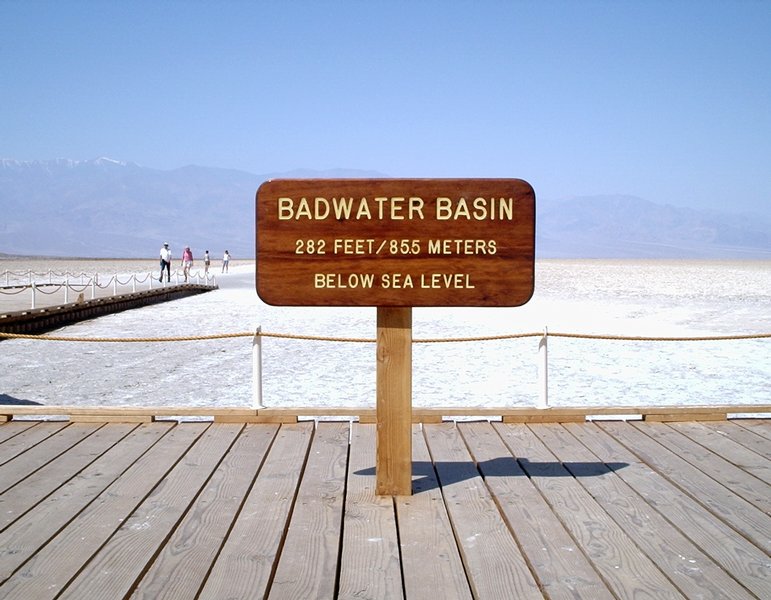 |
| Badwater |
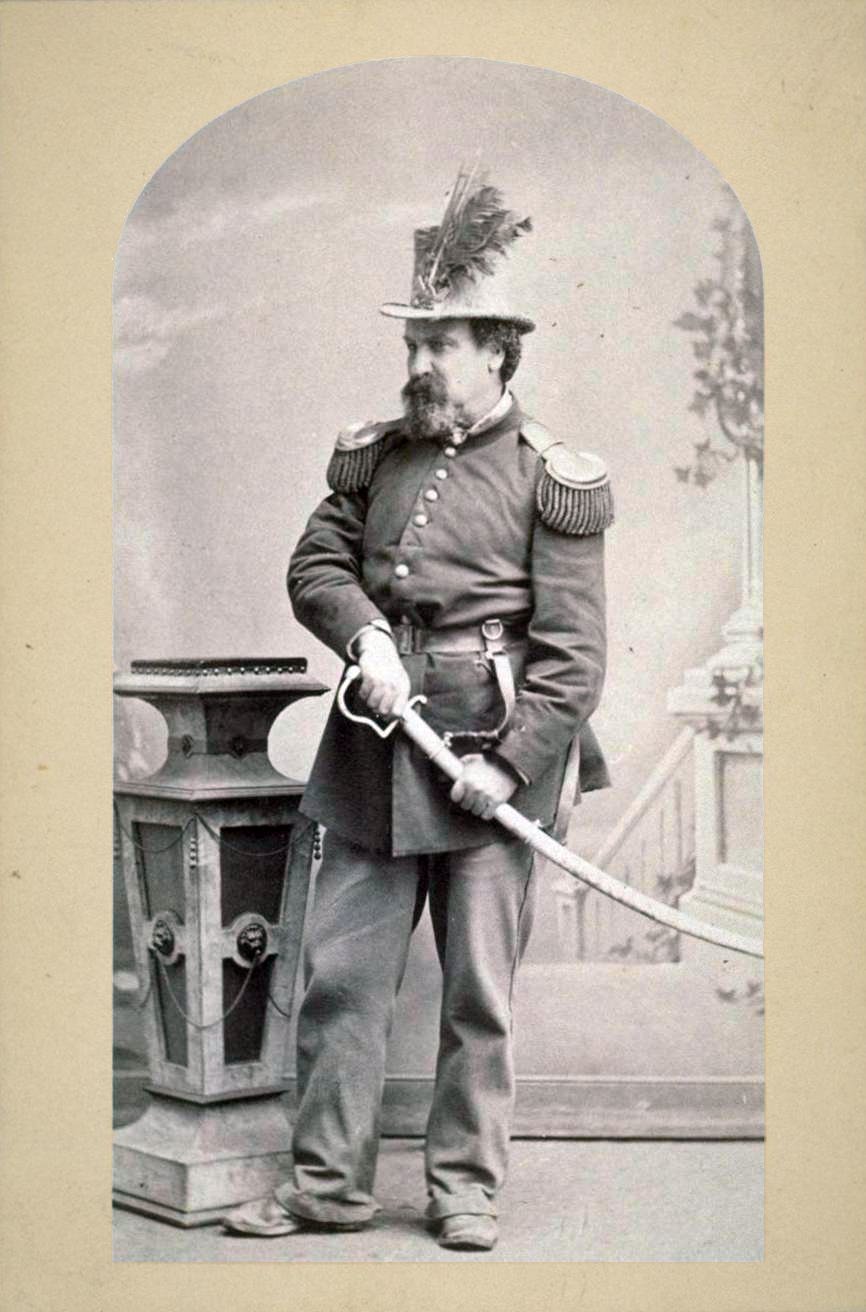 |
| His Imperial Majesty Emperor Norton I, aka Joshua A Norton The first transbay proposal was submitted by the builder of the Panama Canal in 1920—essentially the same plan BART used to build the world's longest and deepest sunken tunnel (in 1965-69, it opened in 1973). The tunnel withstood the 1989 Loma Prieta earthquake which destroyed the Bay Bridge. |
But I digress. Definitely canals were invoked. Perhaps not the palindrome: a man, a plan, a canal—Panama! I had to do careful snorkel snorts both descending to the bottom of the bay floor and ascending to the SF Embarcadero stop. The trick is to know when to pinch your nostrils and how hard to blow—too much pressure and you'll damage your eardrum.
My eustachian tubes were truly plugged so it was touch and go. I was constantly yawning and rotating my lower jaw like a donkey to keep them open.
When you equalize the pressure between the middle ear eustachian tubes and the atmosphere, whether by yawning or blowing your nose, there is an audible pop, or click, which can be heard by others. But then, everything sounds loud—including your own voice—until the canal closes again.
Nothing was as bad as the time I had a head cold in Cuzco and when the bus descended from the Andean pass above Cuzco into the Urubamba Valley, I was screaming in pain, and John had to coax the busdriver to stop at the overlook.
I took so many Sudafeds to relieve the pressure, my heart was beating fast as a hummingbird's. I took so many Sudafeds I would've tested positive for drugs. Hell, I wanted drugs, to obliterate the pain.
Of course I was already technically on Andean drugs on account of the high altitude. Coca leaves and rock lime weren't cutting it. But my teeth didn't hurt. I couldn't even feel them or my gums.
My left eardrum blew—there was blood on the pillow the next morning. Things sounded weird for a long time. Sometimes when I get into a noisy space, my eardrum beats its tympanum with every noise.
My right eardrum is scarred from when I was a child and had double earaches on Christmas Eve. It must've been pretty bad because the doctor came all the way from Point Reyes Station on Christmas Day replete with his little black doctor bag. That's the only time my grannie ever called the doctor to make a house call.
Now, the problem is, that I've cleared my passages—that I can hear everything far too well. And I do mean everything. Rustling paper is excruciating. Other people's iPod earbuds are too loud. People thoughtlessly rustling their swag bags during a seminar had me moving seats early and often just to escape the noise.
MacExpo staff gave me a Ricola to suck on—which helped a bit. But the ambient noise in the hall was wearing my reserves down. Then there were all the Mac fans meandering in thundering herds and droves to negotiate around.
I managed to make two passes around the exhibit floor to see if I had missed anything. I got some great technical advice on SSD hard drives from OWC, my go-to online store. But they didn't have anything for sale.
Aside from the maddening crowds, on the show floor there were a whole lot of guitarists, vague, blurred incarnations of Jimi Hendrix trapped in bowels of a bad Xerox machine, licking their so-called chops at every intersection—ostensibly showing off the latest music app or interface. ERG!
Certainly the music toys were amazing—the musicians, not so much.
Of course I was looking forward to going to MacExpo on the final day as well, but today I feel so rotten, I think I'll pass. The only things I really wanted were a tiny iPhone speaker, and a bluetooth keyboard—and the prices weren't great. And I'm in no mood to actually listen to mini speaker performance, let alone, make a rational decision. I'm afraid I'd have at it with a flyswatter.
The swag was almost nonexistent. I would've liked getting my New York Times word portrait done but the line was too long yesterday and I'm not one for standing in line. Besides, it's not the same as back in the good old days, when Apple was part of the MacExpo matrix.
What happened to the delicious madness of MacExpo? Those magical Alice in Wonderland moments?
Most of the vendors were selling iPhone or iPad apps. I don't own either one. I played with some iPad drawing styluses, and a painting app. I prefer the real thing—pen, pencil. or pastel on paper. I drew a galaxy of star lilies as onlookers champed at the bit for their turn. Still, there was some amazing iPad and digital art at the art show.
There was very little software or hardware at MacExpo for the traditional Mac user to play with—other than offers from scanner and printer vendors who were touting their iOS compatibility horns.
Yet the audience was jammed-packed with MacBook users. And no, they weren't just 50+ somethings. There were quite a few even older geezers present too. So much for the snide comment of one twenny-something to another about iOS apps, intended target audience—if you hafta ask—and rampant ageism.
One young vendor asked why I was even attending the show since I didn't have iPhone or iPad—as if I was a Luddite. Other than the urge to smack him one, I too wondered why I was there.
I'm not particularly interesting in owning an iPhone, or at least, not the hefty contract. I like my dumbphone's annual T-Mobile pay-as-you-go bill which costs me all of $200 a year. Can you say, hey big spender?
Besides, I can't even begin to read anything on the iPhone's tiny screen without going cross-eyed. Why would I want to surf on that? What I've noticed is that everyone's playing solitaire on their smartphones and tablets on BART. Wow. Think I'll stick to my Kindle for a while longer.
And I'm waiting for the iPad Retina to become available under Apple Refurbs before taking the plunge. Just because I keep elderly Macs up and running long past their expiration date, and I don't have an iOS gadget, doesn't mean I can't be savvy about the software. I was irritated, to say the least.
Swag levels are next to nil. The John Lennon Bus wasn't there either—they always had serious swag. Besides, they really put on a good show. Most of the vendors have tiny kiosks and stand around like it's a cocktail party. But no booze. No entertaining floor shows, not like in the good old days.
Roxio wasn't there with their contests and funny prizes. I didn't see one of my favorite software developers, Roger Wagner who created the first graphic paint programs for Apple, and developed HyperStudio, used to run a mean Mac "pretzel bar" booth. The amazing conversations we'd have, and the people we'd meet, while hanging out with Roger as co-pilot.
Roger Wagner didn’t just read the first book on programming the Apple computer - he wrote it. —Steve WozniakThe seminars I had access to were mostly focused around iOS apps. This year's MacExpo star was the iPhone. My other cellphone is a dumbphone. One seminar on iBook (iPad) authorship was geared toward the traditional Mac user—lots of great tips on both platforms.
The travel panel was good too. The Hollywood director/author who kitted up his iPad with a monopod, a wide-angle lens and a camera light to take videos of the show, was enthusiastically vouching the merits of the iPad and iPhone for big filming projects.
I attend MacExpo to see the innovation. MacExpo is a bit like a Maker Fair. There were a couple of cool projects in various stages of development. Many solar panels and even a water battery recharger. Myriad iPhone skins and kooky iPad cases—my favorite kickstarter project, from the guy whose booth was a green teardrop trailer‚ was a bungee cord with four clown noses attached to the corners of an iPad. Wavy Gravy on a trampoline came to mind.
I did manage to get to the iFixit seminar, which I liked so much I attended it twice. Few women in the repair panel audience. I got some technical advice on fixing my MacBookPro inverter light. They said, piecaecake! I'd already replaced the hard drive with an Other World Computing SSD Seagate hybrid drive and got fantastic boot times—17 seconds.
MacWorld senior editor Chris Breen was moderator of the second iFixit panel. There was a lot of discussion on keeping older technology alive as it's next to impossible to truly recycle them—whether dumbphone or iPod.
The trace rare elements used to make smartphones are lost, and the sheer amount of "upstream" elements needed to make our toys and gadgets was enormous. The latest MacBooks and the iPads, with throwaway technology, are not good for recycling—you can't separate the batteries from the frame—they blow up!
So, we were of a like mind, in keeping our components alive for a s long as possible. The iFixit guys were impressed that I kept my PPC iMac alive for so long, and said the power supply was suspect in those old iMacs. It was replaceable as long as the capacitors weren't bad.
However, with that said, they all agreed that trying to resurrect my 2005 PPC iMac probably wasn't worth it as I can't upgrade the software past Tiger. Chris Breen said it had a good run. Catch and release.
It was good to catch up with Chris after the panel. I reminded him of how he once beaned me with a little MacWorld office kit—back in the day when MacExpo swag was good. He laughed and said, I was lucky—he broke some other guy's tooth. Maybe Chris wanted to be a baseball pitcher in another lifetime.
I'm not much of a starstruck fan, though I was wearing an iFan pass. I admire Chris's wit and his intellect as a writer. He always writes back when I have a technical question. We had a sweet good old days moment. Dite. Angels dancing on a pinhead.
A spontaneous Steve Jobs shrine appeared last night. Flowers, Weird Mac thingies, candles. Something I would've like to have seen. So at least Steve was invoked.
Today, the MacExpo event is closing with a drumming circle.
Think I'll pass on that one too.
RELATED APPLE TECHNOLOGY POSTS
On iClouds & Motherships
Lloyd Reynolds' Calligraphic Legacy
Wednesday, October 5, 2011
APPLE CORPSE
"I want to put a ding in the universe."
iClouds take note.
I put an apple pie in the oven
and then sat down to Twitter
when I got the news
and then I burnt the pie
it was an apple corpse
a curious carboniferous death notice.
iClouds take note.
I put an apple pie in the oven
and then sat down to Twitter
when I got the news
and then I burnt the pie
it was an apple corpse
a curious carboniferous death notice.
RIP Steve Jobs 1955-2011
Wednesday, June 8, 2011
On iClouds & Motherships
February 24th 1955 – October 5th 2011)

Today's MacWorld Headlines: Apple plans new 'spaceship'-like campus. Pretty shocking. Earth jolting even. This is not to say that the proposed Apple campus isn't cool. It's infinitely cool. I'm rapturously ecstatic. I'm over the moon.
But, speaking of moons, the proposed Apple Campus looks like Frank Lloyd Wright's futuristic Marin Civic Center in the round—perpetually chasing its ourobus-hole. Talk about One Infinite Loop! No straight lines anywhere. Even the glass walls will be curved. I wonder if there's a way to design a building as a Möbius strip, er, trip?
Jobs has been one busy man. He may have stepped down as Apple's CEO in January, but he's clearly still at the helm—I mean—bridge. He just announced iCloud computing at the WWDC, that everything will be transmitted via wi-fi or 3G. No more tethering oneself to desktop computers. No more desktop computers. The new theme song will be: I feel it in my fingers. I feel it in my toes. The iCloud is all around us, can you feel it glow?
(Miss Monday's Apple keynote? Behold, "WWDC 2011: The Musical" )
And then Jobs said: “We’re going to demote the PC and the Mac to be just a device—just like an iPad, an iPhone or an iPod Touch. We’re going to move the hub of your digital life to the cloud.” We've come a long way from the "interpersonal" computer, Steve.
I've hauled an old dead iLamp out of the closet (that half-Wilson volleyball iMac); it's in bits & pieces on the living room floor. I'm trying to reincarnate it back into life and turn it into a headless Lazarus server—as the iLamp screen really is dead... it should be ready in time to commune with the great iMothership in the sky in July.

Today's MacWorld Headlines: Apple plans new 'spaceship'-like campus. Pretty shocking. Earth jolting even. This is not to say that the proposed Apple campus isn't cool. It's infinitely cool. I'm rapturously ecstatic. I'm over the moon.
But, speaking of moons, the proposed Apple Campus looks like Frank Lloyd Wright's futuristic Marin Civic Center in the round—perpetually chasing its ourobus-hole. Talk about One Infinite Loop! No straight lines anywhere. Even the glass walls will be curved. I wonder if there's a way to design a building as a Möbius strip, er, trip?
In an accompanying video, it was great seeing the faces of the Cupertino City Councilwo/men light up when Steve Jobs arrived. It was as if royalty, or God, himself, had stepped up the podium.
Someone in the audience bawled out to Jobs: I love you! The audience roared and gave Jobs a standing ovation before he even spoke. Now, The Woz I've had an actual conversation with (AKA the Other Steve), but not Jobs—though I've met him and seen him at MacWorld Expo. Jobs has charisma, no doubt about it.
Mission Control: Jobs jumped right into the fray and announced that the Apple Mothership will land in Cupertino in 2015. The City Council, already on cloud nine, cooed and cheered.
Someone in the audience bawled out to Jobs: I love you! The audience roared and gave Jobs a standing ovation before he even spoke. Now, The Woz I've had an actual conversation with (AKA the Other Steve), but not Jobs—though I've met him and seen him at MacWorld Expo. Jobs has charisma, no doubt about it.
Mission Control: Jobs jumped right into the fray and announced that the Apple Mothership will land in Cupertino in 2015. The City Council, already on cloud nine, cooed and cheered.
Jobs assured the City Council that there will be plenty of free underground parking. And Peter's Gate will be virtual as most Apple employees will live nearby the company store and will bike to work. And Jobs decreed that there will be twice the amount of trees. Not to mention more taxes for the city coffers. There was even talk of restoring the historic prune and apricot orchards.
No mention of more Apple or Macintosh trees. No iOranges either. It's been a busy two days with Jobs redefining the Mac-iVerse as we knew it. And we haven't even gotten to the Lion or iOS 5 yet! (Joni Mitchell singing: I''ve looked at iClouds from both sides now….)
Jobs said, Lo, today there is iCloud, but alas, there will be no free wi-fi for the masses tomorrow—until I pay no taxes. Cirrusly. No, cumulously. (As the city's biggest taxpayer, Apple is Cupertino's golden cash cow.) And then Jobs said: Nor will there be a Mother AppleStore in Cupertino. The natives will still have to travel to GoogleLandia to buy an iPad. (Menlo Park.)
The godseye courtyard of the Apple Mothershop will double as a collective conscousness circle. No talk of shortcut slinglines across the quad—er, the π shaped courtyard. Or into the neighborhood. Forget monorail—too old school. But strategically placed feeder slinglines (or zip lines) could do wonders for alleviating traffic jams as 12,000 employees try to navigate Apple Central each day.
O brave new world! That has such creatures in it…. I don't know whether I'm Miranda or Caliban in this dream. Jobs is clearly Prospero. In my rather delirious flight of Mac fancy, I can just see Merloch Silvermane, I mean Kim Silverman, a master magician in his own right, wizarding his way across the zócalo on a slingline with his beard and mane flying—going wheee, wheee, wheee all the way home.
Talk about magic afoot and in the air. But then, Kim is from Oz. You know, Downundah. Just don't wear yer kilt on the zip line, mate, or there'll be waaay too much latent semantic mapping coming up in Mac OS XXX.
A herd of eco-green Segways might be heeled in. My friend Dennis and the Other Steve, the Woz used to Segway around town together. I don't know where that leaves my best friend's son, Teo Carr—still commuting, old school, via the bio-bus feeder line because SF's—a long way to Segway, I know.
The zip/sling lines could double as tin can iPhones if there's ever a power outage. Maybe Teo will get a new job description as Tin Can iPhone developer. Or maybe the slinglines could double as the world's largest Les Paul guitar. (And then the Möbius Trip Band played Stairway to Heaven).
Jobs told City Council members that no stinkin' power outages and brownouts are gonna happen on his watch. No siree! The self-sufficient eco- Mothershop will run off the grid. No mention of solar panels or wind turbines—though, just natural gas.
Hmmm. Maybe it was yesterday's solar flare acting up. According to the law of thermodynamics, I'm sure there'll be enough hot air generated for the Mothership to harvest a steady source of perpetual energy.
No mention of more Apple or Macintosh trees. No iOranges either. It's been a busy two days with Jobs redefining the Mac-iVerse as we knew it. And we haven't even gotten to the Lion or iOS 5 yet! (Joni Mitchell singing: I''ve looked at iClouds from both sides now….)
Jobs said, Lo, today there is iCloud, but alas, there will be no free wi-fi for the masses tomorrow—until I pay no taxes. Cirrusly. No, cumulously. (As the city's biggest taxpayer, Apple is Cupertino's golden cash cow.) And then Jobs said: Nor will there be a Mother AppleStore in Cupertino. The natives will still have to travel to GoogleLandia to buy an iPad. (Menlo Park.)
The godseye courtyard of the Apple Mothershop will double as a collective conscousness circle. No talk of shortcut slinglines across the quad—er, the π shaped courtyard. Or into the neighborhood. Forget monorail—too old school. But strategically placed feeder slinglines (or zip lines) could do wonders for alleviating traffic jams as 12,000 employees try to navigate Apple Central each day.
O brave new world! That has such creatures in it…. I don't know whether I'm Miranda or Caliban in this dream. Jobs is clearly Prospero. In my rather delirious flight of Mac fancy, I can just see Merloch Silvermane, I mean Kim Silverman, a master magician in his own right, wizarding his way across the zócalo on a slingline with his beard and mane flying—going wheee, wheee, wheee all the way home.
Talk about magic afoot and in the air. But then, Kim is from Oz. You know, Downundah. Just don't wear yer kilt on the zip line, mate, or there'll be waaay too much latent semantic mapping coming up in Mac OS XXX.
A herd of eco-green Segways might be heeled in. My friend Dennis and the Other Steve, the Woz used to Segway around town together. I don't know where that leaves my best friend's son, Teo Carr—still commuting, old school, via the bio-bus feeder line because SF's—a long way to Segway, I know.
The zip/sling lines could double as tin can iPhones if there's ever a power outage. Maybe Teo will get a new job description as Tin Can iPhone developer. Or maybe the slinglines could double as the world's largest Les Paul guitar. (And then the Möbius Trip Band played Stairway to Heaven).
Jobs told City Council members that no stinkin' power outages and brownouts are gonna happen on his watch. No siree! The self-sufficient eco- Mothershop will run off the grid. No mention of solar panels or wind turbines—though, just natural gas.
Hmmm. Maybe it was yesterday's solar flare acting up. According to the law of thermodynamics, I'm sure there'll be enough hot air generated for the Mothership to harvest a steady source of perpetual energy.
Jobs has been one busy man. He may have stepped down as Apple's CEO in January, but he's clearly still at the helm—I mean—bridge. He just announced iCloud computing at the WWDC, that everything will be transmitted via wi-fi or 3G. No more tethering oneself to desktop computers. No more desktop computers. The new theme song will be: I feel it in my fingers. I feel it in my toes. The iCloud is all around us, can you feel it glow?
(Miss Monday's Apple keynote? Behold, "WWDC 2011: The Musical" )
And then Jobs said: “We’re going to demote the PC and the Mac to be just a device—just like an iPad, an iPhone or an iPod Touch. We’re going to move the hub of your digital life to the cloud.” We've come a long way from the "interpersonal" computer, Steve.
According to Jobs, the virtual iMothership has already left the Moscone building & is floating above us in the great iCloud in the sky. Holy flying Elvises! Cirrusly out of the stratosphere. My MobileMe account—which dates back to the paleo-days of iTools, will be extended until July of 2012. After that? Pfft! It goes up in smoke.
There will be unlimited iStorage in the iCloud but I might have to sell my soul to the devil at the crossroads if I want to take my iMedia with me. No takebacks. Aye, aiii, aiii. Where's that Les Paul online guitar Googledoodle when I need it? I've got that synching feeling the network is the computer of the future and the future is happening right about…now.
There will be unlimited iStorage in the iCloud but I might have to sell my soul to the devil at the crossroads if I want to take my iMedia with me. No takebacks. Aye, aiii, aiii. Where's that Les Paul online guitar Googledoodle when I need it? I've got that synching feeling the network is the computer of the future and the future is happening right about…now.
This transition will take at most two hardware generations and we’re talking mobile generations, which means three years, total. —I, Cringely
How fast does news travel? At the speed of thought. Within days of its nebulous birth, the iCloud had its own entry in Wikipedia. Holy moly. And the iCloud was only released on Monday. And then, on Tuesday, Apple Starship Central was launched. it looks like God has some good online help in tech development. Clearly, God also uses an iPad. And has unlimited access to the 3G Trinity network. And on the seventh day S/He kicked back and watched PixarFlix on the iPad.
Correction: That would be Yaweh. Yaweh just tweeted that S/He uses an I Am that I amPad, not an iPad as was previously reported. And S/He wanted to clarify that there is plenty of free wi-fi iReception in the iCloud. No need for 3G. But thanks for invoking the Trinity. Muchly appreciated.
I've hauled an old dead iLamp out of the closet (that half-Wilson volleyball iMac); it's in bits & pieces on the living room floor. I'm trying to reincarnate it back into life and turn it into a headless Lazarus server—as the iLamp screen really is dead... it should be ready in time to commune with the great iMothership in the sky in July.
Yaweh also tweeted from Her/His iPad 3.0, something about a new release date for iRapture 1.2a. Apparently there was a bug or a Trojan horse in the software. We couldn't quite make heads or tails out the virtual, or carbon-based data recall date. But I'm sure there's an app in the works for that.
We did learn, however, that the road to heaven is not paved with indentations of old floppy disks, as was previously thought, but with shiny rainbow -hued DVDs—as they will no longer be needed to back up data. Hard drives are another story.
However, we are happy to report that iOS 5 will untether all handheld iDevices with a new virtual cloud clipboard. Hard- and software will be one thing. There will no longer be a division between heaven and earth. Everything will always be backed up.
Wait, that didn't come out right. I feel like I'm channeling The Macalope. There's been a sarcastic void ever since The Macalope, full of sound and furry, crossed over to Pay-Per-View.
Speaking of effluent, in OSX: AKA The Lion. there will no longer be a "Save" command in the kitty litter box. Everything will be auto-saved under the Lion's throne. Forget about Exposé and Spaces. There will be no scroll bars either. Only a light swipe on the touchpad will be needed. It comes down to a swipe and a pinch. No longer will the mice play. The big cat is here to stay. And there really will be a Mission Control. Really, really. Get ready for blastoff in July. Into the cloud. Pinch me awake, please.
Talk about walking on the moon. Cloud computing is one big step for wo/mankind. We're just getting used to the idea of global village and now we've got global skies? The sunspot's acting up again. Think of all those old Jackie Gleason reruns gliding past Alpha Centaurii. All that free range data above us is gonna clutter up the clouds and create a traffic jam all the way to Orion's Nebula.
We did learn, however, that the road to heaven is not paved with indentations of old floppy disks, as was previously thought, but with shiny rainbow -hued DVDs—as they will no longer be needed to back up data. Hard drives are another story.
However, we are happy to report that iOS 5 will untether all handheld iDevices with a new virtual cloud clipboard. Hard- and software will be one thing. There will no longer be a division between heaven and earth. Everything will always be backed up.
Wait, that didn't come out right. I feel like I'm channeling The Macalope. There's been a sarcastic void ever since The Macalope, full of sound and furry, crossed over to Pay-Per-View.
Speaking of effluent, in OSX: AKA The Lion. there will no longer be a "Save" command in the kitty litter box. Everything will be auto-saved under the Lion's throne. Forget about Exposé and Spaces. There will be no scroll bars either. Only a light swipe on the touchpad will be needed. It comes down to a swipe and a pinch. No longer will the mice play. The big cat is here to stay. And there really will be a Mission Control. Really, really. Get ready for blastoff in July. Into the cloud. Pinch me awake, please.
Talk about walking on the moon. Cloud computing is one big step for wo/mankind. We're just getting used to the idea of global village and now we've got global skies? The sunspot's acting up again. Think of all those old Jackie Gleason reruns gliding past Alpha Centaurii. All that free range data above us is gonna clutter up the clouds and create a traffic jam all the way to Orion's Nebula.
As to the future of Microsoft? Yaweh was reported to have mooned the software behemoth while mumbling: We don't need no stinkin' blue screen of death. Let 'em eat prunes. Clearly, S/He doesn't do Windows either. What a peach! Um, orange?
Jobs has been one busy man. In just two days, Jobs has rocked the world—make that: clouds. I wonder what news tomorrow will bring. Think different. Indeed, what a long and strange trip its been.
Segue to Yaweh's iAmPhone. Jobs is on Line One. Will you hold? Muzak segue: This is the dawning of the Age of iCloud, Age of iCloud, Age of iCloud, ohhh. Fade to Stairway to Heaven. (Although some might deem The Godfather theme more appropriate. )
House lights, please. I'm afraid to wake up in case it was all only a dream. Of course, none of us expected that he’d be gone within three months, this was his final legacy.
Jobs has been one busy man. In just two days, Jobs has rocked the world—make that: clouds. I wonder what news tomorrow will bring. Think different. Indeed, what a long and strange trip its been.
Segue to Yaweh's iAmPhone. Jobs is on Line One. Will you hold? Muzak segue: This is the dawning of the Age of iCloud, Age of iCloud, Age of iCloud, ohhh. Fade to Stairway to Heaven. (Although some might deem The Godfather theme more appropriate. )
House lights, please. I'm afraid to wake up in case it was all only a dream. Of course, none of us expected that he’d be gone within three months, this was his final legacy.
Tuesday, June 7, 2011
Lloyd Reynolds' Calligraphic Legacy
 |
| Lloyd Reynolds by Henk Pander, cover of Encore (Jan 1978) |
About the time I began writing poetry in the late 1970s, I studied calligraphy with Sonoma State University French professor, Adele Friedman, who was a student and friend of Georgianna Greenwood; both were students of master calligrapher Lloyd Reynolds.
So depending upon how you want to count, I am within one or two degrees of separation from both Lloyd Reynolds and Steve Jobs.
At the time, I didn't have a typewriter, so I hand-calligraphed all my poems in a sort of Japanese "running grass" style Italic chancery cursive script for David Bromige's poetry classes. He seemed to like that—and told me it was a Reed College tradition: Philip Whalen, Lew Welch, Gary Snyder, etc., (all of whom I had met, so I was in good company.)
Calligraphy, a Greek word, literally means "beautiful writing." Beautiful, my handwriting was not—it was really awful and disjointed (I'm dyslexic). I hated writing, but after I studied calligraphy for a year, my handwriting dramatically improved. So did my brain. Calligraphy is much more than the sum of its parts: not only is it the art of fine penmanship, it is a state of being.
I never intended to become a scribe. Calligraphy and poetry honed my critical thinking skills and allowed me a visual workaround to combat the dyslexic roadblocks and labyrinths that had plagued me all my life. It was a major miracle that I even made it to junior college, let alone, earn a BA in Art—with a side order in poetry.
The introduction of Apple and Mac computers allowed me to write. The technology unlocked the doors of my convoluted brain. I taught myself how to write on an old Apple IIc with floppy disks. I began small, with poetry, and then branched out to write newspaper stories, and grants—which led to my life's work, teaching poetry and art to kids in the schools.
One of my first artist in residency jobs was at Healdsburg Elementary School teaching RSP/Learning Disabled kids how to write calligraphy (and poetry)—when all else had failed them. I redesigned my approach to the letters, and made up stories about them so the kids could really see the shapes as shapes—not letters. We flourished. Kids wrote poetry and their handwriting and reading skills improved.
During this time, The Calligraphy of Lloyd J. Reynolds was my Bible. I found a battered copy of the rare, o.o.p. book and it was the most money I'd ever spent on a used book.
Letters have fascinated me ever since I found their power and beauty when I was five years old. I learned to read. I was always drawing and letters were a favorite subject. —Lloyd Reynolds, Autobiographical NotesWhen Lloyd Reynolds (1902-1978), a poet who taught at Reed College for 40 years (1949-1984—the year the Mac was invented), first discovered calligraphy in 1934, he said "The letters would not leave me alone…."
It was like "a bolt of lightning," he wrote: "It seemed perfectly obvious—the only logical approach is the historical one. Learn to cut reed and quill pens and write your way through the history of the alphabet!" Lloyd spent the next few years studying paleography. Connect the dots. (Autobiographical Notes).
[Lloyd] He respected students, and he added joy to the skill. Legibility, communication, clarity, and respect for others—all these were tenets in the religion of Lloyd Reynolds and calligraphy. You got as much from who he was as from what he was teaching, and that’s the talent of a great teacher. —Georgianna Greenwood (Reed, ’60)In 1972, Lloyd Reynolds was honored as Calligrapher Laureate of Oregon‚ the first title ever bestowed in the nation. Reynolds, who revived the art of calligraphy in the West, saw it as a means to work one's way back into the origins of literature. A gateway to history.
It was also very Zen. One had to approach the blank page with a meditative approach. The mind had to be stilled. It was a true Vulcan body - mind meld. There was no room for hesitation or false starts.
I had to wipe my mind clean: in that state of mind, I could recognize the letters I needed to write, but I couldn't say what the word was nor could I spell it. If someone talked to me, I immediately made a mistake—I misspelled the word—or added the words they said—usually a noun. Wherever my mind went while I was calligraphing was not of this world—it was a tranquil white place of suspended time.
During the late 1970s and early 80s, I became the resident calligrapher / sign painter at Sonoma State University. I traded in my steel pen nibs to dance with fat greengrocer felt paint brushes, I pushed the art form into large format. My ephemeral signs and banners on butcher paper graced every corner of the campus.
I made signs for The Student Union, the InterCultural Center, Peter Scarlet's Sonoma Film Institute, and campus events including backdrops for Pete Seeger, Daniel Berrigan, The Jewish Oral History Project, Westwind, The Dead Kennedys, James Burke, etc. Many performing artists who visited SSU, took my banners home with them.
I also did some freelance calligraphy (I called my business Calligrafix). I made wedding invitations, obituaries, cards, menus, programs, tickets, etc. All our posters and broadsides for The Russian River Writers' Guild were hand-calligraphed as getting anything professionally photo-typeset on a huge Compugraphic machine the size of a VW bus—was prohibitively expensive. Hot lead press typography was still in use. Desktop publishing was still a nascent glimmer in Steve Jobs' eye.
This post is a funny circle back to Tim Girvin's blog about his connection with Steve Jobs, and Jobs' connection with Lloyd Reynolds and the evolution of the Mac's superb typographic legacy. Reynolds is really the godfather of desktop publishing.
Interesting to note that Tim Girvin's own chancery examples look a lot like Georgiana's work. Lloyd had a strong influence. A distinctive style imprinted upon so many of us—even those of us once and twice removed from the source.
 |
| Even Joan Baez kept my calligraphy sign. |
Lloyd Reynolds
Note Bene: This blog entry is in response to an interesting calligraphy link posted by Oregon poet Jim Carmin, whose day job is an antiquarian rare book collector and manuscript wrangler for the John Wilson Special Collections at the Multnomah Library. @JimCarmin tweeted: GIRVIN: Steve Jobs, Calligraphy, Lloyd Reynolds and Reed College. Check it out.
SOME LINKS AND CLIPS:
Italic Calligraphy and Handwriting with Lloyd Reynolds
Lloyd Reynolds: Italic Calligraphy
Italic Calligraphy and Handwriting with Lloyd Reynolds
Lloyd Reynolds: Italic Calligraphy
Lloyd J. Reynolds Biography
The Dance of the Pen
'Lloyd Reynolds: A Life of Forms in Art,' on view at Reed College
The Dance of the Pen
'Lloyd Reynolds: A Life of Forms in Art,' on view at Reed College
Steve Jobs Stanford Commemoration speech 2005
My links:
Calligraphy doodles (art)
see also my early calligraphed poems from 1978, 79... (uneven work—some were drafts, and some were silly poems)
My links:
Calligraphy doodles (art)
see also my early calligraphed poems from 1978, 79... (uneven work—some were drafts, and some were silly poems)
Subscribe to:
Posts (Atom)


