Showing posts with label USSR. Show all posts

Thursday, May 18, 2023

Leave-takings


I was born with wanderlust. When I was a child, I would traipse off into the woods and hike up the ridges of Mt. Barnabe to see Elephant Mountain and Tomales Bay cleaving the land like a saber shining in the distance. Since then, I've traversed many landscapes the world over and for that I am grateful. 

One summer, when I was working in a small village deep in the Swiss Alps, I involuntarily threw my arms open wide as if to encompass the sublime majesty that left me breathless. Whenever I am overwhelmed by raw beauty, I open up my arms as if to embrace the landscape.

To anchor the self in place and time—if only just for a moment—that is my one true religion. I’ve done something similar with my own childhood landscapes, my ritual involves greeting the landscape as well as saying goodbye. Perhaps it is also a form of gratitude.

I once taught an old lover how to embrace the land. It was so exhilarating and liberating to acknowledge the intangible like that. As we hiked the long ridges that traversed the coastline, we opened our arms wide with impromptu hugs, kissing the vast landscape, saying I love you. I love you. A ritual that he continued to cherish long after we had broken up. 

When a Soviet friend had to return to the USSR when his visa expired, I was surprised to find there was also a Ukrainian custom of leave-takings—or saying goodbye to places you’ve been—which included bidding adeiu to my little cabin. 

It was somehow a fitting reminder to acknowledge the importance of departures. When you say goodbye to a house as if it were an old friend, you acknowledge its hospitality and shelter. It doesn’t need to be your house, it could be a place you've stayed, a place where the walls have protected you from the vagaries of the world.

And the house offered us refuge from our ourselves. Yes, I know, a house is an inanimate object, but it both shelters and cradles us in its arms like a mother. In that moment, it becomes not a house, but the idea of home. Something I learned while living in the USSR—and it seemed a fitting ritual. 

I can’t say there were many places in the Ukraine I wanted to embrace. The vast breadbasket was flat as a pancake all the way to the horizon and beyond—except for the desecrated kurgans, tumulus mounds punctuating an ancient landscape carpeted with sunflowers and wheat. 

At the steep ravine of the Bibi Yar, Stalin’s secret burial chasm, I wanted to weep even before I knew the backstory of the atrocities that had happened there, what was inhumanly possible. I said a goodbye racked with sobs for the eroding debris—bones of the unnamed dead hidden from the world in a mass grave.

Ditto that in Iona in the Hebrides as well—for entirely different reasons—the holiness of St. Columba's abby was graced with filtered light. I was letting go of something so profound, it was nearly nameless. It was as if I were shedding a lifetime of grief. The death of my grandmother, my mother. The absent father. 

Maybe it's a form of hiraeth or saudade. An overwhelming homesickness, more than nostalgia, it’s a longing for a place you cannot return to—the soul harboring equal parts of grief and love. As sobs racked my body, I was grateful that the holy community of Iona tactfully looked away, they understood the personal conversion of psyche.

The idea of leave-taking dates back to the 12th c., to receive permission from a liege lord to formally depart, as in fare thee well—I’m off to the holylands. As I made ready to leave, I was reminded of a saying I coined as a form of closure while on the steep slopes of Huayna Picchu, where I had left talismans: a lock of hair, and milky quartz from our hill in Northern California. For my grandmother, I said, as if bearing witness.

I instructed my friend, Always remember to say goodbye to the places you've been. Cherish them, say goodbye, for you will never pass this way again. 

And with that, I kissed the landscape goodbye.

5/18/23 Mill Valley Library non-fiction workshop with Sarah Broderick

Tuesday, January 17, 2023

Breakfast of campions

One summer day around 32,000 years ago, during the Pleistocene epoch, an arctic ground squirrel stopped to sniff the Siberian wildflowers and nibbled on little white campions gone to seed. As the squirrel digested his breakfast on the banks on the River Kolyma, we will never know how his life abruptly ended. Did a flood cover his burrow? Did a mastodon tread on his home, grinding him into the earth? Too much ice to burrow through, come spring thaw?

Enter Time present: in 2007, the squirrel’s tiny body, buried 12 stories deep, still asleep in his burrow, was recovered from the melting permafrost with hundreds of seeds still in his gut. And a well stocked larder, a seed cache for the coming winter. Russian scientists sorted and counted the seeds.  

Years later, enter Svetlana from the Russian Academy of Sciences who tried her luck at resurrecting the seeds, she extracted placental tissue and nurtured the silene stenophylla embryos along. Sure, it was a longshot. Damned if the 32,000 year-old Methuselah seeds didn’t sprout and grow leaves. All 36 seeds sprouted and bloomed in profusion all at once like good little Soviets as if they were thrilled to be free from the permafrost at last. Not a false spring—like so many others.

Winter was finally over. The little white campion flowers bloomed for the first time in 32,000 years. The lab was perfumed with a spicy clove-cinnamon odor as they unfurled their finery and went about the business of pollination. Svetlana and her sable hair brush did the honors. A squirrel, a freaking carnation. A regeneration of the world’s oldest seeds. Talk about bloomin’ luck. It was like Lazarus rising from the dead. Nostrovya, they said.

I love this story of silene stenophylla, a.k.a. white campion. 

I remember finding bladder campion in Wengen, the Swiss Alps in 1972— it had little pink and white candy stripes on its bladder as if it was the frilly apron, or fancy bloomers worn by a volunteer nurse. I was lonely working as a waitress, in a hotel one summer, without a common language. So I turned to that of flowers. 

The campion, a silene, was similar to an Indian pink (actually a scarlet wildflower with pinked, or sheared decal edges), that I knew from West Marin. Gentian and chicory I recognized. Dandelions and buttercups, eiderweiss and pearly everlasting. But there were so many flowers I didn’t know, I was hooked. It got me interested in botany. 

That summer I collected, pressed and dried alpine flowers between the pages of old books. Though I was desperate for my mother tongue, I forfeited my novels weighted down under the legs of my bed, they had a more important job— preserving flowers. I didn’t know the names of most of the flowers—other than edelweiss and gentian, heather and clover. But the silly silene, a card-carrying member of the pink, or carnation family, (Caryophyllaceae) is what kicked off my interest.

Some say that the carnation stands for fascination, and others say for love, whether filial or maternal. Agape. According to one legend, white carnations grew from the Virgin Mary's tears as she wept for her son hanging on the cross. 

But the red ones were the eyes of the shepherd that Diana, the huntress, plucked from his head for throwing her off her game. Dianthus: either way, is the flower of the goddess. White for luck and pink for gratitude and red for revolution. I remember buying carnations from the street vendors in Red Square keeping their fragile blooms warm in little glass houses lit by candles, snow falling like feathers on the corpse of a failed experiment.

A few years ago, I was hiking in the deep canyons above Santa Barbara, headed towards the top of the ridge. I was winded and grateful for a chance to rest—I was on my hands and knees with nose pressed to the ground. Right in front of me, on the umpteenth switchback, was a plant I’d never seen before, pink, like a carnation, but thorny. 

It reminded me of those alpine campions. My memory wandered back to those good old days, hiking in the Swiss Alps, startling other hikers who found me on my hands and knees by the side of the trail, doing a faceplant. I later realized I was looking at a member of the Cichorieae (Dandelion) tribe. Santa Barbara wire lettuce. Not a campion, but close enough—call it convergent evolution. Even way back then, I was always looking for equivalencies. Call it simile. Or perhaps metaphor.

Wednesday, December 29, 2021

LENINGRAD, MID-WINTER

LENINGRAD, MID-WINTER

I remember Leningrad, mid-winter, 
before it became Sanct Peterburg, 
before the fall, where we watched the ice boats 
open and sluice the black arteries of the Neva River, 
how the rostral column of the Viking ships 
with its severed boat prows, bled into the sky, 
held asunder to the pale clouds 
where light reflected off snow 
falling, perhaps somewhere in Finland. 
The ancient windows of the Hermitage Palace 
were warped and buckled with age, slumped glass 
seeking the currents and eddies of the river, 
having survived the siege and revolution. 
I remember how the babushka greeted me 
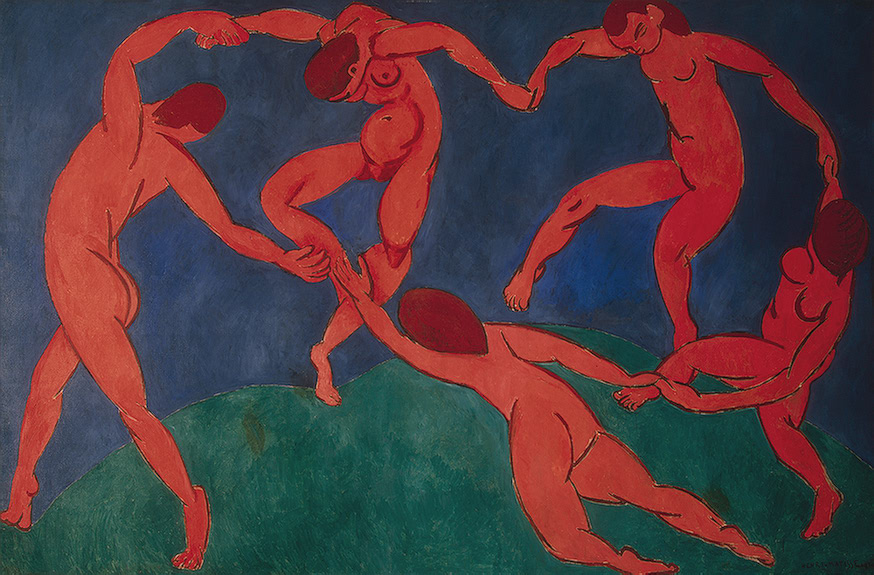
when I entered the room, she said Matisse’s dancers 
righted the world, kept everything in motion. 
They were wrapped in a fulcrum of time. 
I was homesick, stuck in an exotic place like this 
always brought the unbidden ache 
for what was familiar and safe. 
It's almost as if we can never be satisfied 
with where and what we are—perverse memory, 
that thread of loss, like a red fishing lure
tangled in the back reaches of the mind. 
Valera the rock singer, took me out walking afterwards 
onto the vast frozen lakes of Ozirkii. 
We were far from shore, the bleak ice 
moaned and cracked and hissed beneath our feet. 
The distant shouting in a loudspeaker,
the red flag warning as we retreated 
to the marching song of an unseasonable thaw.
The dark eye of the lake opened up 
to the color of death and distant skies. 
Not now, not this time, the lake said.

12/29/21 CPITS Write On! Susie Terence class

Saturday, December 19, 2020

Rappelling in the rotunda, USSR


When I think of all the scrapes I’ve gotten myself into, it flummoxes me. I think that’s why am a writer. Perhaps the weirdest moment was when I was in the Soviet Union, midwinter, visiting a friend who took me to see a muralist who was restoring a cathedral, dubbed the Museum of Atheism and Religion. The muralist asked if I wanted to see the rotunda mural up close. I said yes, not knowing that we had to climb up outside the copper dome along a catwalk where the railing was literally no longer attached, then go in between the outer copper dome, and enter the inner plaster dome, and traverse to an ancient circus trampoline stretched over the opening of the rotunda—we had to let go of our faith and land on the trampoline so that we could be strapped into a harness. Now understand, I have never been rappelling in my life. This was the Soviet Union where everything was either fly by night, or cobbled together. Or both. No such thing as safety nets. Good news I got to work on the mural a bit, scraping off years of smoke with an exacto knife, but then I had to get down from that lofty height. I was suspended 40 feet above the floor, like a spider. So in Russian, mind you, I didn’t speak Russian, they told me how to rappel. I looked down, not knowing my long hair was going to be problem, and let’s just say a huge hunk got ripped out of the top of my head as I descended spider like to the cold stone floor below. Crapping my pants was the least of my worries.

see 

Saturday, November 21, 2020

Remembering Jan Morris (10/2/1926 – 11/20/2020)

Way back in the yonder age, when I was an art student at Sonoma State University, circa 1976-78, Welsh travel writer Jan Morris came to give a lecture in Inez Storer’s art history class. That semester we met so many extraordinary artists, including artist and inventor, Don Farnsworth, whose grandfather invented the TV, and Sam Francis—who walked to Cotati from Point Reyes to meet us, as he was eschewing all forms of modern transport. 

I don’t exactly remember the details or the lecture itself. But what I do remember is that Jan had lunch with us afterwards in a Cotati pub and the afternoon stretched out beyond the fringes of eternity, embellished with her amazing stories. Beer-in-hand, she was on a roll. The story I remember most vividly to this day is of Jan telling us when she was in Mongolia riding a horse across the vast plains. And something about red cowboy boots stuck in the back of my mind. 

Of course, in those days, Jan may have still been a man (aka John Humphreys Morris, who was the only journalist on Sir Edmund Hillary’s ascent team of Mt. Everest). But, Mongolia! When John began his ascent toward the feminine gender and reassignment in 1972, in Casablanca, Morocco, it rocked the world. People couldn’t wrap their minds around it. 

To this day, I don’t know if I imagined the story of the red Mongolian riding boots, or if I saw them in a photo. See, in those days, I was not yet a writer. It could’ve been a misplaced associative story fragment from Carolyn Leilani Lau, who followed Jan’s Mongolian path during the 1980s. I remember seeing the framed photo on her kitchen counter in Oakland. Celia Woloch too had a pair of red cowboy boots. 

Maybe it’s a poet thing. Those red boots, whether real or imagined, whether they were Jan’s or Carolyn’s, or Celia’s—on her tsigani journey to Romania—became a powerful symbol for my own wanderlust, and the metaphor led me to the far corners of the earth including crossing the Andes, the Galapagos, and to the Russian steppes when it was still the USSR. Not quite outer Mongolia. Or inner Mongolia, but I caught the firebug of travel. And ignited my mind, and my writing.

And no, I’ve never owned a pair of red riding boots, but I did travel to some of those places with red Reebock boots. Not quite the same thing, but infinitely more comfortable. I wore them out a few times over. Duct tape was my friend. In Leningrad, I discovered the Cossacks, and the ancient Scythians also wore beaded red riding boots, so I was in good company. 

But those red boots became a symbol within the distant vistas of my mind. Rest in peace, Jan Morris, and may the Elysian Fields of your mind lead you ever onward. And may you always wear those red riding boots as you travel the great plains of the great beyond.

From a Facebook note to Pamela Robertson-Pearce; rev. 11/21/21.

Wednesday, November 22, 2017

At the Babi Yar: eating the dead

 
I have stood at the palisade of the Bibi Yar. The Babi Yar was "the largest single massacre in the history of the Holocaust." I mis-heard it as Bibi Yar, as there wasn't much available information about it in 1989. 

So much of what I learned was in the oral tradition from the Ukrainians themselves. During the height of Glasnost, they began to speak of the dark secrets of the land. I wonder if it's Ukrainian vs Russian sp.? Baba as in babushka. Babii, plural. The grandmothers' ravine. Yar, A Turkish word. A multi-cultural name. 

 It wasn't just  a mass grave of Jews. Armenians. Tsigani/gypsies. Ukrainian dissenters, students, poets, musicians. Any Nazi dissenter, and later, Stalinist dissenters as well. 

My friends spoke of the massive bonfire funeral pyres that reached to the Ukrainian sky because there were too many bones to hide. Stalin was sweeping it under the rug, so to speak. That summer, Ukraine's golden wheat fields were a carpet of shame. Bone ash fertilized the crops—the Ukrainians were eating their dead for decades to come. 

But the dead were speaking through the mouths of the living—a vast hunger for truth. And so they began to raise the Ukrainian flags for the first time in nearly a century. A vast blue sky over golden fields nourished with bones.

I remember standing at the rim and weeping. It was so visceral. So real. The wind in the trees whispering. Yet there were only a handful of us, there was no memorial. No visual markers to tell us how to feel, like at other holocaust memorials. Just the deep sorrow of the ravine. 

Friday, April 10, 2015

Dark Winter Days at the Hermitage


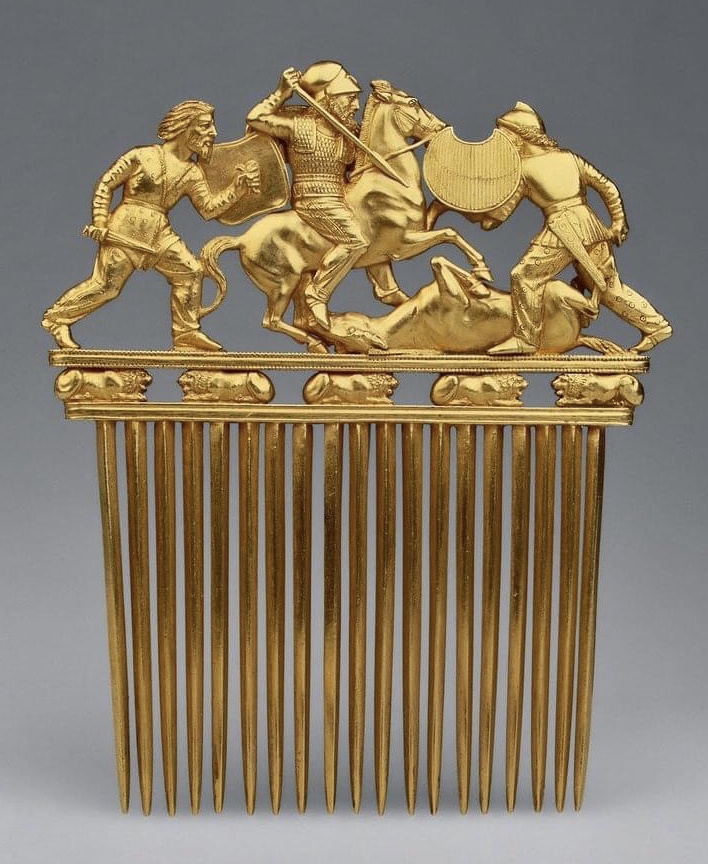
Greek-made Scythian gold comb, Solokha, Ukraine, 4th c. BC, Hermitage —Wiki

During the fall of the former Soviet Union, in the early 1990s, I spent a few seasons living in Leningrad with a noted pop singer. As winter closed in, and light diminished, I became stir-crazy, desperate for outside contact. I was living in isolation with a man from Grozny who spoke no English. But that's fodder for another story. One thing that enabled me to retain my sanity, other, than black market treats, including Earl Grey tea, was art for art's sake. I lived near the largest museum in the world, The Hermitage.

I literally spent my dark winter days in the dreary basement of the Old Hermitage. I discovered that I could waltz in the back door, for free, and avoid the long lines, if I attached myself to a busload of tourists....

Pop singer Valera Stupachenko, my Soviet fiancé, sometimes dropped me off at the museum when he had rehearsals at the Leningrad Rok Opera. I was lonely, isolated by language, or a lack thereof, though I could communicate basic needs in Russian.

I often divided my time between the Scythian, and the Fertile Crescent displays. The winged bull of Nineveh, the bust of the Akkadian king. Mysterious clay seals of Mohenjo-Daru, and cuneiform shards. Thracian gold. 

Of course, everything was explained in Russian, so I had to make do with what I remembered from my distant college art history classes. I painstakingly transcribed the Cyrillic placards into English. The guards did not seem to mind that I spend hours in darkened rooms gazing at these ancient wonders. 

A 2,300 yr-old women's soft red leather boot sewn with pyrite crystals and black beads, found  in an Altai mountain grave, 1948. Hermitage collection.

Having grown up on horseback, I was particularly fascinated by the Scythian horse trappings. Intricately designed saddles, felt applique blankets, bridles, stirrups, bits, and silk rugs—the oldest pile carpets in the world. Soft riding boots with wild roses beaded on the soles. I imagined a woman's feet never touched the earth, except for maybe to sit by the fire pit, dance on a thick carpet at her wedding, or when she was buried.

Oldest pile carpet in the world from an Altai Scythian tomb,.Pazyryk, ca. 4th c. BC. Hermitage

The elaborate gold Scythian pectoral collar made me weep, as did the golden reindeer, with horns so elaborate, they were like shining star-filled trees in a treeless tundra. They were more ancient and mysterious than the elaborate Greco-Scythian synthesized pieces. They were imbued with magic. Nomadic talismans.

Gilded wooden reindeer, Pazyryk, 5th c. BC. Hermitage

Afternoons were best spent in the (Post) Impressionist rooms, often the only direct sunlight I ever saw in winter was in those beautiful rooms with huge warped glass windows so old that I imagined they had somehow survived the Siege of Leningrad. 

Henri Matisse, Dance, 1910, Hermitage (they aren't that red!)

I didn't know those Scythian finds were the foundation pieces for the genesis of the Hermitage. I had unerringly gone to the heart of the matter. During the early 18th c., Russian explorers brought Scythian gold from burial kurgans to Peter the Great. Catherine the Great, a fierce collector of art, and artifacts, was so amazed by Scythian artifacts that she ordered scholars to systematically research them—this was before modern archaeology got its groove on.

Scythian pectoral, Ukraine, 4th c. BC. Horses torn apart by (Greek) griffins. Hermitage —Wiki

A woman ahead of her horse and time, Catherine the Great had the largest collections of paintings in the world (4000), including hundreds of Impressionist paintings. They had to hang somewhere along with all the other art she had collected—some 3 million pieces. One of the oldest (and largest) museums in the world, the Hermitage, a collection of buildings fronting the Nevsky River, was founded in 1764 to house her treasures. (There was Scythian art in Moscow, Kiev and Budapest museums—but nothing matches the Hermitage collection.)

The Giottos, da Vincis and Raphaels were all wonderful, don't get me wrong, but I lived for Impressionism. The impressionist rooms in the southern wing of the Winter Palace were filled with movement. I clattered up three flights of stairs to see Matisse's Nude Dancers, and the old babushka guarding them said she saw them as messengers. It was not just a job to her. She put her hand over her heart. She had to be there every day to keep them dancing. To keep the world dancing. And so she did.

Both the Hermitage, and Moscow's Pushkin Museum had replicas of the world's greatest statuary (for art students). I stood before the Dying Gaul of Pergamon, and marveled over Greco-Thracian artifacts...another abiding interest. The Celts settled among the Thracians. Albania and Bulgaria retain scant traces of lost Balkan Celtic cultures.

The Dying Gaul, Gladiator, or Galatian, a Roman marble copy of a lost bronze Hellenistic statue, 3rd c. BC. Capitoline Museums, Rome. Livy recorded that the Celts of Asia Minor fought naked. There's a modern copy of the Dying Gaul against a Naples yellow wall at the Hermitage (see a copy here—there's no free Wiki image), in St. Petersburg, and another at the Pushkin Museum in Moscow.

And the Scythians of the steppes probably had contact with the Celts (and Tocharians)—especially along the Silk Road, as some artifacts seemed to have a curious cross-influence. Yellow embroidered silk slippers were found in theLate Hallstatt Celtic Lady of Vix's cart burial mound, and site of the world's largest wine krater (500 BC). She must've been thirsty after death.

Early Irish origin myths named Scythia as the Irish homeland and the Scythians as their kin. Perhaps the Irish scribes were miffed, and maybe it's an accretion, because Old Irish wasn't listed in the Tower of Babel, but the Bible included a reference to the Scythians, followed by barbarians. (Colossians 3:11) Better to be Scythian, than barbarian.

Modern archaeology links Scythia with Iranian (not Turkic) cultures, but I'm not entirely convinced. Satem (Avestan, Old Persian; Thracian may have been a transition language) vs. centum (Old Irish, Hittite, Hellenic, Tocharian). Soft vs hard C/K sound. Herodotus recorded that the tattoed Gelonii, were formerly Greeks; they "use a tongue partly Scythian and partly Greek." Sounds like a centum language.  He also placed the Keltoi homeland in the steppes at the source of the Ister/Danube. Like pots, gold doesn't speak much, other than of beauty.

This belt boss seems to have a Celtic echo. Note the wolfhound (lion?) riding the tail of the horse (deer?) has swirls similar to Hallstatt or La Tène art, as does the distinctive shape of the horse's body. No triskles, but plenty of swirls.

Gold Scythian belt boss, Azerbaijan, 7th c. BC. —Wiki

It was easy for me to spot the Classical influences, and/or Greek imports. I have a prodigious memory for art images. The saying goes: beware of Greeks bearing gifts. But these gifts from antiquity were no Trojan Horse filled with the enemy, or shiny objects to steal, or intended to usurp one's culture, they were bridges, or windows into ancient worlds, lost to time and memory. All we have left of so many cultures are shiny artifacts from another time.

Gold plaques: resurrection of a dead hero; Saka culture, 5th c. BC, Hermitage—Wiki

I never married the singer. My heart wasn't in it. I never danced with him, for he loved God more than me, but my days were filled with wonder and beauty in that dank, dusty basement of the Hermitage. I could not resurrect what was never lost. The lower depths of the Hermitage was my only refuge during that last Soviet winter before the Fall.

Monday, February 16, 2015

Tapping Trees: a Sappy Story


Anthropologist and writer, K. Kris Hirst posed a question on the process of tapping maple trees, who invented it first? Northern Europeans or Native Americans? An interesting chicken or egg dilemma.

K. Kris Hirst, who writes for About.com, posted a story on the process of "Maple sugaring—obtaining sugar and syrup from maple trees—primarly a North American phenomenon. Although maple trees (species Acer) are found throughout the world, only North America has sugar-producing species (especially sugar maple Acer saccharum and black maple Acer nigrum), combined with the right mix of cool nights and warm days that generate enough sap to make sugaring worthwhile."

I love Kris's posts, they get me all Wiki-fingered, thinking parallel thoughts. I leave a small comment. Then another, and so on. Soon, I have enough material for a blog. Lovely story. Especially the chicken or egg dilemma part. Who invented tree-tapping first? Europeans or Native Americans? Especially when there's no archaeological evidence to prove or disprove it?

Another reader, Bill W. commented on Kris's Facebook post: "Last year I had an interesting—and surprisingly lively—debate about whether some of the objects labeled "dugout canoes" are actually maple sugaring troughs. There are historical accounts in Iowa of settlers reusing old Indian wooden sugaring troughs as hog troughs."

My mind had already run off with the idea of maple sugar-cured ham and eggs for brekkie. The idea was beginning to tap-dance itself into a bad Abbot and Costello archaeological joke with a sweet punchline. Why did the yellow-bellied sapsucker cross the road? Turns out it may be an even sappier story involving sap-swigging squirrels.
"Legend has it that, during a spring of famine, an Aboriginal was watching a squirrel bursting with energy. After noticing that the squirrel drank water from a maple tree, he realized that this was where the squirrel was getting its energy from. Maple water became a food prized by the people of the First Nations and later of New France.” — ILoveMaple.ca
I'll leave you to visit Kris's page and read up on traditional maple sap collecting practices. But come back, OK?

However, squirrels aside, I envisioned another solution. It's possible that Northern Europeans and Native Americans both independently came up with the process of tapping and reducing down tree sap. Convergent evolution, if you will. The Natives may have taught some European settlers how to tap maple trees, but the concept of tapping trees for sap was already a long-standing tradition in Russia and other boreal regions, as well as in Eastern North America.

Indigenous maples do grow throughout the Northern Hemisphere, but the sweetest sugarbush stands grow in North America. Three maple species are tapped: sugar maple (Acer saccharum), black maple (A. nigrum), and the red maple (A. rubrum). You can tap other maple trees, but they're more stingy with their sugar content.

But there other other deciduous trees in the forest you can tap for sweet sap. Not just those three maples. For example, Sycamore (OK so false and true sycamores are related to maples—Acer; somebody was trying to cop a Biblical feel by naming those trees sycamores, but those Biblical plane trees (ficus/mulberry) are not our sycamores). Somebody posted that sycamore syrup tastes vile. They didn't mention if they were swigging Biblical sycamore sap or Acer sap.

And you can tap the equally related box elder (Acer negundo) AKA the ash-leaf maple. But there's also birch, lime/linden (Tilia), walnut, and even beech and oak trees that have been tapped for sap. (Palm trees too may be tapped for sap, they may be Biblical, but they're not exactly a northern tree…)

Now Birch is classified as a Rosid, as are most of our food sources. The birch family, Betulaceae, includes some 130 species of alders, hazels, hornbeams, birches, and is closely related to the beech/oak family.

Finnish birch trees
When tracking down sources and ideas, I tend to lean toward folk customs, and oral tradition for clues. Sometimes, if I'm lucky, a particular tradition has survived into the modern era. In the case of Northern European tree-tapping, it seems to be true. Only with birch trees, not maple trees.

There is a related old Russian / Ukrainian folk custom, to tap birch trees at the break of winter to spring, boiling the syrup down to make an alcoholic berezovyi or birch beer (considered to be a spring tonic). 

I can't believe I still remember the word (I always think I don't know any Russian—until the words arise unbidden from memory). I was in the USSR collecting and translating poetry from 1989 to 1991. My Ukrainian translator, Oleg Atbashian was very emphatic explaining that berezovyi was a very special spring beer made from the sweet sap. And that old peasants drank it. (Russian: byeryozovyi).

So I Googled it, I found that birch beer is also made in North America, flavored with sap, or a twig oil distillation, but it's also made with added sugar. Coals to Newcastle. Not exactly authentic. I needed a paleo-source, not these modern shortcuts, using raisins and lemons and sugar to make a carbonated soft drink flavored with bottled birch oil.

Besides, most New Englanders erroneously assume that birch beer was invented in America ca. 1800. Well, that just didn't sit right—especially when I began to uncover posts from homesick ex-pat Russians trying to locate a source of the authentic ancient brew. (Hint: it predates root beer, it's made with sap, not roots, or twigs.)

My understanding of Russian birch beer was that only the natural sugars in the birch sap were used (and fermented). Apparently birch sap runs a month later than maple tree sap, and is more copious (but has less sugar content). The reduced birch sap is dark and molasses-like, sweet, slightly tart, maple flavored with vanillin with wintergreen/piney overtones. But it has a shorter shelf life.

During the regime of the USSR, sugar was not readily available, and it was a hot black market commodity. Probably why Russians have a mad sweet tooth today, they add jam and sugar to their tea, so sweet, that your cavities will positively beg for fillings. Birch trees are ubiquitous in Russia. Gather birch sap at the dacha, equals a free sugar fix.

Googling along, singing a song, I found a British birch beer recipe dating from 1676 that must've found its way to North America. John Worlidge was the go-to man for cider-making and his Vinetum Britannicum was the brewer's Bible, a 17th c. Amazon bestseller for at least a quarter of a century. The colonists had a prodigious thirst, and knew about fermenting the blood of several trees, and birch trees were the best (and the cheapest). Since the Middle Ages, laborers were routinely paid two gallons of cider (or birch beer/wine) a day.

(Note that Worlidge added refined sugar, which would've been a luxury item from the West Indies.)
"To every Gallon whereof, add a pound of refined Sugar, and boyl it about a quarter or half an hour; then set it to cool, and add a very little Yest to it, and it will ferment, and thereby purge itself from that little dross the Liquor and Sugar can yield: then put it in a Barrel, and add thereto a small proportion of Cinnamon and Mace bruised, about half an ounce of both to ten Gallons; then stop it very close, and about a month after bottle it; and in a few days you will have a most delicate brisk Wine of a flavor like unto Rhenish. Its Spirits are so volatile, that they are apt to break the Bottles, unless placed in a Refrigeratory, and when poured out, it gives a white head in the Glass. This Liquor is not of long duration, unless preserved very cool. Ale brewed of this Juice or Sap, is esteem'd very wholesome."  From Vinetum Britannicum, p. 176, London, 1676. (Free Google Book download.)—Wiki
The sugar addition to the recipe bothered me. Why add sugar to a sap already ladened with natural sugar? Sounds like a shortcut to an older tradition. I did look up the book and found that honey was also used. I've included a facsimile of the text as it's tho charming. And after you read it, I'm pretty thure you'll be lithping  ath well. Yeth.


The book provides my terminus anti quem. We do know that forest trees were being tapped for sap by the British as early as 1676, and probably since the Middle Ages. It took Worlidge several years to ready his manuscript for the printer, then it had to be hand-letter-set. Safe bet to say it was written ca. 1670. Jamestown was settled in 1607. Quebec 1608.  There is no mention of tapping North American trees for sap, Asian, African and Northern European trees, yes. From the 1620s on, there were Indian raids and wars, safe to say, there wasn't a lot of sharing. The English civil war from 1640 to 1659 meant England was a bit distracted. The French and the Dutch patrolling, more wars. Not a pretty time.

A fortuitous accident more fruitful (sapful?) was to search the internet for birch sap, or syrup. I found that "Making birch syrup is more difficult than making maple syrup, requiring about 100-150 liters of sap to produce one liter of syrup"    —Wiki
In the Ukraine and parts of Russia the sap is collected and sold as a type of mineral water, so they clearly value it. A fantastic, easy to make and reliable white wine can be made with a very distinct and pleasant taste, as well as beer, vinegar and a rich caramel and molasses-like syrup.... The sap then, which is actually about 95% + water, minerals and a little sugar, can be evapourated off to make a sublimely delicious syrup.—Fergus the Forager
Then searching under "birch sap," I hit paydirt:
"Birch sap is collected only at the break of winter and spring when the sap moves intensively. Birch sap was a traditional beverage in Russia (берёзовый сок / byeryozovyi sok), Latvia (bērzu sula), Estonia (kasemahl), Finland (koivun mahla), Lithuania (Beržų Sula), Belarus (Бярозавы сок / biarozavy sok, Byarozavik), Poland (Sok z Brzozy), Ukraine (Березовий сік / berezovyi sik), France, Scotland and elsewhere in Northern Europe, as well as parts of Northern China. Heterosides present in birch sap release methyl salicylate by enzymatic hydrolysis which is analgesic, anti-inflammatory and diuretic."   —Wiki
Then I Googled "birch juice" and garnered even more payola. For centuries, birch sap has been a staple in Russia, Scandinavia, Northern Europe, and Northern China (must be that Russian influence). Described as divine nectar:
Beryozovy Sok (birch juice) is the sap from a birch tree. It is a water-like sweet liquid. It’s the only kind of juice in Russia that is venerated in songs about the love of the Motherland. The ancient Slavs worshipped various Pagan gods. And birch was one of the most sacred trees. At that time it was forbidden to take the juice out of the tree for regular use – it was to be saved for rituals. But after the introduction of Christianity the ban gradually disappeared. And people started to collect birch nectar for everyday needs.  —Russiapedia
(Apparently Chernobyl led to the downfall of large scale birch sap collecting). But it's making a comeback among bodybuilders and athletes. Besides, most of them are already on steroids, so what's a little radiation, besides the glow-in-the-dark teeth bonus? Forget about hydrating with coconut water. Birch sap and maple sap, or rather, xylitol, is the tastier and new improved Gatorade and mineral-rich detoxicant. 

Sok means juice, or sap in Slavic languages. And dang if birch sap isn't just loaded with an aspirin related derivative, methyl salicylate, AKA wintergreen oil.  And birch sap, a diuretic, is a veritable wunder-drug, reputed to restore virility, cure baldness, rheumatism, prevent scurvy, and get rid of freckles (must be an anti-redhead thing). Health tonic indeed, and since the Russians are mad for fermenting all manner of things, birch beer is a natural. I guess there's no hangover. A nice spring ritual. LOL!

And if that doesn't float your boat, you can always buy hangoverless vodka made from birch tree sap, it’s called ‘brzozowka’ in the Ukraine.

In Old Slavonic, a cultural poem is embedded in the names of months: the Latinate Апрель (April) was called берёзозол, from берёза (birch tree) and зол—the month of greening birches. Any gardner worth their salt knows not to prune trees when the spring sap runs, or a fruit tree can bleed to death. Birch juice, collected during the first thaw, when the sap flows, is called the "crying of a birch."

The other weird Russian custom I encountered while in the Ukraine one winter, is birching. You wet your birch switch, or broom (ве́ник), and then flagellate yourself (or a lover) all over while in the (ба́ня) banya. Never personally witnessed it. A birch broom switch was thought to have magical powers, a sweet love potion. Does that make the banya the equivalent of a sugar shack? But it's an interesting aside. Think of it, a wintergreen-like substance is in the bark. Sort of like tiger balm on a stick, with a laced beer chaser, anyone? Sounds like a good spring tonic plan. Elixir of the gods.


And of course, birch is associated with the goddess Brigid in Ireland, and in Siberia, it's considered to be the world tree. The Latin name, betula is from the Gaulish betua; birchm in Old Irish: bethe, is the second letter in the alphabet of trees. Birch bark, the Northern Hemisphere's first paper, the wood, also used for writing. Famine food, and a hangover-free beer, as well. 

A child's IOU birchbark drawing from Novgorod ca. 1240-60AD:
     надо    митрѣво     зѧти     доложзи       кѣ

Monday, January 5, 2015

The Mother House at Dominican


During the summer of 1989 we held our 25th annual California Poets in the Schools conference in the Mother House at the Dominican Convent in San Rafael. It was a a big international event with guest poets from several Writers in the Schools programs, and poets from the USSR and Mexico.

Dominican Convent, San Rafael, California, circa 1908 [postcard‘ Marin County Free Library 
The Convent, dedicated on July 21, 1889 in San Rafael, California, was originally the home for nine Dominican Sisters, four postulants and one novice. The same building housed a girls' school plus high school. The Sisters also taught children at St. Raphael's School at Fifth and A Streets. The college was increased to a four-year institution and the first class of Dominican College graduated in 1922. The elementary school and high school moved to San Domenico in San Anselmo in 1965. In 1971, the College became coed, and in April 2000 Dominican changed its name to Dominican University. The Convent burned in 1990, and the Sisters elected to replace the remains with a new, more modern building. —Marin County Free Library 
The Mother House, designed by San Francisco architect Thomas J. Welsh, was an intricate and ornate four-storey affair, built of solid redwood. A grand Victorian dame replete with cupolas, bell towers and widow walks. There was gorgeous turned woodwork, hidden nooks, lace-curtained vaulted windows and Greco-Roman touches worthy of any fin de siècle grand hotel. Massive grand staircases, fine tongue and groove, intricate tile-work, wall panels of black walnut, oak and rich mahogany patterned veneers.

The Mother House was a living museum. I was attracted to the early California plein-air pastoral paintings worthy of the Hudson Impressionist School, probably hung on the walls when they were still wet. There was a rumor of a Rembrandt. It also contained the usual array of religious iconography, stained glass, and wooden shields, heavy antique claw-footed furniture, and vast carpets of Persian rugs blossoming everywhere.

Sunday, June 28, 2009

Blast from the Soviet Past


Kirk Whipple & Marilyn Morales  wrote:
Hola, guess what we got an email from Sasha Karpenko. He has two kids from 2 different mothers. He wanted to know if we know anything from Fred Ptucha and John Masura.We have not spoken to them since 1997. Are you in contact with either one? We started the concerts this weekend. We had two great shows. Today is the third one. Besitos MM
Maureen Hurley No, I've been SO out of touch! we're in Seattle, just returned from a week in the San Juans, Victoria & Vancouver, BC. Home again in CA, but NON is off to Scotia on Wed. to see his mum. We'll catch up later.


Thursday, February 22, 2007

Letter to Ira Rosenstein

Dear Ira,
Dear friend of a friend

So you ask me if I love life? This is to ask if I also know death—the flip side of the coin. You speak of being held at gunpoint, & question where that passion comes from—if I’d ever had a similar experience because I live in a rural area.

This morning my uncle died, in less than 48 hours I leave for Russia for an unspecified amount of time, and I thought because my uncle tried to sell my grandmother’s house and land out from under her without her permission “for her own good” because I was growing up too wild and untamed (unfit for society’s restrictions) and he made her cry, bullying her with his first-born male energy—that I was somehow exempt from grief.

A son is a form of God in an Irish (or Jewish) family. My grandmother was a strong woman, stronger than most people of any/either sex and I inherited some of that strength and passion—what comes with the territory is the white-hot rage and anger—another socially unacceptable trait. 

I attacked my uncle, a 12-year-old who wanted him dead, and so now he is dead, and I’m surprised to find myself depressed, in a fog, suffering from grief—because I discovered that blood is thicker than intellect or emotion—no matter how disfunctional the family. 

I remember his wife washing my mouth out with soap and sending me to the bedroom for some minor infraction—she was unaware of the deeper mine of wrath and anger below the volatile surface. She labeled me as “child” but perhaps like Athena, I was born fully formed from my grandmother’s brow.

Do not assume that because we grew up in different circumstances that I led a ‘sheltered‘ life; it’s not that cut and dry. 

Growing up rural is a strength that has allowed me refuge from the traumas that followed my family. I’ve faced death both in a global and a personal context. 

No, I have never been held at gunpoint, other than at a roadblock deep in the Guatamalan jungle—with no witnesses. We were lucky and escaped with our lives. 

No, I have never been held at gunpoint, but I watched the campesino sleep with studied indifference as the soldiers practiced kickboxing with uzis slung over their shoulders (a sweet US/Israeli deal—arm the army). 

The other side uses AK-47s. I’ve seen both. 

And in Peru, we came upon the body of the lawyer dumped in front of the Chorillos tunnel in Lima—his crime, a good lawyer for the other side. 

No I cannot shake the larger images of war from my mind, it wasn’t my own life I was worried about, but the perpetual genocides committed by both factions in the name of liberty—for whom? 

The passion is genetic. I am the grand-daughter of a revolutionary. My (IRA) grandfather, while working for the city jail, shipped suitcases of guns from San Francisco to New York to Ireland during the Rebellion, and knew Parnell and Liam Mellows first-hand. 

And was there when India struggled for independence—anything to be on the side opposing the English. When Indians weren’t considered human, not allowed to own land, he sponsored them, bought land under his name for them. 

Recently I came across the engraved invitation from the Indian Consulate dated 1945, inviting my family to the Independence celebration in San Francisco. Another letter from Seamus (James) Mooney, the famous longshoreman and political prisoner of the ‘30s who killed someone during a union riot (I was surprised to hear a lawyer, speaking of ethics, refer back to the Mooney case). 

My grandfather took the city on, suing them and winning (he was his own lawyer) when they discriminated against him, firing him to give his job to someone else. It's down in the lawbooks as a landmark case. Reilly vs SF. To fight is to survive. My family emigrated to America after the Famine, so, genetically speaking, we know no other way than passion to survive.

My second cousin, a mathematician, was whisked off right out of high school to a PO Box address in New Mexico. When she died of cancer, the story came out. Manhattan Project. Fermi Institute. 

In Santa Fe, I stood at the bridge where the Rosenbergs were captured, and shivered in the sunlight—born during this age of Light, I have no choice but to weave the stories. 

Nor could I stop crying at Los Alamos—what we’ve done in the name of an idea. Remember the Bay of Pigs? The scars go deep, and I cannot stop writing about it. Bearing witness—it is this writing I cannot get published because it’s too dark.

Yes, I too am uneasy about the new Russia, as I am about the new Latin America. Now that we’ve had our cake, we (who really do see the other side of the coin) have the audacity to tell them they can’t have it—when we’ve set up the wish list of ultimate attainment to begin with. 

I know we can’t convince the Olegs of the world—they are incapable of seeing out of the trench of their miserable lives, and there’s something in the Slavic character, that will continue to hold them there—the root word “slave” speaks volumes and needs no interpretation. 

Need I say that what I admired in Oleg while we were in the Ukraine evaporated on American soil? Oleg’s limited vision and inability to look inward for root causes is a microcosm of the whole; have we deluded ourselves into thinking that the ideals of communism (vs. anti-capitalism) or another system could overcome some basic human traits?

Of course, no matter the country, it’s the same old story—war between the sexes, only I’m no one’s footstool. I love life because I love my art—and every man, no matter how enlightened, seems to want that space for himself. 

Yes, I learned the term “foetid’ from Durrell’s description of an abortion in the Alexandria Quartet— Brit. spelling, but then Durrell’s Irish, as I am. Did you notice the hidden word “foe”? And having been the victim of men’s basic inconsistencies—love/mysogeny, pregnancies/abortions, I too know first-hand about death, having long-term infections that nearly killed me for my decisions to take life. 

You see, I was the product of a divorce; I saw my mother go crazy (and the suicide attempts that followed), an aunt and drunk husband & co. where violence and poverty is second nature to breathing. I knew better than to leave myself at the mercy of society as a single mother. I’ve been the psych wards and have no intention of becoming an inmate.

I love life because I know first-hand how easy it is to abdicate—the way my 17 year-old cousin did at 4 a.m. in downtown Santa Rosa on a Harley. Maybe drugs were involved. I don’t know. 

But when someone close dies, I am usually there in my dreams with them—and I never want to wake up to hear the news. I dreamed the darkness, the fog, and the red light of my cousin’s death—only we’re not supposed to remember these things during our waking hours. My mother banging on the door to wake me with the news, but I refused to waken, because waking was worse than the nightmare. 

There are things I tell no one, but it comes out in my poetry; sometimes I worry about there being too much death in my work, but I am a witness, and this is my most foetid art!

Eileen Mavorneen! (Rosenstein). What a great name. And what’s she doing with an IRISH first name, pray tell? Is it the Black Puerto Rican, or the Jewish side? 

You know of the Irish kids kidnapped and shipped to the Caribbean by the thousands by the British? This is why most Blacks have Irish in them (or Irish last names) I haven’t time to properly introduce delectable British forms of genocide, but suffice to say, centuries later, they continue to practice on the Irish. 

I know Eileen’s disappointment—looking for the bright ones—and the despair that follows when whole classes show nary a shining star. I wonder why the hell I’m bothering to reach them—but ultimately I have faith. (Faith: something scientifically unproveable). 

Then my faith in humanity is restored when a little 2nd grader, Trevor Yeats (great-grand-nephew to WBY) writes to me: 

“This body is to ask
this question of the mind: 
Is the sun to shine on the day of my death?
Is the hole in the ozone layer to stay as big? 
Tell me, tell me, where is the answer? 
This is the breath, to breathe this air.”
         Trevor Yeats

Well, since my work overtakes me, I’m not so sure I can write in sonnet format It has its own thoughts & forms—probably why I hated poetry as a kid was because it rhymed! 

Well, I’ve got to go miles and miles—to the other side of the earth—before I again sleep—and I still have to pack all this shit, or I’ll weep ere the morning comes, and have a fit of despair, with all this packing to do, or go nowhere at all, except deeper into the mystery. 

Maureen
PS Give my love to Edwin too.

10/91


Wednesday, February 14, 2007

Letter from Oleg Atbashian

Yan Martsinkevitch, Maureen Hurley & Oleg Atbashian
Maureen,

I created a new font Oleg Leningrad, which is the same Leningrad 24, but with the key map same as Smolensk. So, all the files we had in Smolensk, can be easily converted to Oleg Leningrad with the only problem that S-k is 12, and L-d is only 24. With the LaserWriter you can reduce it on “page setup,” as we did earlier, or use Adobe Type Manager, whatever works better.

What we have in Leningrad, let’s leave in Leningrad, and you should also leave it in your system, along with the new Oleg Leningrad. Convert only Smolensk text. It may be a little confusing, but it’s only a one-time thing.

Me, Oleg Atbashian & Yelena Buyevitch reading from Soviet Poetry Since Glasnost, Cherkassy, Ukraine. 1990-91.


I converted your poems on this disk into Oleg Leningrad, and some of the Am. kids poems translations. You’ll see. All the rest of Smolensk typeface you can convert yourself, like you do it with English fonts.

I also converted all the poems in Am. kids poems file from Draw on into Draw Off, which took me a while, but I still didn’t do this to Am.KIDS-90 file. It’s easy, you can do it yourself. Here’s the instructions:

-Press Power key + J, and you’ll get “Draw.” (let me use PK for Power key.)

-Click on “A” on the Draw menu.

-Click on the poem on the right side, and a box will appear.

-Highlight the poem in the box as usual, cut it by pressing PK + X . It’ll disappear.

(If the poem doesn’t get all on the screen, click on the beginning of it, then scroll the text to the end, press “Shift” and click at the end of the last line. It’ll work).

Then press PK + X .

-Press PK + J , and you’ll be out of “Draw”

-Click on the place you want to paste the poem, and press PK + V (paste).

-Convert the text in Smolensk into Oleg Leningrad.

-That’s it!

Sorry, I’m so busy now, I even have no time to take a shower in many days, especially now, as John leaves and I have to accomplish all the paperwork for my business etc.

I wouldn’t have been so busy, and just send stuff via modem, but — the greatest frustration I had in a while — after we payed money to GlasNet and tried the modem making local calls, the day we were supposed to make our first connection with Moscow, the modem died. To be specific, two microchips died because of some misterious reason, possibly power surges. I couldn’t believe it. I literally spent a whole week running with foam dripping from my lips from place to place trying to get the chips. Finally I got one, but the other one is not found yet. 

We sent a telegram to Paul asking to send the chip here. I hope it’ll be worked out eventually. The whole thing worked as a sudden damb across the river, crashing all of our plans, and stopping many projects for an unspecified period of time. After a week of unresultive galloping around, there occurred a real flood of papers gathering and gathering without any chance to break through to the destination, and no movement. I’m panicking because there’s still so much to be done, and John leaves soon, and there were so many unexpected things that stopped me from accomplishing our project.

I’m so sorry, and I feel really bad because I didn’t have a chance to translate poems yet. After John leaves, I’ll have more time, and poetry book will be the first project I’ll start doing. I hope, modem will eventually start working, and I’ll send you stuff e-mail (from e-male). It’ll look like bullshit because it’ll be in some English font, but after converting it into Oleg Leningrad it’ll be something.

Yan Martsinkevitch, Maureen Hurley, Oleg Atbashian,Yelena Buyevitch—we're being interviewed by a TASS reporter (I think.)  

After the modem broke I felt like I’m trapped, and I shouldn’t have taken to this job at all. It took me a while to feel better. 

You know, the work I’m doing now is also very useful for me as a writer because every day I meet new characters, and I learn a lot about people in a different context than before, and often I meet that kind of people I wouldn’t have met otherwise, like high government officials, big plants directors and other types of important guys that wouldn’t have talked to me before. Now they appreciate my skills and knowledge, the things I also had before I started working for an American business person. 

All former Communists are now straight Capitalists wanting to do Big Business and make Big Money (which is actually still better than what they did before). It’s funny to work with them, it turned out that they are just naîve and greedy kids in their souls, which is even touching in a way. As for their cruelty, you know how cruel kids can be without even realizing it — they can kill an animal just from curiosity. 

Actually, “early” Communists that made the revolution were also just kids, ill-bread and not very smart. If you are an ill-bread not very smart kid, and you have good ideas in your heart, you make a good “early” Communist. As soon as you win, you provide a good basis for smart ill-bread kids with bad ideas in their hearts. That’s whom we had at power in the U.S.S.R., after all not very smart kids with good ideas were massacred by bad kids in the 1920-30s. 

Now, as they failed, all these greedy little creatures conform very quickly to the people they persecuted before, because they realized that business will satisfy their greediness much better than the former (ridiculous to a Westerner) privileges in a robbed and hungry country. After the coup when an investigation against the Communist party began, it turned out that feeling their end, the former Communist leaders illegally invested hundreds of millions of the Party money (not always earned legally) into different businesses, and made themselves the directors and managers of half private enterprises. Yepp... Luckily, those are only part of the businesses I work with. Of course, I don’t want to support them, but at the moment I just have to work with the material available, planting good seeds for the future.

The song that we recorded in Santa Rosa provides quite an impression on people who understand music here. Unfortunately, those are not the majority. Artemi Troitski whom I counted on to support our project, became a big shot on the Russian TV. He spends too much time abroad. 

There was also a scandal, when after the coup failed, he promiced publicly on TV to bring best of the world’s rock’n’roll musicians to Moscow to play in the concert to celebrate our freedom. The day was announced, a big stadium was rented, but the concert didn’t happen because nobody of the musicians showed up. 

As you understand, the public wasn’t very excited about this. Artemi got very frustrated, and left for Paris, France, to organize another concert to celebrate our freedom. This time he was a success, but it happened in France, not in the U.S.S.R. I don’t think I shall count on him any more. Now that Ukraine became independent from Russia, it’ll be even more difficult. Still, there are two local companies that said they will consider about sponsorship.

I didn’t ask any questions about your relationships with Valeri. I can’t tell you more than I’ve already said. I just hope everything will be OK, and you will let me know how it is going. I wish you the best of what I can only wish and I want to know that you are happy in the forthcoming New Year.

MERRY CHRISTMOUSE! 

Oleggy
12/91


See also:

Ukrainian Glasnost: An Insider's View (March 28, 1991) Oleg Atbashian, the author of this essay, is a writer from the Ukrainian city of Cherkassy. He came to the United States last October on a private cultural exchange, working with poets and writers in California to translate Russian and Ukrainian poetry. In this essay, he remembers some of the events of 1990 and comments on the changes then taking place in the Ukraine under glasnost.


Note Bene: Ironic, the Soviet poetry translation project was my baby, and traces of me have been expunged, no credit, other than here on my own blog. And yet I diligently credited Oleg for his translations. When Oleg returned to Cherkassy in the summer of 1990, he went back to his wife. On emigrating to America in 1994, Oleg reinvented himself with, not one, but two right wings. But I know where the bodies lie. His wife, Nadia used to send me hate email, she hated living in New York and blamed me for their relocation, and not the fall of the USSR. After 9/11 I heard from Oleg, he was working in the American Express building, next to the Twin Towers, he was running late, missed the train to work, and lived to tell the tale. I wish him well, but we are light years apart from that fateful day I met him in August in Cherkassy. I haven't heard from him since. 

This poem is where it all began.

ROAD TO UMAN

Thursday, August 28, 2003

Letter to Michael Kettner, Catalyst

Dear Michael Kettner,

I noticed that you're selling a book I'm published in, under Abebooks.com. I'd completely forgotten about it...and AD Wynans...Migawd! How did you obtain a copy of the book? Would you like me to sign it to increase its value? Hahah. Um, what poem DO I have in it?

Maureen Hurley

CATALYST #17: 3nd ANNUAL EROTICA ISSUE
Bookseller: M. Kettner and Son, Booksellers
Contact: Michael Kettner
Address: M. Kettner and Son, Booksellers, 1501 NE 68th, Seattle, WA, U.S.A., 98115
E-mail: mkettnerbooks@juno.com
Phone #: 206-323-7268

Dear Maureen, 

How nice to hear from you again. Lest you have forgotten, i was the publisher of said CATALYST. Have taken a few years off writing to insure i have retirement income - to set up an on-line book biz specializing in poetry and sm. pr. stuff. Only have a few dozen of Catalyst 19 left, and since so popular, am selling them one by one on line;

Your contribution to #19 was a graphic, "self-portrait". thanks for offering to sign a copy. however with periodicals, there is little value enhancement with signatures unless multiple contributors do so or if signed by editor or famous person. in the case of erotica, the mere fact it is erotica, is usually enough. 

You did receive a copy or two of #19, did you not? don't remember you being on list of copies returned with no forwarding address. check out my list on ABE by clicking on booksellers. have over 1500 sm. pr. titles on line with at least as many to go. also have large list of general titles since it's hard to make a living on poetry alone. if you ever want to sell off part of your poetry collection, let me know. 

Take Care, M.

In a message dated 8/28/04 12:24:34 PM, mkettnerbooks@juno.com writes:
<< if you ever want to sell off part of your poetry collection, >>

Hi Michael,

I've been thinking about it for ages, the books just sitting in my cabin in Forestville, some rare ones at that. And correspondence. Robert Bly/ Calliope Press...I put on that event at SSU. Lotta work & little gratis from himself.

Lee Perron--do you know him? also got into the rare book business--along with John McBride...who, if I have the story right, was laif off after 25 years from Moe's Books on Telegraph--recession, a sign of the times. As our friend Ken Bullock said, hell of a time to try & sell books. How are you doing with it? Are you still publishing journals? I did look at my resume and Catalyst is indeed listed--way back in the 1980s.

Ach, the book signing, It was merely a ploy to say hi via cyberspace...your name rang a bell, and certainly, Seattle....I'm trying to put a face/event/place to your name as I'm certain that we met...in SF? Or Port Townsend? I'm excellent with faces, even after 20 years...when & where? Obviously you've got my drawing, it must be a self portrait...

Gawd it's been a right long while since that epic journey we took north from Mendocino: Sharon Doubiago, Leonard Cirino, Tobey Kaplan, myself and Moonlight the Alsatian shepherd, in a white station wagon named Roses. An anarchy of northern California poets crashed the Port Townsend Writers' Conference...Carol Jane Banks was having apoplexy right, left & center.

We were all sleeping on the beach, one full moon night, the tide came in and nearly swept us away. Leonard was floating around in his down bag like a cork. Bill Knott was living in a big Victorian on the bluff with Pamela Uschuk (sp)?, we spent a couple of nights on the porch. We later found some barracks that were open after that. CJ Bangs was trying to get us bounced out of the conference but we were like bad pennies. Meridel LeSueur took to us, said we stayed or else and that was that.

Meridel took Sharon under her wing, and that was the start of something, all right. I kept out of the way, feeling like a poetry impostor, and years later, Meridel was asking me why I stayed away so long, was I mad at her...by then it was too late for a prodigal daughter.

I remember Ray Carver, a long cool drink of, er...uisge beatha, chainsmoking and we were all singing Irish songs at some bar with Tess Gallagher... and Michael Daley. Empty Bowl. And Marina Albert...putting us up. All these names bubbling up. it was a spur of the moment event that irrevocably changed my life, somehow I always thought it would continue like that, mad confabs of poets...but then long distances of time and isolation set in.

After finally breaking it off w / John Oliver Simon, I wound up in the USSR doing a poetry & art exchange. It was there I began to translate the Soviet poets. I ran into Marina in Moscow, we were both living in Leningrad with crazy Soviet singers. We'd hoard our dimes and meet at the Seagull Cafe on Nyevsky Prospect, we'd pay an outrageous sum (a week's wages for some) for lattes, worth every penny. 

One time we met Mendelstahm's publisher, it was Glasnost and there was hope. He brought his samizdat publications out of hiding and we held a piece of history. For that one publication he could've been killed. In Moscow, I saw Akhmatova's frail sister feeding pigeons in the snow. But I had to let go of Russia in order to survive. I came back to the States.

I did get to Poetry International in Rotterdam a couple of times, and was in on the Breytenbach translation project...with the likes of Holub, Heaney, Dove...I was onto something, in that I loved the process of translation, then I was nearly killed in 1997, a car accident, and with the shock and healing and all that, poetry sort of left me. I still write, but not with the fervor of the past. Dabbling in prose too, but what's a dyslexic to do with linear thought? After the accident I went back to school and got a MA/MFA at SFSU, w/ a side of Celtic studies at UC Berkekey. Did some playwriting too. But I blather on...

Maureen

Hey Maureen, 

no, 12 years of publishing was enough for me. still writing. on-line is the way to go with book biz these days. more one has on line, the more you make. been learning on-line biz from a couple of the masters here in seattle. left Kathleen after 23 years a couple revolutions about the sun ago. tough at first but had to be done. 

quit job of 16 years and decided to set myself up so i'd never have to work for someone again. just write and sell books. if your poetry collection is anything like mine, i'm very interested if you truly want to sell. i'm just getting past initial years of set-up and debt management it takes to get going and could probably work something out as autumn progresses. 

glad to hear you've recovered. the writing impulse is fragile. been observing it in others for years, studying, if you will, how to maintain it and have it thrive. not easy to do, especially as one ages and life's vicissitudes work on one. have to get ready for work (at Horizon Books). talk to you again soon. -M. P.S. No, we have never met. You were in town once but we didn't hook-up, if i remember correctly.

Take Care, M.