Showing posts with label Becky Dart. Show all posts

Tuesday, July 19, 2016

Becky Dart: Born to Run


Me and Becky Dart ca. 1969. The fence is cribbed so I had her a while.
Once upon a time I had a sorrel mare so fast at the quarter mile, no other horse could beat her. When Becky Dart ran, it was like riding the wind, or a barrel down the rapids. She exploded with energy so fierce, it was hard to stay mounted. Of course, I rode bareback, and had thighs of steel. I was addicted to speed and she was born to run.

The thrill of riding an animal faster than any other four-legged creature on earth, save the cheetah, or antelope—neither of which you can ride—was euphoric.

My five-year-old mare came from Olema Ranch and cost $500. In those days there wasn't much readily available information on the pedigrees of horses. Most pedigree stories were passed down by word of mouth while standing at the corral gate. My aunt's friend Chuck traced her pedigree chart, the long hard way. At first, he thought her pedigree was forged, then he said that she was valuable as a broodmare, as her bloodline was that of champions. Of course I had no idea.

Becky Dart carried the same ancestry as California Chrome—right back to the Darley Arabian—they were Drinkers of the Wind. I had the fastest horse in West Marin. I rode the wind. No one could beat that horse at the quarter-mile. But at the two-mile marker, on the old Lagunitas railroad bed in Samuel P. Taylor Park, I was always left eating crow. Or dust. My competitive mare wouldn't give up until she was thoroughly winded and sobbing for breath.

I pored over that pedigree chart, the size of a coffee table, and memorized the names of her ancestors all the way back to the thoroughbred foundation sires. Her pedigree was studded with Kentucky Derby, Preakness, and Belmont Stakes winners: she had Triple Crown winners on both sides of the family tree. She was related to Man o' War, (1917-47) one of the greatest Thoroughbred racehorses of all time, through War Hug. And one jockey's name appeared again and again: the famous racing icon, Willie Shoemaker.

I remember watching Willie Shoemaker riding the legendary Candy Spots to victory at the 1963 televised Preakness. I was starstruck.

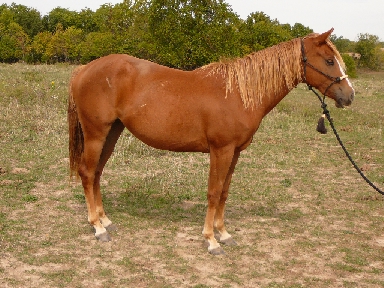
Becky Dart's great-grandfather was Three Bars (1940-1968.) Other than a wide blaze, she looked like him. Same tiny ears, dished face and teacup nose, reflecting Arabian ancestry. she even held her tail up like a flag when she ran. The mare was a bit slenderer, though. And she had scarred knees.

How the mare came to that ranch in Olema, her sire, Dart Bar, owned by Bill Cowan, was from McNeal, AZ), is a bit of a mystery. But her scarred knees suggest something went wrong and she was not racing track material. Retired from the track before she even began. But she carried the legendary names of Three Bars, and Dart Bar.

A cowboy at the Olema Ranch mentioned she wore braces as a foal, that's why her knees were bald. She was probably sold at auction to the knackers, or a claims race, and was rescued by those cowboys who ran the dude ranch. For a cripple, she sure could run. She had a palomino sister at the ranch too, also out of Dart Bar.

That spring, I put my mare in Mary Bianchi's pasture to graze on the lush grass. I checked on her after school and she was fine. But that evening, I had a hunch something was wrong and and I found her down and sweating.

Nothing should've gone wrong, but it did. She had colic, and though I walked her for 18 hours, she never got better, she'd twisted her colon—peritonitis had set in. No way to save her. She died in Edie Lehman's sand arena, where I worked as a exercise groom—after a long, and violent struggle.

I never got over watching her die like that, screaming, and rearing over backwards, to escape the pain. The vet ended it with a foot-long needle to the heart. I always meant to write about her, never quite managed to do a decent job of it. A snippet here and there. A horse like that leaves a deep sinkhole in the mind, and I had backfilled it with grief.

I worked for the Lehman's training stable, and showed their horses at gymkhanas, I collected armloads of blue and red ribbons, but I didn't want to own another horse, losing her was devastating. She was big and beautiful, there was so more of her to love. There was nothing much left of my childhood landscape. Sometimes I dream of my horses running free on the slopes of Mt. Barnabe, and wake up with an inconsolable sense of longing.

I had to wait decades for the internet cute animal memes to parade forth in order to find this page on Doc Bar...which led to this post.

My brother Guy, and a relation—who, I'm not sure.

Saturday, May 17, 2014

Eating the Wind


When I was a kid, King of the Wind was my go-to comfort book. So, the Godolphin, the Darley Arabian, and the Byerly Turk were my small horse gods.

I had a sorrel quarter horse mare, Becky Dart, who carried some of the same bloodlines as California Chrome—right back to Man o' War... and the Darley Arabian—they were Drinkers of the Wind. I had the fastest horse in West Marin. I rode the wind. No one could beat her at the quarter mile. 

But at the mile marker, I was always left eating crow.

My horse, Becky Dart (a Three Bars/Doc Bar/Dart Bar lineage mare), looked a bit like this mare, she was leaner and had better conformation—including a higher croup, like an Arabian. She was related to Man o War through War Hug, four generations back.

The thrill of riding an animal faster than any other four-legged creature on earth, save a cheetah, or an antelope—neither of which you can ride—was an euphoric experience.

Fact: the only animals able to run faster than an American Quarter Horse (55 MPH), close cousin to the thoroughbred, and mustang, are the those sprinters, the cheetah (70-80 MPH) and the Pronghorn antelope (60 MPH). However, they're only capable of short bursts of speed. A cheetah can accelerate from 0 to 100 km/h (62 mph) in three seconds. That's something like 96 feet per second. 

Here's the rub: cheetahs can't run fast for an hour, or even a quarter of an hour. Cheetahs can sprint full tilt for about 100 feet before they overheat.
At the quarter mile, the quarter horse would still probably win, as it can easily sustain speeds up to 55 MPH for a quarter of a mile (1320 feet in 21 seconds). Thomsons gazelle, wildebeasts and lions (50 MPH) would be eating the quarter horse's dust.

Becky Dart: Born to Run (I borrowed a couple of sentences from this blog post)

Tuesday, December 4, 2012

Sitting Deep


We were watching a 2006 YouTube meme of a deaf-mute girl, Stacy Westfall riding at a horse show sans saddle and bridle. It's pretty amazing piece of showmanship given the amount of time she had to work with the horse—only three weeks. (Plus her double handicap.)

The video highlights Stacy's integrity as a rider and a trainer, and her ability to get the horse to trust her. Pure obedience. Being at one with the horse. 

That got me to thinking. It seems I can't observe anything without analyzing it. Where most people would go OMG, OMG! I was analyzing it as a fellow rider. And weighing in. No sentimental claptrap here. 

Then it came to me that the particular skillset required to be an exceptional equestrian or trainer was the power of observation. Phillip (that lover of horses) was vexed that his prize Bucephalus was untamable. Phillip's son, Alexander the Great, noticed that the horse was afraid of his own shadow. So he turned the horse toward the sun, and was able to mount him. In order to be able to read horses, sometimes you just have to turn toward the sun.

The horse the deaf-mute girl's riding is a good, honest hard-working quarterhorse. Babydoll stops true and square on her slides—that makes the quarterhorse justly famous (think of when a cowboy ropes a cow and the horse sits back on its haunches and comes to a screeching halt). Babydoll is evenly spaced on her rollbacks in both directions. (I'll explain that term later). 

Babydoll switches her leads (changes her front legs from left to right at a gallop) like a dream—what we used to call a pushbutton horse. However, it's all done with the shifting of your weight and subtle leg commands, which are dressage signals that date back to before the founding of Rome—no voice commands are needed. 

What the audience also doesn't know, of course, is that the girl using the horse's mane like reins to signal the horse. You can see her gather the mane up like reins, and then pick it up. Those are rein signals. The horse is listening to those commands. Watch her ears.

However, the critical rider in me noted that Stacy's seat was a little off. A seat is how you physically sit on the horse, and balance is critical. Your posture (back) changes depending on the horse's gait. Like leaning into a curve on a bicycle. You can tell that Stacy usually rides in a saddle. No matter, it's all very impressive riding. 

Stacy needs to sit down a little deeper, drop her heels down, keep her toes pointed up and forward, not hanging loose like that, then she'll be truly at one with the horse. You can see she's a little off balance, leaning a little too forward. And if the horse ever decided to turn suddenly, of her own accord... Makes you hold your breath in fear.

Believe it or not, I used to do that sort of thing too—ride sans saddle or bridle. It wasn't particularly difficult if you grew up on horseback and had no saddle to begin with, let alone a foam and canvas saddlepad with hokey stirrups you couldn't trust as the pad would slip around the horse if you put more weight on one side versus the other. Riding at a right angle to the horse at half-mast always concluded with meeting the ground head-on. 

I also have a dent in my skull where my horse misinterpreted one voiceless command. Chiquita, a rescue horse, was my first horse. I spent all my free time on her bony back—she was older than dirt. I had no saddle. 

The siren call to a friend's barn, and she took a shortcut up the other unused driveway at a full gallop and I went sailing straight ahead as she turned right—I was doing a kneeling liberty spread with my knees cradled in the hollow of her withers and backbone (what was I thinking?) We'd done it many times before, but when she did an exit, stage right, well... I was cocky, oversure. Mistake. Talk about crossed wires. I was lucky I didn't get a concussion.

When I was young, I wanted to grow up to be a Lippizanner, or maybe Bucephalus. I knew were every Flying A gas station with the red flying horse was, I could recite Pegasus's lineage.  I knew all the stages of horses from eohippus to equus. I was that kind of horse-crazy for all things horses. 

Horses were my link to the world, to my emotions—my heart. I, who had been pawned off onto my grandmother after my grandfather's death by my mother who wanted to follow her dream of show biz. I was a fragile child but I hid it beneath a tough carapace. I became mute. Horses were my Beatrice, my way out of the seventh ring of hell. They offered me succor and solace. They are the ultimate empaths.

I used to work as a rider for Edie Lehman, at Rafter L Ranches training stable so I rode a lot of horses and Edie gave me lessons that were based on dressage and feeling the horse with your legs—thigh and calf communication to the front of the girth meant one thing, to the back of the girth, to turn or move sideways. 

The heel command was rarely used unless the horse was lazy or not "listening" to your leg commands. It was always a matter of body over voice. Every nuance of leg and shifting of weight, was a specific signal. Watch a dressage horse in action.

True, we used reins and saddle, sometimes the arena wall—especially in practicing rollbacks. I'd gallop full speed straight toward the corrigated wall, and signal with my legs for Bart, a big-boned bay horse from Minnesota, to suddenly switch gears and roll either right or left. It was always harrowing and exciting practicing rollbacks. 

Then, the real test was that I had to do it again for Edie, a rollback in the middle of the arena. No walls to help you. If Bart was lazy, he'd overshoot the mark. That's why we did a lot of wall practice, to teach him to slide into the wall, and rear left or right, twisting over his hind legs that were skidding toward the wall. He was a big horse. 

This is a maneuver better suited for dainty Arabians and chunky quarterhorses quick on their feet, not a Big Mack truck of a horse who stood 16 plus hands tall. But Bart was tough. He survived Minnesota winters. He didn't DO mollycoddling or barns. The first six years he was in California, be never even bothered to grow a winter coat.

 It's funny how dropping your heels and lifting your toes up and parallel improves your seat and balance—not at an angle like that (sure, when we rode our own horses dinkering around on fireroads we all slouched like that) but NEVER in the arena when riding professionally. I guess that's what it is, sitting deep. I like that idea. Sitting deep.


Horse Chestnuts

If I hadn't met Sweet Old Bob, if I hadn't gone to Europe for the summer of my 19th year, I would've been Edie Lehman's permanent rider. We were showing quite a bit locally and I was supposed to show horses for Rafter L Ranches at the California State fair in Sacramento.

But first love, and Europe beckoned. Edie said, Well, have a nice life. It didn't quite work out that way. But how was I to know?

I was always pretty good rider, having worked my way up via all sorts of sundry ungulates. Donkeys, ponies, Mr. Smits, the runty steer, and any ornery horse that no one else wanted to ride, as I didn't have one of my own—so I was the local charity case. 

When I was about 12, Nick Kobseff and my aunt Canice saved Chiquita, a bright bay horse with a long back, long enough for three skinny girls to climb aboard—from the glue factory. I thought I'd died and gone to heaven—no matter that my MOTHER used to ride her as a girl!

Chiquita was originally from the defunct Lagunitas livery stable at Speck McAuliffe's Lagunitas Lodge—my family used to winter-board their horses. Baby Snooks was another livery war veteran who lived down the road. I remember him, but never rode him—we've photos of my mom and aunt with him. Big temperamental fellah. Mean too. He’d grab your shoulder in his jaws and shake you like a rat. Like Brandy, the Tennessee saddlebred who lived at Rautio’s place.

My grannie said that her father, Michael Walsh in Bantry, was something of a horse whisperer. So I guess it runs in the family. Certainly the love of horses ran deep.

In those days, there were few people with horse trailers out in the valley, so the old horses tended to circulate from family to family like old coinage. Sometimes a neighbor needed to borrow a "lawnmower" to mow down the spring grass before it became a fire hazard. And if the horse decided he liked his new digs better, he often stayed on. That's how I wound up with an extra pony or two. Nobody in town wanted our old horses. No papers, long in tooth, not a prestige kind of thing.

Owning horses was a habit that died harder for some than for others. Old Pete, one of the last cowboys, who used to take care of all those livery horses when my aunts and uncles were kids, out of long habit, kept a strawberry roan named Lightfoot, in a lean-to on the old railroad bed next to the Tanzis in Lagunitas.

Old Pete'd slouch down on that even older roan gelding and ride into Forest Knolls to the local watering hole, the Forest Knolls Lodge. Pete could roll a cigarette one-handed. He must've been a rodeo cowboy at one point—he had a showy tooled saddle and bridle with reins trimmed with silver rings.

After the bars closed, the old horse always got Pete home to his shiny silver slipstream trailer parked in the greasewood behind Speck McAuliffe's bar—why he didn't drink at Speck's was a mystery. But that bar was within waking distance—not that Pete walked much—bis legs were too bowed. Maybe the ride was the thing.

Don't know if the old roan horse had to sleep in his saddle and bridle after he delivered Old Pete to his doorstep after a night on the town or if Pete took care of the horse on auto-pilot. You could say we grew up at the end of an era. Horsecrazy came with the turf.

I used to win all the trick riding at the local gymkhanas—spear rings with a lance at a full gallop, dollar race—you had to do all these maneuvers bareback with a dollar under your knee. Last one standing sort of thing. Piece a cake for me as I usually rode bareback as I couldn't afford a saddle.

We did slaloms with poles, barrel racing, and other odd things too—keyhole, relay races, Totally forgot about all that stuff. We were insane little kids. No fear.

One year, I got all fired up by the trick riders at the Grand National—my aunt Jane took me the first year, I saved up all my pennies to go each year—getting into as many events as possible. But, one small difference, they use saddles, saddlepads, or circingles for a reason! Something to grab onto. I didn't get that part. Couldn't afford it.

I was working my way up to a full liberty stand at a full gallop up the Stone’s driveway, sans saddlepad, of course. The horse made an exit, stage right, I went sailing forward. Trajectory became a real concept. It cut my trick riding career short. Also put a dent in my skull.

Supporting a horse on babysitting money at 25 cents an hour was a tough proposition—as things did go wrong. There was the annual worming, and shoeing—I rarely had enough money for that—my horses often went barefoot. Then you had to buy winter feed—horses couldn't survive on grass year round. It all added up. Colic was a real killer. I was in debt to my veterinarian until I was in my 20s—long after the last horse died.

My canny horses had overdeveloped upper lips—practically the same thing as opposable thumbs—they could untie ropes and slip padlock hinges with bolts too. The horses and ponies were regular little Houdinis—especially the ponies. They loved to go on midnight raids. Kept me busy. (At one point I had four ravenous ponies full of themselves).

They would get into my garbage cans that I had converted into feed bins—that's where I kept the oats and molasses pellets. Nothing excites a horse more than the tiny pitter-patter of oats falling into a bucket.

Even the deer joined in to raid my precious feed stash. Sometimes I'd find all my haybales gotten into during the night, turned into vast swirly nests—with all the grain at the epicenter, gone.

So I wrapped the hay in tarps laden with booby traps and stuck long spike nails through rims of the garbage cans but the critters would work the nails loose. It was clearly a challenge the were up to. Game on.

At least the rattling trashcans falling over in the middle of the night was an early warning signal. If the horses overate, I'd have to walk them a bit. Luckily nobody ever foundered—they'd get niacin flush sweats from eating too much grain, and became champion fartists from all the excess gas, but at least they didn't explode.

I finally moved the feed to our basement for safekeeping, That worked out swimmingly for a while—even if it meant it was a longer trek to the corral. Until Chiquita decided to help herself to a little early breakfast. Which meant she not only had escaped from the corral, she had gotten the basement door open too with those prehensile lips. The basement was a real mess, as she'd broken open several bales of hay and fluffed it all up into a billowing sea of hay.

Winky the cat loved to perch on Chiquita's back when she was grazing, so he thought this was an unusual opportunity to hang out with his friend. Well, he jumped up on her back, and she KNEW she wasn't supposed to be in the basement, so she started bucking. Busted by the cat.

I nearly peed my pants, I was laughing so hard. Winky was a little perplexed. He'd never been bucked off a horse before—so, of course, he held on with his claws like a champion bull rider, which merely upped the ante.

I thought the horse was going to kick the basement windows out. Shelves on books went flying this way and that as she squealed and took off for the corral with the cat on her back, clamped on tighter than a tick, his head weaving like a seasick bobble toy while he was planning his exit. He never dreamed he could travel that fast. It took them a long while to patch up their friendship.

What my grannie didn't know was that Chiquita loved coming in the house to say hello and maybe swipe a drink from the kitchen sink. Or browse the sugar bowl, or the fruit bowl on the table. So I guess the basement raid was an extension of that. My horse clearly made house calls.

She was a very curious horse, taking it all in. You could just see her gears working. So this is their corral. She walked cautiously, crouched down like a slinky cat. She picked up her hooves funny as if she was walking in a creekbed, as each step resounded like a hollow drum on the tiled floor. Kathump, thump, thump. She kept her head down with her ears splayed cautiously, as the ceiling was a little too low for her liking.

One time she popped her head into the front door, saw us on the couch and ambled in for a visit. She lipped the newspapers on the table, nosed the teapot, cursilory sniffed at the couches, and decided to explore the rest of the house. The bedrooms didn't interest her, but the bathroom, like the kitchen, was worthy of deeper exploration. She was on a mission.

It was late summer, we always saved our bathwater to dump it down the toilet as the spring ran low, come August. Of course, she thought that too was for her! Unfortunately it was the culmination of three people's conjoined weekly baths: My grannie, me, and my brother. Very brothy. She took a slurp and realized she couldn't back out. It took some negotiating as the bathroom was the size of a single horse trailer.

I don't think Chiquita quite knew she was a horse. She was very gentle and very curious about how we lived. It could've been because of her advance age, that she was so calm and we could do things with her that you wouldn't dream of doing with an any other horse. Or she was just unusual.

When I think back—she could've freaked out in the bathroom and done some real damage. How would I ever explain why there was a horse stuck in the tub? Or get her out if she broke a leg? No way to get a crane in the bathroom to hoist her out.

There just ain't any amount of creative lying strong enough to ameliorate that one. I eventually got busted when she stepped on the front doorstoop and it tore off. I tried nailing it back on with spikes but it was skewed at an angle.

My old friend, Chiquita eventually died at an advanced age—she must've been 35 or more. She just laid down in the middle of her dinner hay pile and went to sleep. Frost had settled on her during the night, and steam rose from in the morning but she was cold. No breath. No amount of nudging from Winky the cat would rouse her. The glue factory knackers got her after all. I was devastated. 

The old adage, if you get thrown from a horse, the only cure is to get back on the horse. In my case, a different horse. To ameliorate my grief, a neighbor bought me another horse from the Olema Stables. Becky Dart, a bright sorrel penny who was related to Dart Bar and the famous thoroughbred, Three Bars. She had Preakness and Derby winners on both sides. A real hotrod—not like Chiquita.

She was the fastest horse in the San Geronimo Valley at the quarter mile. We rode like the wind down the old railroad bed through Samuel P. Taylor Park. Always bareback. All that fire and muscles churning under my thighs.

My second horse died the summer before I went to Europe. It would've killed me to have to sell my mare. Selling the ponies was easy—they were such little monsters—always getting out and into trouble. But my mare was like a sister I never had.

Becky Dart was in spring pasture—at a neighbor's field. The Bianchi's. I checked on her after school and she was fine. But I had a hunch something was wrong and went back to check on her after dinner and found her down and sweating. Nothing should've gone wrong, but it did.

Becky Dart (my last horse)—she died of colic—that's how I hooked up as Edie Lehman's rider. She died in Edie's arena—after a long, violent struggle. 

I walked that horse for 18 hours straight, but she'd twisted her colon—most likely it had ruptured, peritonitis had set in, and she was going insane rearing up and throwing herself all over the place. Bashing into walls. Screaming uneathrly cries that tore you asunder. No way to save her. We had to put her down. A long needle to the heart. I couldn't watch. It devastated me.

Working with Edie at the training stables eased the pain and loss a bit. But I never got attached to them—except maybe Namûn, the Arab gelding. When you have so much horse, there's so much more to love. I never wanted to be that close to a horse again. 

Sweet Old Bob was a real SOB, but I didn't yet know it. It would take me nearly seven years to get the lesson right. I vowed to never let a man get between me and my horses again. Besides, horses are always a better ride.

Sunday, August 31, 2008

I grew up on the other side of Mt. Barnabe...


I grew up on the other side of Mt. Barnabe, on the southern slope, in full sunlight. Barnabe's mule bones have long since slipped back into the earth. We used to loiter by the pools of Lagunitas Creek, Carson Creek, Devil’s Gulch, and Arroyo Creek when the salmon were running, we waited for that flash, coinage of silver, vermilion and green heralded the fall.

Though the Devil's Gulch route was the most direct route over the mountain, and was one of my grandfather's favorite hikes, it was such a long, hot and desolate ride over the summit of Mt. Barnabe to Camp Taylor, we kids avoided it.

Following the flat railroad bed from Lagunitas, or the creekbed to Tocaloma was the easiest route.

There was also a more northerly route over Mt. Barnabe that avoided the summit. It took us along the hogback ridges through abandoned apple and bitter pear orchards down to the deserted settlement of Devil's Gulch. I felt so far from home, thankful for the warm reassurance of my horse under me.

It was in Devil's Gulch where my mother, as a child, stumbled into a wasp's nest and was nearly stung to death. My grandmother cooled the poor child off in the creek and covered her stings with fine clay mud to draw out the poison. My grandmother said it was always a longer walk home. But when something went wrong, the road home doubled in distance.

Sometimes I made a circle up over Mt. Barnabe and down its steep slopes to Camp Taylor and then returned home up the railroad bed to Lagunitas and Arroyo Road. At one point or another, I've ridden most of what's left of the railroad beds from Woodacre to Tocaloma.

Early mornings, we'd race our horses along the flat stretches of railroad bed to the park gate. I always pulled out ahead at the quarter mile, but a two-mile course fatigued my quarter horse, and the nags would always pull ahead. Even Brenda Bullock's Icelandic pony, Helgar, or little Susie Mattsson's plug could beat my mare on the two-mile run.

Soon after that, my mare pulled up lame, but I was 15, and addicted to racing, I avoided the warning signals. Riding her bareback at breakneck speed was an unmatched thrill. She was pure verve and muscle, it was like riding a barrel down Class Two rapids.

One time when Becky Dart ran away with me at Kent Lake, I sawed on the bit until flecks of blood and foam decorated us, her tongue nearly cut in two by the metal snaffle bit. But still she ran, a Three Bars mare at heart. I just had to let her run it out.

It was spring, my sorrel mare was out to grass, but foxtails carpeted her wound. Every day I had to tweezer the stickers and oats out of the raw flesh, which I cauterized with silver nitrate. Daily I was reminded of what I'd done to this animal by racing her, firing her up like that. I was reminded that she came from a long line of champion race horses, it was in her blood to run.

Granddaugher of the fabled Three Bars, my mare had the thoroughbred lineage of kings in her blood. She was one degree removed from The Preakness, the Kentucky Derby, Sarasota Springs. When my aunt's friend Chuck traced her pedigree, at first, he thought it was forged, but he said, If this proves to be true, you've got quite a valuable mare there, she could beget champions even if her knees were bad.

It was like finding a secret treasure in the woods, or a Vermeer hidden under an artless painting. There wasn't another horse in the valley who could match her at the quarter mile, and no one would race me unless it was a long track.

It was precisely on those kinds of afternoons when you knew spring had arrived. We'd ride and ride for miles on the open road. Time took us on a curious echoing quality. I can still recall the poignancy of late afternoon rides and the dappled roads under tall trees. Bleeding hearts, checker lilies and false Solomon's seal nodding their heads. Trilliums spreading their tripartite wings.

Riding horseback was as natural as walking or breathing. My best friend Stephanie Stone and I rode everywhere. We grew up and lost touch. I hadn't heard from her in years. Her brother Eric said she had a horse in Arizona to ride and that helped to keep her sane through a loveless marriage. But that's when the drinking began. She kept it to herself. Held it in until the cancer ate her marrow.

At seventeen, after my mare tragically died of colic, from eating too much new spring grass in the Bianchi's pasture, I worked for the Lehman's training stable. I showed their horses at gymkhanas, I collected armloads of blue and red ribbons, but I didn't want to own another horse, losing her was devastating. She was big and beautiful, there was so more of her to love.

At nineteen, my other interests, my art—demanded that I move into the larger area of the world. I was at odds. Two worlds colliding. I had a chance to travel, a work-study job in Switzerland. I was sorry to leave, I almost didn't go to Europe, but Edie said, Don't be silly! It's a chance of a lifetime. Go! Have fun!

There were plenty of other girls, like Donna Lopez—who once unscrupulously kicked my horse right when I was in front of the judge, costing me the blue ribbon—girls like her were only too happy to step into my coveted job. And so she did.

I felt a crippling loss, separated from the horses like that. There was nothing much left of my childhood landscape. And so I sometimes dream of horses, and wake up with an inconsolable sense of longing. Everyone else moved into bucolic Marin. They came from LA, and from back east, they bought up the valley, they quickclaimed it and put up plywood palaces, they put up electric fences, they dammed the creeks and gated the roads.

They brought their urban nightmares with them. Runaway horses on the precipice.

When the invaders came, we lost more than our right of way. We lost our way.

The wild creature within me has slowly become urbanized with time. But I still dream of following the horses on endless fire roads running along the horizon.

Twenty years later, laid up with a bad knee, I am remembering it all as if it were yesterday. No point, no point of view. Merely Bob Hass's rivers running uphill against memory and time.