And yes, there were female bards, “while admitting that females cried the Caoine* over the dead, yet in Cathluina we read, “The daughter of Moran seized the harp, and her voice of music praised the strangers. Their souls melted at the song, like the wreath of snow before the eye of the sun.”
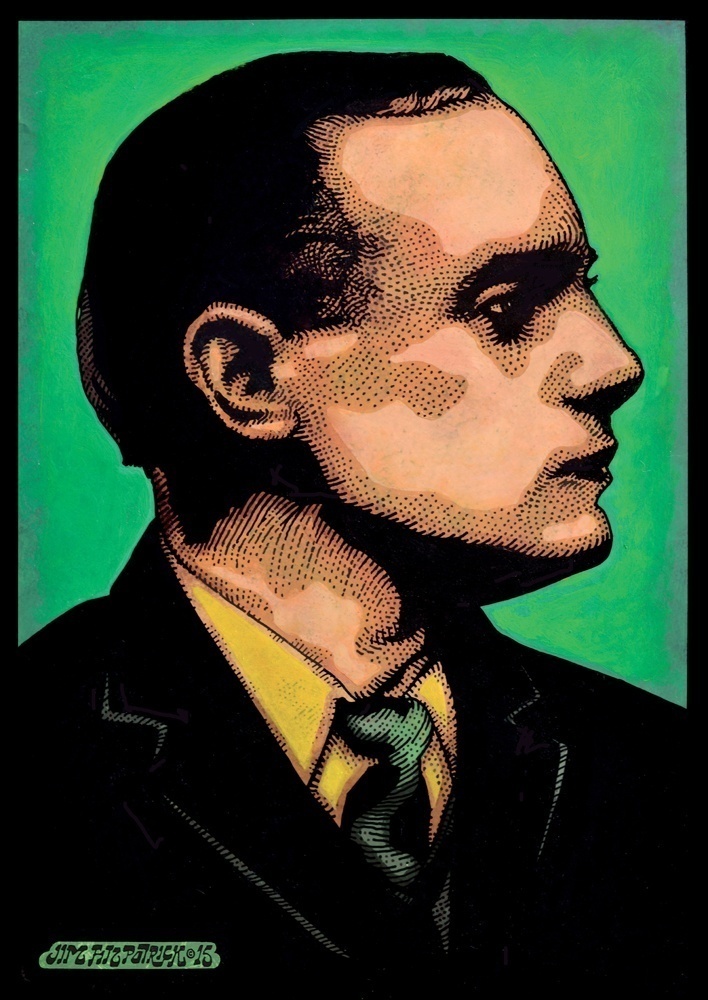
**The modern word, to keen, comes from caoine, there were professional keeners in Ireland up to the 20th century.)
How did they manage to do it? Keep all those tales in their heads? Memorize, memorize, memorize. Poetic and musical forms were important not only for aesthetics, but also for their mnemonic value. And yes, sometimes, the stories were lost. For example:
, pl.
, pl.
, pl.
were considered to be liars, they made up things. They told tall tales.
Diodorus Siculus observed that “Bards; they applaud some, while they vituperate others,” Vituperate: berate, censure, condemn. Strong words.
A bard’s curse was nothing to sneeze at: not only could he raise boils, “he stopped by his power the corn's growth; and the satire of another caused a shortness of life.”
Bid móin 7 mothar a feranna-som co bráth.
Their lands will be boglands and thickets until judgement day.
They (bards) acted as heralds, knowing the genealogy of their chiefs. With white robe, harp in hand, they encouraged warriors in battle. Their power of satire was dreaded; and their praise, desired.
Irish Druids and Old Irish Religions, James Bonwick, 1894
A COPY OF PTOLEMY's MAP OF IRELAND
|
|
Ptolemy's map of the Pretanic Isles, ca. 150 AD —Wiki
|
So what was known about Ireland via the Classical world? Check out Ptolemy's maps. He has some placenames and tribe names listed, including the Brigante, Domnainn (Devnoni), (P-Celtic) Iverni, Volunti, Dairini (Dal Riata; Q-Celtic), and Cruithni (Picts— Cruithni is a Goidelic corruption of Pretani). What Ptolemy's map documents is the earliest "evidence" of two Celtic languages in Ireland.
A NOTE ON CELTIC LANGUAGES
P-Celtic? Q-Celtic? Huh? P-Celtic is Pretanic, or Brittonic; Q-Celtic is Goidelic.
P-Celtic (most of Britain, Cornwall, Devon, and Caledonia), closely related to Gaulish, favors plosive soundss like Ps; Q-Celtic (Ireland, Manx and most of Scotland) avoided P sounds and substituted K sound, so Welsh
map (son of) becomes
mac in Irish. Welsh
pen (head) becomes
ceann, or
ben if it’s a mountain. Cornish
pysk (fish) becomes
iasc in Irish.
Tad (father) becomes
athair in Irish. What’s interesting about
tad is that it’s avoiding the P sound too—as in
pater. Can you see how
tad became
dad? That final d often gets swallowed, so it's closer to Da, than Dadd.
IRISH NOTES ON BARDS FROM WITHIN THE CULTURE
The Dinn Seanchas has poems by the Irish Bard of the second century, Finin Mac Luchna; and it asserts that "the people deemed each other's voices sweeter than the warblings of the melodious harp."
Irish Druids and Old Irish Religions,
—James Bonwick, 1894
TRISKLE / TRINITY St Patrick said to introduce trinity via shamrock, but the concept of Indo European 3 is far older than that.
THE FIRST BARD OF IRELAND WAS A MILESIAN FROM IBERIA
The Gael, from Espania (Galicia), the Milesians, were first mentioned in the
Lebor Gabála Érenn, or the Book of Takings (redacted in the 11th c.). A Milesian, Iberian-born Amergin is considered to be Ireland's first bard, and Blind Raftery, is considered to be Ireland's last true Celtic bard.
Who were the MIlesians? The sons of Mil Espáine. Think of those Celts of Hispania/Iberia, as a shared culture with the Insular Celts of Britain and Ireland.
Their descendants still live in Galicia and Northern Portugal. Celtic languages impacted various dialects of Latin, which in turn, created the Romance languages. Remember that the next time you're in your car or chariot. Carros, Irish: carpait (chariot).
I know, the OED obfuscates word origins when it come to things Irish, it claims nearly all Irish words as being of Scottish origin. So the Irish contribution to English is practically nil, until you learn to code-read. But the Spanish and Portuguese didn't hate their Celtic neighbors with such fervor as the English. So words like car, chariot, and bag are cited. Bag, bolg, bolsa. We are the bagmen of trivia. But I digress.
THE MILESIANS COME TO IRELAND: a quick and durty redaction
Mil's grandfather, Ith, in his tower, said he could see Ireland. His sons wanted to know what kind of craic he was on, as they could see only clouds. But he was determined to follow that vision, so he packed up his family and set sail to the land of green.
He came upon three Irish kings at Tara bitterly quarreling, so Ith, trying to be helpful, said to
Mac Cuill,
Mac Cecht and
Mac Gréine.: “Perhaps you should follow the laws of your land.” That went over well. Not. Perhaos you should shut your gob, they replied. So they killed poor old Ith instead of each other.
(What catches my attention in this story is that they were all speaking the same language. No interpreters needed. So it wasn't a case of what gets lost in translation.)
Ith's kith & kin got rather pithy and took umbrage to the most grievously foul murder of their patriarch (Note that it's now a patriarchal society. Those weasely medieval monkish scribes. Note also that this was an oral tradition, not literary, as the Celts were not fond of writing. Poetry and epic were oral art forms. So sticking to the story was tantamount.)
So Ith's kin and kin set sail with revenge in mind. The sent in the baddest of the way-bad poets. They sent in Amergin.
Amergin, brother of Heber,
was the earliest of Milesian poets.
Irish Druids and Old Irish Religions,
James Bonwick, 1894
The first Irish poem, "The Mystery", attributed to Amergin, a Milesian prince or druid who settled in Ireland hundreds of years before Christ, is from the "Leabhar Gabhala", or "Book of Invasions". Irish tradition has it that they were the first verses made in Ireland, perhaps they are amongst the oldest surviving lines of any vernacular tongue in Europe.'
—Douglas Hyde, A Taste of Ireland’s Poets
SO WHO WAS AMERGIN ANYWAY?
As
Chief Ollam, (Poet Laureate/teacher) of Ireland, Amergin Glúingel ("white knees"), one of the sons of
Míl Espáine, was also a druid. He calmed the wind by reciting a verse to quell a magical storm raised by the Irish Tuatha de Danann (Children of the Goddess Danu) to keep the Milesians from reaching shore. He sang an invocation to the spirit of Ireland.
The Song of Amergin (aka The Mystery) is considered to be one of the oldest poems in irish, passed down in the oral tradition.
THE MYSTERY
I am the wind which breathes upon the sea, (glosses)
I am the wave of the ocean,
I am the murmur of the billows,
I am the ox of the seven combats,
I am the vulture upon the rocks,
I am a beam of the sun,
I am the fairest of plants,
I am a wild boar in valour,
I am a salmon in the water,
I am a lake in the plain,
I am a word of science,
I am the point of the lance of battle,
I am the God who created in the head the fire.
Who is it who throws light into the meeting on the mountain?
Who announces the ages of the moon?
Who teaches the place where couches the sun?
(If not I)
— Translated by Douglas Hyde
(There are several translations of this incantation, including Robert Graves' version in
The White Goddess. (My synopsis of
The White Goddess, here.)
I've compiled a revision using several translations, but I find that as a poet, I am most attracted to Douglas Hyde's version. Though it's an incantation, I suspect it's also a coded poem, something like a power brokering list, a remnant of a shape-changing poem, a collection of story titles, or even a calendar of sorts.
The storytelling season was during the winter months, beginning now, at Samhain, the Celtic New Year, and each bard was required to have a vast repertoire of poems, songs and stories committed to memory.
What little we do have of surviving poems from the Irish bardic tradition are written in Old Irish, or Latin Irish, and attributed to the 6th to the 10th centuries. But most of those poems were transcribed much later, in
Middle Irish, during the 11th to 14th c. So dating the poems is tricky as the Irish language was changing,
(An aside: who first transcribed English? Yep, the Irish monks. By way of Latin and Irish.)
TALIESIN, AMERGIN'S WELSH COUNTERPART
We know that the tradition of Amergin conservatively dates back to at least the 6th century, because in Wales, his counterpart (or doppleganger) is
Taliesin of the "shining brow." In the
Book of Taliesin, scribed in Middle Welsh, Taliesin is called Ben Beirdd, or Chief of Bards. Ben, pen, ap = head, and Beirdd is bard.
Another poet is mentioned. The name
Aneirin, sounds suspiciously like Amergin.
Taliesin too incants a shape-changing poem (but in the past tense):
I have been a multitude of shapes,
Before I assumed a consistent form.
I have been a sword, narrow, variegated,
I have been a tear in the air,
I have been in the dullest of stars.
I have been a word among letters,
I have been a book in the origin.
I have been the light of lanterns.
I have been a course, I have been an eagle.
I have been a coracle in the seas:
I have been compliant in the banquet.
I have been a drop in a shower;
I have been a sword in the grasp of the hand:
I have been a shield in battle.
I have been a string in a harp....
XIII Kat Godeu, The Battle of the Trees
(See the
Second Battle of Mag Tuireadh (
Cath Dédenach Maige Tuired) between the Tuatha Dé Danánn and the Formorians. And the
Lebor na hUidre story of
Tuan mac Cairill who retains his memories of all his incarnations, has a similar theme of invaders, and shape-changing: he awoke as a stag, a wild boar, cormorant, an eagle/hawk, a salmon, he was caught, eaten, and reborn human.
In another story, the sun goddess Etain, was turned into a pool of water, then a worm and a fly by a jealous wife, and as a tiny fly, she was accidentally swallowed and reborn.)
In the
Tale of the Two Swineherds, Friuch and Rucht quarrel, and fight in various animal forms.They become two worms, swallowed by two cows; who give birth to the Whitehorn, and to the dun Bull of Cuailgne, the very animals that set off the war in the
Táin (see my synopsis
here). The Welsh parallel is Cerridwen and Gwion, who becomes a grain of wheat, Cerridwen, as a hen, finds and swallows him, and he is reborn as Taliesin. Shape-changing also plays a role in KIng Arthur (
Le Mort d'Arthur,
here), as well as in the Song of Amergin, Ireland's oldest vernacular poem.
The first Irish poem, "The Mystery", attributed to Amergin, a Milesian prince or druid who settled in Ireland hundreds of years before Christ, is from the "Leabhar Gabhala", or "Book of Invasions". Irish tradition has it that they were the first verses made in Ireland, perhaps they are amongst the oldest surviving lines of any vernacular tongue in Europe.'
—Douglas Hyde, A Taste of Ireland’s Poets
(A little archaeological rumination about the learnéd class:
The Life and Death of a Druid Prince: The Story of Lindow Man, an Archaeological Sensation by Anne Ross & Don Robins
HOW WE BANDY ABOUT THE BARDS
We tend to bandy about the term "bard" about lightly, and thanks to the political machinations of the English, the Celtic bard was reduced to little more than a wandering minstrel. But there was a time when a bard was much more than a musician. He or she was the cultural equivalent of Google, an arbitrator, and the Spotify playlist of the day.
HOSPITALITY & SATIRE aka CURSES
Now, here's the thing, Irish chiefs and kings were supposed to offer hospitality and gifts to all strangers, especially wandering bards and ollamhs (professor bards). If patrons were to refuse hospitality, they were publicly satirized and shamed. Satire was considered the first true art form of Ireland.
Satirizing included a curse, and since the bards were a class of druid, poets' curses were something to be feared—even up to the Renaissance. That other Bard, whose grandmother was Irish,(yes, Shakespeare), could throw a curse or two. (Speaking on curses, a mayor renamed his castle Rougemont "Because a bard of Ireland told me once /I should not live long after I saw Richmond." —King Richard, Richard III.)
THE COMING OF ST. PATRICK, aka Adze-Head
And what about Old Adze-Head, you ask? What's he got to do with it? The Irish poets called St. Patrick Ticfa Tálcenn, a reference to he who was crazed in the head, perhaps from wearing that pointy mitered hat.
Patrick’s real name was Maewyn Succat. "Padraig" was his holy name handle. He was a pig wrangler for seven long years.There was probably no love lost. It took him that long to learn Irish. But perhaps, St Patrick's arrival was the beginning of the end of the bardic tradition.... With the coming of a British slave captured by Irish raiders, everything changed.
Because you see....
Among the virtues of early Irish poetry are accurate observation and precise diction. Those early poets said exactly what they meant, and meant (for the most part) exactly what they said.
—Ancient Irish Poetry & Early Christian Verse
The Druids (bards, ollamhs, fili) in Erin “were assembled, and each of them exhibited his art before Patrick, in the presence of every chief in Erin. —What did not clash with the Word of God in the written law, and in the New Testament, and with the consciences of the believers, was confirmed in the laws of the Brehons by Patrick” ... was allowed.
Cain Patrick, from the Ancient Laws and Institutes of Ireland
A History of the Irish Nation, Mary Francis Cusack, 1876
Not everyone thought that bringing Christianity was destructive (but I prefer the vernacular poetry, especially that scriptorium cat, Pangur Ban):
The introduction of Christianity gave a new and exalted direction to poetry.
—The Dublin Penny Journal, Philip Dixon Hardy, 1832
Tícfa Tálcenn
tar muir mercenn,
a thí thollcenn,
a chrann crombcenn.
Canfaid michrábud
a mias i n-airthiur a thige;
fris-gérat a muinter uile:
'Amén, Amén.'
Across the sea comes Adze-head,
crazed in the head,
his cloak with a hole for the head,
his staff bent in the head.
He chants impiety
from his table in front of his house;
all his people answer:
'Amen, Amen.'
from James Carney Medieval Irish Lyric Poetry & The bards
THE SCRIBES
(There are other bards I could have entered here but covering such a vast track of time, but I had to include the story of Pangur Ban, a white Welsh cat. How do we know he's Welsh? Name begins with a P.)
The scholar and his cat, Pangur Bán(from the Irish tr. by Robin Flower )
I and Pangur Ban my cat,
'Tis a like task we are at:
Hunting mice is his delight,
Hunting words I sit all night.
Better far than praise of men
'Tis to sit with book and pen;
Pangur bears me no ill-will,
He too plies his simple skill.
'Tis a merry task to see
At our tasks how glad are we,
When at home we sit and find
Entertainment to our mind.
Oftentimes a mouse will stray
In the hero Pangur's way;
Oftentimes my keen thought set
Takes a meaning in its net.
'Gainst the wall he sets his eye
Full and fierce and sharp and sly;
'Gainst the wall of knowledge I
All my little wisdom try.
When a mouse darts from its den,
O how glad is Pangur then!
O what gladness do I prove
When I solve the doubts I love!
So in peace our task we ply,
Pangur Ban, my cat, and I;
In our arts we find our bliss,
I have mine and he has his.
Practice every day has made
Pangur perfect in his trade;
I get wisdom day and night
Turning darkness into light.
The Blackbird of Belfast Lough
The little bird
lets a whistle go
from the point of a beak,
bright yellow:
throws out a cry
above Loch Laíg,
a blackbird from branch
(a cairn of yellow).
Int én bec
ro·léic feit
do rind guip
glanbuidi
fo·ceird faíd
ós Loch Laíg
lon do craíb
charnbuidi.
from James Carney Medieval Irish Lyric Poetry & The bards
THE VIKING ERA
Another poem I toyed with, but Early Irish is more opaque than Middle Irish. But this one sums up the era.
TONIGHT I FEAR NOT THE VIKINGS
Is acher ingáith innocht
fufuasna faircggae findḟolt
ni ágor réimm mora minn
dondláechraid lainn oua lothlind
Bitter is the wind tonight
It tosses the ocean’s white hair
Tonight I fear not the fierce warriors of Norway
Coursing on the Irish Sea.
(translation Kuno Meyer)
Bitter and wild is the wind tonight
tossing the tresses of the sea to white.
On such a night as this I feel at ease;
fierce Northmen only course the quiet seas.
(translation James Carney)
This was an anonymous marginalia poem found in an
Early Irish manuscript from the monastery of
St. Gall, Switzerland, written ca. 850 AD, possibly composed at Nendrum, or Bangor monasteries, Co. Down, N. Ireland.
Fil súil nglais
fégbas Érinn dar a hais;
noco n-aicébá íarmothá
firu Érenn nách a mná.
There is a blue eye (grey eye)
that will look back at Ireland;
never again will it see
the men of Ireland or her women.
(translation Dennis King)
An 11th c. poem supposedly uttered by exiled St. Colum Cille as he sailed from Ireland in exile.
THE BEGINNING OF THE END OF THE BARDIC TRADITION
For two centuries after the invasion of Henry II (1170). the voice of the muse was but feebly heard in Ireland. The bards fell with their country, and like the captive Israelites hung their untuned harps on the willows
—The Dublin Penny Journal,Philip Dixon Hardy, 1832
The Statutes of Kilkenny (Edward III, 1366) made it penal to entertain any Irish Bard; but Munster Bards continued to hold their annual Sessions to the early part of last century. Carolan, the old blind harper, called last of the Bards, died in 1738.
—Irish Druids and Old Irish Religions,
James Bonwick - 1894
In 1522, English law existed in only four of the Irish counties; and Brehons and Ollamhs (teachers) were known to the end of the seventeenth century —Ancient Laws and Institutes of Ireland.
Now while our harps were hanged soe,
The men, whose captives then we lay,
Did on our griefs insulting goe,
And more to grieve us thus did say,
You that of musique make such show,
Come sing us now a Sion lay;
Oh no, we have nor voice nor hand,
For such a song, in such a land!"
—The Dublin Penny Journal, Philip Dixon Hardy, 1832
The bardic schools were still in existence in 17th c. Ireland and 18th c. Gaelic-speaking Scotland. But after Ireland was conquered by the English in the 1600's, the Irish language fell from grace. It was its death knell of a cultural tradition that spanned more than 1500 years. There were parallels in Scotland and Wales, but Ireland took the brunt of cultural genocide at the hands of the English.
THE LAST WELSH BARD
Thomas Gray’s poem,
The Bard, recounts the tale of Edward I’s massacre of the Welsh bards. The English carried on the tradition set by Caesar, to rid the world of Celts. (See my synopsis
here.)
 |
| The Bard, Thomas Jones (1774) |
Poised on the edge of cliff clutching a harp, the last surviving bard places a curse on the English invaders before leaping to his death. This dramatic history painting has become iconic for Wales. Based on Thomas Gray’s poem The Bard, it recounts the tale of Edward I’s legendary massacre of the Welsh bards.
Bards were highly regarded in Welsh society at that time, and were thought to be descendants of the Celtic druids. Jones makes this connection by giving his Bard druidic features – a long white beard and hooded robe. The stone circle in the background, based on Stonehenge, emphasizes the antiquity of the druid.
—National Museum of Wales
THE BARD: a Pindaric Ode —Thomas Gray
“Ruin seize thee, ruthless King!
Confusion on thy banners wait!
Tho’ fanned by Conquest’s crimson wing,
They mock the air with idle state.
Helm, nor hauberk’s twisted mail,
Nor e’en thy virtues, Tyrant, shall avail
To save thy secret soul from nightly fears,
From Cambria’s curse, from Cambria’s tears!”
Such were the sounds that o’er the crested pride
Of the first Edward scattered wild dismay,
As down the steep of Snowdon’s shaggy side
He wound with toilsome march his long array.
Stout Glo’ster stood aghast in speechless trance:
“To arms!” cried Mortimer, and couched his quiv’ring lance
On a rock, whose haughty brow
Frowns o’er cold Conway’s foaming flood,
Robed in the sable garb of woe
With haggard eyes the Poet stood;
(Loose his beard and hoary hair
Streamed like a meteor to the troubled air)
And with a master’s hand, and prophet’s fire,
Struck the deep sorrows of his lyre.
“Hark, how each giant-oak and desert-cave
Sighs to the torrent’s awful voice beneath!
O’er thee, O King! their hundred arms they wave,
Revenge on thee in hoarser murmurs breathe;
Vocal no more, since Cambria’s fatal day,
To high-born Hoel’s harp, or soft Llewellyn’s lay.
Enough for me: with joy I see
The diff’rent doom our fates assign.
Be thine Despair and sceptred Care;
To triumph and to die are mine.”
He spoke, and headlong from the mountain’s height
Deep in the roaring tide he plunged to endless night.
—Thomas Gray, 1757
The Bard by John Martin (1817)
THE LAST IRISH BARD
BLIND RAFTERY Antoine Ó Raifteiri or Aodhagan Ó Reachtabhra
Antoine Ó Raifteirí (1779–1835) is considered to be the last wandering Irish bard. By last bard, I mean, Raftery was the last of the itinerant Gaelic-speaking bards of Ireland who composed poems in Gaelic. He was born in Killedan, in County Mayo, Ireland in 1779 or 1784, His father was a weaver who moved to Killedan from County Sligo to work for a local landlord. Around 1785, Raftery's family caught smallpox. Within three weeks, Raftery's parents, and eight brothers and sisters had died. The last image young Anthony saw before going purlblind from smallpox was his family laid out on the floor for burial.
Raftery, who was a wandering bard (and fiddler), made his living by singing his songs and poems in the mansions of the rich Anglo-Irish gentry. He worked as a stableboy, but after a mishap when he ran his patron's favorite horse into a bog, drowning it, Antóin lost both his job and home, and became an itinerant poet.
Red-headed Raftery was slender and he earned his living by wrestling when his audience was too poor to pay him. He always wore a long frieze coat and corduroy breeches, and carried his fiddle in a sack. He eventually married and had children. But we don't know much more about him. Raftery died in 1885 and was buried in Kileeneen Cemetery, near Craughwell, County Galway.
Raftery's work utilized the traditional forms of Middle Irish poetry—that also marked the end of an old literary tradition. None of Raftery's poems were ever written down during his lifetime, but they were collected by his pupils, and by folklorists, including Yeats, and Lady Gregory, who published them. Raftery is mentioned in James Joyce's Ulysses, and he is the blind poet commemorated in Yeats's poem,
The Tower.
Strange, but the man who made the song was blind;
Yet, now I have considered it, I find
That nothing strange; the tragedy began
With Homer that was a blind man,...
—WB Yeats
MY CONNECTION TO RAFTERY
My connection to Blind Raftery is a story of odd beginnings and endings. Raftery was one of the first Irish language bards I encountered while studying modern Irish at UC Berkeley.
At the end of the last century, U.C. Berkeley was experiencing a second Celtic Twilight, or renaissance, and the Celtic Studies Department was a vibrant place to hang out. I was pursuing my MFA, and needed a year of language, so, one summer I took what I thought was a
beginning Irish class. It was easily the hardest thing I've undertaken.
My Irish teachers were Joe Nugent from Mullingar, and Breen (Bria) Ó Conchubhair, a Kerry man from Tralee. Breen is one of Irish language poet
Nuala Ní Dhomhnaill's translators, along with Paul Muldoon.
My first Irish translation assignment was a short poem, Misa Rafteri / I am Rafteri. I can't find my version, but I labored long and hard over it,
MISE RAFTERY
Mise Raifteirí, an file,
lán dóchais is grá
le súile gan solas,
ciúineas gan crá
Dul siar ar m'aistear,
le solas mo chroí
Fann agus tuirseach,
go deireadh mo shlí
Feach anois mé
m'aghaidh le bhalla,
Ag seinm ceoil
do phocaí folamh.
I am Raftery, the poet,
full of hope and love
With eyes without light,
silence without torment.
Going back on my journey,
with the light of my heart
Weak and tired,
until the end of my way.
Look at me now,
facing the wall
Playing music,
for empty pockets.
Here is an interlinear literal translation:
Mise Raifteirí, an file, lán dóchais is grá
I am Raftery, a poet full hope /love
le súile gan solas, ciúineas gan crá,
eyes without light silence without heart
ag dul síos ar m'aistear le solas mo chroí,
at going down on my journey to light my heart
fann agus tuirseach go deireach mo shlí;
faint and tired to the end of my road
féach anois me lem aghaidh ar Bhalla
look now my face at/against at Balla (a town) or wall
ag seinm cheoil do phócaí falamh.
at making /playing music with pockets empty
Hear the poem
read in Irish.
=========
TEACHING POETRY TO KIDS, PASSING ON THE TRADITION
I teach poetry through California Poets in the Schools, and the first lesson I teach my young students is an
I Am poem. Amergin is the model.
AFTER AMERGIN
I am the water upon the sea
I was the one who challenged the wind
to sing upon the waves
I ran from the moon's shadow
that crept across the deserted plain
I dreamt of twilight's sadness
Who but I made all these things?
—Maureen Hurley
An in-class CPITS ditty that goes nowhere in particular, ca May 2008
And just to be cheeky, I've included:
THE DELIGHT SONG OF TSOAI-TALEE (N. Scott Momaday’s Kiowa name)
I am a feather on the bright sky
I am the blue horse that runs in the plain
I am the fish that rolls, shining, in the water
I am the shadow that follows a child
I am the evening light, the lustre of meadows
I am an eagle playing with the wind
I am a cluster of bright beads
I am the farthest star
I am the cold of dawn
I am the roaring of the rain
I am the glitter on the crust of the snow
I am the long track of the moon in a lake
I am a flame of four colors
I am a deer standing away in the dusk
I am a field of sumac and the pomme blanche
I am an angle of geese in the winter sky
I am the hunger of a young wolf
I am the whole dream of these things
You see, I am alive, I am alive
I stand in good relation to the earth
I stand in good relation to the gods
I stand in good relation to all that is beautiful
I stand in good relation to the daughter of Tsen-tainte (White Horse)
You see, I am alive, I am alive
—N. Scott Momaday
OK I'm being a bit tongue-in-cheek by adding a Kiowa poet, but do note Momaday's middle name. (Scott means Irish, BTW). The model is at hand. Amergin's influence is still with us today.
SO, WHO WAS THE VERY LAST BARD?
Of course the contender for the last Irish bard could be awarded to several poets, Certainly
Turlough O Carolan (1670-1738), the blind harper, who also wrote in Gaelic. He too caught smallpox, went blind and was trained at the harp by Ruari Dall (dall means blind, hmmm).
Turlough composed 214 praise songs, or planxties for English ascendancy families. Sí Bheag, Sí Mhor is one of my favorite pieces.
Thomas Moore (1776-1852 ), Ireland's national bard, like Scotland's
Robert Burns, wrote solely in English: most notably "The Harp That Once Through Tara’s Halls", "
Believe Me, if All Those Endearing Young Charms", "
The Minstrel Boy" and "
The Last Rose of Summer". His melodies are not traditional, but were often based on modern compositions (like O Carolan). Moore adopted an English accent and moved to London. When his friend Lord Byron died, making Moore his literary executor to publish his memoirs, Moore burned them. Augh!
And you might argue that the Celtic bardic tradition carries on in the form of Irish folk songs, but they are part of the Anglo-Irish tradition, vs the Gaelic tradition. An important distinction, once removed from the primary culture through a foreign language.
Since I had an accidental
I Am theme going on in this lecture, I chose Raftery (1779-1885) who is often referred to as the last itinerant, or wandering bard. Neither O Carolan or Moore were old school wandering bards, though they indeed were bards.
AND THE TRADITION CONTINUES: MODERN IRELAND
Mise Éire
Mise Éire:
Sine mé ná an Chailleach Bhéarra
Mór mo ghlóir:
Mé a rug Cú Chulainn cróga.
Mór mo náir:
Mo chlann féin a dhíol a máthair.
Mór mo phian:
Bithnaimhde do mo shíorchiapadh.
Mór mo bhrón:
D’éag an dream inar chuireas dóchas.
Mise Éire:
Uaigní mé ná an Chailleach Bhéarra.
I AM IRELAND
I am Ireland:
I am older than the old woman of Beare.
Great my glory:
I who bore Cuchulainn, the brave.
Great my shame:
My own children who sold their mother.
Great my pain:
My irreconcilable enemy who harrasses me continually…
Great my sorrow
That crowd, in whom I placed my trust, died.
I am Ireland
I am lonelier than the old woman of Beare.
—Padraic Pearse, 1912
But the envoi I leave you with, is that Padraic Pearse too wrote an I Am poem, and since he is considered one of the founding fathers of Ireland, it seems like a fitting place to close this story, from the mythic beginning of a nation, its death, its reincarnation and its rebirth.
As Padraic Pearce said:
Tír gan teanga, tír gan anam.
A country without a language
is a country without a soul.
My grandmother instilled in me the importance off language, she said use it well agains them. Perhaps this is why I became a poet. I am hot fluent in Irish but I can get by in the enemy tongue.
I am of Ireland,
And the Holy Land of Ireland,
And time runs on,' cried she.
"Come out of charity
And dance with me in Ireland.'
William Butler Yeats
HOPE FOR THE FUTURE
I want to leave you with the name of a modern Irish poet who carries on the tradition of Irish poetry, Nuala Ni Dhomhnaill of Dun Laoghaire, County Dublin, who calls the Irish language "the corpse that sits up and talks back."