Sunday, September 30, 2012
On Andamanese Languages
(I responded to a Facebook rant—and did far too much Wiki surfing.)
A recent Facebook post I read on Andamanese peoples was a case of fast and loose reading with overbroad extrapolation and interpretation of facts. And it gave the appearance of ethnocentric (read: American Black) racism at the expense of indigenous cultures.
I wanted to tell the author, though I respected his attempt to reconcile the convoluted history of peoples and migrations throughout the eons, stating that Jōmon, and Andamanese peoples were one and the same—both out of Africa based on the outward appearances of skin color and hair—is wrong.
We have no photographic or linguistic record of ancient Jōmon cultures. As my ceramics teacher, Thano Johnson was fond of repeating: pots don't talk. My anthropology teachers McGrath and Dundes, reiterated the phrase. Be careful how you arrive at conclusions.
Granted that Andamanese languages and genes are old, very old. Possibly Proto-Australoid, it doesn't make them African.
A few Andamanese genetic characteristics are present in isolated populations from Asia to Oceania: southern India, Sri Lanka, Malaysia, Indonesia, Papua New Guinea, and China.
Andaman languages (during the 1900s there were ten-plus mutually unintelligible Andaman languages—meaning they've been around a while—at least 60,000 years) are what is called a "linguistic isolate"—today only 3 languages survive, and they are in decline.
Genetically, "Andaman Islanders have been isolated for a substantial period of time." Andamanese genes have little genetic variation (bottleneck). The Jarawas carry an allele with no affinity to any other population in the world. It means they've been inhabiting the Andaman acrchpelago for a long, long time.
I noted that the subclade of the D haplogroup is not present outside of the Andamans—which supports the extreme insularity of these tribes. They are haploid D group, yes, but not the unique subclass marker. It does not make them Ainu, or vice versa.
(Archaic DNA origins of the Ainu, or Utari of Japan and Russia have not been scientifically identified (but they are thought to be proto-Mongoloid). Their Y-DNA haplogroup D2 is common in Tibet and the Andaman Islands. Mitochondrial DNA haplogroup Y is also found among Nivkhs, Tungusic peoples, Koreans, Mongols (including Kalmyks and Buryats), Chinese, Japanese, Central Asians, South Siberian Turkic peoples (e.g. Tuvans, Todjins, Soyots), Koryaks, Alyutors, Itelmens, Taiwanese aborigines, Filipinos, Indonesians, and Malaysians. )
Take mtDNA: All Andamanese belong to the subgroup M[10] which is also on the Indian subcontinent, it represents 60% of maternal lineages, but also in Africa and other areas west of India. But M2 is unique to the Andamanese. M2 and M4 lineages diverged 60,000-30,000 years ago. They've been an isolate group for so long, they had no immunity against common diseases—like the Amerindians.
In other words, nothing is as simple as it seems—other than these two groups are extremely old. Skimming the surface, with overbroad extrapolation and interpretation of facts serves only to muddy the water. Not shed light.
The oldest Chinese pictographs—the sun, moon, tree, etc., all share parentage with the glyphs and writing of ALL world cultures. Some things are held in common, as a development of mankind. It doesn't mean that they're African—unless you go really far back. Broaden the lens.


Saturday, September 29, 2012
STREAMSONG
I grew up within the melody range of streams
Our watershed creeks were named Arroyo & Barranca
for things bone-dry but our streams ran year-round,
a raging torrent in winter, a small song in summer
where minnows nosed the rocks in shallow pools
and snapped up damselflies and larvae
Sometimes I'd catch fingerlings in my palms
I'd build rock dams to deepen the pools
and then cup my hands to scoop them up
One spring I caught three small salmon fry
and kept them close in a mayonnaise jar
i marveled at their olive spots, their mouths groping
the way their silver undersides
flashed and wove water into threads of light
but we were going to my aunt's for the summer
so I screwed the lid on tight and toted my troutlings with me
I caught flies, small insects, I fed them hamburger
After a few weeks of city living, two went belly-up,
I gave them fishy funerals by the seashore
But one fish survived the long ride back home
The pools on Barranca Creek seemed so small
after seeing the world like that,
my fish was well traveled, so I set him free,
I slipped him into the cool depths
of the wine vat that was our spring-fed water tank
The daddy-long-legs on the cover
bounced in unison as if to say yes!
I never told my grandmother where I'd set him free.
I was perfecting the art of omission of truth.
Daily I hiked up the hill, maybe it was guilt that drove me
or perhaps I wanted to prove the adults wrong,
that the fish could live with us after all
But I never thought to the future,
or that I had interrupted a lifecycle
I kept tabs on that little fish
as he nosed at the bright algae
growing on the walls of the tank,
I marveled at the way
a shaft of sunlight sliced the darkness of his pool
and he'd swim towards the light,
but the tank couldn't sustain him
By summer's end he was gone,
melted back into the water
and I drank him in, salmon wisdom
returning home to natal grounds.
9/29/2012
This piece was written for Watershed Festival—I was a featured poet on the Strawberry Creek walk. I read this piece to the creek with other poets.
17th Annual Watershed Environmental Poetry Festival


17th Annual Watershed Environmental Poetry Festival
Saturday, September 29, 10:00 a.m.
Saturday, September 29, 10:00 a.m.
Strawberry Creek Walk • Meet at Oxford & Center Streets in Berkeley.
Creek Walk poets: Chris Olander, Susan Kelly-DeWitt, Maya Khosla, Rebecca Moos, Maureen Hurley, Rebecca Moos, Kim Shuck
A walk from Strawberry Creek on the UC Berkeley campus to the Watershed festival led by poet/eco-educator Chris Olander with poetry readings by poets and commentary by creek restoration experts, featuring Chris Olander, Susan Kelly-DeWitt, Maya Khosla, Maureen Hurley, Rebecca Moos, Kim Shuck, Tim Pine (UC Berkeley), Kirstin Miller (Ecocity Builders).
Festival Main Stage • Martin Luther King, Jr. Civic Center Park
Robert Hass • Joy Harjo • Michael McClure • Brenda Hillman • Francisco X. Alarcón • Rebecca Foust • Richard Silberg

Wednesday, September 26, 2012
Sunday, September 23, 2012
Wáng Wéi translations BIRDS
Myriad Birds Calling in the Ravine
—Interlinear translation of Wáng Wéi's Niāo Míng Jiàn
I am lost amid the falling petals of the cassia tree
calm spring night in the deserted hills
rising moon startles the mountain birds
birds singing forever deep in the ravine.
—2nd translation
Lulled by a sweet drift of cassia petals
night nestles on the empty ridges
moonrise startles the mountain birds
a cascade of birdsong floods the steep ravine.
Water Ousels in the Gorge
—after Wáng Wéi's Niāo Míng Jiàn
(freewrite transliteration)
They hide between shining trees
A stone hut in the distance
A woman's thoughts like the moon
trapped in the pines
Windows, so like the sun, or eyes
Clouds upon clouds, mountains
and the moon, hidden in the mist
Ousels skim across reflected light
the river mouth singing.
Poetry Inside Out workshop
Niǎo Míng Jiàn
Wáng Wéi 699-759
Rén xián guìhuā luò,
Yèjìng chūnshān kōng.
Yuèchū jīng shān niǎo,
Shí míng chūn jiàn zhōng.
To see the Chinese Mountain Song
—Interlinear translation of Wáng Wéi's Niāo Míng Jiàn
I am lost amid the falling petals of the cassia tree
calm spring night in the deserted hills
rising moon startles the mountain birds
birds singing forever deep in the ravine.
—2nd translation
Lulled by a sweet drift of cassia petals
night nestles on the empty ridges
moonrise startles the mountain birds
a cascade of birdsong floods the steep ravine.
Water Ousels in the Gorge
—after Wáng Wéi's Niāo Míng Jiàn
(freewrite transliteration)
They hide between shining trees
A stone hut in the distance
A woman's thoughts like the moon
trapped in the pines
Windows, so like the sun, or eyes
Clouds upon clouds, mountains
and the moon, hidden in the mist
Ousels skim across reflected light
the river mouth singing.
Poetry Inside Out workshop
Niǎo Míng Jiàn
Wáng Wéi 699-759
Rén xián guìhuā luò,
Yèjìng chūnshān kōng.
Yuèchū jīng shān niǎo,
Shí míng chūn jiàn zhōng.
To see the Chinese Mountain Song
Saturday, September 22, 2012
Mac Hell and the realm of Lost Permissions
Hell and damnation. Hell and damnation and back again. The Snow Leopard Update I ran on my "new" MacBookPro stalled, via the iCloud, but due to slow DSL, it also locked all my external volumes to "custom access"
and now I can't access ANY of my backup hard drive files under Info/Unlock. Not exactly progress.
Some Terminal codes I get are: drw-rw-r-T and an uchg flag. Anyone know Terminal, or UNIX?
Some Terminal codes I get are: drw-rw-r-T and an uchg flag. Anyone know Terminal, or UNIX?
Friday, September 21, 2012
The USS Endeavor

I saw the Endeavor fly over Oakland enroute to SF, right outside my front door with Lorenzo the mailman. Rockin! We saw, we screamed, we clicked pix, and high-fived each other! Much more exciting than I anticipated—seeing as earlier I had been driving all around town for an hour looking for it. I gave it up for lost. And went home. Sigh.
But as I turned to go inside, there it was, low between the trees, flying piggyback on a 747 right up Highway 580. Flying in slo-mo. Egad, I took three out-of-focus pix, two passable fuzzy ones, and a crisp in-focus photo of the sidewalk and my foot. I thought my mother would've laughed at the folly of it. Then I remembered it was her birthday.
I never expected to be that excited. Like I was a kid. Absolutely thrilling. I did not go gentle... I'm hoarse from whooping and screaming.
I never expected so many emotions all at once. I was sort of ho-hum about it all until I saw it—then I realized anything was possible—even the stars.
GLIMPSING THE STARS
While they unwrapped their new iPhone cameras,
my eyes wrapped themselves around an image
of the Endeavor silhouetted against the sun.
And for a moment, I saw the countenance of hope.
Then I realized anything was possible—even the stars.


GLIMPSING THE STARS
GLIMPSING THE STARS
While they unwrapped their new iPhone cameras,
my eyes wrapped themselves around an image of the Endeavor silhouetted against the sun.
And for a moment, I saw the countenance of hope.
Then I realized anything was possible—even the stars.
9/22/2012
Sunday, September 16, 2012
Feeding the soul
Make a list of body parts, to save the prisoner, think of water torture. It’s impossible to say, turning 50. There’s only time for a short kiss. Then it’s time to go home and rinse off the soul. We are all living on stolen land, said Ishmael Reed, Oakland‘s original son. Merritt hated writers he called them scribblers. Do you want to rename the lake Peralta? The local historians remember Kit Carson, but we remember you. The teeth of mountains ground down by the four winds. To be tribe is to be without property. How to hold the two thoughts in your head without it exploding, knowing that on the other side, we mark our time with their time.
2012
Saturday, September 15, 2012
EPISTOLARY WRITING with Camille Dungy
Dear Ethyl,
Please don't go down
to the bridge
for it will make no difference
in the end
War is inevitable
an espionage against life
and the martyrs always
fall for all the old stories
I love you too much
to lose you again
Not like that
For if you go down to the bridge tonight
Then I too must go with you
Please don't go down
to the Delgado Bridge tonight
For surely I must accompany you
as your loving husband
I rremain faithful to the cause
but I love you more than life itself
so I will go with you
down to the bridge
Your Ira
LETTER TO MY SULLIED ART
Because my art is suffering
offering service to the void
the unborn legacy of words
awaiting birth, or rebirth
because nothing is new
we are continually reinventing ourselves
passing it forward
I want to tell you
about the way the eye sees
a certain angle of light
the way the shadows ease their grief
across the web of the labyrinth
hunting loose aspects of crystal
trapped within stone
Name it, call it feldspar and citrine
garnet and quarttz, serpentine and blueschist
But the deer ignore the pattern of the labyrinth
daintily picking their way across stones
At the crest of the hill
where buckeye and oak meet the eons
a horse's mane of clouds
shrouds the sky—whether in grief or as a bride
And so I write to fill the void
and settle into an easy chair
in the corner of a dream
These words, a gift,
a lone hawk keening in the wind
What was it Picasso said? A lie? Truth?
Yours,
Maureen
BODICE RIPPER
—after Ezra Pound's The River Merchant's Wife
She married too young
but he was a great lord
who said absence
made the heart stronger
but the insecurities
One never comes back
Did the river take him?
So many undercurrents
written into the river
He loved her
passing of time
They were paired butterflies.
She thought him dead,
never coming back
It was a great leveler
of circumstances, the turning tide,
not translated, nor translatable.
She could never send that letter
into the void, let the river take it,
a paper boat jettisoned
on the far shore of regret.
How we communicate in this age
of artifice and intimacy
the lie that makes us
realize the truth.
Please don't go down
to the bridge
for it will make no difference
in the end
War is inevitable
an espionage against life
and the martyrs always
fall for all the old stories
I love you too much
to lose you again
Not like that
For if you go down to the bridge tonight
Then I too must go with you
Please don't go down
to the Delgado Bridge tonight
For surely I must accompany you
as your loving husband
I rremain faithful to the cause
but I love you more than life itself
so I will go with you
down to the bridge
Your Ira
LETTER TO MY SULLIED ART
Because my art is suffering
offering service to the void
the unborn legacy of words
awaiting birth, or rebirth
because nothing is new
we are continually reinventing ourselves
passing it forward
I want to tell you
about the way the eye sees
a certain angle of light
the way the shadows ease their grief
across the web of the labyrinth
hunting loose aspects of crystal
trapped within stone
Name it, call it feldspar and citrine
garnet and quarttz, serpentine and blueschist
But the deer ignore the pattern of the labyrinth
daintily picking their way across stones
At the crest of the hill
where buckeye and oak meet the eons
a horse's mane of clouds
shrouds the sky—whether in grief or as a bride
And so I write to fill the void
and settle into an easy chair
in the corner of a dream
These words, a gift,
a lone hawk keening in the wind
What was it Picasso said? A lie? Truth?
Yours,
Maureen
BODICE RIPPER
—after Ezra Pound's The River Merchant's Wife
She married too young
but he was a great lord
who said absence
made the heart stronger
but the insecurities
One never comes back
Did the river take him?
So many undercurrents
written into the river
He loved her
passing of time
They were paired butterflies.
She thought him dead,
never coming back
It was a great leveler
of circumstances, the turning tide,
not translated, nor translatable.
She could never send that letter
into the void, let the river take it,
a paper boat jettisoned
on the far shore of regret.
How we communicate in this age
of artifice and intimacy
the lie that makes us
realize the truth.
Monday, September 10, 2012
Tech wars
Anyone have an old T-Mobile phone they're not using? Or an old iPhone (3Gs or newer)—I can unlock and use my T-mobile SIM in? Cellphone no longer holds a charge & the new pay-as-you-go model at Costco is primitive. New battery is nearly the price of a new phone. What's with that? It's a BATTERY fergawdsakes!!!
I'm reaching crisis point meltdown with my electronic gear all at once—and duct tape will not work. PPC iMac—code name: 'Ol Lazarus, Neil's Wind Tunnel G4—dead power supply (kaBOOM!); my main MacBook has one dead hard drive—tinkering with it now.
Last summer's brownouts finally coming home to roost. Truth be told, I can't believe I kept these old discarded Macs alive this long. The G4 I souped up for Neil was 1 GHz MDD (mirrored door drive—looks like a caddy grill on front) code name: Windtunnel, not one of the older models. So it was special—and fast. And it has SCSI ports—for my old Nikon film scanner. All this fuss over keeping old tech alive so I can scan some negatives. But with the G4, I think I have to call it quits. It went kabloom Literally. It’s dead, Jim. Time to hit Craigslist.
I'm a feckin’ miracle worker at resurrecting old Macs, but when the power supply goes kabloom, and smoke issues forth! Not much I can do. Except to back off. So glad I was wearing glasses at the time.
Why my trusty MacBook also had to enter into the electronic fray of the obsolete and dead Mac pile at the same time with a failed hard drive, is a mystery. Bad timing, or that brownout is wreaking havoc. So now we really are Macless. And hard drives are now so shitty they don't even last 2 years—my second sucky Hitachi drive in 2 years—was under warranty first time around—is now toast. Solid state drives are more reliable. Wish they weren't so pricy.
I desperately need a working MacBook for the CPITS Symposium, and to take writing intensive with Camlle Dungy this weekend (I very nearly made my goal—fill the beds, and bring in 60 people for Saturday. Only 12 more to go...)
My emergency Craiglist find is a deranged headless MacBook Pro (no working screen, DVD drive, or internal sound, plus a dead battery—hey it was cheap—the previous owner must've learned skateboarding with it). But it fires up, and with a lot of coaxing, is serving as a motherboard hub—everything is peripheral! Think: e-octopus. It took some serious working, and a few miracles, not to mention, an external screen, keyboard, speakers and DVD drive, but I have a working Mac. Mopping up the software mess now. The MacBook Pro, though the same age as my MacBook, is infinitely faster. I was able to get some work done, and managed to fill the last of the beds for the CPITS conference.
Tech wars continued: Managed to get a tiny old hard drive working in my old MacBook 1.1—it fired right up, but updating it from 2008 is another issue. Still fussing and fighting with it hours later. I was able to upgrade from Tiger to Leopard, via an external DVD drive (the internal drive also went south)—but Snow Leopard just won't take. And Leopard is obsolete. Augh.
How did I ever function with a 60GB hard drive? Had to jettison most of my music and photos in order to upgrade. Poor ting sounds like a helicopter with the old hard drive. And it’s warmer than a hot tin cat on the lap too. Research on a solid state drive is in order. I need a new hard drive. At least I now have a clean system to clone! We'll eek another year of use out of you yet, Mr. MacBook 1.1!
To make matters worse, my cellphone fell off the wagon, it needs a long, cool ele-drinkypoo every 12 hours or it beeps piteously at me like an orphaned kitten. Then it chirps like a bird when it's well-fed. What happened, an electronic pulse? And it’s so old, I can’t find a battery for it.
Just received an extraordinary care package from poet Kathleene K West in New Mexico—a very fancy T-Mobile phone and myriad tchatchkiis. Go raibh maith agat! All she wants is to be reimbursed for postage. Deal.
Still in computer purgatory... So I salvaged my old Macbook after the HDD died, with an old HDD from 2008—upgrading it was, well, pure hell. Do computers also have Mercury retrograde days? I managed to get it working again but, it's too old. All was swell until I OK'd the combo update (on both MBs). What was I thinking? I couldn’t leave well enough alone, now, could I? I had to go and update both MacBooks and now I have to MacBricks.
I think our DSL is so slow, the software was corrupted as it happened TWICE. Due to a series of flukes (MBP install disk was in DVD), I was able to save the old MacBook—and install Snow Leopard—probably b/c the combo update stall had thrashed Leopard, that it had to load. Never could get it to work before. So I'm half-way there. But the MacBook Pro is another story. In geek purgatory. But I really need an intel core duo 2 Mac (that #2 is important!) to access the iCloud. At least I was able to save my Apple email account with the now daid MacBookPro (MBP). Well, I’m still Mackless on all fronts. I’m afraid that MacBook resurrection 2.0 is on hiatus until after the conference.
Note Bene: I bought a portable external hard drive at Costco and managed to run the ailing Macbook off the external drive, then update the combo OS update at IONs Institute, as they had faster WiFi. Thinking outside the boxes’ box is exhausting. But, success! Now to remedy that MacBook Pro still stuck in limbolandia when I return. Having the combo update on the external drive saved my bacon. Let the clone wars commence.
Friday, August 31, 2012
BOOKENDS
who shored up his old bed
with the books of rival poets.
He used library copies
to prop up the missing leg
so no one else could read them.
His ex-wife’s book,
among the fallen.
All this was revealed
when he was carted off
to the funny farm, mid-semester.
Funny that we were discussing
a photo of an enraged Ezra Pound
crouched in a cage
at the time.
8/31/2012
added, rev. 8/21
Thursday, August 30, 2012
Bill Truesdale
If it wasn't for Bill Truesdale's constant encouragement, I would've never thought of my zany email letter to him as a possible prose piece for House on Via Gombito: North American Women Writing Abroad (A broad!). (I had just returned from the USSR; I was abuzz, agog, as well as jet-lagged.)
Bill rejected my Peru travel piece and said—work on the letter. My flabber was ghasted. My shell was shocked. What letter? My email? So, from my emails, I drafted a train piece about traveling across the Russias. First big prose piece I'd ever tackled. Something like 10k words, it went through many drafts, and it also opened up the doorway to writing prose. And here I am, right now, writing prose....
Bill believed strongly in supporting emerging writers, and founded New Rivers Press in an old barn in 1968; Bill picked up lead poisoning from setting type as he set the first books by hand. The legacy press, with some 300 titles in print, is oldest continuously publishing press in the country. It was also the first book publisher to obtain a 501(c)3 nonprofit status, thus changing the role of small publishing forever.
So, yeah, I Bill, New Rivers Press editor extraordinaire. Bill died in 2001, after a long illness. Wherever you may be, Bill, riding that great zephyr in the sky, thanks for reading my zany eleventh-hour emails and seeing a potential story in them.
So, yeah, I
Bill, New Rivers Press editor extraordinaire. Bill died in 2001, after a long illness. Wherever you may be, Bill, riding that great zephyr in the sky, thanks for reading my zany eleventh-hour emails and seeing a potential story in them.Nearly fifty women writers from North America contributed to the House on Via Gombito, an extraordinary anthology, published in 1991, long before the likes of Cheryl Strayed, Elizabeth Gilbert, and other women traveller-writers came into the limelight. These women writers (and myself) were pioneers exploring the inner emotional landscape of travel, as well as the outer landscapes, in a genre stolidly set in a male-dominated world of heroic adventure writing.

My memoir about traveling across the USSR, Night Train to Moscow: Waging Peace was reprinted in Writing the Rails: Train Adventures by the World's Best Loved Train Stories—by a subsidiary of Workman Publishers, Black Dog & Leventhal. It was a great line up (of mostly dead writers), Paul Theroux, VS Naipaul, Edith Wharton... I kept thinking they'd made a mistake including me.
Sadly the book was stood up and remaindered after 9/11. I never did get to do an author reading or book signing at Barnes & Noble. Alas, I do not have an electronic facsimile of my story, it's on the ever-growing 'to do" scan pile. It's done! Visit the page, Writing the Rails: Train Adventures.

 |
| C.W. "Bill" Truesdale |
Maureen Hurley teaching silkpainting at Pleasanton
 |
| Maureen Hurley teaching silkpainting with Living History at the 2011 San Francisco Caledonian Club Scottish Highland Games. See you in the barn at the Alameda Fairgrounds in Pleasanton this Labor Day weekend! Tickets are $12 at the gate. KIds get in free. |
Thursday, August 23, 2012
Migraine cure
OMG! I've found a fantastic cure for migraines—lemon curd tart smothered in fresh
raspberries. Be sure to really push the berries into the curd for best
results.

Monday, August 20, 2012
CPITS Poetry & Writing Symposium
California Poets in the Schools
Passing the Gift Forward
A Poetry and Writing Symposium
September 14 - 16, 2012 Institute of Noetic Sciences Petaluma, California

Friday, August 17, 2012
A Maxfield Parrish sunset like no other
Susan Wooldridge said that were beams of light streaking out from "bimulous" clouds—it looked like a William Blake! Nothing like a little display of Godlight refracting through a sieve of clouds. Or smoke. So do ya think all that Chevron pollution is a contributing factor to that glorious sunset? It surely set the imagination afire. Jack Glider managed to get a photo from San Francisco but his fine photo was nowhere near as intense as what I witnessed.
 |
| Nice photo Jack Gilder! Did you snap any others? |
Tonight, I'll be at the ready
with my camera in hand.
But no sunset was ever as grand
as last night's cloud confetti.
from a FB post, somewhat revised. Added 8/19
Wednesday, July 25, 2012
Hedgehogs
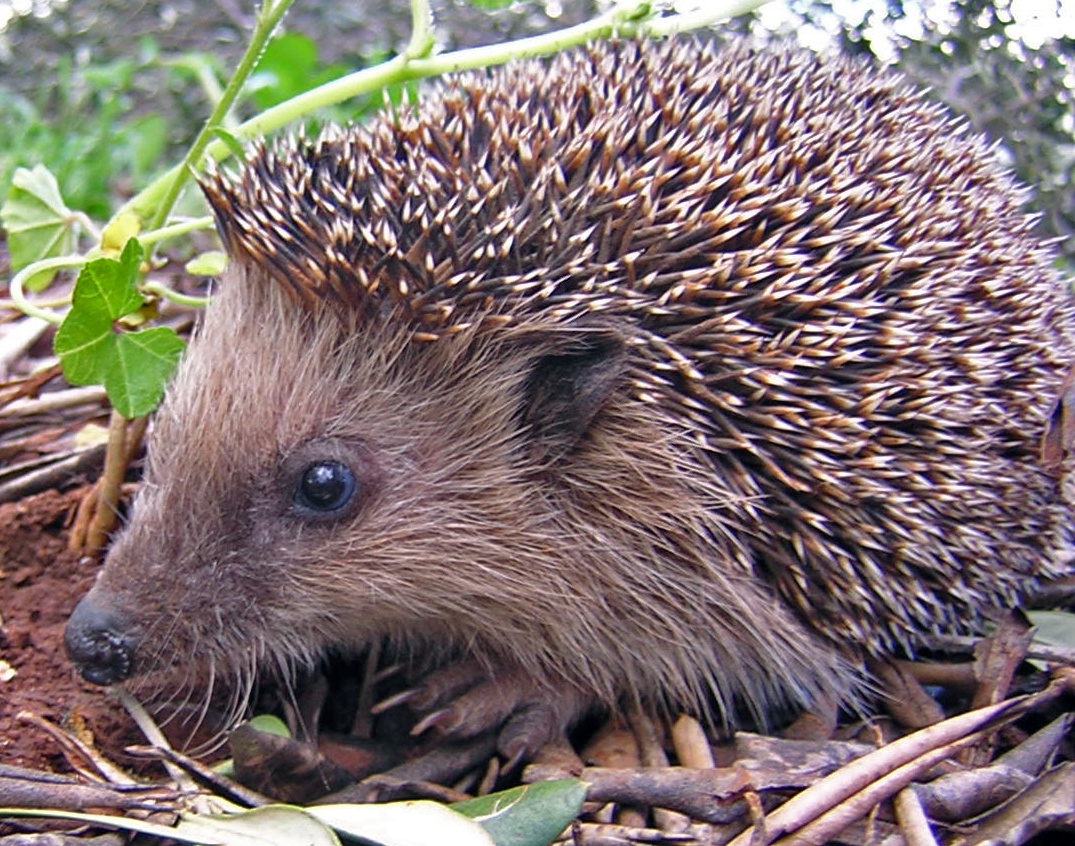
In Scotland, they say it's bad luck to encounter a hedgehog, or, as they call it, a furzepig, on any road, high or low, after dark. But hedgehogs only come out at dusk. Does that mean hedgehogs are bad luck no matter what? Or is it strictly an off-road love affair?
Someone, most likely an Englishman visiting his summer holiday croft, ferried hedgehogs in a handbag to the Hebrides in 1974—ostensibly to control the snails and slugs in his garden. Things got out of hand. Hedgehogs now outnumber Uist island residents 2:1.
Hedgehogs, whose only living relatives are umpossom-ably ugly Borneo moonrats, share a distant ancestry to shrews. They are voracious as pigs and rats, and have no natural enemies. And that spells bad luck for shore birds and other ground-nesting birds, including the corncrake, as they are endangered due to the groundhog's lustful appetites. According to hedgehogs—escargot is overrated. They prefer their eggs raw.
I once heard corncrakes gather at dusk in the hedges of Iona singing like electric fences. Uist now exports more non-native hedgehogs than sheep to the Scottish mainland. So much for the corncrakes. There are only so many ways you can prepare a shepherd pie of hedgehog and wild haggis. The Hebrides hogs are routinely airlifted to Ayrshire. WWRB say? Tae A Hedgehoglet? Not exactly a sleekit, cowrin, tim'rous beastie for a' tha.
Meanwhile, washerwoman Mrs Tiggy-Winkle's relatives have their own rather mundane holiday hovel hidaway replete with tiny clothespegs in Beatrix Potter's garden in Dunkeld near Birnam Wood, not the Lake District, as was previously reported. I bet you didn't even know Peter Rabbit was as Scottish as Macbeth. Och, but that's an old Entish tale that's still waiting to be told.
 |
| Hedgehog by Luke Clennell 1815 |
| Order: | Erinaceomorpha |
| Family: | Erinaceidae |
| Subfamily: | Erinaceinae |
Meanwhile in merry olde England, hedgehogs really are an endangered species. Go figure. They have had a long run (er, waddle) of very bad luck crossing the roads ever since Henry Ford got inventive. The cars win every time. Cars: plus 100%. Hedgehogs minus 75%.
Besides, hedgehogs rather look like little scullery brushes scooting across the road. The chickens have a much better track record. They have wings. I don't think we're ready for the idea of winged hedgehogs. So now there are little hedgehog tunnels to help them cross the road to get to the other side. (Don't go toward the light!)
In England, there are hedgehog hospitals for the hedgehog survivors (and the occasional bad-temperred badger) who've had run-ins with lawnmowers and such—St. Tiggywinkles Wildlife Hospital being the busiest in the world. (Ya can't make this stuff up!)
Hedgehog is from Middle English heyg-hoge, via a circuitous street Latin hericion-em, via the Greek kher, meaning yrchon, or, urchin. An yrchon hab a litel body and many pikes and prikkes. The young are called hoglets. Really.
Since hedgehog was a preferred delicacy of the medieval riche, Chaucer probably ate hedgehog in cameline sauce—whatever that is. The camel part worries me. Some recipes from the Middle Ages called for hedgehog meat puddings studded with slivered almonds. This is how we know what they were called.
Putte hem in a Spete as men don piggys; take a litel prycke, & prykke þe yrchons, an putte in þe holes þe Almaundys….(Sounds suspiciously like a haggis recipe.)
According to The People's Cookbook, roasted hedgehog on a spit was an ancient Briton favorite dating back some 8,000 years. Apparently "the meat of a hedgehog is good for lepers" and is also a guaranteed pissy diuretic. Think asparagus.
The English have been coining similes and false syllogisms of man (and knights) with hedgehogs dating back to Anglo-Saxon era.
Made him with arwis (arrows) ot ther malis most wikke Rassemble an yrchon (hedgehog) fulfilled with spynys thikke.They also thought hedgehogs stole apples by rolling home with them in tandem like dunghill beetles. Or that the crafty buggers snuck up on dozing cows to steal milk straight from the teat while they y-slept unawares. Talk about spilt milk.
They say the gypsies still bake them in clay (to remove the spines). They stole children too—especially those street urchins. The gypsies, not the hedgehogs—nor the lepers.
* * *
During the summer of 1989, I was walking the tree-lined backstreets of Cherkassy with a new Soviet friend. As we strolled along the banks of the Dnipr River one sultry evening, we unfolded the good linen stories of our lives—and a hedgehog snuffled across our path. I scooped it up as it tried to waddle away.
Oleg said NO! It was bad luck to pick a hedgehog up, they were "quite disgusting." The same way he spoke of the street tziganii (gypsies). But I wanted to see one up close.
The hedgehog grunted and snuffled like a little pig and tried to curl into a kootchie ball but he was far too fat. He gave up and stared at me with beady eyes—completely unafraid. Snorfling asthmatically all the while. We eyed each other in the gloaming. The fat hedgehog and I.
It was then my Soviet friend said, "The fox knows many things, but the hedgehog knows one big thing." He told me that hedgehogs could predict the weather. We were in the midst of the great Soviet Thaw. That was pretty big. He said it was an old Ukrainian custom to entice hedgehogs into the garden with saucers of milk, who repay them by eating garden snails and pests.
Alas, the hedgehog had critters of his own nesting between his spines (the hedgehog, not my friend) so I was not willing to hold him for very long for fear of fleas and ticks and lice.
Eventually our luck ran out. Sometimes that is the way of the heart crossing the road late at night. No one to blame but the weather.
* * *
When my grandmother was staring death in the eye, she complained of hedgehogs loose in the living room again.
We put out saucers of milk, just in case.
See Hedgehog Tale Index
Used with kind permission from Alastair Johnston Hedgehog by Luke Clennell is not technically public domain: since i uploaded it, it's in MY domain, but you may link to it, Mo, here's the first page of hedgehog text, it's from Recreations in Natural History, 1815.

On Lugh and Leprechauns
 |
| Celtic deity Lugus[1] |
My grannie once told me that if you were clever and quiet enough to sneak up and catch that little leprechaun who hides his pot of gold at the end of the rainbow, while he was busy at work, most likely he'd be smoking his pipe and cobbling a brogue, or a shoe.
Then, if you caught him, you got three wishes. But don't let go, don't take your eyes off him for one instant—or poof! He'll be gone in a blinding flash. And don't take any coinage he offers. It'll turn to stone at first light.
OK, so for years I thought little old Mr. Berini, the Italian cobbler who lived down the road, was a leprechaun. I'd sneak up on him but he was merely busy cobbling our shoes in his basement, nothing more.
But he only charged my grannie a quarter for resoling our shoes. In hindsight, she was probably just trying to get me to go away or be quiet. Mr. Berini must've thought I was a peculiarly "touched" child, I'm sure.
Some scholars think the origin of the diminutive Irish leprechaun was an offshoot of the bigger-than-life Celtic god of all crafts, the Irish Lugh Lámhfhada (Lew of the long arm), or his cognates, Welsh Ludd, or Lleu Llaw Gyffes, (Lew of the Skillful Hand), and the Gaulish triune god, Lugus. (The Romans equated Lugos/Lugus with Mercury).
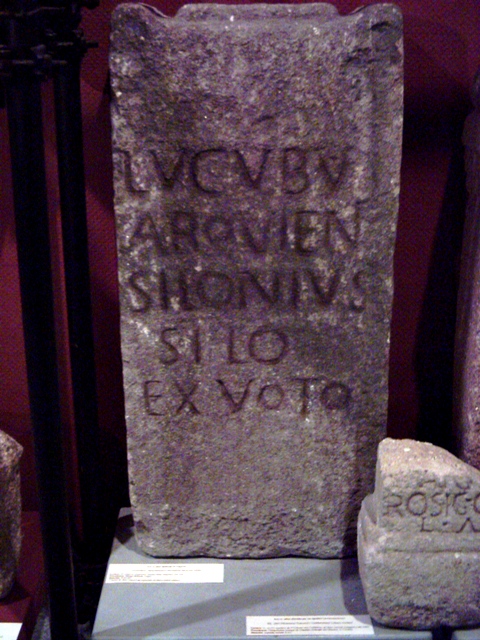 |
| Votive inscription to Lugus. Lugo,Galicia. |
The great god Lugh (whose –Proto-Celtic moniker,*Lug-" is embedded in dozens of European cities—from London, to Leiden, to Laon), was erroneously referred to as the shining one, or a sun god before the advancement of Proto Indo-European linguistics proved it to be a false cognate.
You're probably wondering why I've gone off the deep end writing about leprechauns during high summer. Other than it's nearly half way to St. Patrick's Day, I was responding to a Facebook post by Celtic Mythology, August, Lúghnasadh, is Lugh's month. The harvest month approacheth. Besides, our summer months, dubbed Junuary and now, apparently, Julyuary, have been socked in with thick fog and drizzle. What sun?
the burning man set aflame
Full moon marks the first harvest
The plain ripens, bellydeep in bright grain.
Though Lugh was the maker of shoes, and master of all crafts, his name is not related to the Proto Indo-European leuk, and the later Latinate cognate, luz, or light—besides there already is a minor Gaulish Celtic lightning god Leucetios‚ whose name does stem from leuk. And we don't want to invoke lightning and rain.
You're probably wondering why I've gone off the deep end writing about leprechauns during high summer. Other than it's nearly half way to St. Patrick's Day, I was responding to a Facebook post by Celtic Mythology, August, Lúghnasadh, is Lugh's month. The harvest month approacheth. Besides, our summer months, dubbed Junuary and now, apparently, Julyuary, have been socked in with thick fog and drizzle. What sun?
In Irish mythology, the Lughnasadh festival is said to have been begun by the god Lugh (modern spelling: Lú) as a funeral feast and sporting competition in commemoration of his foster-mother, Tailtiu, who died of exhaustion after clearing the plains of Ireland for agriculture. —WikiLughnasadh, the night of the wicker man,
the burning man set aflame
Full moon marks the first harvest
The plain ripens, bellydeep in bright grain.
Some scholars think that the leprechaun is not a vestige of the pre-Christian Celtic pantheon at all.
Others say he was an invention of the Irish Tourist Board. I think he was a hangover invention of the Saint Patrick's Day Parade.
Clearly when Lugh got snared in the web of medieval hagiography in Christian Ireland, he got the roughshod Cinderella treatment and was subsequently shrunk like a wool sock in the hot water laundry cycle.
The leprechaun is supposed to be a singular entity (no plural hoardes or tribelets—that too seems to be a Disney-meets-Bord Failte Eireann shenanighan—courtesy of Darby O'Gill and the Little People).
According to the Facebook site, Celtic Mythology, “The Lore of Ireland: An Encyclopedia of Myth legend and Romance”, renowned folklore collector and native Gaelic speaker and poet, the late professor, Dathi Ó hÓgáin, stated that "the designation luchorpán was only invented in Ireland when the lore of dwarf communities was adopted from abroad by Irish writers and that the solitary leprechaun of folklore is a post-medieval development from the literature." (Collins Press, Cork, 2006; pp. 308-9).
University College Dublin Professor Dathi Ó hÓgáin's post-medieval claim is interesting in that luchorpán is clearly not a native Goidelic Irish word. Not with that "p" in it. There is no "p" in Goidelic. The Irish were positively allergic to plosives. This is how you can spot loan words in Irish, like páiste (from the word, page, or child, not the cymbals!) Or Welsh—map; Irish cognate—mac (son).
But I don't think it's quite that simple, as the term is indeed used in Old Irish texts.
A quick internet search reveals that the earliest version of "luchorpán" (a water sprite) was used in the 8th century in "Echtra Fergusa maic Léti". But it's a far stretch of the imagination—let alone, linguistics, as luchorpán mixes Church Latin with Irish—to be a native irish word.The Old Irish, lúchorpán is a hybrid word— lú means “small” and corp means “body.”
But Lú, or Lugh, also means the really BIG baddass god dude. What's a neopagan to do to keep the Cailleachan ("Storm Hags") at bay? The leprechaun's abode seems to be a curious conspiracy of sunlight and rain.
Of course, the watery luchorpán might have been a different entity altogether that was later conflated with Lugh and the leprechaun. Still, there's that pesky "p" to contend with.... And we know that those sooty godlets, the leprechauns, who live in caves, or wood huts deep in the woods, are not particularly fond of water, other than their Swiss bank vaults at the ends of rainbows.
Another Lugh link from Celtic Mythology with some interesting Indo-European connections.
Others say he was an invention of the Irish Tourist Board. I think he was a hangover invention of the Saint Patrick's Day Parade.
Clearly when Lugh got snared in the web of medieval hagiography in Christian Ireland, he got the roughshod Cinderella treatment and was subsequently shrunk like a wool sock in the hot water laundry cycle.
The leprechaun is supposed to be a singular entity (no plural hoardes or tribelets—that too seems to be a Disney-meets-Bord Failte Eireann shenanighan—courtesy of Darby O'Gill and the Little People).
According to the Facebook site, Celtic Mythology, “The Lore of Ireland: An Encyclopedia of Myth legend and Romance”, renowned folklore collector and native Gaelic speaker and poet, the late professor, Dathi Ó hÓgáin, stated that "the designation luchorpán was only invented in Ireland when the lore of dwarf communities was adopted from abroad by Irish writers and that the solitary leprechaun of folklore is a post-medieval development from the literature." (Collins Press, Cork, 2006; pp. 308-9).
University College Dublin Professor Dathi Ó hÓgáin's post-medieval claim is interesting in that luchorpán is clearly not a native Goidelic Irish word. Not with that "p" in it. There is no "p" in Goidelic. The Irish were positively allergic to plosives. This is how you can spot loan words in Irish, like páiste (from the word, page, or child, not the cymbals!) Or Welsh—map; Irish cognate—mac (son).
But I don't think it's quite that simple, as the term is indeed used in Old Irish texts.
A quick internet search reveals that the earliest version of "luchorpán" (a water sprite) was used in the 8th century in "Echtra Fergusa maic Léti". But it's a far stretch of the imagination—let alone, linguistics, as luchorpán mixes Church Latin with Irish—to be a native irish word.The Old Irish, lúchorpán is a hybrid word— lú means “small” and corp means “body.”
But Lú, or Lugh, also means the really BIG baddass god dude. What's a neopagan to do to keep the Cailleachan ("Storm Hags") at bay? The leprechaun's abode seems to be a curious conspiracy of sunlight and rain.
Of course, the watery luchorpán might have been a different entity altogether that was later conflated with Lugh and the leprechaun. Still, there's that pesky "p" to contend with.... And we know that those sooty godlets, the leprechauns, who live in caves, or wood huts deep in the woods, are not particularly fond of water, other than their Swiss bank vaults at the ends of rainbows.
The page from the Free Dictionary has some interesting information that seems plausible.
Leprechaun n. One of a race of elves in Irish folklore who can reveal hidden treasure to those who catch them.
[Irish Gaelic luprachán, alteration of Middle Irish luchrupán, from Old Irish luchorpán : luchorp (lú-, small; see legwh-in Indo-European roots + corp, body from Latin corpus; seekwrep- in Indo-European roots) + -án, diminutive suff.]
lep re·chaun
 ish adj.
Word History: Nothing seems more Irish than the leprechaun; yet hiding within the word leprechaun is a word from another language entirely. If we look back beyond Modern Irish Gaelic luprachán and Middle Irish luchrupán to Old Irish luchorpán, we can see the connection. Luchorpán is a compound of Old Irish lú, meaning "small," and the Old Irish word corp, "body." Corp is borrowed from Latin corpus (which we know from habeas corpus). Here is a piece of evidence attesting to the deep influence of Church Latin on the Irish language. Although the word is old in Irish it is fairly new in English, being first recorded in 1604.
The American Heritage® Dictionary of the English Language, Fourth Edition copyright ©2000 by Houghton Mifflin Company. Updated in 2009. Published by Houghton Mifflin Company. All rights reserved.
and
leprechaun [ˈlɛprəˌkɔːn]
n (Myth & Legend / European Myth & Legend) (in Irish folklore) a mischievous elf, often believed to have a treasure hoard
[from Irish Gaelic leipreachān, from Middle Irish lūchorpān, fromlū small + corp body, from Latin corpus body]
Collins English Dictionary – Complete and Unabridged © HarperCollins Publishers 1991, 1994, 1998, 2000, 2003
See also: How Lleu Llaw Gyffes Got his Name
Leprechaun n. One of a race of elves in Irish folklore who can reveal hidden treasure to those who catch them.
[Irish Gaelic luprachán, alteration of Middle Irish luchrupán, from Old Irish luchorpán : luchorp (lú-, small; see legwh-in Indo-European roots + corp, body from Latin corpus; seekwrep- in Indo-European roots) + -án, diminutive suff.]
lep
re·chaunish adj.Word History: Nothing seems more Irish than the leprechaun; yet hiding within the word leprechaun is a word from another language entirely. If we look back beyond Modern Irish Gaelic luprachán and Middle Irish luchrupán to Old Irish luchorpán, we can see the connection. Luchorpán is a compound of Old Irish lú, meaning "small," and the Old Irish word corp, "body." Corp is borrowed from Latin corpus (which we know from habeas corpus). Here is a piece of evidence attesting to the deep influence of Church Latin on the Irish language. Although the word is old in Irish it is fairly new in English, being first recorded in 1604.
The American Heritage® Dictionary of the English Language, Fourth Edition copyright ©2000 by Houghton Mifflin Company. Updated in 2009. Published by Houghton Mifflin Company. All rights reserved.
and
leprechaun [ˈlɛprəˌkɔːn]
n (Myth & Legend / European Myth & Legend) (in Irish folklore) a mischievous elf, often believed to have a treasure hoard
[from Irish Gaelic leipreachān, from Middle Irish lūchorpān, fromlū small + corp body, from Latin corpus body]
Collins English Dictionary – Complete and Unabridged © HarperCollins Publishers 1991, 1994, 1998, 2000, 2003
See also: How Lleu Llaw Gyffes Got his Name
Subscribe to:
Posts (Atom)

