"Where do they get the money? Coming up redheaded curates from the county Leitrim, rinsing empties and old man in the cellar." —James Joyce (himself, a redhead), Ulysses, Calypso Ch. IV, Mr. Bloom stepping out.
(Dear Reader, You're welcome to post comments below and if you don't want comments published, please say so.)
OK, so why is it that every St. Paddy's Day, silly redhead stereotypes and myths foam up and froth over like bad green beer, equating Irish redheads with the Viking invasions when Vikings are generally blond or dark-haired?
Clearly, Classical writings and epic literature documents that there were many redheads in Ireland (and in Celtic Europe) long before the Vikings were a concept, let alone, a force to be reckoned with—looming on the distant horizon of the Irish Sea. This redheaded Viking gene theory smacks of a cultural hangover from the 19th century Romantic Thought, where, in its extremest hour, the notion of racial superiority was crossbred with ideals of Romantic Nationalism. (See Viking Revivalism.)
Though there were indeed redheaded (and dark-haired) Scandinavian Vikings, the idea that a rogue redheaded Viking gene was introduced to Ireland and then the Irish all madly inbred like island rabbits to concentrate that said gene, is an an urban—er, make that a seafaring—myth. Besides, the Old Norse word "víking" is a verb (er, noun). Let us go a-viking (a roving) through these schools of red-herringed thought to see what booty comes of it.
REDHEADED GENES IN SCOTLAND & IRELAND
Red is the rarest hair color in the world: less than 4% of world's population has naturally red hair. Scotland and Ireland have an unusually high incidence of redheadedness: it is reported* that redheadedness in Scotland currently weighs in at 11- to 13% of the populace, and Ireland at 10%. By contrast, most northern European populations tally in at about 2%. The rest of the world: 1%. Sweden (a big Viking stronghold), curiously, has almost no redheads at all.
(Note Bene: I'm not sure how I would actually verify any of these findings. I tried to use reputable web sites, BBC Science, etc., for my data, but I'm merely reporting back what I've read. So read everything written here with a grain of salt.*)
Scientists agree that red hair is more common among those with genetic roots in northwestern Europe, especially Ireland and Scotland (and by extension, Argentina, and Australia—via immigration and penal colonies). This means that more Celtic Scottish (vs. Lowlander Scots) and Irish people carry redheaded genes to produce all those redheaded offsprings than other cultures. Irish people carry the highest ratio of red-haired gene (and its variations) in the world.
RECESSIVE GENE OR ADAPTIVE TRAIT?
Redheadedness is a recessive gene: a genetic mutation. This means red hair only occurs when two people carrying that same recessive gene marker, have children who also inherit that same recessive gene. Who pass it onto their children. And so on. Ad infinitem.
Dr. Rees found more redheads in Scotland than in Ireland, but then, his study was conducted in Scotland, not in Ireland. And these days, most women either color or henna their hair red while the natural redheads go blonde or dark. Go figure. When it came to all those redheads confessing to their natural hair color (only their hairdressers knew for sure), I guess he had to take their word on it.
So far, I've found no evidence that Dr. Rees, or any geneticist, equates Irish red hair with the introduction of roving Viking or Finnish genes. If anything, it was probably a stray bit of Irish (or Scottish) DNA in the Viking gene pool that introduced redheadedness to Scandinavia as the Dublin Norse-Gael Vikings routinely took Irish wives, and some of them (and their offspring) went back home to Scandinavia.
But most Norse-Gael Vikings followed the migrating wild Irish swans and geese west—to West Scandinavia, that is—Iceland and the Faroe Islands. So if the Irish origin of the melanocortin 1 receptor (MC1R) is true, then those westernmost European isles should harbor hotbeds of redheads.
(You might want to also read up on the golden gene, as fair skin and light hair is a linked sequence of genes in those of European descent, but not for those of Asian descent who might have light-colored eyes, yet retain darker skin coloration. Also check out the Stanford links on the MC1R gene that determines red hair. Skin color is also linked to MC1R –freckled folks are often red hair gene carriers. And there's even a link to test for red hair: RedTracer DNA.)
VIKING TIMELINE
Early medieval Irish Annals and Hiberno-Norse-Icelandic literature reveals that most Vikings were blond (or dark), but not red-haired.
According to the Irish Annals of Ulster: in 851 AD, there was a large pitched battle between the "fair-haired" and "dark-haired Vikings. The dark heathens came to Áth Cliath, made a great slaughter of the fair-haired foreigners, and plundered the naval encampment, both people and property. The dark heathens made a raid at Linn Duachaill, and a great number of them were slaughtered.Afterwards the Danes seized the women and gold and all the goods of the Norwegians, and thus the Lord took from them all the wealth they had taken from the churches and holy places and shrines of the saints of Ireland. Fragmentary Annals of Ireland. In 852 The complement of eight score ships of fair-haired foreigners came to Snám Aignech (Louth), to do battle with the dark foreigners; they fought for three days and three nights, but the dark foreigners got the upper hand and the others abandoned their ships to them. Annals of Ulster For a detailed gory account of the battle, see the Fragmentary Annals of Ireland. In 927 AD, the Vikings left Ireland to plunder Britain. The fleet of Linn Duachaill departed and Gothfrith abandoned Áth Cliath; and Gothfrith returned again within six months. Annals of Ulster.
If the Vikings were redheads, they were singled out with monikers like Erik the Red (Eirík rauða), or Rus, or Rurik or Erik Battle-axe. Red could also signify ruddy cheeks/skin, hair color, or bloody, as in battle. Some Vikings painted themselves red before a battle (to hide the blood?).
(Viking timeline.)
The earliest recorded Viking raid was in the Hebrides, in 795 AD. The monastery at Iona was plundered and it is recorded that the Vikings landed on Rathlin Island. (BTW, The Hebrides—settled by Irish Gaels, or the Scoti of the overkingdom of Dál Riata were not part of Scotland until fairly recent times.)
By the summer of 802, the Viking raiders reached the monastery on the Skellig isles, off the West of Ireland. It wasn't until 832 that the Vikings ventured inland to take Irish slaves. Previous to that, the Vikings had a pretty grim slash-and-burn policy. Take no prisoners.
The first Viking over-wintering settlements in Ireland were in Louth and in Dublin during the winter of 840-41. The Irish found that Vikings were a much easier target on land than by sea. So Irish chieftain, Máel SechNíall put some 700 Viking invaders to death in Skreen, Co. Meath. The Viking Louth settlement, Linn Duchaill, was abandoned 100 years later.
The Irish annals record that in 849, the dark-haired Danes came a viking too. In 851, a fierce battle between the Danes and Norse was noted by Irish monks. In 853, Hiberno-Norse warlord "Olaf the White" (aka Amlaíb Conung, or Oleif, son of King Ingjald), held Dublin, and an alliance was made with Áedh Findliath, the Irish king of the northern Uí Néills, whose daughter was married off to Olaf. But decades of war between the Irish and both strands of Vikings soon followed. In 902, the Vikings were ousted from Dublin.
But in 914, the Vikings were back with a vengeance and ravaged Munster. (Whether Norse or Danes, I'm not sure.) The Irish king of Tara, Máel SechNíall II, sacked Viking-Irish* Dublin (again) in 944. Máel SechNíall II joined forces with Brian Bóruma, and led successful skirmishes against the Vikings in 998, 1000, and in 1012. The Vikings were eventually driven from Ireland for good by Brian Bóru at the Battle of Clontarf in 1014.
The Vikings took Irish slaves and wives (prize booty-call) back to Norway (and Iceland) in 832. We know this because of the Celtic artifacts and knotwork art that show up in Scandinavia. There are also Irish personal names and toponyms preserved in the Norse-Gael manuscripts, the Landnámabók, Laxdœla Saga, Njáls Saga, the Orkneyinga Saga, and the lost Brjáns Saga—the last three manuscripts pay homage to Brian Bóru and Norse-Gael loyalty to the descendants of Bóru.
Njáll Þorgeirsson, aka Burning Niáll (Neil)—possibly a Brithem (or Brehon) lawyer with the gift of the gab—really, really had flaming hair. After a dispute, handsome Njál refused to leave his home and was was burned to death by irate neighbors.
Irish toponyms survive in the Faroe Islands and Iceland (via Hiberno-Scotti monks). The Icelandic village, Patreksfjörður was named after St. Patrick. Breiðafjörður (where an Augustinian MS, the Flateyjarbók—with a different account of Eirik the Red, was written), may be named after St. Brigid. (Bríd, aka Bri-id, Brida, Breeda.)
There were attempts at Irish-Viking alliances and mixed marriages and children in Dublin—though with 200 years of continuous warfare, survival was at best, iffy. The mixed marriages are duly recorded in Irish surnames: McAuliffe (son of Olaf), McManus (son of McManus), McLoughlin (son of Lochlainn), McIvor (son of Ivor) and Doyle (the dark stranger or foreigner). Note that the names are written in IRISH, not Scandinavian. What does that say about the dominant culture and language?
By 944, the Viking-Irish* were mostly of Irish descent as the Norse Vikings did not bring Norse wives with them—they took Irish wives who had half-Irish children who married Irish and half-Irish kin. The Viking gene pool was diluted by 50% the minute they stepped onto Irish soil.
It seems unlikely that the Vikings were planting red-haired genes to significantly overwhelm the entire Irish gene pool. The fighting Irish did not go meekly into Viking servitude. In fact, the Vikings suffered severe losses at the hands of the Irish. At the Battle of Clontarf, some 6000-12000+ died, making the battle one of the largest of the medieval era—and that was the end of Viking occupation of Ireland (sort of).
Though the Vikings founded the major port towns (and coinage) in Ireland (the rural autonomous Irish didn't live in towns) a full-scale invasion of Vikings to Ireland was never attempted. They were otherwise busy (and were much more successful) in Britain and France where people actually DID live in towns—thus much easier to control (or hold hostage). That resulting admixture brewed and bubbled and then their descendants returned to Ireland in 1169 as the Anglo-Norman invasion, heralding in a new era of warfare.
REDHEADEDNESS A NEW MUTATION?
Though most scientists think that the redheaded gene is a relatively new mutation (50- to 20,000 years old), I did find a study that notes that Neanderthal Man carried that recessive genetic marker too. Some scientists think this suggests that red-hairedness may have been an evolutionary adaptation to survive in extreme northern latitudes where there is little winter sunlight.
Hmmm. Is it a geographic adaptation that leads to lighter skin, lighter eyes and red hair? Do redheads (having no ability to tan) absorb more vitamin D from sunlight than others? I am reminded of the H.L. Menkin quote: "There is always an easy solution to every problem—neat, plausible, and wrong." Except, those Neanterthal redheads we were discussing were found in sunny Iberia, not in northern Germany or Scandinavia.
This byproduct of natural selection adaptation theory just doesn't make any sense as red hair and pale skin equals the ability get a really bad sunburn in under 20 minutes, not to mention a greater chance of skin cancer with prolonged exposure to the sun (it's not just the ability to absorb vitamin D really fast). This theory is as silly as the one about redheads and blonds becoming extinct in the year 2100, or whatever. Are these pseudo-scientists using a Mendelian genetic trait theory?
Now, I loved studying Gregor Mendel's experiments with genetics, using white flowering peas cross-pollinated with red flowering peas to test his theories. But, snow peas and scarlet runners aside, we are not haricots verts. Even as a kid, I saw the flaw: we were taught that all parents with dark hair and dark eyes will beget dark-eyed/dark haired children who will in turn, beget the same dark progeny and so on. Easy-peasy. Not.
According to Mendel, having one light-eyed/haired, and one dark-eyed/haired parent gives us a 1-in-4 chance to have any combo, as dark hair/eyes would win out 3 out of 4 times because it is a dominant (strong) gene. In which case, my whole family was a genetic throwback... Dark-haired/eyed Irish parents begetting dark eyed/haired children who begat blue-eyed blonds and redheads, etc. More than rolling the dice. Snake eyes. The milkman was also a brunet.
Let me take it to an absurd extreme. If this Nordic redheaded vitamin D theory held water, then most circumpolar peoples: Inuit Aleut, Skraeling, Chukchi, Siberian Yup'ik, Sámit (Saami/Lappi) or the Antarctic Yahgan (Fuegian), would all be pale, freckled redheads, or at least carry the gene! All are First Peoples (Eskimo, etc.) with dark hair and olive or dark skin; the exception is Saami (Laplanders) who are Caucasian and blond or dark haired. My light-haired, blue-eyed Saami (or Suomi) friend has golden skin—not white—and a characteristic Saami face like Joni Mitchell. (Read up on that Asian blond/golden skin link I mentioned above.)
Redheadedness is generally associated with northern (but not extreme southern) peoples as is the accompanying pale skin sprinkled with freckles. So, is it primarily a Caucasian trait? Certainly before migration to the New World, northern Europeans carried the most diversity of hair/eye color in the world.
The rest of the world tends toward dark hair and eyes. There are Melanesian and African redheads (as noted in The Last King of Scotland—who are considered ugly), and there are also other non-Celtic redhead groups to consider. But that's fodder for another blogger. Interestingly, many freckled African-Americans often have an Irish grandmother or great-grandmother in the family tree.
Some scientists suggest that it is estimated that 40% of all Scots carry the recessive red hair gene especially in the outer Hebrides and the Orkney Islands (probably where the Viking theory was shoehorned in), while the Irish red hair gene tallies in at a whopping 46%, the highest in the world. (Must be all that insular inbreeding!)
Other Celtic archipelagic fringe regions also carry a remarkably high percentage of this gene: notably Cornwall, Devon, Kent (warrior Queen Boudicca's Iceni who sacked London, Colchester and St Albans), Wales; and the northern borderlands: Nottinghamshire, Yorkshire (a later Norse stronghold). Cumbria and the Lake District were Old Welsh-speaking enclaves that successfully resisted the Anglo-Saxon invasion.
 |
Boadicea Haranguing the Britons by John Opie. "It is not as a woman descended from noble ancestry, but as one of the people that I am avenging lost freedom, my scourged body, the outraged chastity of my daughters…you will see that in this battle you must conquer or die. This is a woman's resolve; as for men, they may live and be slaves, and captive, but I shall not." —Boudicea (The Annals of Tacitus, Book 14, 36)
|
But several genetic studies reveal that the highest per capita red-haired genetic marker was in Ireland. Period. Not Scandinavia.
I've yet to find a study stating that 40-46% of all Scandinavians or Finns carry the recessive marker. Genetic DNA testing also suggests that red-hair genes were common among the first Britons.
What's interesting about this train of thought is that the ethnic Irish Travellers (aka Tinkers—tinceard or traveling tinsmiths) are possibly descendants from a pre-Celtic aboriginal race, who were said to be predominantly redheaded.
Irish Travellers speak a Hiberno-English creole, the Cant, or Shelta. The post-Irish Famine American branch were made famous by Eddie Izzard in "The Riches" also spoke a secret argot—or Gammon as it's called from within the culture. Think Pig-Latin with a rhyming Cockney-twist: rife-stray = wife. Now think backwards: mac (son) = kam. Póg (kiss) = gop. Scottish Celtic Tinkers, the Ceàrdannan ("the Craftsmen") also spoke Gammon, or Beurla-reagaird.
Some scholars believe Shelta contains the remnants of an old European tongue.
Research by an Irish socio-linguist, Dr Alice Binchy, suggests that more than half the surviving Cant/Gammon lexicon may be derived from a long-lost language spoken in Ireland before the Celts arrived. — The Independent, March 27, 2005.
But Stephen Oppenheimer's The Origins of the British: a Genetic Detective Story, states that genetics reveals that the vast majority of Britons' ancestors hailed from that Celtic stronghold, the Iberian Peninsula.
No Spanish Armada was needed to crash on Ireland's shores to fund the Black Irish theory. It was already there. Hmm. Parallel structure: dark hair from the Spanish, red hair from the Vikings. Do we see an exogamic pattern here?)
Late 20th c. scholarship has also proven that Celtic presence (and influences) were substantial in Iberia. And we musn't forget the modern Celtic survivors, those west Iberians, the Cailleach-worshipping Galicians (aka Gallaeci or Callaeci and western Asturians) of Spain/ Portugal have their fair share of redheads too. The Moors never ventured into the Pyrenees.
ANCIENT GRECO-ROMAN OBSERVATIONS OF CELTIC REDHEADS
The ancient Greek ethno-historians, especially Dio Cassius, noted in their observations that there were an awful lot of really, really big bad-ass (Clairol) blond/flaxen and redheaded Celtic warriors with grey eyes. He described the Iceni warrior Queen Boudicca as being “tall and terrifying…a great mass of red hair fell over her shoulders” to her hips. She must've been a sight to see—standing tall in her chariot racing across the moors, her fiery mane blazing in the wind.
According to the Roman historian Livy, Roman general Manlius Vulso called the Celts of Asia Minor a fierce nation: "Their tall bodies, their flowing red hair, gigantic shields and long swords, together with their howling as they go into battle, their shouts and leapings and the fearful din of arms as they batter their shields according to some kind of ancestral custom—all these things are designed to terrify!"
He called the Galati "wild animals, whose fathers and grandfathers hardened and made savage by misfortune, driven from their land to settle in Illyricum, Pannonia and Thrace." (The Celts: A History, Dáithí Ó hÓgáin. p110).
Roman historian Tacitus, (b. ca. 56 AD), in one of the Gaulish provinces, possibly Belgica, or the Narbonne, was most likely a Celt himself, he often conflated German* and northern Celtic tribes in his writings. A hangover from Caesar's senate campaigning days to loosen the senators' purse strings and get them to fling open the warchest coffers.
In a nutshell, many of the so-called Rhineland Germanic tribes* Tacitus described in Germania and Agricola had Celtic tribal names and place names. Any tribe north of the Rhine was deemed Germanic, even if they spoke a Celtic language, and worshipped Celtic gods.
Dr. T. Rice Holmes, ['Caesar's Conquest of Gaul,'] noted that the ancients—who were not very close observers of other cultures' physical characteristics—consistently described the Celts as a tall fair race, warlike and masterful, and they made a distinction between the "fair" Germans as being blond, and the "fair" Celts as redheads.
But to the Romans, anyone north of the Rhine, whether the were Celtic, or German or Celto-Germ an, was dubbed "German." The Rhine was the great divide—like the American North-South division, the Mason-Dixon line. This side, there be badass Gauls. That side of the river, there be badass Germans. Even bigger and badder than the Gauls. So, cough up the dough, you old fharts.
Dr. T. Rice Holmes, ['Caesar's Conquest of Gaul,'] noted that the ancients—who were not very close observers of other cultures' physical characteristics—consistently described the Celts as a tall fair race, warlike and masterful, and they made a distinction between the "fair" Germans as being blond, and the "fair" Celts as redheads.
But to the Romans, anyone north of the Rhine, whether the were Celtic, or German or Celto-Germ an, was dubbed "German." The Rhine was the great divide—like the American North-South division, the Mason-Dixon line. This side, there be badass Gauls. That side of the river, there be badass Germans. Even bigger and badder than the Gauls. So, cough up the dough, you old fharts.
Tacitus also commented on the "red hair and large limbs of the inhabitants of Caledonia (P-Celtic Pictland)" which he linked to red-haired Gaulish tribes living in Belgium and Germany. Clearly, invasion plans were in the works.
I've not read the texts in the original Latin, but in modern translation, luckily, tribal names and place names tens to keep their orthography. The roving Belgae marauders were not Germanic, but descended from Hallstatt Celts or the related Volcae Tectosage tribe of Bavaria and Austria. In the Greco-Roman world, "red-haired" meant big, badass warriors. Clearly, the Vikings were not genetically involved with the Celts way back when.
In the Aeneid, that fine Cisalpine Gaulish poet, Virgil, (the very bright, or illustrious one) described his fellow Celts as "golden is their hair and golden their garments...and their milk-white necks..." The Celts preferred red-gold over any other gold. So "golden" could also mean red-gold—or ruddy. And they were extremely fair, not swarthy. Diodorus corroborated, "their skin is very moist and white."
CELTIC FRINGE
Celtic Fringe survivors, the Gaulish langues d'oil-speaking Walloons of southern Belgium (Brabant to Calais), have a higher incidence of red hair than the French, or Germanic Belgians, and these Gaulish descendants look distinctly Irish. As do the Galicians (Gallegos) of Northern Portugal/Spain who share a cultural and musical tradition with other Celtic countries. But at least we know they're CeltIberians.
AN ASIDE ON WAL-GAL-Wall-/wallha- a Germanic prefix, means strangers (or Romans, but not Germans), as does the word Wales—usually signifies non Latin-speaking Celts. It was used to describe Romanised inhabitants of the former Roman Empire, who spoke proto-Latin or Celtic languages. (Old English: 'wealh', means 'foreigner' or 'stranger'). Walha is also possibly a corruption from the name of the Celtic tribal confederation, and Caesar's nemesis, the formidable La Téne Celts, the Volcae Tectosage (who not only ran the Germans off their Rhine lands, they also invaded Macedonia and Anatolia, and founded that wild party town, Galatia). It also might be the origin of the word Gaul as v/w/g sounds shapeshift in Indo-European languages. European and Asia Minor place names that begin with the prefix gal-, gaul-, wal-, wel, generally indicate a Celtic presence in the region.
FINNISH CONNECTION?
Unable to let go of the Viking redhead connection, someone in my Yahoo group mentioned a Finnish Viking connection for the root introduction of Irish red hair. First, Finns are not Vikings, nor did they (by their own admission) raid and settle in Ireland. They predate the Norse Vikings by centuries (as do the Irish, and their red hair). Finns (AKA Jutes, Huns, but sometimes erroneously conflated with Varangians—Swedish Rus Vikings of the 9th-11th cs.) are not typically stereotyped as a nation of redheads either.
I remember learning in Biology 1A at College of Marin, from my professor, Dr. Fatt, a Finnish MD, that Finns generally had different genetics, blood type (and language, like Sámit, or Suomi) than the rest of Europe. Type A+ (34%) probably points to Viking blood, as Norway is mostly type A+. (Ireland is mostly Type O+ at 55%). Finland's A, B, and AB cluster is 60%. But it's complex and difficult to track this information. Modern genetic studies have found that the Y- chromosome haplogroup N3, is fairly specific to Finno-Ugric populations.
Though the Turkish-born Greek scholar (5th c. BC ), Herodotus, dubbed the "Father of history," described the Ukrainian "Budini" as a "large and powerful nation: they all have deep blue eyes and bright red hair." They lived in Scythia, their capital was the wooden city of Gelonus, built on the fens, their shrines were adorned in the Greek way and they honored Dionysus. If you read a bit further, you'll find Herodotus was probably describing nomadic, aboriginal peoples. Or conflating two different groups. It's hard to tell from the translation.
Aside from the stark contradiction of primitive, aboriginal nomads living in a complex fortified wooden city, it seems they were not Hunnic Finns who speak a radically different non Indo-European (IE) language that is related to Suomi, Basque and Magyar. Nor were they Sámit (AKA Suomi? which would link them genetically to the Basques).
Now, let me split a few fine red hairs: Herototus points out that the Budini "use a tongue partly Scythian and partly Greek." The Suomi and Finns would have had an especially hard time adapting. or speaking a Greco-Scythian hybrid tongue, as their Finno-Urgic languages are entirely unrelated. This strongly suggest that the Budini were Indo-European speaking—possibly Cimmerarians, or nomadic Indo-Iranian Scythians. But there were also numerous Celtic strongholds in the Russian steppes, settlements on the Sea of Azov and the Black Sea and beyond.
Besides, the phrase "white-skinned, red-haired and blue-eyed" is a Classical trope, generally referring to the Hyperboreans, i.e., the Celts, or any non Greek-speaking barbaric tribes. The TItans, the first gods (Atlas, Promethius, Cronos) were depicted as white-skinned with red (or light) hair.
- xanthe—light-haired. Orestes’ hair is described as fair, Apollo and Demeter, are described as light-haired.
- kuanochaites—dark-haired
- rhodo and purros—refer to red. Eos, the Dawn goddess is rosy-fingered (rhododaktylos).
Racial Type of the Ancient Hellenes (From Stirpes: Antiquam Exquirite Matrem forum, Jan.6, 2005,) in one thread, Alkman, offers some food for thought:
We must also dispel the notion that xanthos always refers to yellow hair, or that purros refers to purely red hair…. Strabo uses xanthotrichein and leukotrichein (making hair xanthon and making hair “white”) indicating that xanthon was a darker shade than extremely fair hair….
Color terms are relative among different cultural groups; xanthos may mean the fair end of the Greek hair color continuum, not blond. This impression is enhanced by the descriptions of northern European hair as polios (gray, usually of old people) or leukon (white) to be found in Greek literature (Diodorus Siculus, Adamantius Judaeus).
As for purros it is noteworthy that the common Greek words for fiery red eruthros is not employed for hair, while purros is given by Aelius Herodianus (Partitiones 115, 10) for the color of eyes. Human eyes are never red, or strawberry blond…. Therefore, purros means having a red tinge, it does not mean redhead. Maybe rabid.
It would be worthwhile to quote here in full, the opinion of British anthropologist John Beddoe [34]. Beddoe studied thousands of Britons and continental Europeans, and comparing his designations with that of other observers, came to realize the approximate relativity of the names of color terms:
French anthropologists say that the majority of persons in the north of France are blond; whereas almost all Englishmen would say they were dark, each set of observers setting up as a standard what they are accustomed to see around them when at home. What is darkish brown to most Englishmen would be chestnut in the nomenclature of most Parisians, and perhaps even blond in that of Auvergne or Provence; an ancient Roman might probably have called it sufflavus or even flavus.
In Histories (4.108-109), Herodotus describes a Scythian tribe, the Budini as “ruddy,” or “red-haired” purron and “blue/gray-eyed” glaukoi. In their land, exists a city, Gelon, inhabited by the Geloni. While the Budini are nomads, the Geloni are farmers, speak a language that is half-Greek and half-Scythian and worship Greek gods. According to Herodotus, they are Greek colonists who left their sea ports to live inland among the Budini. Interestingly, Herodotus states that the Geloni are unlike the fair Budini in “neither form nor coloring” [ouden ten ideen homoioi oude to chroma].
(Note bene: this is thread from a forum, not my research. NB 2 I found the original paper replete with photos and art byDienekes Pontikos who seems to be an anthropologist (dated 2009). Will need to update links.)
Generally, "good" Greeks were represented as dark-haired and dark-eyed. Apparently "good Athenian girls had black hair," while courtesans had red hair. Galen (Galenus, or Galien) of Pergamon, that famous (possibly Celto)-Greek philosopher, and physician to the gladiators, wrote:
That of the inhabitants of cold, wet places, conversely - Illyrians, Germans, Dalmatians, Sauromatians, and the Scythian types of people in general- has reasonably good growth and is thin, straight, and red.
 |
Aristotle wrote that the Greeks generally considered blue eyes as unhealthy—the evil eye was associated with those northern barbarian tribes. Plato, in The Republic, stated that statues should have dark (manly) eyes and hair.
When Persian King Darius attempted to invade Gelonia (aka Gelonus or Helonus), the Budini (a Finnic tribe, or Scythian tribe) scorched the earth to avoid battle by leaving the "earth without grass," who oratorically replied: "We are free as wind and what you can catch in our land is only the wind." Hmmm, that almost sounds cheekily Celtic. (Like the Celtic envoy's retort to Alexander the Great's query as to what they feared most: "We fear no man: there is but one thing that we fear, namely, that the sky should fall on us." —Sacred Texts.
These phrases are archaic remnants of standard Celtic oath-formulae preserved from the oral tradition, like: "May the sky fall on us and crush us, may the earth gape and swallow us up, may the sea burst out and overwhelm us." Not. Ibid.
A variant in the Irish epic, the "Táin Bo Cuailgne," goes something like this: "Unless the sky shall fall with its showers of stars on the ground where we are camped, or unless the earth shall be rent by an earthquake, or unless the waves of the blue sea come over the forests of the living world, we shall not give ground.") —From Myths and Legends of the Celtic Race, Thomas Rolleston, 1911 (ch. 1); via Sacred Texts.
Though there were Finnish or Suomi populaces on the Volga, I can find no record among ethnographic information on Finns or Saami/Suomi settlements—languages or dialects—for a tribe called the Budini. Please note that only the 1911 Britannica surmised that the Budoni were Fenno-Ugric—not Herodotus, who claimed the Gelonii (or Budinii) were once Greeks. But they could have been Scythians as well. Then there's the language thing: "The Geloni are farmers, speak a language that is half-Greek and half-Scythian and worship Greek gods." —Herodotus
There were also several huge Celtic migrations to/from the steppes and Ukraine: in Poland, the Celtic name survives as Galicia, not to be confused with Galicia, Iberia, or Galicia, Anatolia (Gr: the place of the rising sun). BTW, Finn/fionn means fair or bright/shining in Irish. As in Vienna (Finn's City). (F=V).
And red hair is very rare in Sweden, and most Scandanavians are blond or dark, not redheads. This is not to say that Celtic genes didn't worm their way back to Scandinavia, they did. Russia, colonized by a red-haired Viking, Rurik, does not have a high incidence of natural redheads, hennaed redheads, and natural blonds, yes. Again, the red moniker did not signify redheadedism.
IBERIA & NORTH AFRICA (BERBERS & CELTIBERIANS)
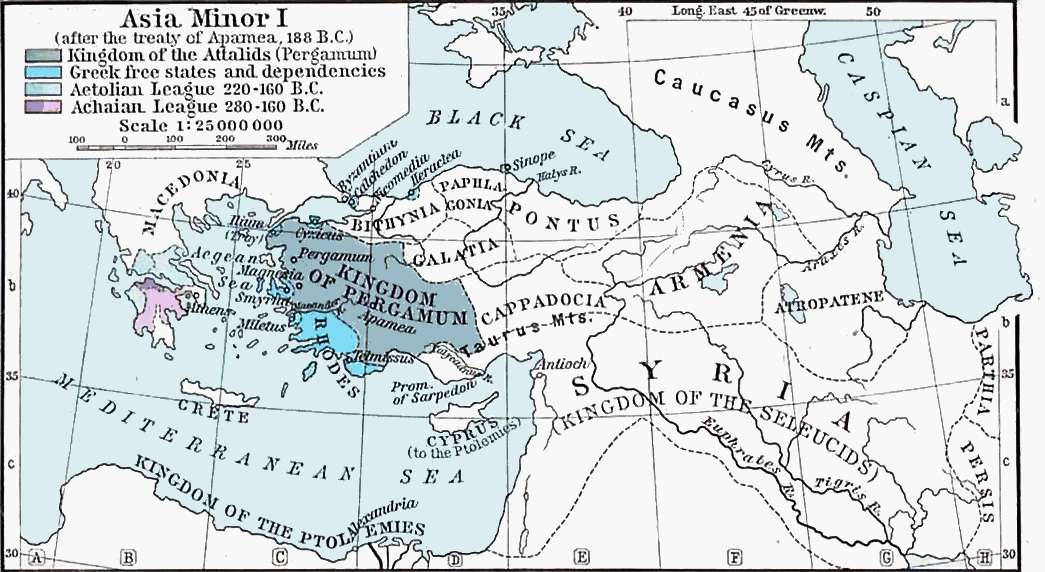
If you look at most of the the regions of the world where there is traditionally a higher percentage of redheads, including northern India (IE settlements) Iran/Levant (tribes of Celts moved to Anatolia en masse after the Battle of Pergamon), coincidentally, you will find evidence of ancient Celtic settlements there as well. (See Luís Fraga da Silva's downloadable map of pre-Roman Iberia ca. 200 BC—Note: Celtic tribes are marked in yellow.)
Celtic tribes from Thrace to Iberia—spoke an Indo-European Celtic language with mutually intelligible dialects. "St Jerome, who visited Ancyra (modern-day Ankara) in 373 AD, likened their language to that of the Treveri of northern Gaul." That's 316 years after that famous Anatolian tentmaker, the bull-headed Tarsan, St. Paul wrote his famous rebuke, Epistle to the Galicians.
The Treveri spoke the same language as those wild party-animals, the Anatolian Galatians /Galicians, [and Phrygians, and Thracian Celts] of Asia Minor. (No matter that they couldn't/wouldn't read). No evidence that the Galatians ever wrote back to Saul-Paul either, but clearly their response was: Piss off! Who died and made YOU an apostle, dude? No trace of the original letter is known to have survived. The Galicians probably used the papyrus as nappies.
It seems that fear of circumcision also motivated the Galatians' anti-Judeo-Christian angst. You want to do WHAT to my pecker? Though we don't typically think of central Turkey as a Celtic stronghold, the Galatians managed to retain their language and cultural identity (and intact peckers) for at least 700 years.
Classical writings on pre- and Roman Iberia are not as readily available in English. And there are now many Wiki articles on the Celtic tribes of Iberia, translated from the Spanish and Portuguese—which I'd love to cite, but this blog's central focus is on references to redheads across linguistic and cultural divides. The Iberian Cantabri came to the rescue of the Gallia Aquitanii to fight against Caesar. But I digress. I've mentioned modern Galician redheads earlier under the Celtic Fringe heading.
Weirdly, I found mention of a high incidence of readheads among the North African Berbers (though they are said to be Eurasian (Iberio-Marusian) and share genetic traits with Basque, Saami, and possibly Galicians), they speak an Afro-Asiatic (Semitic) language. But it seems Berber DNA has been in North Africa some 20,000 years and invading Arab-Moors or Middle East tribes made no dent in their gene pool.
And there are tales of the huge fierce redheaded aboriginal men of the North African Canary Islands (Island of the Dogs (possibly referring to sea dogs, or monk seals—as in canis—not little yellow birds!) The Canary Islanders were dressed in furs, wielding hardwood swords and shields, and their fair-haired women were uncommonly beautiful. Some speculate that one Neolithic group, the Guanches shared a common origin with Berbers—as the last surviving Canarian language was related to Berber.
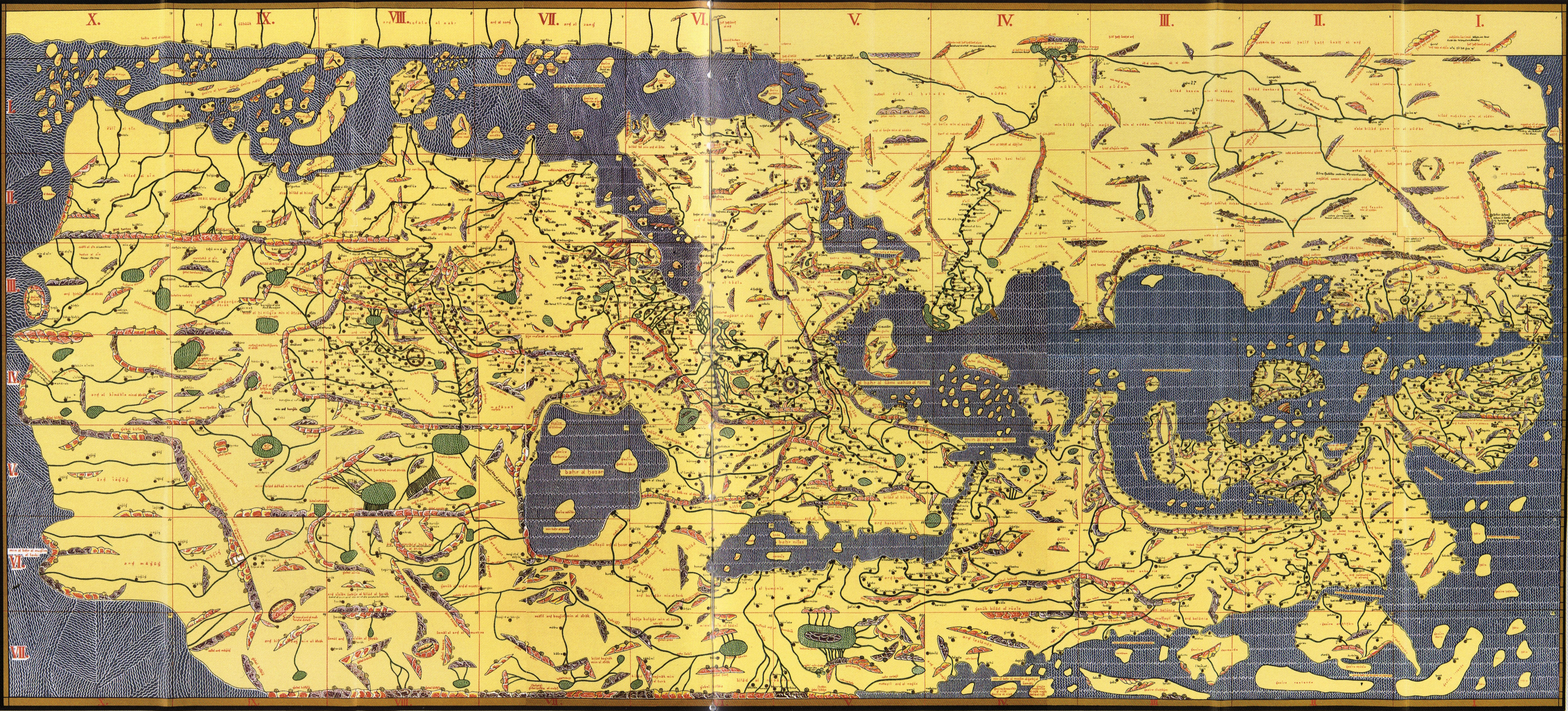
[They] reached another island where they were soon surrounded by barks and brought to "a village whose inhabitants were often fair hair with long and flaxen hair and the women of a rare beauty". —Arab geographer Muhammad al-Idrisi, Nuzhatul Mushtaq, 1150 AD. (Note Bene: the Arab definition of fair-haired covered a wide range of colors).
 | ||
| ||
I speculated that the Berbers of North Africa (Carthage) might be related to the (redheaded) Phoenecian sea traders (Lebanon) as Punic evolved from Phoenecian and Berber. Unless, of course, the Iberian Celts put down roots in Carthage and were assimilated into Berber culture.
However, Celts do make a significant appearance in Carthage. The southern Celt-Iberians, no strangers to the sultry charms of Carthage, were Hannibal's mercenaries, hired to defend Carthage against Rome during the Punic Wars. Tens of thousands of Celts fought in the Roman army; so (elephants aside), it was a rout of CeltIberian against Gallia Celt against Cis-Alpine Gaulish Celt. As they slaughtered each other wholesale, the Romans won on all sides.
REDHEADED EGYPTIANS & THRACIANS
Apparently, ancient Egyptians routinely burned their redheaded maidens. Redheaded men were called Typhonians, after red-haired Typhon—evil rival of Osiris. Their ashes were scattered at the grave of Osiris and used to fertilize the fields. Some were equated with the god Set. Not good to be a redhead in any Egyptian dynasty—except maybe Cleopatra's.
 |
A fresco of a noble woman with golden necklace and earrings on the ceiling of the main chamber in the Ostrusha Mound near Kazanlak, Bulgaria.
|
If you're having trouble wrapping your thoughts around the idea of all these redheads in North Africa, remember that Cleopatra, a Ptolemy (read: Macedonian Greek), was a redhead but she was probably dipping heavily into the old henna jar. Greek satirist poet Xenophanes scribed Macedonia's neighbors, the Thracian (Celts), as depicting their version of God in their own likeness: red haired and blue-eyed. (Sounds like Tocharian Buddhas.)
The Celts settled in Macedonia and Thrace en masse as well. Philip of Macedonia had a large Thracian Celtic mercenary armies at his beck and call. Alexander the Great famously commented upon the bravery of Celtic warriors.
Also, thousands of Celtic mercenaries were employed by the Egyptian Ptolemies. In 283-246 BC and 186 BC, they attempted to overthrow Ptolemy II. My guess is that those feastingfighting&fecking Celtic warriors weren't exactly celibate for 40 years in the deserts of Egypt.
There are records of Celtic mercenaries in Egypt serving the Ptolemies. Thousands were employed in 283-246 BC and they were also in service around 186 BC. They attempted to overthrow Ptolemy II.
 |
"Tocharian donors", with light hair and light eye color, 6th century CE fresco, Qizil, Tarim Basin. These frescoes are associated with annotations in Tocharian and Sanskrit made by their painters.
|
THE TOCHARIANS OF CHINA
Though the Chinese are loath to admit to any foreign invasions, there were a few notable redheads (and blonds) found in Asia too, those nomadic Silk Roadies, the Tocharians of the Tarim Basin in the Taklimakan Desert and the Gobi Desert who were northern Europeans, or possibly Scythians, according to Strabo.
These easternmost speakers of various Indo-European dialects (IE), a foundation language that includes Irish, Hittite, Sanskrit, Greek, Latin, etc., spoke/wrote in a highly inflected IE language, Tocharian A (similar in grammatical structure to Old Irish), that predates later Indo-Iranian and Tocharian B speaking settlements.
I found a Tocharian timeline online and links that's worth looking at. But note that the anachronism, "Nordic" in this case, could not possibly refer to Teutonic tribes ca. 3000 BC!
 |
Tocharian Buddhas
|
The later 9th c.Tocharian A Buddhist texts, shrines and cave murals portray a red-headed blue-eyed Buddha that had northern Indus Valley links. (FWIW: Genghis Khan was reputed to be a redhead with blue/green eyes.) The northern Indus Valley (also an IE region, was also the homeland of the Mahabharata (containing an abbreviated form of the Ramayana) which is related to (but not the ancestor of) ancient dynastic struggles and the hero's journey portrayed in the Iliad, Odyssey, and the Irish Ulster Cuchullain Cycles via the IE dialectic continuum).
Dio Chrysostom (of the Gilded/Golden Mouth, Dio Cassius' relation) noted that the Mahabarata was related to Homer's epics, with conterparts to Achilles, Priam, Hecuba.
The Tocharains, a horse warrior cult, who, according to Pliny the Elder, were tall, fierce warriors (not having a language of their own—in other words, they didn't speak Greek), made an appearance in the Mahabharata War. Go figure!
Also, we so easily forget that ancient China's boundaries did not include Tocharian lands northwest of the Great Wall of China. The Taklimakan, the Gobi Desert and Chinese Turkistan were a later Chinese land grab.
Oh, and the extremely tall (6'), woad-tattooed Tocharians dressed in plaids, and herringbone (Harris) tweeds; their sheep were were a distinct breed also from northwestern Europe. Tattooed Cherchen Man (11th c. BC, buried in a dearg red tunic, with his cannabis pouch and ten hats) was 6'6" and one of his women was 6'. Not only their sheep, but their weaving style is identical to that of the peoples of the Celtic Fringe. So say the anthropologists.
Yingpin Man (Handsome Man) was also 6'6", a tall shaman who was buried with his harp, horse bridles, archery equipment, and a good kilo of cannabis. Though hemp was clearly present, they preferred leather and woolen clothing and goods. He wore a gold foil death mask (click on picture link) worthy of Agamemnon. The beard, eyebrows and mushtache are inlaid red garnets. Suffice to say, he was probably a redhead. (Many Tocharian skulls were also trepanned, strikingly similar (pardon the pun) to that of European Celts, where head-bashing was an international art form.)
In Natural History, ca. 60 AD, Roman historian, Pliny the Elder described a people called the Seres who were essential in maintaining silk trade between Europe and the Far East. He wrote, "The Seres are of more than average height; they have [flaxen] red hair, blue eyes and harsh voices and have no language in which to communicate their thoughts." Were these the Tocharians? The word seres means silk.
(Note Bene: "Flaxen" is in brackets because I found two different translations. Since I've not read the Classical writers in Latin, I can only trust the veracity of the translators, but it looks like it's open to interpretation as flaxen and red are different hair colors. Virgil's "golden" haired Celts could be either flaxen-haired or redheads, according to interpretation. Something to consider. Also, most Roman and Greeks were dark-haired and of small stature, so large, red, or light-haired barbarians made a lasting impression. The Greeks were fascinated by the Celts, they considered them primeval: the Noble Savage.)
REDHEADS IN ANCIENT IRISH TALES
All the ancient Irish myths (dating back to the time of the composition of the Iliad via the Indo-European continuum), are peppered with all variety of redheads. It usually is an Otherworld indicator, and it meant magic's afoot, or about to happen. Redheads are associated with the Túatha Dé Danann. And there are a lot of them in Irish mythology. If anything, this is probably the origin of the redheaded Irish stereotype.
In Gaelic Irish, there are two types of red: dearg and ruadh (rua), Dearg, or blood red, as in dyed, or otherworldly red, then there's worldly red (ruadh) as in redhead. And beware those dearg agus ban—white heifers with red ears...fairy cattle, real redheads sort of gone albino. If they were truly albino, there would be mention of blue or red eyes, so they're not albino. Leucistic, maybe.
In the great Irish epic, the "Táin Bó Cúailnge", set in the pre-Christian era during the first century AD, the names of Conchobar's houses: Craoibh Ruadh, "Red Branch (as in The Ulster Cycle) was the throne upon which the king sat at Emain Macha, and Craoibh Dearg or ("bright red branch") was where the severed heads and other trophies of battle were kept. Conchobar's Knights of the Red Branch were semi-divine; Cúchulainn was their greatest warrior. His counterpart, Achilles was a redhead too.
In the "Tochmarc Emire", (The Wooing of Emer), an early Irish foretale to the "Táin Bó Cúailnge" (the earliest copy was scribed in the 8th c., but composed much earlier in Ancient Irish), Cúchulainn's famous martial arts teacher, Scáthach, from the Isle of Skye, was depicted as a redhead too. (Again, this mythological reference predates Viking invasions—as the Hebrides were settled by the Irish—long before Scotland became a concept.
The name of the Isle of Skye is a derivative of her name as Scáthach is pronounced as Skahah. Scáthach was a famous Celtic woman warrior who led armies. As the Scots might say, Ruad gu Brath! Redheadsforever—or redheads rule.
With the release of Pixar's Brave! in June of 2012, now the Scots will be insufferably stereotyped as redheads. At least the redhead stereotype is Celtic Scottish (read: Irish), not Viking derivation!)
The ancient Irish tales give very graphic details on dress, food, hair and eye color. We know the colors of the divine cattle and Cu Chullain's horses, fergawdsakes! Brindled is another favored Otherworld marker.
And the Vikings were wont to steal Irish women: 819 AD. The plundering of Edar by the foreigners, who carried off a great prey of women. (From the Annals of the Four Masters.)
 |
Flight of the Witches, by Francisco de Goya 1797-98. Museo del Prado, Madrid. (Notice the redhead is dressed in green?)
|
REDHEADS IN MY FAMILY
My Irish mother was a brunette, though she described her hair color as auburn. All my aunts and uncles are dark-haired and hazel or brown eyes. Ditto for my grandparents. My mother had a child with a redheaded Irishman, their son had strawberry blond hair and hazel eyes. His daughter (my niece) is a classic Irish blazing carrot top, her two half-sisters were blonde (the two mothers were blonde).
Several of our half Irish-German and Irish-Swedish cousins have red (see my photo at top of page) or strawberry blonde hair. The redheaded link is the common denominator, with the addition of an Irish gene, but not necessarily a German or Swedish one. Redheads don't go gray, they go sandy-colored, then white.
Now, brunette hair color gene is a more dominant gene than red (or blonde) so it should win out every time, but it doesn't, because so many more Irish are carriers of the redheaded gene. I have quite a few redheaded Irish great aunts and second cousins as well. More than the world average of 2-4% redheads runs in our family. My grandmother said it always skipped a generation. My baby hair was reddish. I have freckles.
Don't forget the Irish (and the Celts in general) really got around. They were also famously spreading their genes throughout Europe—especially Nial of the Nine Hostages. All those Western Isles of Scotland and the entire Glasgow region from Ayrshire to Lanarkshire, were settled by Dalriadic Irish.
I won't mention all the medieval monasteries founded throughout Europe by the Irish who were not, I repeat, NOT celibate. The Irish monks who transcribed the Irish tales in the 6th to the 14th c.s, were not above a little feastingfighting&fecking themselves from time to time.
It's been noted that many Irish (and the Irish abroad) seem to have a basic lack of knowledge of their own culture. They pick up what others say about them and then parrot it back in true neo-colonial fashion.
Hopefully by now you know beyond a doubt that redheadedness is not a Viking trait. Get over the myth.
However, I read somewhere that Vikings dyed their hair red before battle. A thousand years earlier, the Celts limed their hair. Lime(stone) bleached their hair red or blond. So some credence is due.
REDHEADEDNESS IN FOLKLORE = BAD LUCK
In other cultures, redheadedness is associated with bad luck, the devil, and all things bad (Judas was rumored to be a redhead, as was Mary Magdalene, and the first suffragist, Lilith, who wanted to be on top, and you know where that got her).
I'm more inclined to chalk those redhead flights of fancy up to European artists' stereotypical world view during the Middle Ages and the Renaissance.
The Bible seems to take special umbrage with redheads (it even warns against Apocalyptic red horses and Judas-colored heifers) in general. Supposedly the mark of Cain was being born with red hair. But apparently David was a strawberry blond—or ruddy-cheeked.
In the Middle Ages, a redhead, especially a redheaded Jew, was seriously bad mojo. Talk about stigma (or maybe stigmata). Throughout history, redheadedness was associated with negative traits. Redheads were labeled witches, they were bad-tempered, traitorous, whores, and the byproduct of 'unclean' sex.
They were branded with the ultimate Scarlet "A." (All things Awful.) In the ginger-phobic Germanic fairytales, many of the bad guys are redheads; there is a German (and a Greek) folk belief that redheads were witches and vampires.
In the pogroms of the Middle Ages and beyond, it is estimated that between 1000 and 1500 AD, some 100,000 witches were tortured and killed in Medieval Europe. Many were fair-skinned freckled redheads. I'm sure it didn't help that redheaded women have the ability withstand significantly higher pain thresholds, and are 25% harder to anesthesize than the rest of us.
- During the Spanish Inquisition, red hair was proof-positive that its owner had stolen hell fire and was therefore burned as a witch.
- Redheaded women are either violent or false, and usually are both. —French Proverb
- If a person has redhair on the top of his head or the back of the neck, then he will be wealthy. —Proverb of Madagascar
- There was never a saint with red hair. —Russian Proverb (I guess it's the oversexed thing.)
- If you pass a redhead in the streets of Corsica, you must spit and turn around. (Bad juju luck, like the Evil Eye.
- I'll beat you like a redheaded stepchild —American South, refers to inbreeding, or an illegitimate (Caucasian/African) child.
- Do not let the shadow of a redheaded person fall upon you. It might give you bad luck. —Old English proverb
- Red-haired people cannot make good butter, for the butter always ends up with a slight tang to it. —Old English Proverb
- In Donegal, if a girl is born with red hair it is a sign that there was a pig under the bed. —Irish Proverb (Contrary to what you are thinking, pigs are sacred animals in Ireland)
- Irish farmers did not want their daughters to marry redheads as many tinkers had red hair. Many were persecuted, so they moved to Scotland. (Probably the Orkneys. Orc = pig.)
- Brahmins were forbidden to marry redheads. (A cloud of dark hair was considered a sign of beauty.)
- It is said that Hitler forbad redheads to marry.
- Aristotle believed that redheads were emotionally unhousebroken. (Whatever that means. Was his wife Pythias of Assos a redhead? Or his companion Herpyllis? Some of his views on the qualities of good wives here:)
- The Romans prized red-haired slaves, and sold then at a higher price.
- Greece is one country that admires redheads because of their mythical qualities. (Tremember, those Titians were pasty-skinned redheads.)
- If you pass by three redhaired people, you will win the state lottery.—Polish proverb
- An honour it is to have a child with red hair. —Danish Proverb
- If you happen to walk any distance between two redheaded girls, it is a sign that you will soon be very rich. —Scottish Proverb
Source: The Redhead Encyclopedia, by Stephen Douglas
In Ireland, redheadedness is often associated with good luck. Just don't pinch a redhead on St. Patrick's Day! Maybe we're going about this all wrong. What if the introduction of Irish genes into other gene pools creates more redheadedness? After all, it seems the rest of the world was hellbent on offing and torturously killing all its redheads for centuries on end. No wonder the gene went recessive!
Interesting aside, most women CHOOSE to dye their hair red! A recent study suggests that though blondes might have more fun, but redheads have more sex!
NEW WORLD REDHEADS
Other higher incidences of red-headed nations besides North America, include Argentina and Australia, were both heavily settled by Irish, Scottish, Welsh, and English peoples. Buenos Aires has the second largest population of Galicians in the world, alas Castro and Franco were Galician as was Símon Bolivar and Jerry Garcia. Ah, those genes, they do get around.
MONIKERS FOR RED
Historically speaking, the Celtic notation of, and fascination with redheads predates the Viking invasions by many centuries. There were quite a few redheads around. Irish names for redheaded: Rory, Roderick (Ruairí/Ruadrich) means the nasty redheaded dude, and there's Rowan, Derg, Dergán (Derrick) Flynn, Flann, Reed, Rhys and Róisín. (Other European names that signify a redhead include Russell, Reynard, Rusty, Rufus, Rurik, etc.
Then there are names of the types of red hair: Straw, golden, orange, copper, titan, auburn, russet, chestnut. My Irish grandmother didn't consider strawberry blond a member of the redhead family, nor was auburn. She called it Titan red. Ginger and sandy were more orange. A true redhead was a flaming firecracker red.
Nicknames: ginger (if they have freckles), carrot top, agent orange, copper head, rusty.
LIST OF A FEW FAMOUS REDHEADS
The Tocharians, King David, Saul, Achilles, Menelaus, Alexander the Great, Cleopatra, Queen Boudicca, King Arthur, William the Conqueror, Richard Lionheart, Eric the Red, Charlemagne, Christopher Columbus, Galileo Gallilei (a Gaul of the Gauls), Vivaldi, Napoleon Bonaparte, Oliver Cromwell, Henry VII, Henry VIII, Elizabeth I, Mary Queen of Scots, William Shakespeare, Queen Victoria, Winston Churchill, Charles de Gaulle, William Clark (of Lewis and Clark), General Custer, Thomas Jefferson, Sarah Bernhardt, William Blake, Lord Byron, Jean Paul Sartre, George Bernard Shaw, Algernon Swinburne, Anton Chekhov, Henri Matisse, Vincent van Gogh, Lizzie Borden, Billy the Kid, Sherlock Holmes' "Red-Headed League", Bram Stoker, James Joyce, Mark Twain, Emily Dickinson, Margaret Sanger, Clara Bow, Charles Bickford, Maureen O'Sullivan, Maureen O'Hara, Bette Davis, Ginger Rogers, Red Skelton, Stan Laurel, Harpo Marx, Katharine Hepburn, Marilyn Monroe, Rita Hayworth, Shirley McLaine, Carol Burnett, Ann Margret, Lucille Ball (though hers came out of a bottle, as does Debra Messing's color), Susan Sarandon, Billy Wilder, Robert Redford, Sissy Spacek, Bonnie Rait, Julianne Moore, Nicole Kidman, Sylvia Plath, Lew Welch, J K Rowling, Axl Rose, Charlie Dimmock, Chris Evans, Neil Kinnock, Johnny Rotten...
Note Bene: This blog started off as a small email to my Irish in California group to clarify some redheaded stereotypes that arise every St. Patrick's Day, and it got outa hand! Hence its meandering Celtic structure. I suppose I'll fiddle with it until I tire of the subject. Weirdly, this proves to be my most visited post, according to Blogger stats.
NB2: I am not an archaeologist, anthropologist, or geneticist. Nor am I an armchair Eurocentrist or Celticist. I just get tired of hearing the Nordic-centric "everything began with us" theory. Far too long have other cultures claimed ancestral parentage of all things Celtic, variously suggesting the Celts were the illigitimate red-haired step-children of the Greeks (they were parallel cultures), or that the Irish received red hair from the Vikings, etc.
This flagrant misappropriation of culture is a Victorian hangover (that led to Hitler's Aryan mindset) and unfortunately when one wrong thing is repeated often enough on the internet, then it becomes "true" by its very promiscuity. "I read somewhere that..." As if the (wrong) written word was "truth" itself.
About me: I grew up in the Irish oral tradition. My grandmother was from Bantry (b. 1893) and was constantly telling drumming into me Celtic (pre)history, that was later borne out when modern Celtic archaeology got a foothold in the 1960s. By training, I'm an Irish Studies scholar; my interest is in the Middle Ages in particular. In order to understand that period of time, I wanted to know what came beforehand, to have a glimpse into the Medieval mindset.
So I became conversant with post-Classical literature, only to find I needed to know what the Classical mindset was, and so on back into the ages. Until I found myself looking at the Iliad, and realized the continuum was important indeed as the Irish tales are related to Homer via the Indo-European continuum.
Which led to a foray in linguistics, where I read the medieval Irish tales in their original language. I remember stumbling upon the famous Irish phrase: "The enemy of your/my enemy is my friend," Is é namhaid mo namhad mo chara (I need to look this up) and being amazed as I painstakingly translated it out for my UCB professor. The hairs on my arms stood on end. I recognized the phrase. I was hooked. Those musty pages of archaic text were suddenly living history.
This apologia is not meant to be a scholarly piece. Its job is to entertain and perhaps provoke a little thought. There is a lot of often-repeated material on redheads on the internet. I've filtered much of the dross and pulled together distant strands of inquiry, reorganized and augmented what I've read. I've broadened the theme.
Wikipedia links are not particularly verifiable or scholarly, but they're copyright-free, and damed handy for a quick overview; they will give you another perspective and get you pointed in the right direction for your own line of inquiry. (Besides, I figure Herodotus's quotes are more-or-less correct, no matter what link I use.)
I stuck with Wikipedia because at least it was consistent in its format. Gleaning and pinpointing information from blogs and bulletin boards proved to be the most challenging. If I could find a more direct source (horse's mouth), I've included it.
I'm slowly extracting and revising various threads into separate posts
Redheads in the Greco-Roman Ream (it's expanded from here)