Wednesday, February 20, 2013

Fire ants in my pants


When I was about five or six, I went for an afternoon hike Across the Way, that is, across the road to the neighbor's summer place, in Forest Knolls. We hiked  up the hill, with my grannie and my favorite cousin in the lead. We were standing admiring the view, looking out across the Stone's pasture, and Mt. Barnabe with its long shadows at dusk, when something began pinching me. I screamed and pulled my flannel plaid lined jeans off, my cousin Ricky sniggering away—I was standing on an anthill of angry red fire ants.

added, rev. 2/18

Facebook post about tapdancing in stores

 Facebook thread with Donna Champion:
Mo Hurley Remember when we tap danced in the Sebastopol Safeway and everyone looking around for all that clattering? A flamenco dancer came into the store the other day and danced in front of my cheese booth. It was a scream. Customers joined in, clapping, saying Olé. Do you remember the flamenco guitarist Enrique Sanchez? She is his blind musician friend Augustine's wife. I met them when I was producing the art/poetry events at the InterCultural Center at SSU. Didn't we book them for Garbo's too? RRWG?

Donna Champion Ah, yes, tap dancing in Safeway. I'd almost forgotten that. I think my most obscure tap experience was in a convalescent home. I think they enjoyed the show. One old man yelled out, "Look at the girlies!" I don't remember any flamenco dancers/musicians performing for the Guild, but anything was possible in those days--not too many restrictions on what we called "poetry & prose." 

Mo Hurley Great floor acoustics. Was it the bowling alley? No that was farther down Hwy 116.

Donna Champion Well, it was a DANCE floor! I thought it used to be a bowling alley and they converted it into Garbo's.Yeah, it wasn't a full-sized bowling alley, but it made a pretty good nightclub.

Mo Hurley Ninepins! Donna, did you give me those old school flamenco button-up boots with the hobnail heel taps? I was telling Augustine's wife I needed to be a contortionist to get them buttoned up. Didn't wear them often! I remember those too, Sistha! And the Guamanian slips that I wore as dresses and how your mother was so scandalized.

Donna Champion I think I gave you a pair of sexy black heels with ankle straps and buttons on the sides.I just donated all of my old dance costumes to the local thrift store. I gave my tap shoes to my great-nieces years ago. **sigh** Life goes on....

Mo Hurley But you've ballet dances in the family now. Didn't Galena dance in the SF Nutcracker?

Donna Champion How did this conversation go from ants to tap shoes? They do come in handy for killing ants, I suppose.

Mo Hurley Curiouser and curiouser. You'd think this thread would be under the Rita Moreno post.

Donna Champion Yes, several ballerinas. Galina has hung up her toe shoes and teaches at City Ballet, the studio that she and Kenny own in SF. They're all in Moscow now with several of their students who are doing an internship with the Bolshoi. Connie's with them.

Mo Hurley I remember standing outside the Bolshoi, mid-winter, snow falling in feathers. Valera Stupachenko (remember him) sang there when he was famous. Ah, memory. The man I didn't marry.

When we got off topic with dance and romance, was the best bit of the thread.

DEAD ANTS!


Ants! Ants in the bathroom sink.
Ants cirrcling the drain.
Ants clinging to the toilet paper.
Ants scaling the heights of the toilet tank.
Ants storming the toilet seat. Ants!
Are they trying to get in my pants?
Dead ants! DeadantsDeadantsDeadants!
Now I am giggling like zee Inspector Clousou
and seeing pink panthers in my panth. Yeth.  
Peckish little meat ants from the Argentine.
I wondered why they were biting my thighs. 
Should I cover them in chocolate? Dance the tango?
One friend says sprinkle cinnamon on their trail, 
another friend says to use orange oil spray
so that the ants will lose their way.
Another suggests little ant motels with boric acid.

But now it smells like Christmas. 
They're pulling out all their little party hats,
inviting the neighbors. It's an ant rave.
So I nuked them with bleach.
Forlorn ants cut off from the mother trail, 
circle the stone hearts on my toilet tank lid. 
Mystery solved. I dumped old food down the loo, 
so the meat ants came marching in two by two.
 
added, rev. 2/18 


Tuesday, February 19, 2013

Maybe Even Dance Again

      Elegance is the only beauty that never fades. —Audrey Hepburn

Rita Moreno walked over to say hello to me at my sample booth today. She always makes a point of coming over to say hello and to visit. It's not just about sampling the cheese of the day. It's about the connection. Community. Except today I had finished early and was serving raspberry almond tarts. I said I was the queen of tarts.

Rita laughed. Nibbled on her sweet. Nice to see you, nice to SEE you, she always says in her little Carmen Miranda lilt. And she means it. Putting her hand over her heart. We always gaze deep into each other's eyes for a moment as if to fathom something profound but the words never come. Her kohl-rimmed eyes are cinnamon brown with green flecks like mine. The makeup suits her.

Hard to believe that Rita's 82. She always wears interesting hats. A wisp of chestnut hair streaked with gold framed her face—she'd just come from the hair salon. Marvelous describes her. In a word: she is elegant. She has a beauty that never fades.

The first time I met Rita, she looked like she was at death's door. Her husband had recently passed away. She was frail, barely mobile. Shopping was an effort. But today she walked unaided. Sans walker. Today the red shopping cart was her surrogate walker. But it was banished to the far side of the aisle. She carefully walked over to me unaided.

She said: See, I am off my walker, but I keep it it in the car just in case. She's living dangerously. Wow! The hip replacement surgery was a success.

Rita, the Hollywood goddess of dance, did a halting little two-step and said Look, I can walk again—maybe even dance again! She said, smiling, her arm leading with a slow spin. Now those are immortal words to live by.

She said, But the balance is not so good. With a dismissive wave of the hand, she tottered off pushing the red cart like red Ferrari, but she was a frail hummingbird. My heart in my throat.

My cheese booth at Trader Joe’s is like a village well. The Regulars come to visit me, to share their stories. I tell them I am a stationary object. I am a lighthouse. I stand at this one spot five days a week greeting people, picking up dropped threads of conversation.

New friends tell me old stories. I give them recipes, wine and cheese. It is a civilized bastion, an outpost in the midst of commerce where the qualities of terroir are invoked daily. I have many Regulars who come to visit without fail.

Blind Augustine's wife, the flamenco dancer, took off the neckscarf I was admiring and then danced with it in front of my cheese booth. Customers clapped, said Olé as we twirled our hands like pigeon wings in unison. In that moment, we realized that we knew each other from long ago via Enrique Sánchez, the flamenco guitarist. A gig I produced at Sonoma State University in the 1980s. Small world.

And  any (in)famous old friends always stop by to say hello and chat: Earl Kingston and Maxine Hong Kingston, Camille Dungy, and her daughter,  Al Young, Alastair Johnson—even Jerry Brown and his retinue. I once gave him a standing ovation for all my CAC arts grants. He said Where's the salmon? But Rita Moreno, by far, is my favorite Regular.

In my CAC poetry workshop at Mark West School, an exuberant kindergartner once threw his arms open wide and told me: If I were king of the universe, I'd dance for a living. Pure poetry on the hoof.

Today we celebrate a small victory. I give Rita another piece of raspberry tart. We measure the progress of recovery in small, ordinary increments. Today the dancer can walk again. Maybe even dance because dancing is still in her heart.

That sterling moment more than made up for yesterday's sour customer from hell: a 20-something blonde who shrieked at me, Youfuckingbitch! and stomped off, because I said: Please do me a favor, use the serving tray next time instead of my cutting board as it's a health code violation. I never even got to finish my sentence. I was too shocked to respond as I dumped the tray-full of cheese in the trash.

Such displaced rage—a tantrum over what? A piece of cheese? Wow. Not the first time this has happened. Chalk it up to bad parenting. The young woman was too impatient to wait for an older woman to get her sample first. At that moment, the customer becomes my friend, she became a Regular. She vouches for me, tells the manager what happened, then calls the 20-something A real bitch.

I tell my Regular the story about Rita Moreno. She is thrilled. Says Bless her heart. Bless her heart.

May that tart young woman who cursed me, grow old and wrinkled too soon in her fallow heart and may she never find the joylines to dance at the cheese booth in a supermarket when she's old enough to know better. But does it anyway.

Monday, February 18, 2013

Saami vs. Norse notes


The Saami tribes have suffered terribly at the hands of the Norse Scandinavians and Finns for centuries because they have no "superior" claim to the land. For the most part, they've been forced off their territory, or Sápmi. If anything, they've been marginalized and forced to adapt to Norse and Finnish culture(s) to the point of losing their own cultural identity.

It's not a question of who arrived first in Scandinavia as it's "pretty slippery" to peg the arrival of the ethnic Saami, aka Sami, Suomi, Lappi (FWIW, Lappi a pejorative Norse term), as they didn't have a written (historic) culture, and were marginalized early on by the Norse Scandinavians. However, they do predate the Scandinavian period. Period.

Like the Euskaldunak (Basque), the Caucasians—the Vainakh/Kavkas and Ossetians (Georgian; also the kingdom of Pern—now that's an isolate group!), the Kvens (Sami-Finns, different than Finnish Finns), even the Samoyeds (sounds like Sami, doesn't it?—but they split off the linguistic family tree very early, like the Ainu—Altaic/Uralic); however, they are/were Uralic speakers, not Indo-European. (Uralic = Urals; generally includes many Siberian cultures.)

The western Uralic branch, Finno-Urgic (toss in the Magyarok—the Hungarians) are different peoples—in many cases, they carry different genetic markers—literally—predominance of RH - factor. And revisionist thinking claiming that it's merely an "ethno-linguistic distinction" is not going to change that bloody fact.

An interesting aside, during the Plague/Black Death, many Norse died, the Sea Saami peoples did not—though they were living side by side.


Lost Particles of History

I am utterly enchanted with the intersection of archaeology, anthropology & linguistics. Blame it on my linguistics professor at Berkeley, or the fact that I studied Ancient, Early & Modern Irish (rather badly), as well as Medieval Welsh (also rather badly)—because I could. 

Or because I sat at the feet of the great folklorist-anthropologist, Dr. Alan Dundes. And of course, because, pots don't talk. 

On a more personal note, I am interested in the story of the underdog—not history written at the hands of the victor. Blame it on my well-read grannie who gave me a different, if not slanted, perspective of the world. 

Also, blame my high school biology teacher, Dr. Fatt, a Finnish marvel. And yes, se was also fat. She instilled in me, the quest for obscure biological tidbits. Ask me about stickelback fishes (her PhD thesis), or why Siamese cats have heat sensitive fur (and how to prove it.) Or the propensity of RH- bloodtypes in Finland. 

And why I see red when someone makes sweeping statements. My but-but-but button begins blinking. It's the lost particles of history that make the story go round. As to most favored wave-particle theory, well, I lean toward letting Schrodinger's cat out of the box! 

Indeed, how lovely it is to be (or not be) alive.

Friday, February 15, 2013

POST FEVER BABBLE

POST FEVER BABBLE

It's 12:24 AM. Can't sleep.
Do you know where your asteroid is? 
I want to know: What's its real name? 
and other meteorless questions 
like what famous lubricant did NASA invent?
No, Preparation H is not the right answer. 
Buzzz! Fail. It's WD-40! Yep. 40th time's a charm.
Chris Hadfield's singing on the final frontier again
and the asteroid's real name is 212DA14. 
Got that? Like I'll remember something that cozy.
NASA gave us Velcro and Postets. Not McGuyver.
I'm sure we can ductape something better together. 
Did you know that in space, tears don't fall? Yep.
Time to refund the space race. 
Who remembers Tang? Astronaut OJ.
We used to drink it mixed with Ripple. 
Don't mind me. Post-fever babble.
Again.

2/15/13


Watch as 2012 DA14 buzzes by

It's 11:24 AM. Do you know where your asteroid is? (What's its real name? and other less meteor questions like what famous lubricant did NASA invent?) No, Preparation H is not the right answer. Buzzz! Fail. It's WD-40! Yep. And the asteroid's name is 212DA14. I'm sure we can ductape something better together. NASA also brought us Tang, not McGuyver. Who remembers Tang? We used to drink it with Ripple. NASA also brought us Velcro and the stickiness of Postets. Time to refund the space race. Don't mind me. Post-fever babble.

Watch as 2012 DA14 buzzes by (that's not exactly a cuddly name.) http://goo.gl/cQ2fs


NASA also gave us Teflon and super-absorbant adult diapers.

 Tang - can you even still get that stuff?

I don't know about Tang, but an astronaut at MacExpo gave me frozen ice cream—Neopolitan, mind you. So very Italian. Or is it Spumoni. Who remembers spumoni? Who can even pronounce it? Think I'll have another Tang & Ripple.

Wednesday, February 13, 2013

That dread virus


That virus I've been beating back with a flyswatter the past couple of weeks finally got me. The 4-6 week plague that is going around surely is pl-ague-ing me! Whenever I was feeling a bit off color during the past month, I stayed in bed (when I could) for a day—it worked wonders—or it kept the virus more or less at bay. 

It nailed me once on Jan 20th, asserted conjugal visitation rights with an earache on the 30th. But now it's full-fledged headhold replete with nightsweats.
I manage to stave it off for so long—working too hard, no days off, & teaching. I gotta coach kids and emcee the POL event this afternoon.

"My candle burns at both ends, it will not last the night"...

Well, I made it through emceeing Poetry out Loud—Lawd know what I said during the filler moments between poems while being under the influence of double Sudafed and lattéd up into an adrenalin lather. I vaguely remember singing Frost's Whose woods these are I think I know (to the tune of Hernando's Hideaway)...to the audience.
Sneezing so hard, I'm leaving my tonsil on the ceiling. Now if only I had some tonsils. I think I sneezed them out ages ago. Had a rather unfortunate intersection with a sneeze and dinner.

You know you're sick when you fix a piece of salmon (favorite food) and only take two bites and pour the glass of wine back in the bottle. Funny how there's still room for the chocolate cake. Chocolate cake is medicinal.
Fever & sweats all night long. My grannie always said the sweats are good—means the fever's broken. Clammy days are here again. Didn't teach today–good call. Feel pretty run over by a mack truck. I hate to cancel work again, but I want to get over this one and not get a relapse. Wait, this is the relapse.

There are ten million times more viruses than stars in the universe.

There are more things in heaven and earth, Horatio,
Than are dreamt of in your philosophy.

Hamlet, scene v

Careful, Fortinbrtas is on his way.

Saturday, February 2, 2013

MacExpo

I was so looking forward to going to MacExpo 2013. 

But my long day at the Social Media conference at Stanford the day before, wiped me out. It was a 12-hour day from door to door. I left before dawn, with the moon still up, and I arrived home well after sunset. First full moon of the year. 

Too much input. Too much time on the road, though Stanford's only 40 miles away. Commute home was classic. I hid out at Costco in Foster City for an hour.

The next day, I felt like I was run over by a tank—or maybe a Mack truck—so I stayed home thinking that at least I had two more days to attend MacExpo.

I won a coveted iFan pass from MacWorld, for tweeting—which meant I could attend all the MacExpo seminars and panels. I was pretty excited about attending MacExpo. I even took time off work to Make it So. Sore throat didn't help matters either. But hot tea did wonders.

Alas, Friday also had other plans for me. I awoke at 4:30 AM with the beginnings of an earache. Squeeze, twinge. Boom boom. Crackle crackle. It was nearly dawn before I fell back to sleep. So I didn't rush out the door until the crack of noon.

What I learned the hard way, was that when one has a budding earache, going down the 3.6 mile-long transbay BART tube at 135 feet below sea level, is a painful experience.

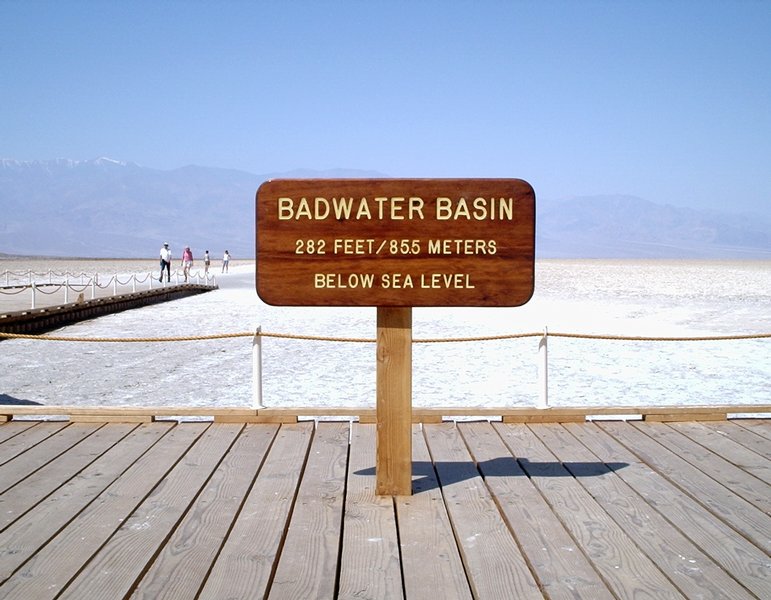
The lowest place in North America, Badwater, in Death Valley, is 282 feet below sea level. But you don't have the weight of the San Francisco Bay above your head and you're not whizzing along at 70 MPH down the rabbit hole.

Badwater
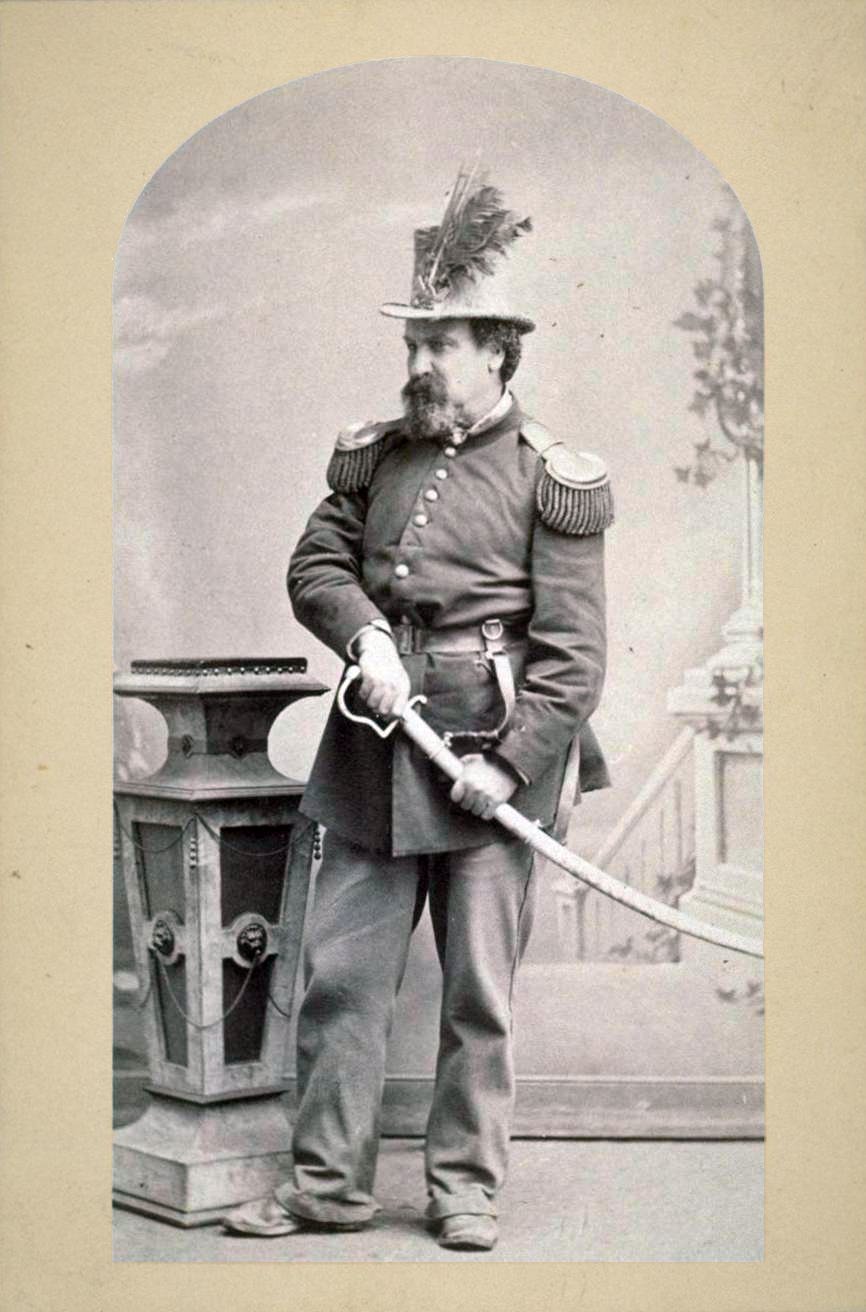
The idea of an underwater transbay tube along the bottom of San Francisco Bay was proposed in the 19th century by eccentric, some say he was mad as a hatter—Emperor Norton, the self-proclaimed "Emperor of these United States and Protector of Mexico." Norton, who abolished, congress, was literature's muse for many writers from Mark Twain, and Robert Louis Stevenson, to Neil Gaiman.

His Imperial Majesty Emperor Norton I, aka Joshua A Norton

The first transbay proposal was submitted by the builder of the Panama Canal in 1920—essentially the same plan BART used to build the world's longest and deepest sunken tunnel (in 1965-69, it opened in 1973). The tunnel withstood the 1989 Loma Prieta earthquake which destroyed the Bay Bridge.


But I digress. Definitely canals were invoked. Perhaps not the palindrome: a man, a plan, a canal—Panama! I had to do careful snorkel snorts both descending to the bottom of the bay floor and ascending to the SF Embarcadero stop. The trick is to know when to pinch your nostrils and how hard to blow—too much pressure and you'll damage your eardrum.

My eustachian tubes were truly plugged so it was touch and go. I was constantly yawning and rotating my lower jaw like a donkey to keep them open.

When you equalize the pressure between the middle ear eustachian tubes and the atmosphere, whether by yawning or blowing your nose, there is an audible pop, or click, which can be heard by others. But then, everything sounds loud—including your own voice—until the canal closes again.

Nothing was as bad as the time I had a head cold in Cuzco and when the bus descended from the Andean pass above Cuzco into the Urubamba Valley, I was screaming in pain, and John had to coax the busdriver to stop at the overlook.

I took so many Sudafeds to relieve the pressure, my heart was beating fast as a hummingbird's. I took so many Sudafeds I would've tested positive for drugs. Hell, I wanted drugs, to obliterate the pain.

Of course I was already technically on Andean drugs on account of the high altitude. Coca leaves and rock lime weren't cutting it. But my teeth didn't hurt. I couldn't even feel them or my gums.

My left eardrum blew—there was blood on the pillow the next morning. Things sounded weird for a long time. Sometimes when I get into a noisy space, my eardrum beats its tympanum with every noise.

My right eardrum is scarred from when I was a child and had double earaches on Christmas Eve. It must've been pretty bad because the doctor came all the way from Point Reyes Station on Christmas Day replete with his little black doctor bag. That's the only time my grannie ever called the doctor to make a house call.

Now, the problem is, that I've cleared my passages—that I can hear everything far too well. And I do mean everything. Rustling paper is excruciating. Other people's iPod earbuds are too loud. People thoughtlessly rustling their swag bags during a seminar had me moving seats early and often just to escape the noise.

MacExpo staff gave me a Ricola to suck on—which helped a bit. But the ambient noise in the hall was wearing my reserves down. Then there were all the Mac fans meandering in thundering herds and droves to negotiate around. 

I managed to make two passes around the exhibit floor to see if I had missed anything. I got some great technical advice on SSD hard drives from OWC, my go-to online store. But they didn't have anything for sale.

Aside from the maddening crowds, on the show floor there were a whole lot of guitarists, vague, blurred incarnations of Jimi Hendrix trapped in bowels of a bad Xerox machine, licking their so-called chops at every intersection—ostensibly showing off the latest music app or interface. ERG! 

Certainly the music toys were amazing—the musicians, not so much.

Of course I was looking forward to going to MacExpo on the final day as well, but today I feel so rotten, I think I'll pass. The only things I really wanted were a tiny iPhone speaker, and a bluetooth keyboard—and the prices weren't great. And I'm in no mood to actually listen to mini speaker performance, let alone, make a rational decision. I'm afraid I'd have at it with a flyswatter.

The swag was almost nonexistent. I would've liked getting my New York Times word portrait done but the line was too long yesterday and I'm not one for standing in line. Besides, it's not the same as back in the good old days, when Apple was part of the MacExpo matrix.

What happened to the delicious madness of MacExpo? Those magical Alice in Wonderland moments?

Most of the vendors were selling iPhone or iPad apps. I don't own either one. I played with some iPad drawing styluses, and a painting app. I prefer the real thing—pen, pencil. or pastel on paper. I drew a galaxy of star lilies as onlookers champed at the bit for their turn. Still, there was some amazing iPad and digital art at the art show.

There was very little software or hardware at MacExpo for the traditional Mac user to play with—other than offers from scanner and printer vendors who were touting their iOS compatibility horns. 

Yet the audience was jammed-packed with MacBook users. And no, they weren't just 50+ somethings. There were quite a few even older geezers present too. So much for the snide comment of one twenny-something to another about iOS apps, intended target audience—if you hafta ask—and rampant ageism. 

One young vendor asked why I was even attending the show since I didn't have iPhone or iPad—as if I was a Luddite. Other than the urge to smack him one, I too wondered why I was there. 

I'm not particularly interesting in owning an iPhone, or at least, not the hefty contract. I like my dumbphone's annual T-Mobile pay-as-you-go bill which costs me all of $200 a year. Can you say, hey big spender?

Besides, I can't even begin to read anything on the iPhone's tiny screen without going cross-eyed. Why would I want to surf on that? What I've noticed is that everyone's playing solitaire on their smartphones and tablets on BART. Wow. Think I'll stick to my Kindle for a while longer.

And I'm waiting for the iPad Retina to become available under Apple Refurbs before taking the plunge. Just because I keep elderly Macs up and running long past their expiration date, and I don't have an iOS gadget, doesn't mean I can't be savvy about the software. I was irritated, to say the least.

Swag levels are next to nil. The John Lennon Bus wasn't there either—they always had serious swag. Besides, they really put on a good show. Most of the vendors have tiny kiosks and stand around like it's a cocktail party. But no booze. No entertaining floor shows, not like in the good old days. 

Roxio wasn't there with their contests and funny prizes. I didn't see one of my favorite software developers, Roger Wagner who created the first graphic paint programs for Apple, and developed HyperStudio, used to run a mean Mac "pretzel bar" booth. The amazing conversations we'd have, and the people we'd meet, while hanging out with Roger as co-pilot.
Roger Wagner didn’t just read the first book on programming the Apple computer - he wrote it. —Steve Wozniak
The seminars I had access to were mostly focused around iOS apps. This year's MacExpo star was the iPhone. My other cellphone is a dumbphone. One seminar on iBook (iPad) authorship was geared toward the traditional Mac user—lots of great tips on both platforms. 

The travel panel was good too. The Hollywood director/author who kitted up his iPad with a monopod, a wide-angle lens and a camera light to take videos of the show, was enthusiastically vouching the merits of the iPad and iPhone for big filming projects. 

I attend MacExpo to see the innovation. MacExpo is a bit like a Maker Fair. There were a couple of cool projects in various stages of development. Many solar panels and even a water battery recharger. Myriad iPhone skins and kooky iPad cases—my favorite kickstarter project, from the guy whose booth was a green teardrop trailer‚ was a bungee cord with four clown noses attached to the corners of an iPad. Wavy Gravy on a trampoline came to mind.

I did manage to get to the iFixit seminar, which I liked so much I attended it twice. Few women in the repair panel audience. I got some technical advice on fixing my MacBookPro inverter light. They said, piecaecake! I'd already replaced the hard drive with an Other World Computing SSD Seagate hybrid drive and got fantastic boot times—17 seconds.

MacWorld senior editor Chris Breen was moderator of the second iFixit panel. There was a lot of discussion on keeping older technology alive as it's next to impossible to truly recycle them—whether dumbphone or iPod. 

The trace rare elements used to make smartphones are lost, and the sheer amount of "upstream" elements needed to make our toys and gadgets was enormous. The latest MacBooks and the iPads, with throwaway technology, are not good for recycling—you can't separate the batteries from the frame—they blow up! 

So, we were of a like mind, in keeping our components alive for a s long as possible. The iFixit guys were impressed that I kept my PPC iMac alive for so long, and said the power supply was suspect in those old iMacs. It was replaceable as long as the capacitors weren't bad. 

However, with that said, they all agreed that trying to resurrect my 2005 PPC iMac probably wasn't worth it as I can't upgrade the software past Tiger. Chris Breen said it had a good run. Catch and release.

It was good to catch up with Chris after the panel. I reminded him of how he once beaned me with a little MacWorld office kit—back in the day when MacExpo swag was good. He laughed and said, I was lucky—he broke some other guy's tooth. Maybe Chris wanted to be a baseball pitcher in another lifetime.

I'm not much of a starstruck fan, though I was wearing an iFan pass. I admire Chris's wit and his intellect as a writer. He always writes back when I have a technical question. We had a sweet good old days moment. Dite. Angels dancing on a pinhead.

A spontaneous Steve Jobs shrine appeared last night. Flowers, Weird Mac thingies, candles. Something I would've like to have seen. So at least Steve was invoked.

Today, the MacExpo event is closing with a drumming circle.

Think I'll pass on that one too.


RELATED APPLE TECHNOLOGY POSTS

On iClouds & Motherships

Lloyd Reynolds' Calligraphic Legacy

Sunday, January 27, 2013

BLESS THE POETS

BLESS THE POETS

The coffee shop sent a double order by mistake. 
Wouldn't take it back, said to throw it away.
Since it was Sunday, we fed the homeless 
sleeping in Market Street doorways.
We gave them an abundance of bagels & coffee.
May I have some cream and sugar?
Perhaps a napkin, and a knife for the schmear? 
Those on the street kept asking us why.
Because we're poets! we said. That's why. 
That's when they said Bless the poets.
And truly we were blessed.

1/27/13


St. Peet’s and the homeless in Market St doorways

This morning we fed the homeless on Market St. extra doses of Noah's Bagels & Peet's coffee—they sent us an extra order for our poetry workshop by mistake. We were an early gathering of poets for Poetry in translation training workshop for PIO—Poetry Inside Out. Those living on the street kept asking why. Because we're poets! That's why, we said. They said Bless the poets. I was a coffee wench until we ran out of cups. We found a shopping cart chef— he had an entire kitchen on wheels— and gave a gallon of hot coffee, bagels and schmear to him to distribute. It was a near religious experience all round. We traded names.  Michael, who had severe palsy, nearly wept with joy. I spread cream cheese on his bagel and wrapped it for him as he couldn't do it himself. Poet-angels, they called us. But they were the ones shedding light. Was a time when my own mother was one of the fallen ones sleeping in Market Street doorways. When I recounted the story, my friend Lin Marie de Vincent said, Bess the poets. and those who share when they have extra. There’s enough to go around. Once again "Noah" made room on the ark. And St Peet(er) warmed the souls of the poor. Shalom.

Wednesday, January 23, 2013

RIP Chris Caswell, Bard


Chris Caswell's Facebook album, At the Gypsy Glen
Tuesday morning, I had a nagging feeling that someone I knew, a friend had died. I had a purple ribbon, a lost streamer from someone's funeral wreath I found blowing across a lawn, in my car for ages. I'm partial to purple. I had tossed it into the recycle box weeks ago, but it kept finding its way back out onto the floor.

So I picked the ribbon up off the floor and washed the mud off of it, trying not to think of graveyards, and hung it to dry on my Celtic music CD rack. it's just a ribbon, I said. Maybe I can reuse it. I felt a shock. Death wants it back. Stupid. Don't be superstitious, I said to myself. Someone walking on a grave, my inner voice said. It's just a purple satin ribbon, I said aloud. Nothing more. I will repurpose it, I said.

The day before, while at work, I felt suddenly and inexplicably sad. Body blows. Like a freight train had hit me. I was weak-kneed. I could barely get through my shift. I looked at the clock: 3 PM. 4 PM. I blamed a virus.

I remembered the dead: Boschka Layton came to mind. I told a co-worker how we shared the hospice and right before she died, and how I got so sick, so fast—bronchitis. Death can do that. Something about the past was haunting me. I didn't feel good, I went home early and cancelled my Tuesday morning class.

A restless night. I slept in late—something I never do. I was haunted by dreams I couldn't remember. I didn't get the news until Tuesday that Chris Caswell died at his home on Monday, during the same time I was feeling the weight of death upon me, wondering who had died.

My grandmother always heard knocks at the door when someone died. Not me. Mercifully. Don't let birds come into the house, she said. It invites death in.

Wednesday, January 9, 2013

Old Tunes, New Licks


Because my partner, Neil O'Neill is a Celtic folksinger, my ad-hoc job is to sleuth out the provenance of traditional Scottish and Irish folksongs, collect variants, and to write the liner notes. What I've learned is that new song lyrics are often set to old tunes or melodies, and updated every generation, and that the song is a compilation of melody or tune, and lyrics (words). 

The ballad our family traditionally sings at every funeral, Danny Boy, is a melody from an old Irish air "discovered" by a sister-in-law in the goldmines of Colorado [what was she doing in the mines?], Londonderry Air (AKA "Air from County Derry" or "Derry Air"), with words written by a London barrister and lyricist in 1910—a prime example of melodic borrowing.

Frederic Weatherly gave the ancient Irish tune, updated with his new lyrics to Elsie Griffin, who made it one of the most popular songs in the new century (first record was made in 1915). So we tend to think of him as the author and composer of Danny Boy. But he didn't compose the melody of the song, just the lyrics. 

The story goes that the original air was collected from a blind fiddler by Jane Ross of Limavady in Northern Ireland, and published by musicologist and antiquarian, George Petrie in 1855, The Ancient Music of Ireland, by the Society for the Preservation and Publication of the Melodies of Ireland.
World famous song Danny Boy is taken from a melody composed by O’Cahan bard Rory Dall O’Cahan. The original version concerns the passing of the Chief Cooey-na-Gall whose death brought an end to a long line of O’Cahan chiefs in Northern Ireland. —Wiki
Folksingers have been swapping tunes and lyrics for eons—sometimes, in their travels, the bits get separated from each other—a muffled line becomes a mondegreen, oftentimes new songs arise from the ashes of the old.
Ye Highlands and ye Lowlands,
Oh, where hae ye been?
They hae slain the Earl O' Moray
And Lady Mondegreen.
So much for laying the poor old dead Earl of Moray down on the green. And what about Lady Mondegreen? She had some melons. A Cuban favorite: José can you see by the dawn's early light? Imagine a rainbow Hendrix: 'S'cuse me while I kiss this guy. Who knew that Kumbaya is really Come by Here—oh Lord.

Our family simply slaughters the lyrics to Háva Nagíla at weddings. Gawd only know what we're boisterously singing while mangling the Grapevine. (Mondegreens in Hebrew are called watermelons.) Malachy McCourt thought The Hail Mary rosary phrase "amongst women" was "a monk swimming", which became the title of his book. Neil, who was an altar boy in Scotland, thought the Latin mea culpea was "Mexican cowboy." OK, so maybe he was stretching it a bit.

Many Irish songs and melodies that traveled to the New World morphed into what we think of as American songs—sometimes with watermelon mondegreens intact.

Monday, December 31, 2012

Thursday, December 20, 2012

Dressing the Stones

Tomorrow it's time to dress the stanes—something my grannie taught me to do—except in California, the stones are natural outcroppings—remnants of limestone reefs. But sometimes I wonder of some of monoliths got a little help along the way. 

We have a huge limestone outcropping on our hill in Forest Knolls that's like a long tooth sticking out at an angle. You can stand on top of it and stand suspended in space—and it's a long way down as the slope is  steeper than the angle of declination. 

There are also myriad other outcroppings in West Marin that will suffice as Old World Neolithic stones. I will post some images soon.

Bantry, where my grannie was from, is loaded with standing stones, and stone circles. So this urge to dress the stones is a long-standing tradition, if you'll pardon the pun. It's a bit of an obsession, almost like an ancient calling. I can't explain it.


I was relieved to note that they still dress the stones in Scotland. One New Year we dressed an ice age geologic erratic, supposedly a druid judgement rocking stone in that it once rocked in the wind (whether yea or nay, we don't know) called Cloch-na-Ryderik (stone of king Rhy—Derik—Roderik).

Clochoderick on Crossflat Farm Road off the Beith Road (A737), near Castle Semple, in Renfewshire, Scotland, is supposedly the burial place of Rhydderch Hael, King of Strathclyde. 

The name of the stone tells me Rhydderch was a Briton, not Dalriada Irish. The region is an admixture of the two peoples. Most place names are in Irish, Like Beith—but not who the stone was named after. However, the orthography is Irish: cloch na (rhy)derick. Stone of the king Derick.

The Castle Semple and folly, or hunting tower, and a wooded ring (possible remains of a standing stone circle) all triangluate to suggest there was once an important pre-Celtic Neolithic site here.

Up the road is where the Houston (better known as the Barochan Cross in Paisley Abbey) and the Arthurlie stones were found. How many Neolithic standing stones were converted into crosses?

There are also what looks to be a series of rings (and a possible ringfort) by Skiff Wood above Howood but I couldn't figure out how to get to it. 

But somebody beat us to it and left it a bouquet of holly and red roses at Clochoderick. We left it old silver coins in the cracks and gave it a little uisge beatha—I had to stop Neil from practically drowning the poor stone! Waste of good Glenlivet, I said.

That winter, I dragged Neil all over the place—we founds stones in places where he had explored as a child growing up in Renfrewshire, but had no knowledge of. In those days, trespassing was frowned upon—replete with fines and guns. With Scotland's new land access laws, we trespassed with impunity.

I was pretty excited when we found the Arthurlie Stone in a suburb of Barrhead, there's another standing stone (the Barochan Cross) converted into a cross in the Paisley Abbey—from Houston, Scotland (not TX). There's a few odd stone formations up at Robertson Car Park too. Hard to tell if it's natural nor not. This area was heavily glaciated. Amazing what you can find in aerial view on on GoogleEarth.

We also dressed a (modern/restructured) standing stone monument near Irvine, Ayrshire—sometimes called the Sorlie Stones at the Toll Girdle crossroad, Whether the stones were there before the coal mines decimated the area, and moved, only to be reconstructed when the land was reclaimed, is an arguable point. 

The Toll Girdle /Sorlie Stones (there's the remains of another stone circle nearby in the middle of a housing project which also may have also been called the Sorlie Stones) were reputed to point the way to Paisley Abbey. There's an estate nearby and people were mad for antiquities and follies, so anything is possible. Whether old or new, the stones are magnificent.

That winter I introducing Neil to the ancient Celtic custom of dressing the stones. Red berries, evergreens (holly & mistletoe), whisky, flame/smoke—a candle will do. Perhaps a song or a poem or two—especially after the whisky—which you pour down the back of your own throat after the rock has had its share.

Yes, there were some amazing photos, but some of those pix were lost when my SD card failed (I dropped the SD card on the floor as I was transferring photos). The low resolution back-up photos I took on Neil's Sony HandiCam—were also lost when a hard drive failed. 

But I have hope that I'll find them on some old hard drives someday. I was always backing things up. So it's a matter of finding the time to hunt them down. But the ones on the SD card are gone forever. I even tried recovery software—it only recovered the photos I already had.

Sometimes the memory of the event will just have to do. 

Tuesday, December 11, 2012

Cellular Mania

You know you don't feel good when you're running a tad behind schedule for an artist board meeting in The City, you've repacked your bag, and laptop twice but you can't find your cellphone, thinking you've lost it last night at the play. So you shake down all your dirty laundry (but there's an awful lot of it (purple mountain ranges come to mind) because that pesky virus you picked up last week gave you far too much permission to let things slide). And you're off your vat of morning tea (not a good thing on a clear day) because your gut's protesting overmuch. And a jolt of caffeind would work major wonders right about now. Maybe the second glass of wine last night wasn't such a good idea. Then you tear apart the car and find all kinds of wondrously distracting things (dark chocolate caramels—still edible, BTW, dried cheese, your other reading glasses). You're laying supine on the sidewalk in an Odalesque nude position, in order to peek under the seats (or change a tire). You have enough stuff crammed in your car to go camping, teach an art class, and outfit the Bolinas Freestore. Some of the flotsam finds its way onto the sidewalk and people walking down the street are giving you wider berth than usual. Soon they'll be making you offers. Then as a last ditch effort, you flag down the postman so he can call you on his cell, but it's locked in the mail truck which is a half a block up the street. And so you go into the house to shake down your laundry again, thinking you really, really must do the laundry, wondering if you should call the auditorium. Did you save your ticket from last night (what a great play), so you can tell the cleaner-uppers (now you're sorry for leaving all that garbage), exactly where it fell out of your pocket of the stretch jeans that are too big because the spandex is shot. No need to unbutton them—they slide right off your hips like ghetto-pants if you cram too much in your pockets, like a wallet, keys and cellphone. Forget coins—a pocketful of change is like cement boots at the bottom of the East River—leaving your pants in a puddle around your ankles. Not to mention the fact that they're girl-pants: postage-stamp-sized pockets too shallow to even hold a wallet—what were they thinking? We don't need no stinkin' place to stash our credit cards, keys, or cellphone? And you've been off your fodder lately. Damned virus making you daft as a goldfish—you are reminded of the myriad times you've lost your readers, only to find a few pairs in a cozy herd perched on top of your head. So this is how it begins: 60 is not the new 40. Fuck that cellular decline thing. Just say no. Then it hits you: why not just call your bloody cellphone from the landline? Duh. No shit, Sherlock. But even that concept requires a modicum amount of skillsets which you don't seem to possess this morning, like what your cellphone number is, not the boyfriend's old number, or all your old phone numbers. No GL4s. Nor do you possess your cellphone which has the number safely stashed on it and now it's clear that you'll be officially late for your artist meeting. And you hate the late artist cliché. None dare call it mentalpause. But here you are. Meanwhile, your gut's practicing its warm-up wind instruments for some aerodynamic audition for Cirque du Soleil, and you finally manage to dial your cell number on the fifth-time's-a charm rule. Did you remember to take it off mute? Oops! A faint buzzing sound like an angry beehive or a lilliputian thundering herd of beefaloes eminates from under the bed. Shit! It took a powder during the night and was on the charger all along! (Gawd, would you look at all the dust bunnies under the bed? So, there's where the amethyst earring you got in the real Inverness when you were 19, went!) At least the charger was plugged in. It could've been worse. You could've locked the keys in the car.

You're saving that one the next time.

Thursday, December 6, 2012

California Accent

When I was young, we always honed in on the rare new kids who were from out of state. In those byegone days, midway between the last century and this one, there was no cable TV, there were very few television channels, broadcast stations were local, as was radio. That kept the local accent fairly stable.

So we could acutely hear the regional accent of those who were descendants of the Oklahoma Dust Bowl (often by way of LA). For some reason it was high on our radar. New kids quickly learned to drop their accent and blend in in order to fit in. The playground was a great equalizer of accents. 

Ironically, most of us came from immigrant families, and we learned to code switch. Speak like our playmates in the school yard. Maybe we were mimicking our teachers. But Miss Kolanoski was a Hunkie, so that didn't work.

My parents had a distinctive SF Mission Irish accent (by way of Boston)—but I didn't inherit it because I grew up in West Marin and raised by my Irish grandmother—so my accent is neutrally rural, if anything. I represent an older strain of the Northern California accent. 

I had to unravel my Irish syntax and create American structured sentences in order to fit in. You'd think I would have done well in English, but no, I was a colossal failure. I made up for it by being an avid reader—when I finally learned to read in the 3rd grade. But words I didn't know how to pronounce were given a new—usually dyslexic—twist. 

When I relax, and the Irish musicality creeps back into my voice (but not my sentence structure), most people are positive I'm from the British Isles, not California. I used to be terribly insulted when someone asked if I was from England. 

No! Northern California. 

Funny, you don't sound Californian. 

Really? Because that's where I'm from. 

No surfer dude drawl—another influx accent.

We rarely encountered the deep southern drawl, it was anomaly. Pearlie May's mother was from Lousiana, and Mary Ann's dad was from Georgia. But their accents were contained, isolated. Didn't rub off on us.

So, Dear Reader, how do you pronounce insurance? That's an accentual watershed: do you say INNsurance or inSUREance? Interestingly, many Native Americans also carry some of those broad midwestern nuances in their speech patterns. But it makes sense when you realize how many First Nation tribes were driven into the Oklahoma Territories.

Sometimes people affected that Midwest accent to sound rural or trustworthy. An aww shucks twangy down-on-the farm folksy kind of moment. Redneck bonding. Different than the Midwestern broadcast network accent.

Where did we develop our ear? Old black and white movies on TV. Migrant farm workers. Ma and Pa Joad. Used car dealers, TV commercials. What I think of—when I'm in Bakersfield, for example. Accents we avoided. We called it the California Oakie accent.

Then, during the 1970s, a new influx of accents flooded the Northern California accent matrix, the broad urban nasal sounds of NY or LA. We hated the sound. We mimicked it. Made fun of it.  The invaders prevailed.

Don't even get me started on the 1980s Valley Girl accent of the San Fernando Valley. Again—that too was media-driven. 

Then, massive migrations of Latin American farmworkers brought other accents elements but that took a long time to cross over and meld into the California accent. Then, when California's population doubled—from 15 million to 30 million, overnight—it was a polyglot of languages. Suddenly everybody was moving to California. 

Since California has increasingly become a multicultural state, local and regional accents have also taken on the flavor of immigrant population accents as well. 

So how do you sort it all out? What is a California accent? Is there one? Several? 

I am the Alameda County coordinator for the student Poetry Out Loud project, I successfully coached two Contra Costa County students who placed 2nd and 3rd at the statewide level—and one of the things I've noticed is that I could distinctly 'hear" what regions the kids parents and grandparents were from by the way they pronounced certain key words.

I've seen kids code-switch—one accent is used at home, and another accent at school. I can't imagine coming up with a single definitive accent (or dialect — You, and what army? Sorry, couldn't resist—bad linguist joke). 

So how do we define local accent with code switching and speech acts? People putting on their Sunday best voice versus talking to family at home.

One of the key things I learned from UC Berkeley's Alan Dundes, while collecting folklore—is to never "clean up" the interviewee's speech acts. Stet. As a writer, of course, I want to polish my own writing—but it was interesting to collect folklore while maintaining the authenticity of the subject's linguistic background.

I am acutely aware of regional levels of socio-economic strata accents—for example, when the str combo suddenly became slurred (via inner-city, and rap music movement) and now everybody's slurring str words—even broadcasters. Schtraight. 

Gangsta speak has become everyday speak. No more code switching. Drives me crazy.

'Sup bro?

Such is the power of media. 

Wednesday, December 5, 2012

Take Five, Dave!

If you make a mistake in jazz, you don't give up. You work it into the next line, so it isn't a mistake —Dave Brubeck, December 6, 1920 - December 5, 2012
Jazz musician Dave Brubeck thought he was going to be a cowboy when he grew up. He was born and raised on a ranch in Concord, and at age 11, his family moved to a 45,000-acre ranch in the Sierra foothills near Ione, Ca. He could ride and rope with the best of them. But his mother, afraid for his hands, wouldn't let him rope anything older than a yearling. His uncle had lost a finger that way.

While at school, Dave was studying to be a veterinarian, but music led him astray. No matter that he couldn't read sheet music. He memorized everything from Chopin to cowboy songs. One thing led to another.
Brubeck's mother, Elizabeth Ivey, was a classically trained pianist who had studied in London. "When Dave was 4 or 5, he would position himself under the piano while she was playing Chopin," Gloyd said. Because of poor eyesight, Mr. Brubeck had trouble reading (music), and "his mother gave up on trying to teach him." Mr. Brubeck learned by listening, and by the time he was a teenager, he was playing with adults in a local dance band. —SF Gate
Dave's family had a ranch and hotel on the east side of Honey Lake (Amedee). He had numerous relatives including the Gibson/Haley clan of Litchfield, Carol Doyle of the old Doyle Motor etc. His aunt is buried there.  —Tim Purdy

During the late 1950s, Dave used to hang out in North Beach and at the Sausalito Gate Playhouse theater, where my mom was an actress. I met him when I was very young. I thought the opening line to Take Five was like the rhythm of galloping horses. He liked that.


I remember asking my mom what the Off Broadway stage director Skip Rognlien meant when he said, "Take Five everybody!" during a rehearsal—I was still putting two and two together. I wanted to know what that had to do with Dave Brubeck's Take Five. She laughed and said it meant that they could all take a five-minute smoke break. I was disappointed. Dave's music was more exciting.

I was five-going-on-six, precociously collecting numbers. Quartet was four. Fourfivesix! This many? Two hands. She said: "jazz interlude."

Take Five  peaked at #2 on the Top 40 Billboard singles chart in 1961. It was a signature piece for that era. You heard it playing everywhere. Down Bridge Street to Caledonia in Sausalito. Take Five (with Blue Rondo on the B-side) became the best-selling 45 rpm record ever released. But Dave Brubeck had a heart as big as the wide open skies of California. He never forgot his roots. The album cover was signed.

To be viewed in 5/6 time. When I was young, I loved the album art on Brubeck's album cover by S. Neil Fujita, and probably embellished it with crayons. For some reason, I insisted that it was mine, and not my mother's, though the record was hers. It must've held some triggerpoint of memory of my meeting Dave. It was a half-pint's wild west standoff. Reasoning was not going to work. She finally relented, and let me keep it. 


“One of the reasons I believe in jazz, is that the oneness of man can come through the rhythm of your heart. It’s the same anyplace in the world, that heartbeat. It’s the first thing you hear when you’re born—or before you’re born—and it’s the last thing you hear.” —Dave Brubeck, NYTimes obit
Dave Brubeck was into collaborating with other musicians and poets. He didn't pull rank or status. My friend Ken Bullock said that there may be a tape—rare as a photo of Khrushchiev's shoe pounding the UN table—somewhere of poet Jack Spicer reading to Brubeck's combo. Herb Caen heard it & said it was good.
The Spicer-Brubeck tape—one of the great missing treasures. From his pre-serial poem period, as in The Collected Books. He was a great reader in those days. For all the wonderful collection of mostly serial poems—again, the real stuff—on PennSound, it lacks his finest extant reading, at the Poetry Center in '57, including great, even eerie readings of "Poem for Bird & Myself," "Imaginary Elegies" & "Psychoanalysis: An Elegy" to a crowd primed to the hilt. Can only begin to imagine what he would've sounded like with Brubeck. —Ken Bullock
Tom Pich photo courtesy of National Endowment for the Arts

After a long interlude indeed, I ran into Dave during the early 1990s, at the Russian River JazzFest—I was on assignment taking photos for The West Sonoma County Paper, and Dave and I got to talking about those days of Beat-Bohemia in the SF Bay Area.

Being painfully shy and also being at odds with being so out in the public as a photojournalist, I broke the ice by way of introduction, by giving Dave an anthology of my student art and poetry from my California Arts Council artist residency at Mark West School in Santa Rosa.

Dave thumbed through it, thoughtful, pausing here and there, then he asked me to read a poem or two (I chose Trevor Yeats—This Body is to Ask), and then he handed it back to me and said, "Now, sign it!" There was no early warning signal for paradigm change. There I was. There we were. Is-ness incarnate.

Because I was a poet-artist-photographer working in the schools, Dave introduced me to the musicians (Bob Dorough (Doboro sp?—I can't find a reference to him but I can sing you his song about an old mattress tag he once knew, "Do Not Remove Under Penalty of Law"). The incredibly sweet, Blossom Dearie, and Polish pianist Adam Mankowicz) were interviewing me! Tables turned. What did I know about jazz? Nada.

Not exactly sure what to do, I gave all the jazz musicians poetry books. For some reason, poetry was my ticket to ride. What I didn't know was the role that poetry played in jazz, or repressed nations—like Poland. (Bell learning curve ahead. I later wound up in Russia.)

Dave and I held other held themes in common. He wanted to be a rancher like his father, he grew up on a cattle ranch in Ione; my grand-uncle, Wild Bill Walsh, sold his truck for a bottle of bad whiskey and a good hand of cards in Ione.

Dave wanted to be a veterinarian. As did I. His first love was rodeo roping. I was a fan of All Things Horses—my religion was The Grand National—and rodeo champ Larry Mahan was an idol. But art hogtied us in 30 seconds flat and that was that.

We did not discuss Dave's myriad accolades, we just sat in the warm sun like a couple of cowboys and talked about other things that moved us, as the California hills cradled us, and the long silvered tongue of the Russian River played a riff toward the sea.

Perhaps my editor, Nick Valentine, was disappointed because I didn't mine Dave for pithy quotes. But Dave wanted to blur the boundary between subject and object. I was fine with that.

I found I didn't have the reporter's cold heart, I was no ambulance chaser, after all. The being at-one in the moment was more important than the storyline. Strange meadowlarks, indeed.

I wrote a little story of praise on Dave for The West Sonoma County Paper, and sent the clipping to him. Dave wrote ME a letter (to the editor) in praise of my story and photography. I have it somewhere, along with the photos.

Dave’s letter to the editor, The Paper, December, 1983

RIP Dave Brubeck, your heart never failed you. Take five, Dave. Take Five.

It's a staccato of horses hooves, pounding an opening heartline to the melody. Trust me, I'm not that intellectual, I suck at math. I never set out to find jazz, but jazz just keeps on finding, and outing me.