Tuesday, March 17, 2009

Red-headed step-children

My Dear K,

Redheadedism is not specifically a Scottish trait, we Irish have more than our fair share of redheads and they're not treated any less fair than anyone else in our family...that's why I puzzled over your comment: Red-headed step-children. If anything, the fair-skinned redheads in our family are treated extra-special and allowed more freedom (temper tantrums, etc).

I know that in other cultures, to be a redhead is considered a negative sign or bad luck—but not in Celtic cultures. There's even a specific word in Irish for redhead that's different from ordinary red, and it means magic red as in the red-eared white cattle of the Otherworld. Derg and ruadh. (new blood, old blood). I thought maybe you'd heard the saying somewhere specific. But, I gather that you're using it as metaphor — not folklore. Not something your grandfather told you.

I studied folklore with Alan Dundes at UC Berkekey and have collected a fair bit of it for the archives. If you have specific folklore, it's important to record it—when you first heard it, under what circumstances, Who (age, occupation, place collected) why what when where how come—and an analysis of context. If you want more information on the process I'd be happy to post it.

We should be collecting our own stories of immigration and survival, make them available. Think of it, what's the journey we each took to arrive at this place, this time? Yes! Storyteller Gay Ducey told me that we're hard wired for stories and she's right. We need the stories.

Ahem, I could equally sugges that you do protest too much yourself... but I also glean from your offline email that you're carrying a whole lotta painful baggage too and it's probably hard to sort the emotional response from the oral tradition or historical accounts.

(Yeah yeah, I know the adage: history is written in the eyes of the oppressors. Except there are plenty of other ways to get the news...by artifacts, linguistics and by oral tradition. So you read the lines and your ears and somewhere between the two, are the multicolored facets of truth.

Maybe you never meant to flame-mail me or the group but it sure came across that way, hence the flurry of detailed emails on my part...I was trying to cover the angles and keep a neutral historical stance. Not easy when you were playing fast and loose with facts. Unfortunately arrogance combined with a lack of knowledge is not a useful virtue.

I too grew up in the oral tradition, but I actually was raised (24/7) by my Bantry Irish grandmother so I got a lot of information than I bargained for. Probably why I became a poet was to give a home to all the stories.

Later, I studied Celtic history on my own; only recently did I take formal classes at UCB and SFSU. So I do know both sides of the "historicity" argument. That's why I took the time to write to you to begin with. (Bad, I know to end with a preposition! But it's the Irish syntax coming through.)

And in my family, the English Protestant Crown, especially Cromwell was the antiChrist. (For good reason too, if you knew your history at all...) I had a redheaded Scottish granduncle Michael Ward whose family were originally Donegal Irish (he was a childhood playmate to the Royal Family at Balmoral) and I've got loads o Scottish-American cousins. (The redheads are Irish.)

Our family ceilis in the basement of our old Victorian in SF included Scottish, Irish and Jewish families. Sure politics were discussed. I remember bagpipes skirling, jars of whiskey slammed down on the tables during heated discussions but racial intolerance was never allowed.

I also live with a Scotsman so I know a fair amount of Scottish history and current cultural traditions from that oral tradition too... His response to the gist of your emails was "it's pointless conversing with people like her. I grew up with them. They won't change."

To teach tolerance (and compassion) remains forefront in my book. My grandmother taught me to not harbor grudge against the English or Scots for what their governments did as they were but vessels of the Crown. She did not want me to carry the seeds of bigotry within me...to the next generation. Dear K, do not carry the feud forth.

I don't know how my family managed to survive the Famine but they did survive without having to resort to becoming Protestant in the process... Your slamming Irish Catholics is a bit of a sore spot.

We've really had our fill of it. Did you know some Irish Catholics were fed in Quaker and Protestant soup kitchens IF they gave up their religion? Others chose to eat grass instead and starved to death with green-rimmed mouths. Remember that when you "wear the plaid" and drink green beer to celebrate St. Patrick's Day, a Catholic holiday.

Remember the 2 million Irish who starved to death or were lost on the slave coffin ships destined for Barbados and beyond—all because of the faith they were born into. Those who survived the voyage were sold as slaves to breed more slaves because they were considered sub-human by the Crown. New World Order. It's a pity you chose an anti-Catholic stance in your emails. It reminds me of the xenophobic Scots-American narrowmindedness that led to the foundation of the KKK.

Take a look at how the Irish were treated and depicted by the English and the Americans in the 1860s, by contrast, the Scots fared a whole lot better at the hands of the Anglos. They were not routinely called "white niggers" and "human monkeys" by the British and American press.

I have a blog I recently wrote on the subject after Arby's released the Irish dancing chimps ad, which was, at best, culturally insensitive. Shall I post the link?

My grandmother was spat upon and ridiculed for her ancestry, she was refused a seat on a trollycar and there she was, 9 months pregnant while seated passengers hurled racial slurs against the Irish Catholics breeding like cats. She cried. Her water broke, her firstborn arrived to a world of racial animosity.

As to the Highlanders, they were often Catholic as Protestantism was considered a Lowland religion... Do you know anything about when they became Protestant (I'm assuming this here because of your emails...) And how did they survive the Clearances? Did they emigrate when sheep became more valuable than a human life?

Red-headed step-children aside, I'm puzzled by the comment against the Irish as betrayers of the Scots? I'm fairly conversant with Celtic history and I'd love to know what it's referring to.

Was there really that much dislike for the Irish in your family? Wow. My flabber is gasted. Where did that angst come from and why? What happened in your family that caused such inter-racial animosity? That's how it sounded from your emails.

If so, then I gotta ask, so why are you part of the Irish in CA group? Maybe your interests might be better served with a Scottish group? Although I'm positively certain that you'd get just as much flack there as here for your attitudes.

Or stick around! Another idea would be to collect your own folklore from yourself and then trace the origins of the root myths we carry within that make us all so unique.

I would add that racism and religious intolerance are a result of an incomplete education— enough ammo to fight the "other" but no clear understanding of the larger facts and context. How gangs start... Remember "Birth of a Nation"?

Where does that intolerance come from? Each arriving immigrant group, subjugated by neo-colonialism at home, practices racial hatred on the next arriving group what was practiced upon them... The Scots-Irish intolerance upon the Irish, the Irish intolerance upon the Blacks, African Americans upon the Hispanic, and so on. The model is at hand.

Interestingly, I was once interviewed for a poetry position at UC Berkeley for the African American Studies Dept. (of all things) and one of the questions I was asked, how I would design a course around (Irish) neo-colonialism in the Caribbean. I had to talk fast from the hip. Didn't get the job but it sparked my interest in the stories of "lost" multicultural nations, the Irish-Black families of the Barbados, Monseurat, Trinidad—Irish-Cherokee, Seminole, even Creole-Acadian nations, etc. More than one Trail of Tears.

One time in the '70s, an African American family called us from New Orleans, saying they were related. We said no, regretfully, thinking both sides of out family had only just arrived in 1904 and 1912. Turns out, after the Famine, some of the Reilly family did make it to the Big Easy and to Puerto Rico.

We only just found out a couple of years ago when my uncle went to Puerto Rico and saw a portrait of the governor, his namesake, most likely a great-great granduncle. And now we're sorry we didn't have the foresight to take that New Orleans family's phone number way back when.

I am no closer to understanding what is meant by the phrase: redheaded stepchildren, other than it's clearly a racial slur, meant to hurt, and as such, I can only hope that you'll someday have the ability to step back and see the larger picture—and see the false syllogism of your argument.


Note Bene: this was an email I wrote in rebuttal to a series of rather bigoted flame-mails posted by a young American woman of Scottish ancestry in our Irish in California Yahoo group. The exchanges had me going back and reverifying history to the point that I had material for several blogworthy posts. I did not post her emails as they were rather awful. I tried hard not to flame her, but tried to reach her via fairly neutral language. To no avail. So some good work came out of it. I tried to be gentle, and educational, but she'd have none of it. She was pretty attached to her bigotry.


St Patrick was a Strathclyde Briton

NB: This post was in response to a rock-stubborn Scottish American lassie (not terribly clear on history) who slavishly flamed our Irish in CA group. I've removed most of the personal references. It's challenging to turn an email letter into a blog. I feel like St. Patrick writing a shame Letter to the Soldiers of Coroticus. When I get time, I will revise this. Add links. Or not. This is not a blog on St. Patrick, per se. I'm assuming the reader already knows the basic story.


St Patrick was a probably a Strathclyde Briton. Meaning he didn't speak Irish. Or Scots-Irish. Or English. He probably spoke something similar to Welsh or Cumbrian.
I am Patrick, a sinner, most unlearned, the least of all the faithful, and utterly despised by many. My father was Calpornius, a deacon, son of Potitus, a priest, of the village Bannavem Taburniae he had a country seat nearby, and there I was taken captive.  —The "Confessio" of Saint Patrick (http://www.robotwisdom.com/jaj/patrick.html seems to be a dead link)


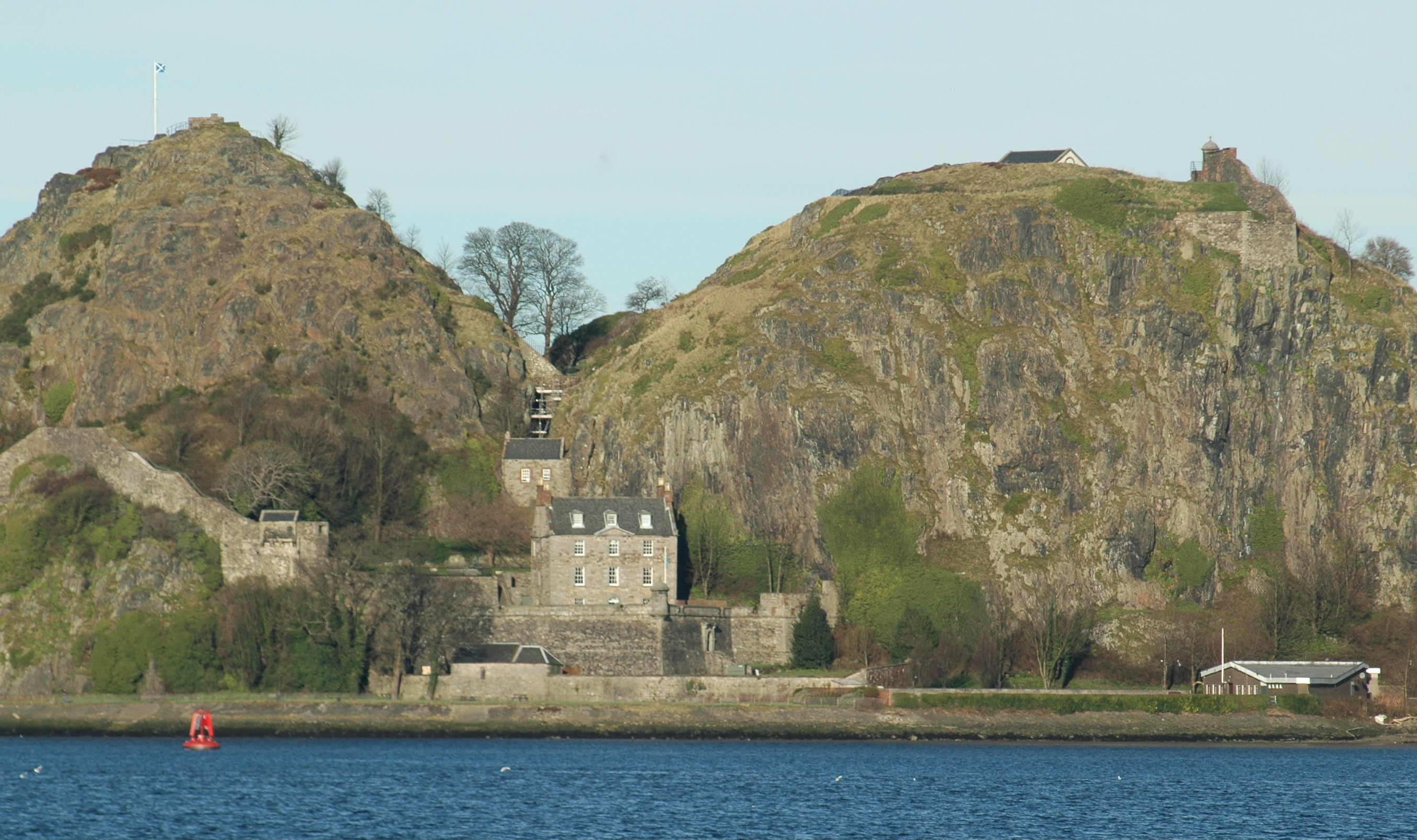
No one knows where the village of Bannavem Taburniae was. But Cumbria, or southern Scotland may have been Patrick's homeland. There's some conjecture that it was near Dumbarton (Dùn Breatainn, or Alt Clut—Clyde Rock) on the River Clyde, translates as Fort of the Britons. 

The Dumbarton settlement was first recorded in the famous letter Saint Patrick wrote to Ceretic (aka Coroticus of Letter fame) King of Alt Clut in the late 5th century. Merlin was rumored to have slept at Alt Clut too. Sir Thomas Grey of Heaton, in his medieval tale, Scalacronica, recorded that "Arthur left Hoël of Little Britain his nephew sick at Alcluit in Scotland."

Some historical "truth" is in order. The term "Briton" in the 5th c. does not refer to a slur, as in "Brit," or the Irish slur, "West Briton," a wannabe Englishman. The correct term in this case, is a Briton, not a Scot. It is not intended as a racial slur but an anthropological/ cultural/ linguistic time/ place indicator.

King Arthur is referred to as a Briton... A Briton was a P-Celtic-speaking native living on an island (Pretannia) that was later referred to as England. There were dozens of Celtic tribes, the Icenii, Caledonii, (or) The Pictii, etc, who spoke Brythonic Celtic, or P-Celtic. (Pictish seems to have elements of both P- and Q-Celtic. It may be an older archaic language, related to Gaulish, as the Romans do identify the Pictii as being in Gaul as well.)

In the 5th C. the term "Scott" would have referred to an Irishman, or an Irish speaker, not a Scotsman. 

At one point, "Scotii" referred to the Q-Celtic-speaking Irish, not the modern day Scots, as Ireland was referred to as Scotia Major, and because of all the Irish settlements in what is now referred to as Scotland, that region of Scotland (Dal Riada) was called Scotia Minor.

The Roman term "Scottii "has been variously translated as "raider" and "pirate." The term may have evolved to distinguish Q-Celtic speaking regions from P-Celtic regions.

Curiously, Scoti is not a Roman or Latin ethnonym. (The Romans used Hibernii, based on Ptolemy's Greek, Iérnē). Nor is it Goidelic, but there is a reference to Scoti in the Middle Irish MS, Lebor Gabála ÉrennScota, daughter of a Pharaoh of Egypt. (Scota was probably Milesian, or Iberian vs. Egyptian—tho the Ptolemys did hire some 40,000 Celtic mercenaries), and Scota was the eponymous leader of the Gaels, who created the Irish language.

The word "Briton" comes from Pretanii. P/B sounds were indistinguishable in insular P-Celtic, the language spoken in most of Great Britain—including the Pretenic of the Picts (but they had elements of both P- & Q-Celtic embedded in their language.)

There was also Q-Celtic, the languages spoken in CeltIberia; (Goidelic), Ireland, parts of Scotland (there were numerous waves Irish settlers in Strathclyde and Renfrewshire), The Hebrides, and the Isle of Man.

Yes, Q-Celtic was also spoken in the Isle of Man. Manx is a dialect of Irish with a different orthography (spelling). In other words, I can grasp Manx if I say it out loud. (Viking veneer aside), there is also linguistic evidence that the Celtic inhabitants of the Orkneys and Hebrides spoke Q-Celtic. There was no difference between Scots Gaelic, Manx, or Irish during the 17th & 18th centuries. It was one language, one dialect.

Irish Q-Celtic place names in Strathclyde region are still in evidence. There is record of Q-Celtic spoken in the West of Britain: there is an ogham stone in Irish. Many waves of Irish speaking settlers in the Lake District, etc.

Scotland and Wales don't emerge as national and separate nations/ identities until centuries after the Anglo-Saxon invasions severed the West Coast Britons into two groups. The language spoken at the time on the West Coast of Great Britain was the same. Eventually the P-Celtic evolved into two dialects (ancestor of Welsh and Cumbrian).

We know very little about St. Patrick—other than he DIDN'T speak Q-Celtic. He had to learn Irish. We also don't know if he spoke P-Celtic. We do know he spoke and wrote in Latin and that his family were Roman citizens. Patricius is Latin. This does not mean he was Roman (or Italian), but we do know he was a Romanized Celt, as was the Cis-Alpine Gaulish writer, Vergil, and probably Catullus, Trajan, and many other so-called Roman authors.

Celestial Padlocks


I awoke thinking of celestial padlocks. I was actually thinking of the keys to celestial padlocks and wondering what left field that came from. Keys to the city. Made of clouds.
 

Sunday, March 15, 2009

from Annals of the 4 Masters—St Patrick Timeline

Notes from the ANNALS OF THE 4 MASTERS
AKA The Annals of Donegal comprised of the:
Annals of Tigernach,
Annals of Clonmacnaoise,
Annals of Inisfallen,
Annals of  Ulster,
and the Book of Conquests; and the books of O'Maol Conereys, Kilronan, Leacan, Isles of the Saints, MacMangus, etc. (Michael O'Clery, et al, compilers 1332-1608).

(Note Bene: Most  of this is more or less from the Univ. of Cork electronic texts and Annals, v.2, Owen Connellan, tr., Dublin, 1845. I've long since lost the original links. So sorry. I compiled this timeline at the end of last century (by hand)—at a time when I had limited internet access—and there was no such thing as broadband so I've included a Wikipedia link above. Hope that helps. There is so much more available on the web these days than when I began studying the Irish texts.


I spent a lot of time searching UC Berkeley Library microfiche databases. I also spent a lot of time in the dusty library basement with turn of the (19th) century facsimiles of Irish Annals. This was all long before I started blogging—as blogging hadn't yet been invented. I never expected my notes to live on in this form. But someone asked me for a timeline. And so here it is. 


This timeline is also augmented from miscellaneous timelines I was reading [they are marked in various ((inventive)) parentheses]. I used several timelines in order to be able to read Patrick's Confessios and Adámnan's Life of Columba in some sort of  quasi-historical context. 


So this is really my personal cribnotes for a class I took at UC Berkley on Medieval Irish texts with Professor Dan Melia. I found it helpful to have both the subject's and the author's timeline at hand—especially since the Viking invasions both promulgated and destroyed much of Ireland's literary history and oral tradition. 


I found that I had to read the texts with two minds, maybe three minds—from the medieval mindset—and from the modern mindset—simultaneously. What was commonplace knowledge during medieval times was often omitted from the texts. (So you have to fill in the missing blanks with your modern mindset). Current medieval notions and schools of thought also have to be kept in mind. What was accepted knowledge, what was the new thinking of the time, etc. And keep in mind what was considered to be old-fashioned thinking way back then.


You have to bring a lot to the table to read ancient texts. You cannot read the texts with 20th or 21st century eyes—then judge them with with modern morals and value systems. That will interfere with your understanding of the medieval world. Sorry this is so clumsily said—I'm sure someone has said this more succinctly. Just my observations. 


I loved Dan Melia's advice on reading the texts: you need to build separate rooms in your mind to house the texts. Mansions of the mind! I needed a freakin' master floor plan to find my way out of the labrynth. The timelines were my only hope. There are also some lovely quatrains buried in the Annals. Tidbits to keep you going.  —MH)

((From the Annales Cambriae; ‡ = different MS)) and is marked as such. Often, there was a conflict of dates—I noted them whenever possible. My comments are marked with [these.]


(429) 430. The second year of Laeghaire. In this year Pope Celestinus the First sent Palladius to Ireland, to propagate the faith among the Irish, and he landed in the country of Leinster with a company of twelve men. Nathi, son of Garchu, refused to admit him; but, however, he baptized a few persons in Ireland, and three wooden churches were erected by him, namely, Cell Fhine, Teach Na Romhan, and Domhnach Arta.

At Cell Fhine he left his books, and a shrine with the relics of Paul and Peter, and many martyrs besides. He left these four in these churches: Augustinus, Benedictus, Silvester, and Solinus. Palladius, on his returning back to Rome (as he did not receive respect in Ireland), contracted a disease in the country of the Cruithnigh, and died thereof.

431. Saint Patrick was ordained bishop by the holy Pope, Celestine the First, who ordered him to go to Ireland, to preach and teach faith and piety to the Gaeidhil, and also to baptize them.

432. Patrick came to Ireland this year, and proceeded to baptize and bless the Irish, men, women, sons, and daughters, except a few who did not consent to receive faith or baptism from him, as his Life relates.

[There were more than a few that resisted—but Patrick was not above smiting the non-believers.. Interesting, he was given the tropes and powers of the druids. Monks hedging their bets?]

Ath Truim was founded by Patrick, it having been granted by Fedhlim, son of Laeghaire, son of Niall, to God and to him, Loman, and Fortchern. Flann Mainistrech cecinit:

Patrick, Abbot of all Ireland,
son of Calphrann, son of Fotaide,
Son of Deisse,—not fit to be dispraised,
son of Cormac Mor, son of Lebriuth,
Son of Ota, son of Orric the Good,
son of Moric, son of Leo of full success,
Son of Maximus, 'tis not unfit to name him,
son of Encretti, the tall and comely,
Son of Philisti, the best of men,
son of Fereni without a tempest,
1Son of Britan, otter of the sea,
1from whom the vigorous Britons came;
Cochnias was his modest mother;
1Nemthor his native town;
1Of Munster not small his share,
which Patrick redeemed from sorrow.

437. Finnbharr Mac Ua Bairdene, died.

438. The Seanchus and Feinechus of Ireland were purified and written, the writings and old books of Ireland having been collected and brought to one place, at the request of Saint Patrick. These were the nine supporting props by whom this was done:

Laeghaire, i.e. King of Ireland,
Corc, and Daire, the three kings;
Patrick, Benen, and Cairneach, the three saints;
Ross, Dubhthach, and Fearghus, the three antiquaries,

as this quatrain testifies:

Laeghaire, Corc, Daire the stern,
Patrick, Benen, Cairneach the just,
Ross, Dubhthach, Fearghus with goodness,
the nine props these of the Seanchus Mor.

(Armagh founded)

447. Secundinus, i.e. Seachnall Mac Ua Baird, the son of Patrick's sister, Darerca, Bishop of Ard Macha Armagh, yielded his spirit on the twenty seventh of November, in the seventy fifth year of his age.

((447 ‡ Days as dark as night.‡Annales Cambirae))

448. The family of Patrick of the prayers,
who had good Latin,
I remember; no feeble court were they,
their order, and their names.
Sechnall, his bishop without fault;
Mochta after him his priest;
Bishop Erc his sweet spoken Judge;
his champion, Bishop Maccaeirthinn;
Benen, his psalmist;
and Coemhan, his chamberlain;
Sinell his bell ringer,
1and Aithcen his true cook;
The priest Mescan, without evil,
1his friend and his brewer;
The priest Bescna, sweet his verses,
the chaplain of the son of Alprann.
His three smiths, expert at shaping,
Macecht, Laebhan, and Fortchern.
His three artificers, of great endowment,
Aesbuite, Tairill, and Tasach.
His three embroiderers, not despicable,
Lupaid, Erca, and Cruimthiris.
Odhran, his charioteer, without blemish,
Rodan, son of Braga, his shepherd.
Ippis, Tigris, and Erca,
and Liamhain, with Eibeachta:
For them Patrick excelled in wonders,
for them he was truly miraculous.
Carniuch was the priest that baptized him;
German his tutor, without blemish.
The priest Manach, of great endowment,
was his man for supplying wood.
His sister's son was Banban, of fame;
Martin his mother's brother.
Most sapient was the youth
Mochonnoc, his hospitaller.
Cribri and Lasra, of mantles,
beautiful daughters of Gleaghrann.
Macraith the wise, and Erc,—
he prophesied in his three wills.
Brogan, the scribe of his school;
the priest Logha, his helmsman,—
It is not a thing unsung,—
and Machui his true fosterson.
Good the man whose great family they were,
to whom God gave a crozier without sorrow;
Chiefs with whom the bells are heard,
a good family was the family of Patrick.
May the Trinity, which is powerful over all,
distribute to us the boon of great love;
The king who, moved by soft Latin,
redeemed by Patrick's prayer.

((453 Easter altered on the Lord's Day by Pope Leo, Bishop of Rome.))

((454 St. Brigid is born.)) at Faughart.

457. The battle of Ath Dara was fought against the Leinstermen by Laeghaire, son of Niall. Laeghaire was taken in that battle; and Laeghaire took oaths by the Sun and the Wind, and all the elements, to the Leinstermen, that he would never come against them, after setting him at liberty.


The Ui Neill and the Oirghialla attempting to bring it to Armagh; the Ulta to keep it with themselves. And the Ui Neill and the Oirghialla came to a certain water, and the river swelled against them so that they were not able to cross it in consequence of the greatness of the flood. When the flood had subsided these hosts united on terms of peace, i.e. the Ui Neill and the Ulta, to bring the body of Patrick with them. It appeared to each of them that each had the body conveying it to their respective territories, so that God separated them in this manner, without a fight or battle. The body of Patrick was afterwards interred at Dun Da Lethglas with great honour and veneration; and during the twelve nights that the religious seniors were watching the body with psalms and hymns, it was not night in Magh Inis or the neighbouring lands, as they thought, but as if it were the full undarkened light of day.


Since Christ was born, a correct enumeration,
Four hundred and fair ninety,
Three years add to these,
Till the death of Patrick, chief Apostle.

((521 St. Columba is born. The death of St. Brigid (523).))

(523) 525. Saint Brighit, virgin, Abbess of Cill Dara, died. It was to her Cill Dara was first granted, and by her it was founded. Brighit was she who never turned her mind or attention from the Lord for the space of one hour, but was constantly meditating and thinking of him in her heart and mind, as is evident in her own Life, and in the Life of St. Brenainn, Bishop of Cluain Fearta. She spent her time diligently serving the Lord, performing wonders and miracles, healing every disease and every malady, as her Life relates, until she resigned her spirit to heaven, the first day of the month of February; and her body was interred at Dun, in the same tomb with Patrick, with honour and veneration.

535. The church of Doire Calgaigh was founded by Colum Cille, the place having been granted to him by his own tribe, i.e. the race of Conall Gulban, son of Niall.

543. The fifth year of Diarmaid. There was an extraordinary universal plague through the world, which swept away the noblest third part of the human race.

548. St. Ciaran, son of the artificer, Abbot of Cluain Mic Nois, died on the ninth day of September. Thirty three years was the length of his life. St. Tighearnach, Bishop of Cluain Eois, died on the 4th of April. St. Colum, son of Crimhthann, died. St. Finnen, Abbot of Cluain Eraird, tutor of the saints of Ireland, died.

(549 a great mortality. c. 500 Brigid founds Kildare; Brendan founds monasteries, travels to Wales & Iona).

553. Brenainn of Birra was seen ascending in a chariot into the sky this year. Cluain Fearta was founded by St. Brenainn.

554. The last feast of Teamhair [Tara] was made by Diarmaid, King of Ireland. Curnan, son of Aedh, son of Eochaidh Tirmcharna, i.e. the son of the King of Connaught, was put to death by Diarmaid, son of Cearbhall, in violation of the guarantee and protection of Colum Cille, having been forcibly torn from his hands, which was the cause of the battle of Cul Dreimhne.

555. The battle of Cul Dreimhne was gained against Diarmaid, son of Cearbhall, by Fearghus and Domhnall, the two sons of Muircheartach, son of Earca; by Ainmire, son of Sedna; and by Ainnidh, son of Duach; and by Aedh, son of Eochaidh Tirmcharna, King of Connaught.

[The first instance of copyright.]


((689. The rain turned to blood in Britain, and ‡in Ireland‡ milk and butter turned to blood)).

690. It rained a shower of blood in Leinster this year. Butter was there also turned into lumps of gore and blood, so that it was manifest to all in general. The wolf was heard speaking with human voice, which was horrific to all. (Tirechan writes Collectanea of St Patrick).

(697. Synod of Birr, Adamnan's Law of the Innocents promulgated).

(700. Adamnan published Vita Columbae Muirchu: Vita Patricii; Crith Galblath; anon. Life of Cuthbert); Famine & pestilence toook place during three years in Ireland so that man ate man.)

703. Adamnan, son of Ronan, abbot of Ia Coluim Cille, died on the 23rd of September, after having been twenty six years in the abbacy, and after the seventy seventh year of his age. Adamnan was a good man, according to the testimony of St. Beda, for he was tearful, penitent, given to prayer, diligent, ascetic, and temperate; for he never used to eat excepting on Sunday and Thursday only; he made a slave of himself to these virtues; and, moreover, he was wise and learned in the clear understanding of the holy Scriptures of God.

715. The fair of Tailltin was celebrated by Fearghal, son of Maelduin; and Fogartach Ua Cearrnaigh disturbed the fair, for he killed Maelrubha, and the son of Dubhsleibhe.

716. Three wonderful showers fell in this year: a shower of silver on Othain Mor, a shower of honey on Othain Beag, and a shower of blood in Leinster.


It was in it i.e. this year, moreover, that the cakes were converted into blood, and the blood flowed from them when being cut. It was in it also the birds used to speak with human voice.

815. There were unusual ice and great snow in this year, from Christmas to Shrovetide.

819 The plundering of Edar by the foreigners, who carried off a great prey of women.

822. The law of Patrick was promulgated over Munster by Felim, son of Crimhthann, and by Airtri, son of Conchobhar, i.e. Bishop of Ard Macha.

830. The first plundering of Ard Macha. Ard Macha was plundered thrice in one month by the foreigners, and it had never been plundered by strangers before. The plundering of Daimhliag and the tribe of Cianachta, with all their churches, by the foreigners....Tuathal, son of Fearadhach, was carried off by the foreigners, and the shrine of Adamnan from Domhnach Maighen.

835. Cluain Mor Maedhog was burned on Christmas night by the foreigners; and a great number was slain by them, and many prisoners were carried off. The oratory of Gleann Da Locha was also burned by them. All the country of Connaught was likewise desolated by them. Great produce both of masts and acorns, which so choked up the brooks that they ceased running. Cill Dara was plundered by the foreigners...

836. A fleet of sixty ships of Norsemen on the Boyne. Another fleet of sixty ships on the Abhainn Liphthe. ...plundered and spoiled... churches and habitations of men, and goodly tribes, flocks, and herds....The first taking of Ath Cliath by the foreigners. (Dublin).

854. Great ice and frost, so that the chief lakes and the chief rivers of Ireland were passable to footmen and horsemen, from the ninth of the Calends of December to the eighth of the Ides of January .

875. Great wind, lightning, and thunder, in Ireland this year; and showers of blood were afterwards shed, so that lumps of gore and blood were visible on the extensive plains at Dumha An Deasa. The shrine of Colum Cille, and his relics in general, were brought to Ireland, to avoid the foreigners.

887. The plundering of Cill Dara and Cluain Iraird by the foreigners.


Letter to Wapedia on the Gauls: check your sources


After reading a bad Wapedia Mobile article, I tried to send an email to correct the glaring errors, but it bounced:

For starters, the Gauls didn't found cities, they founded oppida, or fortified hill forts that later evolved into civitas under Roman occupation.

Tolouse was the region of the Aquitani Volcae Tectosages, a fierce Celtic confederation. There's a famous tale in a classical text that tells of the enormous gold stores in a lake that one chief had stolen.They also got around. Like to the Ballkans and Anatolia. Some say they were the Galatians that St Paul got so worked up over their feasting, fighting and fecking that he wrote a flame letter to them to change their evil ways.

Masallia (Marseilles) was a trading post founded by Greeks in the 6th c. BC to trade with the wine loving Celts (Princess of Vix krater held more than 50 gallons of wine) along the Rhone River region....

Anyone can write and post an article on Wiki....no scholarship credentials needed. Always check your sources as it does us little good to continue to promulgate such blatantly wrong information. It comes back to haunt us in weird ways.

Friday, March 13, 2009

The Fo-Morians


Someone in my Irish in CA Yahoo group suggested the mythical Irish Formorians were Norsemen. Ummm.....that would be no, Formorians were not Norsemen. These mythical beings predated the Norsemen by at least an eon or twelve. Nor were they North men, as he suggested as a possible direct translation. Read on.

Scott, It is too easy to conflate the Irish mythic prehistoric past with the European historical past, and then try to to shoehorn it in to make sense of it through an Euro-centric (read: Anglo-Saxon) world view—which is often in direct conflict with Celtic world view—as history is always written in the tongue of the victor. Besides, mythic timelines rarely jive with historic timelines. It is best to read them with two (open) minds.

For starters, the majority of the ancient Irish tales were written down in Irish (not Latin) in the 12 to 14th centuries (though dating back much farther in language and structure to the 6th to 9th centuries) because of the impending threat of invaders, including Norsemen, threatened to disrupt the lineage of their oral history. The Norse rarely learned Irish, nor were they literate, so those Irish MSS would not have been available to them. But that's fodder for another sidebar.

Few 6-8th C. MSS survived, but many of the later MSS were copies of the earlier texts. We know this because of the grammar. Keep in mind, the 7th Venerable Bede was copying Irish Annals for his Anglo-Saxon Chronicles. Who was Bede's translator, I wonder? Would have to be an Irishman.

Irish is one of the oldest living Indo-European (IE) languages, and Germanic, is among the newer additions to the IE tree.... Irish, a highly inflected language, has more in common with Tocharian A, than, say, Norse.

The ancient Irish tales themselves already existed long before there was any such thing as (Germanic) Norsemen (who are a much later cultural addition to the maps of Scotland and Ireland).

Of course, if my friend was gleaning from Seamus McManus, as source material, that might explain the oddball discrepancies...as he was a 19th c. Romantic"scholar" reshaping history as he saw fit. (By what information was archaeologically available at the time. Celtic studies has cone along way since McManus.) I read him (and Thomas Cahill) with several grains of salt. Make that a shaker full of salt!

It's a good idea to also read the actual medieval source material before making the assumption that the Firbolgs (Bag men Fir = man; bolg = bag) and Formorians (also spelled Fo-morians) were Norsemen. The Irish use an entirely different name for the Norsemen and they distinguish between them and the Danes. Can't remember the word. It was something like French Rat and Blue French Rat (Danes).

The Irish were already in Iceland BEFORE the Norsemen arrived there. And certainly many of the Norse Dubliners did settle Iceland, but by then they were more than half Irish to begin with, as their fathers took Irish wives. No need to take Irish and Pict slaves to Iceland to introduce Irish DNA... That would be coals to Newcastle. The Icelandic Genome project merely supports the Irish oral tradition that they too went to Iceland.

Read the Icelandic Laxdal Saga (written in medieval Icelandic ca. 1245 AD), and note that the young prince is half Irish, his mother having taught him Irish at the knee and when he sails back to Dublin, he speaks in Irish to his grandfather, the Dublin (Norse?) Irish king who thinks he wants to trade, not go to war. Note that he spoke Irish, not Norse.


As for the Lord of the Isles, that was its own separate wildcat kingdom, neither Norse nor, Scottish (nor Irish), and little known fact. Summerlin himself was either a quarter or half Irish (depending on the source) to boot.... So much for that Scottish Romantic idea of the pure old Norse strain existing in Scottish bloodlines...

It was never as simple as some armchair historians would make it out to be....and the dates of the actual Norse settlement in the West of Scotland are under four centuries... Couple that with the fact that they rarely brought Norse women with them, that leaves us with a very resiliant surviving Celtic population in the Isles with Norse political overlordship and structure. Same Celtic substratum paradigm holds true for the Isle of Man....

For example, Norse place names did not replace all the original Celtic place names. A significant fact: if the original Celts were all assassinated or run off, then Norse names would prevail. Place names are curiously persistent as long as there are surviving native speakers to say them. This strongly implies that the native speakers and Norse lived side by side long enough to learn each other's languages. Gaelic was spoken throughout the Isles until at least the 17-19th century.

Defining the word "Formorian" is a bit of a challenge. Note there is conflation/ confusion of the word mór—variously defined as terror/ phantom ( or it could mean big/large/great/high—mor) or the word for sea (muir; genitive mora) or it could even be moor. Besides, the word farraige is more often used for sea than muir.

Now as to spelling: we don't know if it's For-mor-ians or Fo-mor-ians. Or Fomoire, Fomóiri, Fomoraig, Fomhóraigh, Fomhoire, Fomorii, Fomor, Fomors, Fomoré, Fo-Muir, Foawr [Manx].

Fo- vs for-? Is this faoi? If it's a preposition, it's at the wrong end of the word. But I've seen this conjugation in Old Irish poems fo-. But Ro- also is used as a prefix. Then, shouldn't mór be (genitive) móir or (pl.) móra? Where is a linguist when I need him?

Note also how the much later the modern spate of historical confusion conflates the idea of Formorians with North sea folk... Now, if Formorians are from the North Sea as my friend suggests, remember the relative date when they were supposed to exist (read: during the Ice Age) so the idea of Northern lands (or Lochlainn) is a relative term.

Adjust your sights a bit farther south of the grand ice cap for the pre-Christian idea of north! In other words, Torey Island (Oileán Thúr Rí (King's Tower) Donegal) Dún Bhaloir (Balor's Fort) was considered to be the far North. A far cry from where we tend to place the current idea of Lochlainn (or the even later idea of Scnadanavia, for that matter).

Note also the Formorian uber-baddie, Balor is the (Zeus-ian) Lugh's grandfather. Now as a god, Lugh is the primo god of all Celtic nations from Ireland to Anatolia as is attested in principal place names of many European cities dedicated to Lugh: Lug(u)-dunum, Leiden, Lyon, Laon, Liegnitz, Loudon, Liegnitz, Léon, Dinlleu, and Luguvalium, aka Carlisle, etc.

The scattering of Formorian names are Celtic words... As is the word, Formorian. So linguistically, they're looking pretty danged Celtic to me. Lugh was supposed to have driven the Fomorians under the sea... or under something.

Now faoi (fo- in Old Irish) works here: faoi, preposition, meaning under, about. Faoi-mór-ians. Those (terrors) under the great/many (either really big or a lot of them)....or under (the sea—but remember. we're not so sure this word mór is the word for sea to begin with—it could also be transcribed as moor). Fomoorians sound more Cthulhonic, terrors driven underground vs the idea of North Sea men.

There is also an odd bit of historical conjecture that the (real) Formorians were among the original inhabitants of Ireland (probably Meso-Neolithic—in which case, if they were Old European, then they were probably not Celtic.)

Then you have to (un)read/unravel all the Biblical stuff out of the equation as that influence definitely was a medieval cultural bent, a band-aid slapped onto the archaic legends and myths to Christianize them.

Luckily the Irish monk scribes who transcribed the 11th c. Lebor Gabála were pretty transparent commentators when they cobbled on the Bible bits (and they were also pretty irritated that there was no mention of themselves in the Bible/Babel bits—so they fixed that slip-up as we all know that Irish itself was created out of the best bits of all the languages left over at the fall of the Tower of Babel! So they slapped that stuff right onto the old stories!) Luckily, it's relatively easy to remove the Noah-Ham-Japhet lineage accretions from the equation.

Remember also that during the 18th-19th cs. it was still a "scholarly" pastime (or cultural bias) to recreate and shoehorn in Biblical timelines with time present. Archaeology was becoming the rage but it wasn't yet a science. They bungled a lot of finds: Schliemann's pillage of classical Troy...

So a lot of modern historical "interpretation" and bad 19th c. archaeology needs to be weeded out from the prima materia as well. (PS Schliemann founded the Bank of Sacramento in 1851).

I tend to read the mythological cycle with a couple of timelines on hand, 1) when they were transcribed (current world views tend to taint the texts) and 2) when they were supposed to take place.

Hope this sheds some light, or gives you a jumping off place for further research.


Thursday, March 12, 2009

Seanfhocal: Irish Proverbs

Knock means hill...like coomb and standing stones are often on hills...  Slieve means mountain and Ben means mountain or rather, head as in Mt. From the Welsh pen... Pennines....

Lia means stone as in Lia Fail (sorry, missing fadas/acccents). As does cloch.

Knock and Cloch used in proverbs.

Trí saghas incheann:

inchinn reatha,
inchinn cloiche,
inchinn chéarach.

Three kinds of brains:

a running brain,
a rock brain,
a wax brain.

Is glas iad na cnoc i bhfad uainn.
Distant hills look green.


AND SOME FUN STUFF

Is túisce deoch na scéal
A story requires a drink

Giorraíonn beirt bóthar
Two shorten a road

Tír gan Teanga Tír gan Anam
A nation without a language is a nation without a soul


An old article on Irish language courses in the Bay Area which may be of interest. I learned and translated many Irish proverbs in my Irish class at UC Berkeley in 1999. Since my blog only dates back to 2007, I can't post it in 2003.

An Irish renaissance / Interest growing in the difficult but intriguing language
Kathleen Sullivan, Chronicle Staff Writer
Published 4:00 am, Friday, December 19, 2003
All over the Bay Area, Americans are learning to speak Irish. At New College of California, students can take beginning and intermediate Irish classes.

Tuesday, March 10, 2009

My great-grandmother was a Sullivan

Jane Rose Sullivan Walsh
My great-grandmother was a Sullivan who married a Walsh. They married into the McCarthy family as well. My grandmother was Walsh who married a Reilly. I also have Sullivan 2nd & 3rd cousins In San Francisco.

There are a lot of other Sullivans we think we're related to. There's a Sullivan family in San Geronimo Valley, they even look like us. But without family records it would be very hard to prove much of anything in Ireland before the 1860s as most church records were destroyed.

Marin wasn't particularly Irish. It was an admixture. It did however, have large immigrant groups from the Azores, Ireland, Italy, etc. I remember my grandmother pointing out the Italian Swiss colony. Some moved to Asti.

Our family had a summer home in West Marin that became their full time home. I think many San Franciscan families did that. It was not a wealthy enclave. Not like today.

Also, when there was no cure for TB, and other infectious diseases, it was thought that moving to the country would improve one's chances of surviving. It has a long tradition dating back to the mission days at San Rafael when acolytes were shipped to San Rafael to heal, but few Natives survived European diseases.

During the '06 quake, and fire, most people had no place to live, so many moved to Marin. There were a lot of Irish in San Francisco. My grandfather was responsible for, and patrolled a tent city on one of the hills. Maybe Lone Mountain.

Then, during the Depression, more people moved to Marin from San Francisco as it was easier to survive in Marin. My grandfather commuted by train and ferry to San Francisco.

My grandmother's garden on Coomb anOr in Forest Knolls fed more than one family and she had eight kids. The place looked just like her father's farm in Bantry, hence the name.

One St. Patrick's Day I was teaching kids poetry in Alexander Valley and there was a little party and one of the room mothers and I got to talking, comparing Irish last names.

Imagine this conversation:

My family are Sullivans and Walshes.
Yeah? Funny. So are mine.
Mine are from Bantry.
You're kidding. So are mine.
Get out! Our family had a ranch in Nevada.
So did we. Really.
Are you kidding? Omigawd, were you related to Wild Bill Walsh?
Yeah, he was my grandfather.
No way. He was my great uncle, my grandmother's brother. That makes us, let's see, 2nd cousins. We're related. We're actually related! (More screams, etc). It happened, it really happened like that.

And here I had been teaching her young daughter, Samantha Estomba poetry—not knowing we were 2nd cousins once removed. We were related. I must admit we had hit it off like a house afire.

Sunday, March 8, 2009

Remembering Lew Welch


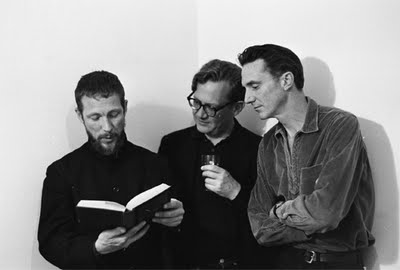
There's been a bit of a buzz on Facebook lately about Beat poet Lew Welch. Poet/guitar maker, L. Layne Russell posted a link from PennSound and I found myself listening to audio bytes of Lew's poems and writing a small memory fragment on David Meltzer's wall. I realized I'd never written about that memory as there wasn't very much to it. No context by which to frame it other than our family names.

But then the little bits of Lew fragments began to add up into a strange constellation of words wanting reassembly. Like Brodsky, I'm "caught up by the relentless centrifugal nature of language." So I guess I have David Meltzer's Two-Way Mirror to blame for this wee blogeen. Go raibh maith agat! They are so few and far between.

David wrote on his wall: "Lew was mentor & friend & we all miss him & keep waiting for him to buzz the bell & visit & listen to Lester Young & knock back a fifth of something strong & then say goodnight & split."


Ar scáth a chéile a mhaireann na daoine:
people live in one another’s shadows.

My mother, nee Maureen Reilly, then, Maureen Hurley, who chucked out all her given and married names, and went by the stage name, Kellé Hurley, and later, Kellé Green, as the name Maureen Hurley was already taken at SAG. She was a Project Artaud artist-painter, an actor, fey poet, and friend of Bobby Kaufman, the first poet who was reputed to have been called a "Beatnik." (Thanks to the press in Herb Cane's weekly column, the moniker stuck).

My mother occasionally hung out with the Beats in North Beach but they were really an exclusive bad boy's club. No women need apply. Many women who later aligned themselves with the Beats were ex-girlfriends and hangers-on. She was no one's girlfriend. She was her own woman. (I once saw a photo in a coffee table book, of my mysterious mother dressed in a striped Marseilles style sailor shirt and black capri pants. Several Beat poets and artists are standing on a street corner. But she's standing off to one side, by a street post, as if not quite with the group, slipping out of the confines of the frame and time. But she was like that.)

I was raised—not by my mother, but by my Irish grandmother who hailed from Bantry Bay, County Cork—out in the west country, in the wilds of Forest Knolls, which in those days, was light years from Fairfax, let alone, San Francisco.

We lived in an red iron oxide stained house perched on railroad ties; it had a summer porch with copper screens and windows salvaged from St. Vincent's School for Boys. It sat alone on a southwestern slope above the watershed of Arroyo Creek on Barranca Road.

My grandmother named the land Coom an-nÓr, the Hill of Gold, with twinned live oaks lining the gateway. Our place looked remarkably like my grandmother's lost family farm in Bantry. Hence the name.

Living out so far in the country in the late 1950s without public transport or a car, meant we were fairly well isolated, and dependent upon neighbors and relations to go Over the Hill (White's Hill) into Fairfax for shopping, or out to Point Reyes, where my doctor, Dr. Whitte (the poet), lived. (But I didn't find that out until years later). But the land was good to us, it fired and fed the imagination.

My grandfather had died a few years before, of throat cancer so I was my grandmother's sole companion. They sold the City victorian on 131 Third Avenue after he died. Forest Knolls was always our country home since the early '20s, we were Old Marin. My grandfather bought the house back in 1910 and the two other lots later from a railroad man who kept his silver under the floorboards. We had thirteen acres straight up a steep coastal hill replete with its own dolmen and artesian spring, facing westward towards Mt. Barnabe, was home.

During the Great Depression, my family lived in Forest Knolls year round, with my grandfather commuting into San Francisco by train and by ferry. The train tracks were all pulled up during WWII for the steel. We used to love hiking and riding along the level railroad beds. No greasebush meant no ticks.

Anyway, one bright afternoon, this yellow checker cab came bounding up our long dirt driveway, lurching and leaping the potholes like a wild pony. The white cab sign perched on the roof, like a nurse's cap. Maybe it was a Red Cross rescue mission. Who was being rescued will never be answered in this lifetime.

We rarely had visitors. In those days, there was very little traffic in the San Geronimo Valley. In those days, it was so quiet, you could hear the progress of a lone car shifting into third gear up the long mile stretch of Arroyo Road from Sir Francis Drake, the highway that bisected The Valley.

We were trapped on an island lost in time and place, caught somewhere between a metaphoric incarnation of Appalachia, the Ozarks and the Azores. We were a backwash of immigrants and welfare families. Not part of Marin proper. The Point Reyes National Seashore was still working ranches, not an urban escape route.

Seeing a cab this far out in the wilderness was akin to seeing a mirage or maybe seeing the bus, Priscilla, Queen of the Desert (but neither Priscilla nor the Magic Bus had yet been born—there's a story about that too.) In those days, there was an unwritten rule: a San Francisco cabbie didn't cross the Golden Gate Bridge. Ever. Besides, there was a $50 surcharge. A bloody fortune in the 1950s and '60s. If my mom had paid that cab fare, it would've taken her SSI checks for the next six months.

Whenever my crazy mom got her SSI check, we could expect a visit, so it must've been at the beginning of a month. What month, I couldn't tell you. Or what year. Or whether it was spring, or fall, but it felt like it was a Sunday afternoon in the fall. Perhaps because my grandmother was lying on the couch reading the Sunday paper, or because it was sunny and there was something evocative about looking up at that indefatigable blue sky of childhood so irrevocably linked to memory that will haunt me forever.

The cab pulled around the Bishop pine at the bend by the big live oak into the turn-around in front of our house and came to a sliding halt at our front door. A puff of dust. My mom and a tall fellow unfolded themselves from the car. My grandmother looked out the kitchen window and said, "Oop, it must be the beginning of the month. Here's your mother." She put the kettle on.

In our house, the ritual of tea was required to properly welcome all visitors, whether they were family, friends or strangers. Fill the kettle to the top with spring water from the tap. Bring the water to a full rolling boil, scald the big teapot, measure in a rounded teaspoon of loose Irish tea (McGraths, Barry's or Lyons will do), one for each guest. Don't forget to put in an extra spoonful for the pot. Reboil the water. Fill teapot to brim. Brew 5 minutes.

Mom and the cabbie, Lew Welch came in and settled in on the other couch by the window; my grandmother got up from her couch, stooped over the tea tray atop old Life magazines and the Sunday paper scattered on the heavy octagonal oak card gaming table, with sawed off legs cut down low to coffee table size. As my grannie poured tea, it was the music of running water and ancient healing wells. My mom had resurfaced the"coffee" table with an awful gold and white mottled faux marble finish, and in the middle of that gold lake, a large crescent black and gold moon shaped ashtray floated; it matched the painted black legs. Very homegrown '50s moderne.

Scores of escaped cigarette butts had burned and scarred the table surface so that it puckered up like tiny craters. But a permanent layer of newspapers hid them from sight. Besides, over the decades, the original oak surface had been burned so many times it looked like a herd of tiny black feet had trompled across it.

What made that oak table really great, was being able to put both your feet up on it, and kick back. It was funny to watch a guest realize that he was expected to put his feet on the table—thinking he'd died and gone to heaven. Someone said those old oak tables were made heavy on purpose so that no irate gambler who lost a fortune at a bad hand of cards, could tip it over in a rampage. It was made to keep gamblers honest. It was so thick, it could probably stop a bullet too. I sat on one corner and watched my mom and Lew chat.

My grandmother poured the properly brewed Irish tea into big mugs, mixing it with milk and sugar, the spoon beat out a melodious rhythm like the clapper of a small bell— like the ones the altar boys rang during the mass. Lew was in luck. There were thick wedges of her famous sodabread hot out of the oven, slathered with butter too. He settled back with a jailhouse mug of tea in hand. Put his feet on the table and kicked back while the Bushmills was released from its prison of closet and shoes to baptize and benedict their cups.

Conversation droned on, sonorous as bees converging on the hive. My grandmother launched into yet another long diatribe about the ancient Celts or politics and such…. Her index finger punctuated each point. My grandmother's maiden name was Walsh. She was busy telling Lew that Walsh and Welsh/Welch were all the same name, meaning the Welshmen who came into Ireland with Strongbow during the Norman Conquest (1169) and settled in Wexford and Bantry.

By the second cuppa tea, we were practically cousins in her telescoping of time. She was deep into the abduction of Dervorgilla, a Breifne chieftain's wife (Tiernan O'Rourke), by Dermot MacMorrough and his traiterous deed which led to Ireland's downfall and played her into the hands of King Herry II of England.

At the creek of Baginbun, Ireland was lost and won.

Welch-Norman lord, Richard FitxGilbert de Clare, Earl of Pembroke, AKA Richard Strongbow (moniker for Welch longbow archers), had fallen out of favor with Henry and saw the invasion of Ireland as a way to curry his back into Henry's good graces. Strongbow's forced marriage to Dermot's daughter Aiofe and the fall of (Viking) Wexford in 1170 pretty much sealed Ireland's fate; when Dublin fell, she would be forever wedded and chained to England.

The diatribe of Cromwell the antiChrist, was up next. My grannie was on a roll. We were well beyond the Pale. My attention wandered, I was a child, and I wanted to play outside, so I don't remember much else.

What I do remember was looking up at Lew; he was a tall, thin cool drink of water, with his auburn hair slicked back, looking so much like my uncles, I thought we were related. They all had the same pointed widow's peak, freckles, and a toothy Irish grin. Lew looked like a cross between Uncle Myles (who had recently died of melanoma) and Uncle John. We were down to two men. Lew was a shoe-in.

But Lew's widow's peak was more pronounced like Uncle Bill's. He looked closest to an old picture of my Uncle Feilim on horseback, but I never met my Uncle Feilim as he died at 17, in my grandmother's arms, of a ruptured appendix right in this very room. Perhaps that's why my grandmother and my mom took such a shine to Lew. Family resemblance. My grandmother never got over Feilim's death.

How my mother and Lew met, the details are lost to history, or herstory—interrupted by death, but my mom probably was a fare he'd picked up in San Francisco, and they got to talking. You know how gregarious the Irish are, with the gift of the gob, I mean, gab. I suppose Lew was living in Corte Madera or Fairfax (or maybe Bolinas) in those days, so he was probably on his way home after a slow day trolling for fares.

But Lew did rescue my mother from the streets of San Francisco more than once. She was a damsel in distress (I'm sure it didn't hurt that she was a a tall, willowy stunner with a long mane of fiery auburn hair and a classic Irish face). Those two crazies decided to take a ride out in the country to meet my rather remarkable Irish grandmother who was an active bearer of the oral tradition and language.

Besides, Lew had friends in The Valley. Grover Sales was living right down the road with Chuck (Charlene) Sutton, the jazzman's wife, in Lagunitas. Sutton and Tristano were hot in the New York jazz scene. When I was in my 20s, a boyfriend, Geoff Davis loaned me a copy of Ring of Bone autographed by Lew over to Grover Sales. But Geoff took it back when we broke up. So I made a photocopy of the book because Ring of Bone was out of print and Lew hadn't yet been "rediscovered" so there were not reprints and posthumous collections in their second incarnation.

In those days, Kenneth Rexroth still had his summer cabin past St. Cecelia's Church on Sir Francis Drake Boulevard between Dead Man's Curve and the cutoff to China House by Shafter's Bridge and the Inkwells. Though Rexroth probably wasn't there as he lived mostly in town.

Come summer, we saw his wife. Marie in church on Sundays. Never Rexroth Himself (my grandfather once hiked up Devil's Gulch with him). My grandmother religiously read Rexroth's weekly column in the News Call Bulletin. Mrs. Rexroth sat in a pew near my grandmother. They always sat on the left side of the church, facing the altar, third pew from the front.

Well, my mom came home that afternoon for tea, stayed a while and then, inexplicably, she left again with Lew. Oxymoron. I was pretty upset as I rarely saw my mother as it was. Sometimes it was months, or a half a year or more between visits. I pined in loneliness like a dog. Hid my scalding tears so no one ever knew.

I guess my mother was no longer just a fare, but an affair of sorts, she got around, some memories are better lost or forgotten and buried along with the dead. She was always leaving me behind. The road, always longer than memory. I carried an ache that was never erased by posthumous promises and tearful embraces at Christmas.

I remember Lew coming back up to the house a couple more times, dropping my mother off. I used to confuse him with Keith Bullock whom I knew long before I met his son Ken, in high school.

I don't remember meeting Huey Lewis, Lew's stepson (it was plausable), but we went to different schools. I knew of Huey because when he played at Uncle Charlie's in Corte Madera with Alex Call, we'd make a pilgrimage to see Lew's stepson play music on Monday nights.

I remember meeting Magda and Honey (Lenny Bruce's ex-stripper wife) in the '70s at The Sleeping Lady Cafe in Fairfax. I may even have a photo buried somewhere. I knew that Huey took Lew's name as his own. But I was not a writer. I had to wait until I was 30 before I began to write. So it comes in transparent dream fragments—shattered, reflected images trapped in pur-blind mirrors.

I can't help but wonder if my grandmother's Irish stories affected Lew, did he remember them? Who was Alice Herlihe? ("Winter") Herlihe is the Irish form of Hurley.

Mt. Tamalpais from Big Rock Ridge, Lucas Valley.


One of my favorite Lew Welch poems is "The Song Mt. Tamalpais Sings," perhaps because I was conceived on the western slopes of the Sleeping Lady. I imagine my mother looking over my father's shoulder at the jewel, Bolinas Lagoon, sparkling in the distance at sunset, whenever I read this poem.

Mt. Tamalpais from Loma Alta/White's Hill, Fairfax.

THE SONG MT. TAMALPAIS SINGS

This is the last place.
There is nowhere else to go.

Human movements,
but for a few,
are Westerly.
Man follows the sun.

This is the last place.
There is nowhere else to go.

Or follows what he thinks to be the
movement of the Sun.
It is hard to feel it, as a rider,
on a spinning ball.

This is the last place.
There is nowhere else to go.

Centuries and hordes of us,
from every quarter of the earth,
now piling up,
and each wave going back
to get some more.

This is the last place.
There is nowhere else to go.

"My face is the map of the Steppes,"
she said, on this mountain, looking West.

My blood set singing by it,
to the old tunes,
Irish, still,
among these Oaks.

This is the last place.
There is nowhere else to go.

This is why
once again we celebrate
the great Spring Tides

Beaches are strewn again with Jaspar,
Agate, and Jade.
The Mussel-rock stands clear.

This is the last place.
There is nowhere else to go.

This is why
once again we celebrate the
Headland's huge, cairn-studded, fall
into the Sea.

This is the last place.
There is nowhere else to go.

For we have walked the jeweled beaches
at the feet of thr final cliffs
of all Man's wanderings.
This is the last place.

There is nowhere else we need to go.

—Lew Welch


Speaking of Lew the Cabbie, I found this poem:

AFTER ANACREON

When I drive cab
I am moved by strange whistles and wear a hat.

When I drive cab
I am the hunter. The prey leaps out from where it
hid, beguiling me with gestures.

When I drive cab
I am guided by voices descending from the naked air.

When I drive cab
A revelation of movement comes to me: They wake now.
Now they want to work or look around. Now they want
Drunkenness and heavy food. Now they contrive to love.

When I drive cab
I bring the sailor home from the sea. In the back of
my car he fingers the pelt of his maiden.

When I drive cab
I watch for stragglers in the urban order of things.

When I drive cab
I end the only lit and waitful thing in miles of
darkened houses.

—Lew Welch


In 1971, while staying at Gary Snyder's house on Kitkitdizzie Ridge, Lew Welch walked off into the wilderness carrying his shotgun; his body was never found. So the story goes. Fare meter up. He left a note for Snyder:
"I never could make anything work out right and now I'm betraying my friends. I can't make anything out of it — never could. I had great visions but never could bring them together with reality. I used it all up. It's all gone. Don Allen is to be my literary executor — use MSS at Gary's and at Grove Press. I have $2,000 in Nevada City Bank of America — use it to cover my affairs and debts. I don't owe Allen G. anything yet nor my Mother. I went Southwest. Goodbye. Lew Welch."

And at a fateful reading of Gary Snyder's at Olney Hall, College of Marin, CA. 1976, I heard Gary read Lew and Manzanita. He was reading poems about MY watershed, my ridges and groves, that's when I decided to become a writer. I said, "I can do that." Little did I know what I was in for...and some 33 years later, I'm still teaching the children about the life cycles:


FOR/FROM LEW

Lew Welch just turned up one day
live as you and me. "Damn, Lew" I said,
"you didn't shoot yourself after all."
"Yes I did" he said
and even then I felt the tingling
down my back.
"Yes you did, too" I said -- "I can feel it now."
"Yeah" he said,"
"there's a basic fear between your
world and mind.
I don't know why.
What I came to say, was,
teach the children about the cycles.
The life cycles. All the other cycles.
That's what it's all about,
and it's all forgot."

27.IV.76
—Gary Snyder

from An Appreciation of Lew Welch,
edited by S. Fox, Stone Soup.

Gary Snyder, Phil Whalen & Lew Welch

For more Lew stories, check out "Hey Lew." Clew Press, Bolinas, CA,1998.

Audiotape of Lew Welch reading at SF State Poetry Center (via Ron Silliman's Blog).


Thursday, March 5, 2009

Poetry is a two way mirror, David Meltzer

Honoring my teachers, I found David Meltzer on Facebook, of all places, and hoping to reconnect, I wanted to tell David how I used his poem and book—Poetry is a two way mirror: a poetry notebook when I was teaching kids poetry at Mark West School in Santa Rosa duri g the 1980s. Pat Nolan said it was a Must Have, and so when I found it, I was over the moon. I used that copy until it wore out. I wanted to tell him also about meeting Ebbe Borregard finishing the front steps at Alice Kent’s house, how, and in that moment, I instinctively knew that when the inside and the outside worlds collide, is where poetry happems. I got it. The aha!

I said: Poetry is a Two-Way Mirror: the outside looking in and the inside looking out. You have to be ready to reassemble the parts. David, when I first started teaching CPITS, Two-Way Mirror was my Poetic Bible. It was my Lew Welch walking off into the wilderness. Thank you for sustaining me through those first years.

and he said,

Hi Maureen,

You made my day & am deeply blessed.  Thank you!

David Meltzer

He thanked me for thanking him! He made my day and I am doubly blessed.